
Complete Guide to Project Mercury Rocket Launches: History, Crew, and America’s First Astronauts
Last updated: November 3, 2026.
Before Americans walked on the Moon or spent months aboard the International Space Station, NASA had to answer a much simpler question: Could humans travel into space and return safely? That question became the foundation of Project Mercury, the United States’ first human spaceflight program. Operating from 1958 to 1963, Mercury introduced America to its first astronauts and established many of the technologies, procedures, and safety standards that would shape future space exploration. Developed during the early years of the Space Race between the United States and the Soviet Union, Project Mercury represented an ambitious effort to bring American astronauts into space. Its primary objectives were to place a crewed spacecraft into Earth orbit, determine how humans could function in the space environment, and safely recover both the astronaut and spacecraft after each mission.
The Purpose of Project Mercury
When NASA officially introduced Project Mercury in December 1958, human spaceflight was still largely experimental. Scientists understood the basic principles of reaching space, but significant questions remained about whether astronauts could withstand the physical demands of launch, weightlessness, and reentry. Mercury was designed to address those uncertainties through a gradual series of tests and increasingly ambitious missions. NASA engineers developed a compact, bell-shaped spacecraft capable of carrying one astronaut. At approximately six feet wide, the capsule provided little room for movement, requiring its occupant to remain seated throughout the flight. Despite its limited space, it contained essential systems for life support, navigation, communications, and flight control.
The spacecraft also featured a launch escape system designed to pull the capsule away from a malfunctioning rocket during the early stages of flight. A heat shield protected the astronaut during atmospheric reentry, while parachutes slowed the capsule for an ocean splashdown. These systems were essential because Mercury astronauts depended on their spacecraft to function reliably in an environment where immediate rescue was impossible. Beyond engineering, NASA wanted to understand how humans would respond to spaceflight. Astronauts monitored their physical condition, performed simple experiments, and evaluated spacecraft controls while experiencing weightlessness. By the program’s conclusion, NASA had demonstrated that people could survive, remain productive, and operate spacecraft in orbit, providing the confidence needed to pursue longer missions.
The Mercury Seven: America’s First Astronauts
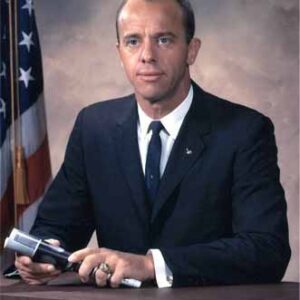
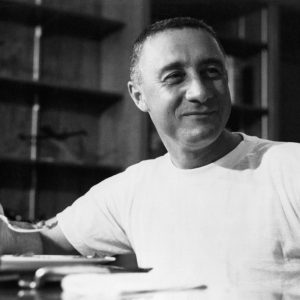
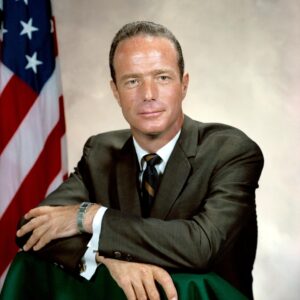
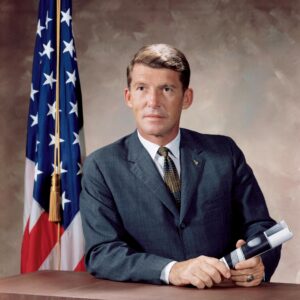
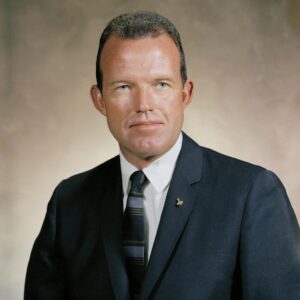
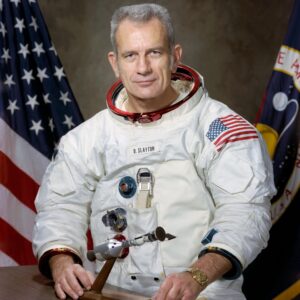
On April 9, 1959, NASA publicly introduced the seven military test pilots selected to become America’s first astronauts. Known as the Mercury Seven, these men became national celebrities and the public faces of the country’s emerging space program. The original astronauts were Alan Shepard, Gus Grissom, John Glenn, Scott Carpenter, Wally Schirra, Gordon Cooper, and Deke Slayton. NASA selected them based on their aviation experience, technical abilities, physical fitness, and capacity to make decisions under pressure. Their backgrounds as military pilots were especially valuable because Mercury spacecraft required astronauts to manage complex systems while responding to unexpected situations.
Six members of the Mercury Seven eventually flew during the program. Deke Slayton was removed from flight status because of a heart rhythm condition, although he later played a major role in astronaut crew assignments and eventually traveled into space during the Apollo-Soyuz Test Project in 1975. The Mercury astronauts helped redefine the role of a space traveler. Rather than serving simply as passengers inside automated capsules, they demonstrated that astronauts could actively monitor, control, and troubleshoot spacecraft during flight. Their experiences shaped the responsibilities of every NASA astronaut generation that followed.

The Rockets Behind Project Mercury
Project Mercury required several launch vehicles, each supporting a specific stage of the program’s development, allowing engineers to build on previous results before attempting more demanding missions.
Little Joe: Testing Spacecraft Safety
The Little Joe rocket was used primarily to evaluate Mercury’s launch escape system and spacecraft performance under demanding flight conditions. Launched from Wallops Island, Virginia, Little Joe carried experimental capsules on short flights designed to simulate emergencies. Engineers used these tests to determine whether the escape tower could safely separate a spacecraft from its rocket and whether the capsule could withstand aerodynamic stresses. Some Little Joe missions also carried animals, including rhesus monkeys Sam and Miss Sam, helping NASA evaluate biological responses to acceleration and brief periods of weightlessness. Although Little Joe never carried a Mercury astronaut, its tests contributed directly to crew safety.
Mercury-Redstone: America’s First Human Spaceflights

The Mercury-Redstone launch vehicle was adapted from the Redstone ballistic missile and used for the program’s first two crewed missions. Unlike orbital rockets, Redstone could send a Mercury spacecraft into space without providing enough horizontal speed to remain in orbit. These suborbital flights followed an arc above Earth’s atmosphere before returning to the Atlantic Ocean. Redstone gave NASA an opportunity to test human spaceflight operations without immediately confronting the additional complexity of orbital missions.
Mercury-Atlas: Reaching Earth Orbit

The more powerful Atlas D rocket made Mercury’s orbital missions possible. Originally developed as an intercontinental ballistic missile, the Atlas was modified to launch spacecraft at speeds approaching 17,500 miles per hour, allowing them to circle Earth rather than immediately fall back toward the surface. Atlas presented greater engineering challenges than Redstone, and early uncrewed launches exposed problems that needed to be resolved before astronauts could fly. Once qualified for crewed missions, Atlas carried four Mercury astronauts into orbit and became central to America’s early achievements in human spaceflight.
Key Uncrewed and Animal Test Flights
Before NASA placed an astronaut aboard a Mercury spacecraft, engineers conducted extensive uncrewed testing to evaluate launch vehicles, recovery systems, and the effects of spaceflight on living organisms. Two missions involving chimpanzees were particularly important in establishing the readiness of Mercury’s crewed launch systems.
Mercury-Redstone 2 (MR-2): Ham the Chimpanzee
On January 31, 1961, a Mercury-Redstone rocket launched Ham the chimpanzee from Cape Canaveral, Florida, on a suborbital mission lasting approximately 16 minutes and 39 seconds. Ham had been trained to perform tasks in response to visual signals, allowing scientists to evaluate whether a living organism could carry out learned actions during the stresses of spaceflight. The mission experienced technical problems that caused the spacecraft to travel higher and faster than planned. Nevertheless, Ham continued performing his assigned tasks and survived the flight. His safe recovery provided valuable evidence that a trained occupant could function during launch, weightlessness, and reentry. Additional testing followed before NASA approved its first astronaut mission, but Ham’s flight represented an important step toward sending an American into space.
Mercury-Atlas 5 (MA-5): Enos the Chimpanzee
On November 29, 1961, Enos the chimpanzee became the first chimpanzee to orbit Earth aboard an American spacecraft. Launched on an Atlas rocket, Enos completed two orbits during a mission lasting approximately three hours and 21 minutes. The spacecraft was originally intended to remain in orbit longer, but technical problems involving its attitude-control system prompted an early return. Enos performed behavioral tasks throughout the flight, allowing researchers to monitor his responses to the orbital environment. Despite equipment difficulties, the mission demonstrated that the Mercury-Atlas combination could transport a living occupant into orbit and return the spacecraft safely. This successful test helped NASA move forward with its first crewed orbital flight, which took place less than three months later.
Ham and Enos were two of the most famous members of a much larger group of animal pioneers. For the full story, read our guide to animals in space.
The Crewed Mercury Missions: Launches, Astronauts, and Major Achievements
Between May 1961 and May 1963, NASA completed six crewed Project Mercury missions. Each flight expanded America’s experience in space, beginning with brief suborbital journeys and progressing to a mission lasting more than a day.
Mercury-Redstone 3 (Freedom 7): First American in Space
Launch Date: May 5, 1961 · Rocket: Mercury-Redstone · Crew: Alan Shepard (Pilot) · Flight Duration: 15 minutes, 22 seconds · Mercury-Redstone 3 launch details
On May 5, 1961, Alan Shepard made history aboard Freedom 7, becoming the first American to travel into space. Launching from Cape Canaveral, Florida, Shepard reached an altitude of approximately 116 miles during a suborbital flight. Although the spacecraft did not complete an orbit, the mission demonstrated that an astronaut could endure launch forces, experience weightlessness, and safely return to Earth. During the flight, Shepard also tested manual attitude controls, confirming that an astronaut could adjust the spacecraft’s orientation in space.
Freedom 7’s successful splashdown in the Atlantic Ocean was a defining moment for NASA and the American public. It also came just weeks after Soviet cosmonaut Yuri Gagarin became the first human to orbit Earth, highlighting the intense competition of the Space Race. Shepard later returned to space as commander of Apollo 14, becoming the fifth person to walk on the Moon.
Mercury-Redstone 4 (Liberty Bell 7): A Successful Flight with a Dramatic Recovery
Launch Date: July 21, 1961 · Rocket: Mercury-Redstone · Crew: Gus Grissom (Pilot) · Flight Duration: 15 minutes, 37 seconds · Mercury-Redstone 4 launch details
Gus Grissom piloted America’s second crewed spaceflight aboard Liberty Bell 7, a mission designed to evaluate improvements made following Shepard’s flight. The spacecraft featured a redesigned window and an explosive hatch mechanism intended to allow astronauts to exit more quickly after splashdown. The flight itself proceeded successfully, with Grissom performing spacecraft control maneuvers before descending into the Atlantic Ocean.
However, shortly after landing, the capsule’s hatch unexpectedly opened, allowing seawater to enter. Grissom escaped into the ocean and was rescued by helicopter, but Liberty Bell 7 sank before recovery crews could secure it. The cause of the hatch opening remains disputed. Despite the loss of the spacecraft, the mission provided valuable lessons about recovery operations and emergency procedures. Liberty Bell 7 was eventually recovered from the ocean floor in 1999, nearly four decades after its historic flight.
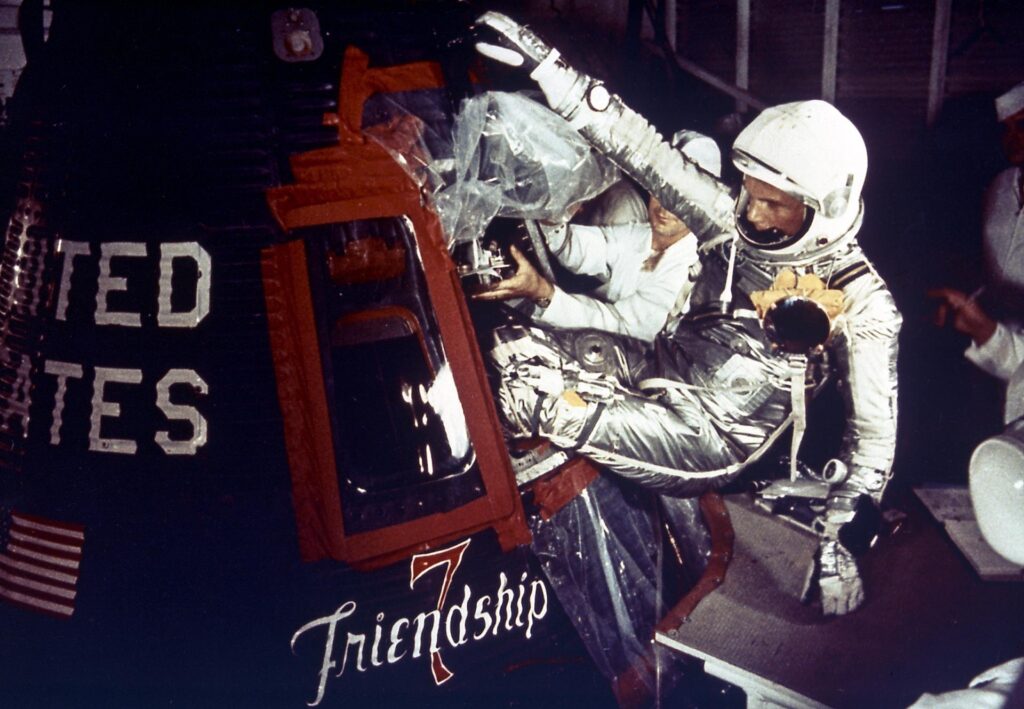
Mercury-Atlas 6 (Friendship 7): John Glenn Orbits Earth
Launch Date: February 20, 1962 · Rocket: Mercury-Atlas · Crew: John Glenn (Pilot) · Flight Duration: 4 hours, 55 minutes · Mercury-Atlas 6 launch details
John Glenn’s Friendship 7 mission marked one of the most significant achievements in American spaceflight history. On February 20, 1962, Glenn became the first American to orbit Earth, completing three revolutions around the planet aboard a Mercury-Atlas spacecraft. Throughout the mission, Glenn conducted visual observations, monitored his physical condition, and operated the capsule’s control systems. He also reported seeing small, glowing particles outside his window, which were later understood to be ice crystals released from the spacecraft.
A potentially serious concern arose when telemetry suggested that the spacecraft’s landing bag might have deployed prematurely, raising questions about whether the heat shield remained secure. Mission controllers instructed Glenn to retain the retrorocket package during reentry as a precaution. The indication was later determined to be false. Glenn returned safely and received a national hero’s welcome. Decades later, he returned to orbit aboard Space Shuttle Discovery in 1998 at age 77.
Mercury-Atlas 7 (Aurora 7): Scientific Research in Orbit
Launch Date: May 24, 1962 · Rocket: Mercury-Atlas · Crew: Scott Carpenter (Pilot) · Flight Duration: 4 hours, 56 minutes · Mercury-Atlas 7 launch details
Scott Carpenter’s Aurora 7 mission placed greater emphasis on scientific observations and how astronauts could perform research in orbit. During his three-orbit flight, Carpenter studied Earth’s atmosphere, photographed natural phenomena, and experimented with spacecraft positioning and maneuvering in weightlessness. He also investigated the mysterious particles Glenn had reported during Friendship 7, helping researchers better understand their origin.
Although the scientific objectives were largely accomplished, Carpenter encountered difficulties while preparing for reentry. A combination of spacecraft orientation issues, delayed retrorocket firing, and other factors caused Aurora 7 to land approximately 250 miles beyond its intended recovery area. Carpenter survived the splashdown and waited in a life raft until rescuers reached him. The mission demonstrated both the potential for scientific research in space and the importance of precise navigation, fuel management, and reentry preparation.
Mercury-Atlas 8 (Sigma 7): A Textbook Engineering Flight
Launch Date: October 3, 1962 · Rocket: Mercury-Atlas · Crew: Wally Schirra (Pilot) · Flight Duration: 9 hours, 13 minutes · Mercury-Atlas 8 launch details
Walter “Wally” Schirra piloted Sigma 7 on a six-orbit mission focused primarily on spacecraft efficiency, engineering performance, and precise flight operations. Schirra deliberately conserved fuel and evaluated how effectively the spacecraft could operate in different control modes, including periods of drifting flight. His disciplined approach allowed engineers to collect valuable information about the reliability and efficiency of Mercury’s automated and manual control systems.
The mission concluded with an exceptionally accurate splashdown in the Pacific Ocean, demonstrating improvements in reentry targeting and recovery planning. Sigma 7 became known as a textbook flight because of its smooth execution and the successful completion of its engineering objectives. Schirra later became the only astronaut to fly in all three of NASA’s early crewed programs: Mercury, Gemini, and Apollo.
Mercury-Atlas 9 (Faith 7): The Final Mercury Mission
Launch Date: May 15, 1963 · Rocket: Mercury-Atlas · Crew: Gordon Cooper (Pilot) · Flight Duration: 34 hours, 19 minutes · Mercury-Atlas 9 launch details
Project Mercury concluded with Gordon Cooper’s Faith 7 mission, the program’s most demanding endurance flight. Launching on May 15, 1963, Cooper completed 22 orbits around Earth during a journey lasting more than 34 hours. It was the first American spaceflight to exceed 24 hours and provided important information about extended exposure to weightlessness. Cooper conducted experiments involving radiation, Earth photography, visual observations, and the tracking of objects in space. He also demonstrated that an astronaut could eat, sleep, and continue functioning during a longer mission.
Near the end of the flight, electrical problems disabled parts of the spacecraft’s automatic control system. Cooper relied on manual procedures, using visual references and his wristwatch to orient the capsule and prepare for reentry. His successful return highlighted the value of astronaut training and the ability to respond to technical failures. Faith 7 was also the final solo orbital mission launched by NASA. With Mercury’s primary objectives accomplished, the agency shifted its attention to spacecraft carrying multiple astronauts.
Project Mercury Launch Summary: Quick Reference
The following table highlights the six crewed Mercury missions, their launch vehicles, flight durations, and most important accomplishments.
| Mission | Launch Date | Rocket | Flight Type | Duration | Key Milestone |
|---|---|---|---|---|---|
| Mercury-Redstone 3 | May 5, 1961 | Redstone | Suborbital | 15m 22s | First American in space |
| Mercury-Redstone 4 | Jul 21, 1961 | Redstone | Suborbital | 15m 37s | Second U.S. human spaceflight |
| Mercury-Atlas 6 | Feb 20, 1962 | Atlas D | Orbital (3) | 4h 55m | First American in orbit |
| Mercury-Atlas 7 | May 24, 1962 | Atlas D | Orbital (3) | 4h 56m | Scientific research in orbit |
| Mercury-Atlas 8 | Oct 3, 1962 | Atlas D | Orbital (6) | 9h 13m | Systems evaluation |
| Mercury-Atlas 9 | May 15, 1963 | Atlas D | Orbital (22) | 34h 19m | First U.S. flight over 24 hours |
How Project Mercury Prepared NASA for Gemini and Apollo
Project Mercury’s importance extended far beyond the six astronauts who flew its missions. The program established the fundamental knowledge and operational experience needed to make more ambitious space exploration possible. Mercury confirmed that humans could function in orbit, operate spacecraft controls, perform experiments, and survive the physical demands of returning through Earth’s atmosphere. Engineers also gained practical experience designing life-support systems, improving launch reliability, communicating with astronauts, and coordinating spacecraft recovery.
However, traveling to the Moon required capabilities that Mercury’s single-person spacecraft could not provide. NASA addressed those challenges through Project Gemini, which introduced two-person crews and developed essential techniques such as orbital rendezvous, docking, spacewalks, and extended-duration missions. These accomplishments prepared NASA for the Apollo program, which ultimately achieved the first human Moon landing in July 1969. Mercury had proven that human spaceflight was possible. Gemini developed the techniques needed for more complex operations, and Apollo brought those lessons together to accomplish a goal that had once seemed beyond reach.
Project Mercury Rocket Launches and Their Legacy FAQ
What was Project Mercury?
Project Mercury was NASA’s first human spaceflight program, operating from 1958 to 1963. It was developed to demonstrate that humans could travel into space, function in orbit, and return safely to Earth.
How many crewed Project Mercury missions were there?
There were six crewed Mercury missions between May 1961 and May 1963. Two were suborbital flights aboard Redstone rockets, while four reached Earth orbit using Atlas rockets.
Who was the first American astronaut in space?
Alan Shepard became the first American in space on May 5, 1961, aboard Freedom 7. His suborbital flight lasted approximately 15 minutes.
Who was the first American to orbit Earth?
John Glenn became the first American to orbit Earth on February 20, 1962, aboard Friendship 7, completing three orbits during the Mercury-Atlas 6 mission.
What rockets were used during Project Mercury?
NASA used Little Joe rockets for early spacecraft and escape-system testing, Mercury-Redstone rockets for crewed suborbital flights, and Mercury-Atlas rockets for crewed orbital missions.
What was the longest Project Mercury mission?
Mercury-Atlas 9, piloted by Gordon Cooper, was the longest mission. Faith 7 completed 22 orbits during a flight lasting 34 hours, 19 minutes, and 49 seconds.
Why did Project Mercury end?
Project Mercury concluded in 1963 after NASA successfully completed its primary objectives. The agency then focused on Project Gemini, which would develop the additional techniques required for lunar exploration.
Where did Project Mercury launches take place?
All six crewed Project Mercury missions launched from Cape Canaveral, Florida. The Redstone flights used Launch Complex 5, while the Atlas missions launched from Launch Complex 14. Several early Little Joe test missions launched from Wallops Island, Virginia.
The Lasting Legacy of Project Mercury
Project Mercury marked the beginning of American human space exploration, transforming spaceflight from an experimental concept into a demonstrated capability. Its astronauts helped establish a new era of exploration, while NASA’s engineers, scientists, and mission controllers developed systems and procedures that would influence decades of future missions. From Alan Shepard’s brief journey beyond Earth’s atmosphere to Gordon Cooper’s 34-hour orbital flight, Mercury demonstrated how rapidly space exploration could advance through testing, innovation, and experience.
More than six decades later, the program remains one of the most significant chapters in NASA history, representing the first major steps toward the Moon and beyond. To explore more historic rocket launches, spacecraft missions, and upcoming launches, visit Space Launch Schedule.
Want to follow the next chapter of human spaceflight? Visit Space Launch Schedule to explore launch schedules, mission details, and upcoming rocket launches around the world.