
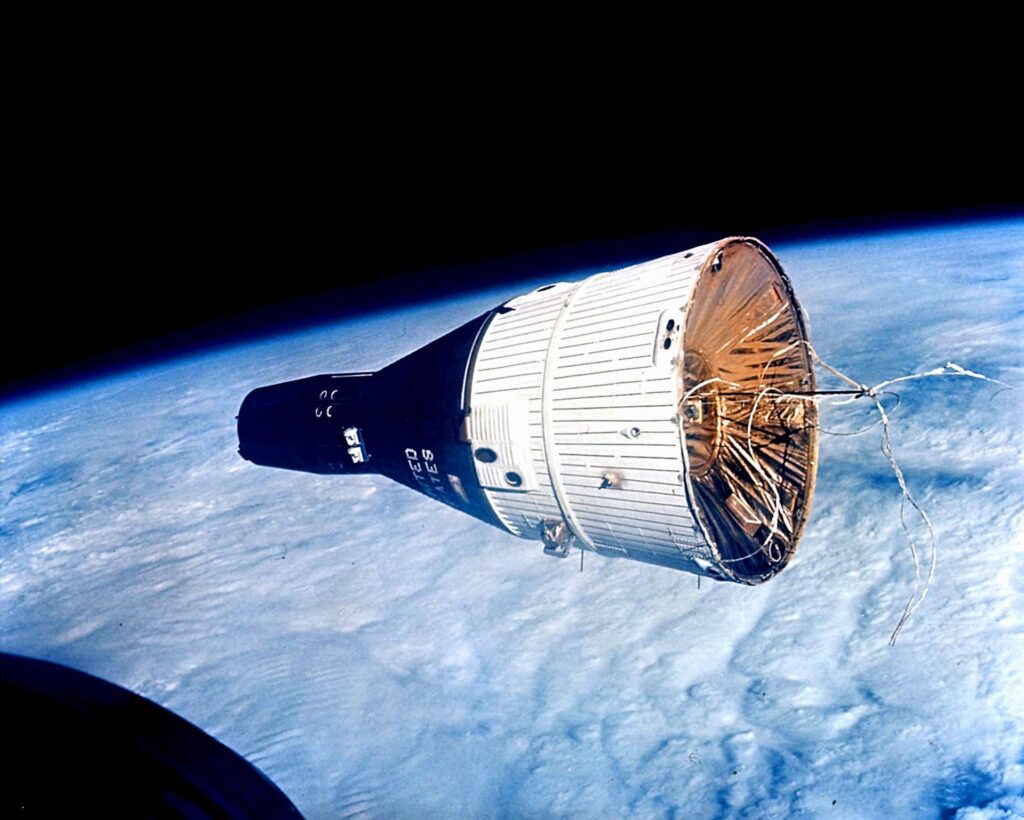
Complete Guide to Project Gemini Rocket Launches: History, Crew, and Space Firsts
Last updated: September 30, 2026.
The Purpose of Project Gemini
Project Gemini was designed as a training and development program for the Apollo missions that would follow. Unlike Mercury, which carried one astronaut, the Gemini spacecraft carried two crew members. This allowed NASA to conduct more complicated missions and divide responsibilities between the command pilot and pilot.
One of Gemini’s most important objectives was long-duration spaceflight. NASA needed to know whether astronauts could remain healthy, alert, and productive during missions lasting a week or longer. Because a round-trip journey to the Moon would take several days, doctors and engineers needed a better understanding of how the human body would respond to extended periods of weightlessness.
Orbital rendezvous and docking were equally important. NASA had to learn how one spacecraft could locate another in orbit, approach it safely, and connect with it. These techniques would later become essential during Apollo missions. Spacewalking, or extravehicular activity, was another major focus. Early EVAs showed that working outside a spacecraft in weightlessness was much more difficult than expected, leading NASA to improve restraints, handholds, equipment, and procedures throughout the Gemini program.
The Titan II GLV Rocket
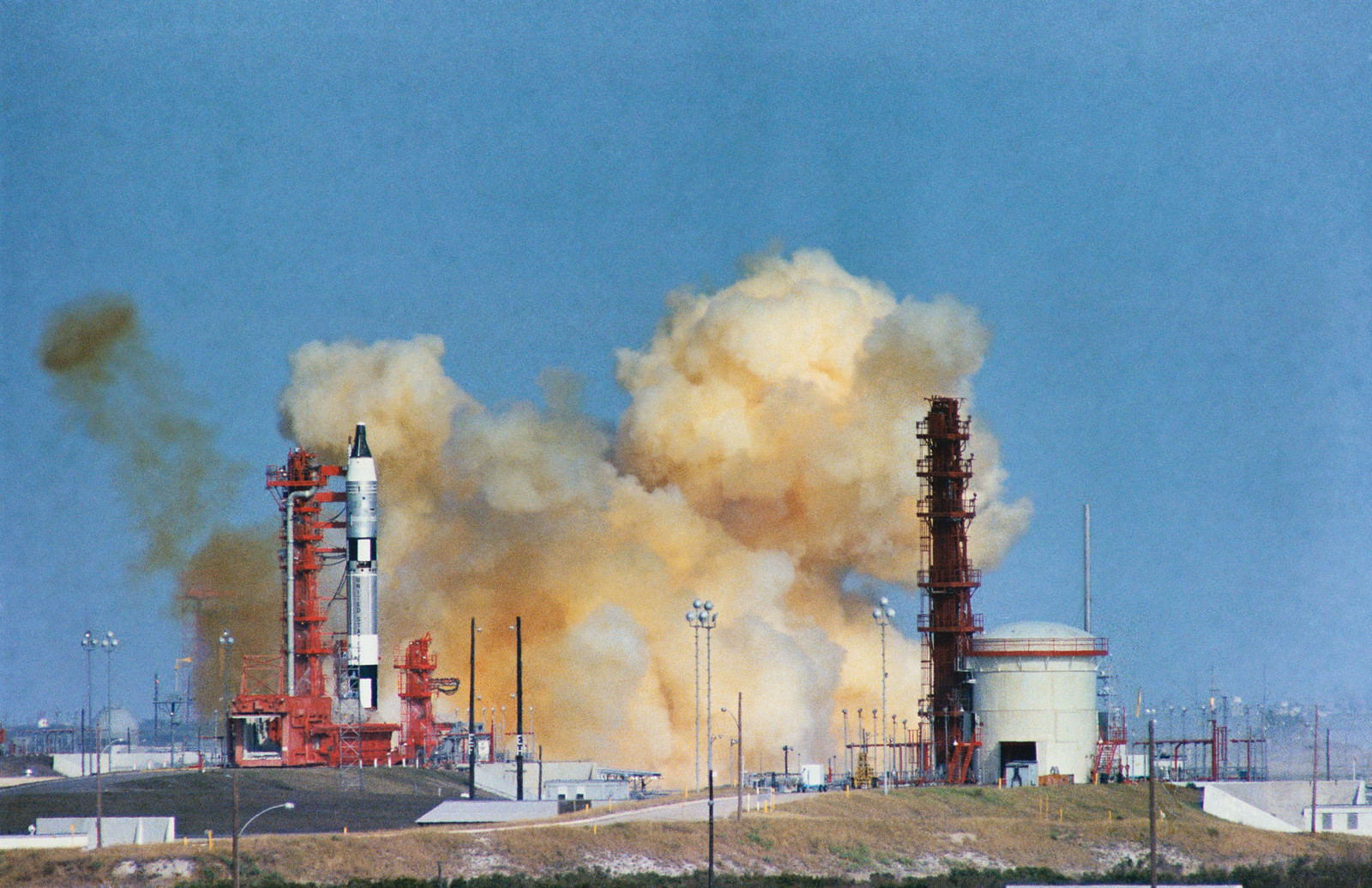
The Titan II GLV was the launch vehicle used for every Gemini mission. Developed from the Titan II missile, it underwent substantial modifications before NASA considered it suitable for human spaceflight. The two-stage rocket used liquid propellants and generated enough thrust to place the heavier Gemini spacecraft into low Earth orbit. NASA modified the launch vehicle to improve reliability, reduce dangerous vibrations, add safety systems, and remove unnecessary military hardware. These changes transformed the Titan II from a dangerous machine into a human-rated launch vehicle. Its performance throughout the Gemini program made it one of the most important rockets of the early Space Age.
Project Gemini Flight Timeline & Missions
Gemini I: The First Project Gemini Test Flight
Gemini 1 launched on April 8, 1964, and served as the first major test of the Gemini spacecraft and Titan II launch vehicle combination. The mission carried no astronauts. NASA used the flight to determine whether the spacecraft and rocket could operate together successfully during launch. Engineers were particularly interested in the structural performance of the spacecraft because Gemini was larger and heavier than Mercury. They needed to confirm that it could withstand intense vibration and aerodynamic forces, before placing human lives at risk.
Gemini 1 successfully reached orbit and completed its planned objectives. The spacecraft was not intended to be recovered and remained in orbit for several days before reentering Earth’s atmosphere. Although it received less public attention than later missions, Gemini 1 was an essential step toward crewed flight.
Gemini II: Testing Reentry Systems
Gemini 2 launched on January 19, 1965, and was the second uncrewed test flight. Unlike Gemini 1, the mission followed a suborbital trajectory rather than completing a full orbit of Earth. Its primary purpose was to test the Gemini spacecraft’s heat shield and reentry systems. Returning from space exposes a spacecraft to extreme temperatures, so NASA needed to verify that the heat shield could protect a future crew. Gemini 2 successfully survived reentry and splashed down in the Atlantic Ocean, where it was recovered. With both uncrewed test flights completed, NASA was ready to begin crewed Gemini missions.
Gemini III: The First Crewed Gemini Mission


The first crewed Gemini mission launched on March 23, 1965. Gemini 3 carried veteran astronaut Virgil “Gus” Grissom as command pilot and John Young as pilot. The spacecraft was nicknamed Molly Brown, a reference to the Broadway musical The Unsinkable Molly Brown. The nickname also humorously referred to Grissom’s earlier Mercury spacecraft, Liberty Bell 7, which had sunk after splashdown. Gemini 3 demonstrated that astronauts could actively maneuver their spacecraft in orbit. Grissom and Young changed their orbital path using Gemini’s propulsion system, an important capability for future rendezvous and docking missions.
The crew completed three Earth orbits and tested several spacecraft systems during a mission lasting just under five hours.
Gemini IV: America’s First Spacewalk


Gemini 4 launched on June 3, 1965, carrying James McDivitt and Edward H. White II. The four-day mission became famous because White became the first American astronaut to walk in space. White exited the spacecraft while connected to Gemini by a tether and used a handheld maneuvering device to move around outside. His EVA lasted approximately 23 minutes and produced some of the most recognizable images of the early American space program. The mission proved that astronauts could operate outside a spacecraft, while also revealing challenges that future crews would face during EVAs. Gemini 4 also attempted to rendezvous with the upper stage of its Titan II rocket. Although unsuccessful, the attempt provided valuable experience with orbital rendezvous.
Gemini V: Proving Astronauts Could Stay in Space
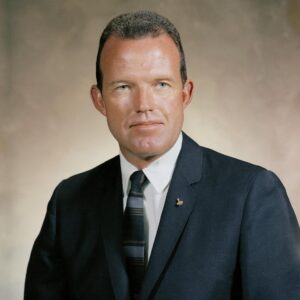

Gemini 5 launched on August 21, 1965, carrying Gordon Cooper and Pete Conrad. The mission lasted nearly eight days, approximately the amount of time NASA expected a lunar mission could require. The main objective was endurance. NASA wanted to determine whether astronauts could remain healthy and productive during an extended period of weightlessness. Cooper and Conrad spent almost eight days inside the confined Gemini spacecraft while scientists monitored their condition. Gemini 5 also demonstrated the use of fuel cells to generate electricity. Fuel cells could provide longer-lasting power than conventional batteries, making them especially useful for extended missions. The successful flight gave NASA greater confidence that astronauts could remain in space long enough to complete a journey to the Moon and back.
Gemini VI: The First Crewed Space Rendezvous


Gemini 6A launched on December 15, 1965, carrying Wally Schirra and Tom Stafford. Its main objective was to rendezvous with Gemini 7, which was already orbiting Earth.
After launch, Schirra and Stafford carefully changed their orbit until they approached Gemini 7. The spacecraft eventually maneuvered within only a few feet of each other, marking the first successful rendezvous between two crewed spacecraft in orbit. The achievement demonstrated that astronauts could locate and safely approach another spacecraft while both vehicles traveled at orbital speed, proving an essential concept for future missions.
Gemini VII: Nearly Two Weeks in Space

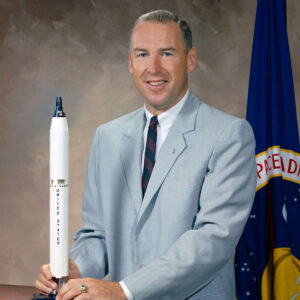
Gemini VII launched on December 4, 1965, with Frank Borman and Jim Lovell aboard. The astronauts spent nearly 14 days in orbit, establishing an important endurance record at the time. Movement was limited, personal space was minimal, and the astronauts had to adapt to an extended period in weightlessness. Despite the challenges, Borman and Lovell successfully demonstrated that astronauts could remain in space longer than the expected duration of an Apollo lunar mission. Gemini 7 also served as the rendezvous target for Gemini 6A, closely linking the two missions in the history of Project Gemini.
Gemini VIII: The First Docking in Space


Gemini VIII launched on March 16, 1966, carrying Neil Armstrong and David Scott.
The crew successfully rendezvoused with an Agena Target Vehicle and completed the first docking between two spacecraft in orbit. Soon afterward, however, the combined vehicles began rolling unexpectedly. Armstrong and Scott initially suspected a problem with the Agena and undocked, but Gemini began spinning even faster because one of the spacecraft’s thrusters had become stuck in the firing position. Armstrong activated the reentry control system and successfully stopped the rotation. However, because the emergency system had been used, the mission had to end early. Despite the emergency, Gemini VIII successfully demonstrated that orbital docking was possible.
Gemini IX: Lessons From a Difficult Spacewalk

Gemini IXA launched on June 3, 1966, carrying Thomas Stafford and Gene Cernan.
The crew attempted to dock with an Augmented Target Docking Adapter, but the target vehicle’s protective shroud failed to open correctly. Astronauts described its appearance as resembling an “angry alligator,” and docking was impossible. Cernan also performed a demanding EVA. Without sufficient handholds and restraints, he struggled to control his movements and became overheated and exhausted. The difficulties experienced during Gemini 9A helped NASA understand that astronauts needed better restraints, equipment, and carefully planned procedures to work effectively outside a spacecraft.
Gemini X: Rendezvous With Two Targets

Gemini 10 launched on July 18, 1966, carrying John Young and Michael Collins.
Young and Collins successfully rendezvoused and docked with an Agena Target Vehicle. They then used the Agena engine to raise their orbit and travel toward a second Agena vehicle that had remained in orbit after the Gemini 8 mission. The ability to move between multiple target vehicles demonstrated how rapidly NASA’s orbital navigation and rendezvous techniques had advanced. Collins also performed EVAs during the mission, helping NASA continue refining procedures for working outside spacecraft.
Gemini XI: Reaching a Record Altitude

Gemini XI launched on September 12, 1966, carrying Pete Conrad and Richard Gordon.
The crew completed an exceptionally fast rendezvous with an Agena Target Vehicle and docked with it during their first orbit. They then used the Agena engine to raise their orbit significantly.
Gemini XI eventually reached an altitude of approximately 853 miles, or 1,374 kilometers, above Earth, establishing a crewed Earth-orbit altitude record. The mission demonstrated that astronauts could safely operate at much higher altitudes than typical low Earth orbit flights.
Gemini XI also experimented with artificial gravity by connecting Gemini and the Agena with a tether and allowing the two vehicles to rotate slowly around one another.
Gemini XII: Mastering Extravehicular Activity

The final mission of Project Gemini was Gemini 12, which launched on November 11, 1966. The crew consisted of Jim Lovell and Buzz Aldrin. One of the mission’s main goals was solving the problems astronauts had encountered during earlier spacewalks. By this point, NASA understood the importance of effective handholds, footholds, restraints, and carefully planned procedures.
Aldrin trained extensively underwater before the mission, using underwater exercises to simulate EVA movements. During Gemini 12, he performed several spacewalks using the improved methods. The results were significantly better than earlier attempts. Aldrin demonstrated that astronauts could work effectively outside a spacecraft without becoming dangerously exhausted. The mission also completed rendezvous and docking activities with an Agena Target Vehicle. By the time Gemini 12 returned to Earth, NASA had achieved nearly every major objective established for Project Gemini.
Legacy and Impact of Project Gemini
How Project Gemini Prepared NASA for Apollo
Project Gemini dramatically expanded NASA’s human spaceflight capabilities in only a few years. At the beginning of the program, NASA had never docked two spacecraft in orbit, had limited experience with long-duration missions, and was still learning how astronauts could work effectively outside a spacecraft. By the end of Gemini, astronauts had demonstrated long-duration spaceflight, orbital rendezvous, docking, spacewalking, high-altitude operations, advanced maneuvering, and controlled reentry.
These abilities became essential during Apollo. Apollo missions used a strategy known as lunar orbit rendezvous. The command and service module remained in lunar orbit while two astronauts descended to the surface aboard the lunar module. After leaving the Moon, the lunar module had to rendezvous and dock with the command module before the crew could return to Earth. Gemini gave NASA practical experience with the exact types of operations required to make that mission architecture possible.
Project Gemini’s Lasting Legacy
Project Gemini never traveled to the Moon, but its contribution to the Apollo program was enormous. It allowed NASA to develop, test, and refine the procedures astronauts would later rely on during lunar missions. Just as importantly, Gemini gave future Apollo astronauts valuable experience before they traveled far beyond Earth orbit.
Project Gemini ultimately served as NASA’s proving ground for the technologies, procedures, and crews that made the Apollo Moon landings possible.
For more information on both historic and modern spaceflight, Space Launch Schedule provides launch information, mission details, rocket profiles, and schedules for upcoming missions around the world. From the historic Titan II GLV to today’s modern launch vehicles, the evolution of spaceflight can be traced through the missions that continue to push exploration forward.
Project Gemini Rocket Launches and their Legacy FAQ
What was Project Gemini and why was it important?
Project Gemini was NASA’s second human spaceflight program, running from 1964 to 1966 as the crucial bridge between Project Mercury and the Apollo Moon program. Across 12 missions — two uncrewed test flights and ten crewed flights — Gemini developed the long-duration spaceflight, orbital rendezvous and docking, and spacewalking techniques that Apollo would need to reach the Moon. Explore the full mission list in our 1960s launch schedule.
What rocket launched the Project Gemini missions?
Every Gemini spacecraft flew on the Titan II Gemini Launch Vehicle (Titan II GLV), a two-stage liquid-fueled rocket adapted from the U.S. Air Force Titan II ballistic missile. NASA modified the missile for human spaceflight by improving reliability, dampening dangerous vibrations, adding safety systems, and removing unnecessary military hardware. See how the rocket performed on the Gemini VII mission page.
What were Project Gemini’s greatest achievements?
Gemini proved that astronauts could live and work in weightlessness for up to two weeks on Gemini VII, mastered rendezvous and docking between two spacecraft, and flew America’s first spacewalk when Ed White stepped outside Gemini IV in 1965. These space firsts — along with precision splashdown and long-duration flight records — directly enabled Apollo’s lunar missions. Start with the first Gemini test flight to trace the program from its beginning.
Which famous astronauts flew on Project Gemini?
Gemini’s crews read like a who’s who of spaceflight history: Neil Armstrong, Buzz Aldrin, Jim Lovell, Gus Grissom, John Young, Michael Collins, Gene Cernan, Ed White, Frank Borman, and Pete Conrad all flew Gemini missions before many went on to Apollo. Six of the twelve moonwalkers first flew in space during the Gemini program. Read their stories in our Neil Armstrong and Buzz Aldrin astronaut profiles.
How did Project Gemini help Apollo reach the Moon?
A trip to the Moon required skills Mercury never demonstrated: keeping two astronauts healthy and productive for a week or more, finding and docking with another spacecraft in orbit, and working outside the capsule in a spacesuit. Gemini rehearsed every one of these in Earth orbit, with missions like Gemini VIII’s first docking and the 14-day Gemini VII endurance flight. Without Gemini’s hard-won lessons, Apollo could not have attempted a lunar landing. Relive the era in our 1960s launch schedule archive.