

Historic Rocket Launches That Changed Space Exploration Forever
Last updated: September 30, 2026.
Rocket launches have long captured humanity’s imagination, marking many monumental milestones in our journey to explore the universe. From the early stages of the Space Age to the most recent advancements and discoveries in commercial spaceflight, these moments represent the triumphs of ingenuity and collaboration. This article will cover some of the most influential historic rocket launches that have transformed the space industry, and includes some fascinating fun facts and trivia!
This article will cover some of the most historic rocket launches that have transformed the space industry, from Sputnik to modern commercial spaceflight.
The Early Days of Space Exploration

Sputnik 1 (1957): The Dawn of the Space Age
Sputnik 1’s launch in 1957 is considered one of the most significant historic rocket launches, sparking the Space Race and the creation of NASA. On October 4, 1957, the Soviet Union launched Sputnik 1, the first artificial satellite into orbit. This basketball-sized satellite that broadcasted simple radio pulses signified the beginnings of space exploration. It also demonstrated the beginnings of the USSR’s technological prowess, sparking fears of future domination into the United States and other countries. Following the launch of Sputnik, the United States established the National Aeronautics and Space Administration in 1958, which led to significant advancements in scientific education through programs like the National Defense Education Act. Not only limited to the United States, Sputnik’s success ignited the Space Race and encouraged nations globally to invest in space technology.
Fun fact: Sputnik’s radio signals were picked up by amateur radio operators across the globe!

Yuri Gagarin (1961): The First Man in Space
April 12, 1961, marked a historic day for Yuri Gagarin as he became the first human to journey into space aboard the Soviet spacecraft Vostok 1. He orbited the Earth for 108 minutes marking a significant milestone in human space exploration. Gagarin’s achievements pushed the USSR further ahead in the Space Race, as they broadcasted their ability to send and safely return a human from space. He became an international hero and symbol of Soviet success during the Cold War, inspiring millions to believe in the potential of human spaceflight.
Fun fact: Gagarin famously said, “I see Earth! It is so beautiful!” during his historic flight.

Alan Shepard (1961): The First American in Space
Only a few weeks after Gagarin’s flight, on May 5, 1961, Alan Shepard became the first American to journey into space aboard Freedom 7. His 15-minute suborbital flight demonstrated NASA’s ability to compete in the Space Race and set the stage for future crewed missions. Shepard’s flight was part of NASA’s Project Mercury and aimed at understanding the challenges of human spaceflight.
Fun fact: Shepard later walked on the moon during the Apollo 14 missions and even hit two golf balls on the lunar surface!
The Apollo Era: Humanity Reaches the Moon
The Apollo missions feature some of the most celebrated historic rocket launches, including Apollo 11’s first moon landing. The Apollo program was a landmark series of missions conducted by NASA between 1961 and 1972, designed to achieve human space exploration milestones. Some of their main goals were landing humans on the moon and returning them safely back to Earth.

Apollo 7 (1968): 11-day Earth-orbital test flight
After the tragic Apollo 1 fire, Apollo 7 restored confidence in NASA’s capabilities. The mission’s three-man crew successfully tested the redesigned spacecraft in Earth’s orbit over the course of 11 days, proving that it was prepared for more ambitious lunar missions.
Fun fact: Apollo 7 was the first mission to broadcast live TV from space, giving millions of viewers a glimpse into life aboard the spacecraft.
Apollo 8 (1968): First Humans to Orbit the Moon
Apollo 8 marked the first time in which humans orbited the moon. Additionally, astronauts Frank Borman, James Lovell, and William Anders captured the famous Earthrise photo, providing an interesting new perspective of our planet.
Apollo 11 (1969): “One Small Step for Man”
The Apollo 11 mission was a monumental achievement, landing humans on the moon for the first time on July 20, 1969. Neil Armstrong and Buzz Aldrin made history by walking on the lunar surface, while Michael Collins orbited above in the command module.
Fun Fact: A piece of the Wright Brothers’ airplane was aboard the Apollo 11 spacecraft, symbolizing the journey from powered flight to space exploration.
Apollo 12 (1969): Precision Landing on the Moon
Apollo 12, launched on November 14, 1969, was NASA’s second lunar landing mission. Commanded by Charles “Pete” Conrad, with Richard F. Gordon orbiting in the command module and Alan L. Bean joining Conrad on the lunar surface, the mission demonstrated improved precision in landing on the moon. The spacecraft touched down approximately 200 meters from the Surveyor 3 probe, a robotic lander that had landed only two years earlier.
Apollo 13 (1970): The Successful Failure
Apollo 13, launched on April 11, 1970, was intended to be the third lunar landing. However, a catastrophic oxygen tank explosion on the service module two days into the mission forced the crew to abort the landing and focus on survival. The astronauts on board were Jim Lovell, Jack Swigert, and Fred Haise, who worked tirelessly, along with NASA engineers, to use the lunar module as the “lifeboat” to conserve power and oxygen. Finally, after traveling 400,000 kilometers around the Moon, the crew successfully re-entered Earth’s atmosphere on April 17, 1970, landing safely in the Pacific Ocean.
Apollo 15 (1971): The Lunar Rover’s Debut
Apollo 15 marked the beginning of NASA’s mission that focused on extended lunar exploration. Commanded by David Scott, with Alfred Worden in the command module and James Irwin on the lunar surface, it introduced various new capabilities and conducted groundbreaking science. Together, the crew collected approximately 77 kilograms of lunar samples, including the “Genesis Rock,” which is a piece of anorthosite believed to be part of the Moon’s original crust.
Apollo 17 (1972): The Final Lunar Mission
The last Apollo mission, Apollo 17, launched on December 7, 1972. Commanded by Eugene Cernan, with Harrison Schmitt (a geologist and the first scientist-astronaut) aboard, the mission conducted extensive lunar surface research. It also captured the famous Blue Marble photo of Earth, and provided significant insights into the history of the Moon.
The Shuttle Era: Reusable Rockets
The Space Shuttle program contributed several historic rocket launches, introducing reusable spacecraft and expanding human presence in orbit. NASA’s Space Shuttle program, officially known as the Space Transportation System (STS), revolutionized space exploration by introducing reusable spacecraft capable of carrying astronauts and payloads into orbit. Active from 1981 to 2011, the program conducted 135 missions, contributing to the construction of the International Space Station (ISS), deploying scientific satellites, and enabling unprecedented scientific research. Below are the iconic shuttles that defined the era and their remarkable missions.

Columbia (1981): The First Space Shuttle Launch
Columbia was the first shuttle to launch into space, debuting on April 12, 1981, with STS-1. It marked the first time a reusable spacecraft orbited Earth and returned safely, showcasing the potential for routine spaceflight. In 1993, Columbia carried Spacelab, a modular research laboratory, enabling significant scientific experiments in microgravity.
Atlantis (1985): Workhorse of the Shuttle Program
Atlantis, the fourth shuttle to join the fleet, flew 33 missions and was heavily involved in constructing the ISS and conducting interplanetary science missions. In 1989, it launched the Galileo spacecraft to study Jupiter, and delivered many valuable components to the ISS, including the U.S. Destiny Laboratory Module. Its final mission was in 2011 and marked the end of the Space Shuttle program.
Challenger (1986): Tragedy and Lessons Learned
The Challenger disaster on January 28, 1986, was a somber moment in space exploration history. As the second shuttle to join NASA’s fleet, conducting numerous missions that expanded the scope of human spaceflight, it underscored the importance of safety protocols and engineering checks, leading to significant improvements in NASA’s processes. It carried the first American woman (Sally Ride) and the first African American astronaut (Guion Bluford) into space and also conducted missions involving satellite deployments and Earth observation experiments. On January 28, 1986, Challenger exploded 73 seconds after liftoff during STS-51-L, killing all seven crew members, including school teacher Christa McAuliffe, who was set to be the first civilian in space. The disaster shocked the world and led to a 32-month suspension of shuttle flights.
Endeavour (1992): The Newest Shuttle
Endeavour was built as a replacement for Challenger and incorporated several design improvements. Despite its late start, Endeavour played a vital role in science and exploration. In 1993, it conducted the first servicing mission to the Hubble Space Telescope, correcting its flawed optics. Additionally, it helped build the ISS by delivering critical components like the Unity and Tranquility modules. Endeavour carried the Alpha Magnetic Spectrometer, a particle physics experiment, to the ISS on its final mission in 2011.
Columbia (2003): A Heartbreaking Loss
On February 1, 2003, the Space Shuttle Columbia disintegrated during reentry, killing all seven crew members. The disaster was caused by damage to the shuttle’s thermal protection system during launch. Like the Challenger tragedy, the Columbia disaster led to extensive safety reforms in NASA’s shuttle program.
The Space Shuttle program’s legacy is a testament to human ingenuity, resilience, and our enduring desire to explore the cosmos. From its triumphs to its tragedies, the shuttle era reshaped humanity’s relationship with space.
Space Stations: Mir and Beyond

Mir Space Station (1986–2001): A Groundbreaking Milestone
The Soviet Union’s Mir space station, operational from 1986 to 2001, was the first modular space station and served as a critical precursor to the International Space Station (ISS). With its modular design, Mir allowed for expansion over time, enabling increasingly complex scientific experiments and long-term human habitation in space. Though initially a Soviet endeavor, Mir later became a symbol of post-Cold War cooperation, hosting astronauts from the United States and other nations through the Shuttle-Mir Program, and laying the groundwork for partnerships that define the ISS. Despite mechanical challenges, such as onboard fires and power failures, Mir proved humanity’s ability to maintain a long-term presence in space, holding the record for continuous human habitation in orbit until the ISS surpassed it.
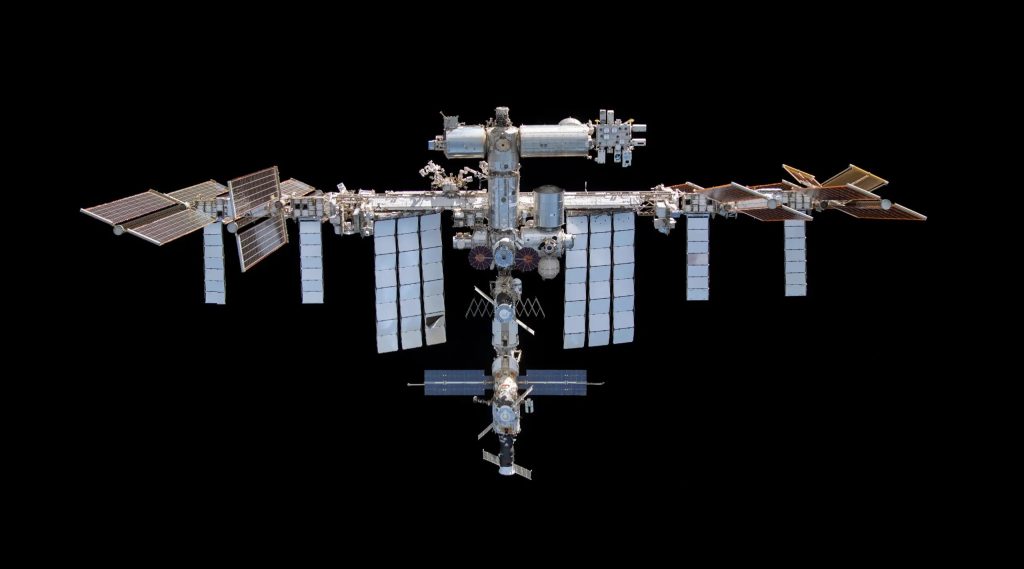
International Space Station (ISS): A Global Achievement
Launched in 1998 and still operational, the ISS is the most ambitious international space project to date. It represents collaboration between NASA, Roscosmos, ESA (European Space Agency), JAXA (Japan Aerospace Exploration Agency), and CSA (Canadian Space Agency), along with contributions from other nations. Built through a series of assembly missions involving multiple space agencies, the ISS spans the size of a football field and orbits Earth at an altitude of approximately 400 km. The ISS is a hub for cutting-edge research in medicine, technology, and fundamental science. It has facilitated breakthroughs in cancer research, materials science, and the study of climate change.

The Chinese Space Station: Tiangong (2022–Present)
Built with a modular design, Tiangong includes core modules like Tianhe and lab modules such as Wentian and Mengtian, providing facilities for advanced scientific experiments. Tiangong focuses on life sciences, astronomy, and space technology, conducting experiments in microgravity and Earth observation. While primarily a Chinese effort, Tiangong has opened opportunities for international scientific collaborations, with several countries contributing experiments and payloads. China plans to expand Tiangong by adding additional modules and eventually opening it to space tourists.
The Rise of Global Space Programs
Russian Space Program
Russia continues to be a major player in space exploration, building on its legacy from the Soviet era. The Soyuz spacecraft remains a reliable workhorse, transporting astronauts and cargo to the ISS for decades. Currently, Russia is developing the Angara rocket family, designed for heavier payloads, and has announced plans for its own independent space station to succeed the ISS by the late 2020s.
View the Russian space launch schedule
Chinese Space Program
China has rapidly emerged as a space superpower, achieving major milestones in recent years. The Chang’e program has landed rovers on the Moon, including the far side, and returned lunar samples to Earth for the first time since the 1970s. Additionally, the Tianwen-1 mission placed an orbiter, lander, and rover on Mars in 2021, showcasing China’s advanced capabilities. Beyond Tiangong, China is developing the Long March 9 super-heavy rocket for crewed lunar and Mars missions, aiming to establish a permanent lunar base by the 2030s.
View the Chinese space launch schedule
India Space Program
Recently, the Indian Space Research Organisation (ISRO) has established itself as a leader in cost-effective space exploration. Most importantly, ISRO’s Chandrayaan-1 discovered evidence of water on the Moon, while Chandrayaan-3 successfully landed a rover on the lunar south pole in 2023. To continue their research, India aims to send its first crewed mission to space in the coming years, marking a new milestone in its ambitious plans.
View the India space launch schedule
Other Countries Space Program
Space exploration is an increasingly global effort, with many nations making significant contribution to the science. Japan’s Hayabusa missions have returned asteroid samples to Earth, while its Kibo module on the ISS is known for conducting critical experiments. Furthermore, the United Arab Emirates’ Hope Probe became the first Arab mission to reach Mars, entering orbit in 2021 in order to study the planet’s atmosphere. Finally, in Europe, the European Space Agency continues to collaborate on the International Space Station and operate various advanced space telescopes and robotic missions, including JUICE (Jupiter Icy Moon Explorer) set to study Jupiter’s many moons.
Modern Rockets and Spacecraft
Modern rockets, including SpaceX Starship and ULA’s Vulcan, continue the legacy of historic rocket launches by pushing boundaries in commercial and interplanetary spaceflight.
SpaceX: Falcon and Starship
Starship is SpaceX’s next-generation spacecraft designed for deep space exploration and colonization. It aims to carry humans to Mars, and its massive payload capacity redefines possibilities for space travel. With a height of 120 meters, Starship is the largest and most powerful rocket ever built. It features a payload capacity of over 100 metric tons and is designed for rapid reusability, significantly reducing costs. Furthermore, NASA has selected Starship for its Artemis program to land astronauts on the lunar surface. Future plans include establishing a permanent human presence on Mars and supporting planetary colonization efforts. After multiple test flights, Starship reached orbit and began deploying Starlink satellites in 2026, with Florida Starlink missions shifting from Falcon 9 to Starship.
Similarly, another major SpaceX innovation is its development of reusable rockets. First launched in 2010, the Falcon 9 rocket introduced the concept of a reusable first stage. Reusability allows SpaceX to dramatically reduce costs, making frequent and affordable space missions possible. As of 2026, some Falcon 9 boosters have flown up to 37 times.

United Launch Alliance (ULA): Delta, Atlas, and Vulcan
United Launch Alliance (ULA) is a collaboration between Boeing and Lockheed Martin, known for its reliability in launching critical government and commercial payloads. The Delta IV Heavy flew its final mission in April 2024 and is now retired after 16 heavy-lift flights. Atlas V is a versatile rocket supporting missions ranging from Mars rovers to weather satellites, now flying out its remaining manifest. ULA’s next-generation platform is the Vulcan Centaur, which debuted in January 2024 and has since flown national security missions for the U.S. Space Force. It offers increased payload capacity and cost efficiency, with BE-4 engines developed by Blue Origin.
Blue Origin: New Shepard and New Glenn
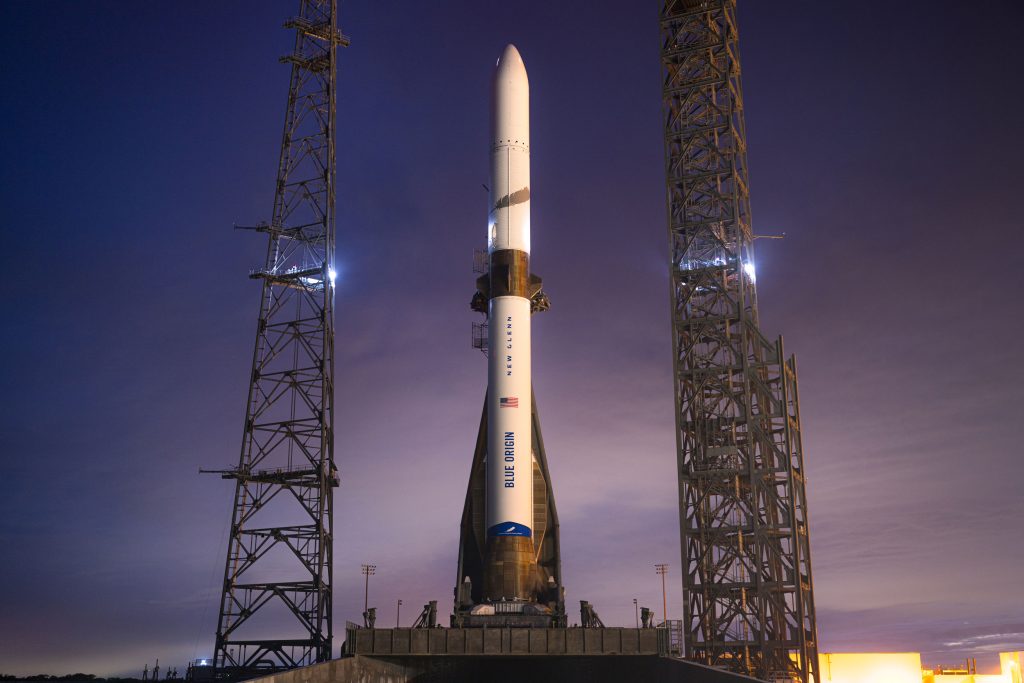
Blue Origin, originally founded by Jeff Bezos, is known for its focus on making space travel accessible and sustainable. Designed for suborbital space tourism, New Shepard carries passengers to the edge of space, offering a few minutes of weightlessness and breathtaking views of Earth. Notable passengers of New Shepard include various celebrities and private customers, significantly emphasizing the growing appeal of space tourism. Blue Origin paused New Shepard tourism flights in early 2026 to focus on developing its Blue Moon lunar lander for NASA’s Artemis program. Additionally, the massive orbital-class rocket New Glenn features a reusable first stage and is designed to launch heavy payloads into orbit and beyond. New Glenn debuted in January 2025 and has flown three orbital missions, including the first reuse of its booster in April 2026. A test-stand explosion in May 2026 destroyed a vehicle and damaged its launch pad; Blue Origin aims to return to flight before the end of 2026. It is designed to compete with SpaceX’s Falcon rockets for commercial and government contracts.
Virgin Galactic: SpaceShipTwo and Beyond
Virgin Galactic is at the forefront of commercial space tourism, offering suborbital flights to private customers. When aboard SpaceShipTwo, passengers experience several minutes of weightlessness and an unparalleled view of Earth’s curvature. Virgin Galactic retired its VSS Unity spaceplane in 2024 and is developing its next-generation Delta-class spaceplanes for a higher flight cadence, with commercial service targeted for 2027.
Firefly Aerospace: Affordable Access to Space
Firefly Aerospace focuses on small and medium payload launches with a vision of making space more accessible. Its Firefly Alpha rocket is optimized for small satellite launches, catering to growing demand from commercial and academic users. It is designed for cost efficiency and quick deployment. Firefly is developing the Eclipse medium-lift rocket (formerly known as Beta) with Northrop Grumman, targeting a first flight in 2027, and its Blue Ghost lunar lander touched down on the Moon in March 2025 under NASA’s CLPS program.

Rocket Lab: Electron and Neutron Rockets
Rocket Lab is known for specializing in small satellite launches and is a pioneer in the burgeoning small payload market. Rocket Lab’s launch pads are in New Zealand, making it the first private company to conduct orbital launches from the Southern Hemisphere. A highly reliable rocket with a capacity of 300 kg to low Earth orbit (LEO), Electron is known for its rapid deployment capabilities. Rocket Lab has also begun recovering and reusing its first stages to reduce costs. Similarly, its upcoming Neutron rocket is designed for medium-lift payloads, bridging the gap between small and large launch systems. It will support crewed missions and interplanetary exploration.

The Future of Space Exploration
Artemis marks the newest chapter in the history of rocket launches, returning humans to the Moon and paving the way for Mars exploration.

Artemis I & II (2022, 2026): Returning to the Moon
NASA’s Artemis program is a bold initiative to return humans to the Moon, establish a sustainable presence there, and prepare for future exploration of Mars. Artemis emphasizes technological advancement and global collaboration, marking a new chapter in human space exploration. The program aims to explore the lunar South Pole, a region of immense scientific and resource potential due to its water ice deposits. This area holds promise for supporting long-term human presence and as a stepping stone for interplanetary travel. Artemis also seeks to inspire a new generation by landing the first woman and the first person of color on the Moon, highlighting the program’s commitment to diversity and inclusivity. Artemis II already made history in April 2026, when four astronauts flew a 10-day crewed loop around the Moon — the first crewed deep-space mission since Apollo 17 — setting a new human distance record of 252,756 miles from Earth.
In Conclusion
From the historic rocket launches of the Apollo program to modern rockets like Starship and New Glenn, humanity continues to push the boundaries of space exploration. As global space agencies and private companies join forces, the next generation of missions promises to be even more inspiring.
Stay Updated: Want to witness the next historic rocket launch? Check out our space launch schedule and start planning your trip to view one of humanity’s greatest spectacles.
Historic Rocket Launches FAQ
What was the first rocket launch in history?
The first artificial satellite launch was Sputnik 1, launched by the Soviet Union on October 4, 1957. The basketball-sized satellite broadcast simple radio pulses — picked up by amateur radio operators worldwide — sparking the Space Race and the creation of NASA in 1958. Today’s launches continue that legacy on our rocket launch schedule.
Who was the first human in space?
Yuri Gagarin became the first human in space on April 12, 1961, orbiting Earth for 108 minutes aboard the Soviet spacecraft Vostok 1. During the flight he famously said, “I see Earth! It is so beautiful!” Weeks later, Alan Shepard became the first American in space aboard Freedom 7 on May 5, 1961.
What are the most historic rocket launches that changed space exploration?
The missions that changed everything include Sputnik 1 (1957), Vostok 1 carrying Yuri Gagarin (1961), Apollo 11’s Moon landing (1969), and the modern era of reusable rockets pioneered by SpaceX. Each marked a turning point in human spaceflight. Read more stories in our space news articles.
What was Apollo 11 and why was it historic?
Apollo 11 was NASA’s 1969 mission that landed the first astronauts on the Moon, fulfilling President Kennedy’s challenge and capping the Space Race. More than 50 years later, NASA’s Artemis program aims to return astronauts to the lunar surface. See the full journey in our Artemis program timeline.
Where can I watch historic and upcoming rocket launches today?
You can follow every upcoming launch — and look back at past missions — on Space Launch Schedule, which tracks liftoff dates, times, and mission details from Kennedy Space Center, Cape Canaveral, and launch sites around the world. It is the modern way to witness history as it happens.