
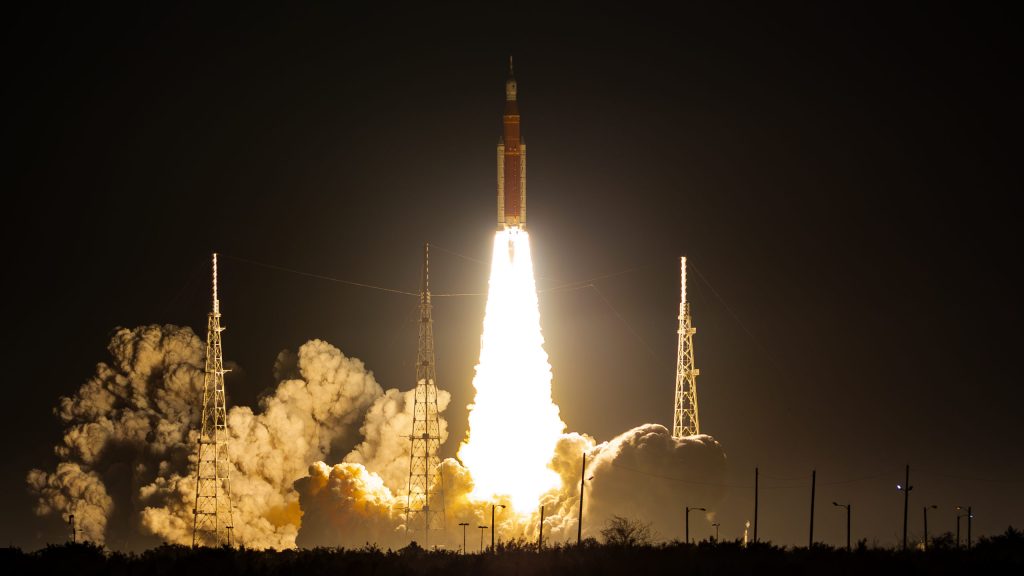
Breakthroughs in Spaceflight: The NASA Artemis Program
The NASA Artemis program timeline outlines humanity’s return to the moon and eventual journey to Mars. In 1969, the first American Astronauts were sent to the moon as representatives of the Apollo program, with the intent of being the first people to step foot on the moon. Now, more than 50 years later, the Artemis program is a representation of humanity’s return to outer space, the moon, and eventually, Mars. Specifically, the program seeks to land the first woman and the first person of color on the lunar surface by the end of the third launch cycle, while simultaneously developing innovative technologies to reach Mars.
Previous Accomplishments
The first mission of the Artemis program took flight on Wednesday, November 16th, 2022, after being postponed four times due to a variety of engine problems, leaks, and weather concerns. The mission traveled a total of 1.4 million miles, curving directly past the moon and lasting a total of 25 days, before historically splashing down in the Pacific Ocean.
Artemis I was an uncrewed test flight that had various purposes in the realm of spaceflight, including testing the Space Launch System and Orion spacecraft and setting a margin for future lunar exploration. Due to the complexity of Artemis’ future missions, it requires a structure that is capable of propelling more than 500 thousand gallons of liquid hydrogen, an astronaut-containing spacecraft, and multiple additional adapters. Therefore, NASA created the Space Launch System (SLS), made of four main engines and three separate stages, which became the most powerful rocket in the world upon its launch. Located on top of the SLS is the Orion capsule, containing a crew module, service module, and launch abort system. Each of these components are vital to ensuring the success of the future Artemis missions. As part of the Artemis program timeline, Artemis I successfully tested the SLS and Orion spacecraft.
Current NASA Artemis Mission Status
Following the historic success of Artemis II in April 2026, NASA is now preparing for Artemis III, the next major step in the Artemis program timeline.
Artemis II became the first crewed mission to travel around the moon since Apollo 17 in 1972. Launched aboard NASA’s Space Launch System (SLS) rocket, the Orion spacecraft carried four astronauts on a 9-day mission that traveled more than one million miles through deep space before safely splashing down in the Pacific Ocean.
The Artemis II crew included:
- Commander Reid Wiseman
- Pilot Victor Glover
- Mission Specialist Christina Koch
- Mission Specialist Jeremy Hansen of the Canadian Space Agency
The mission successfully tested Orion’s life support systems, navigation, communications, and high-speed Earth reentry capabilities with astronauts onboard for the first time. Artemis II also marked several historic milestones, including:
- The first crewed Orion mission
- The first human lunar flyby mission in over 50 years
- The first deep-space mission to include a woman and a person of color
- The first Canadian astronaut to travel around the moon
NASA considers Artemis II a major success and a critical validation of the Orion spacecraft and SLS rocket for future deep-space exploration missions.

Artemis II was a historic mission as a 10-day crewed spaceflight for the first time in almost 50 years. Aboard this mission was Commander Reid Wiseman, Pilot Victor Glover, and Mission Specialists Christina Koch and Jeremy Hansen.
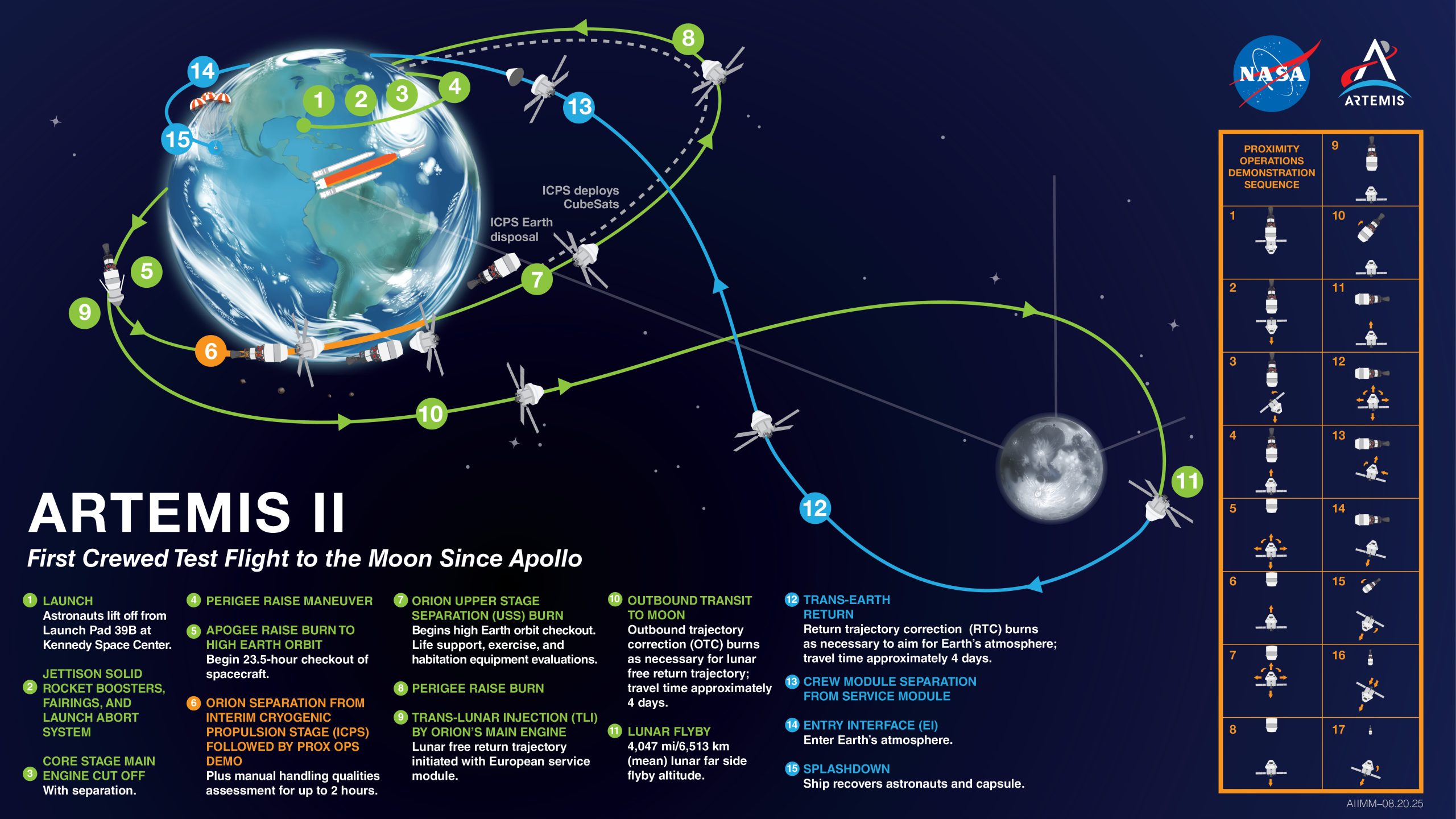
(https://www.nasa.gov/image-article/artemis-ii-map-2/)
Artemis III: NASA’s Next Step Toward Lunar Return
With Artemis II completed successfully, NASA is now focusing on Artemis III, currently targeted for launch in 2027. However, the mission architecture has evolved significantly from NASA’s original plans.
Instead of immediately attempting a crewed lunar landing, Artemis III is now expected to focus primarily on testing critical docking and rendezvous operations between Orion and commercial lunar landing systems in Earth orbit. These tests are considered essential before astronauts can safely land on the moon again.
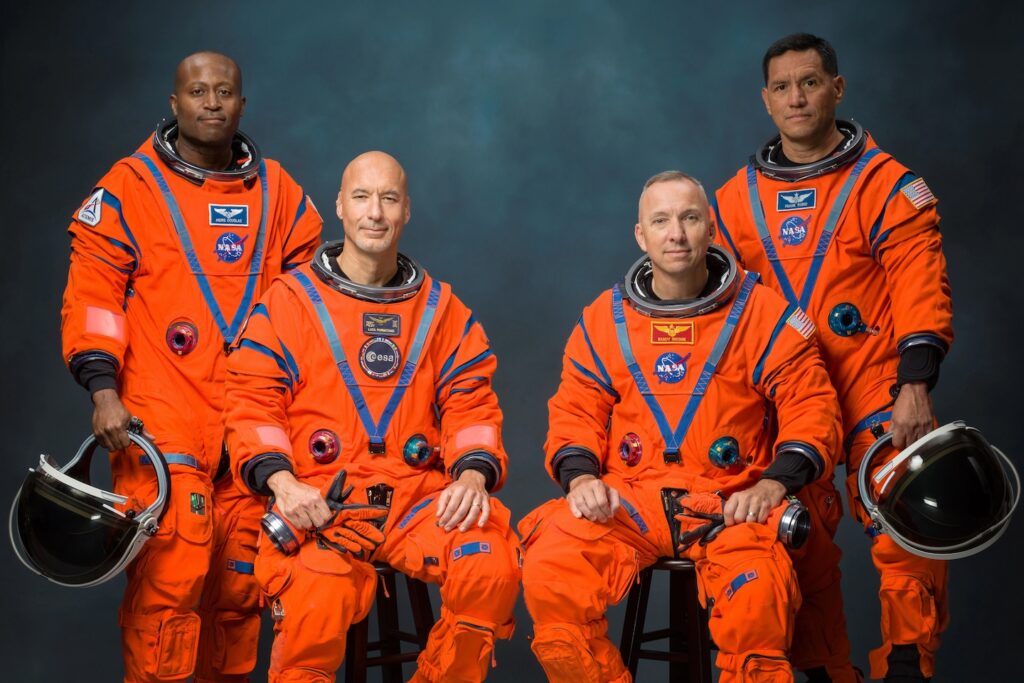
NASA recently announced the Artemis III crew:
- Commander Randy Bresnik
- Pilot Luca Parmitano (European Space Agency)
- Mission Specialist Andre Douglas
- Mission Specialist Frank Rubio
The Artemis III mission will test interactions between Orion and commercial lunar landers being developed by both SpaceX and Blue Origin. SpaceX’s Starship Human Landing System and Blue Origin’s Blue Moon lander are both expected to play major roles in future Artemis lunar landing missions.
These tests will help NASA validate:
- Docking procedures in orbit
- Life support integration
- Deep-space mission operations
- Crew transfer capabilities
- Future lunar landing systems
NASA’s long-term goal remains returning astronauts to the lunar surface near the moon’s south pole, where water ice may support future long-duration missions and eventual Mars exploration.
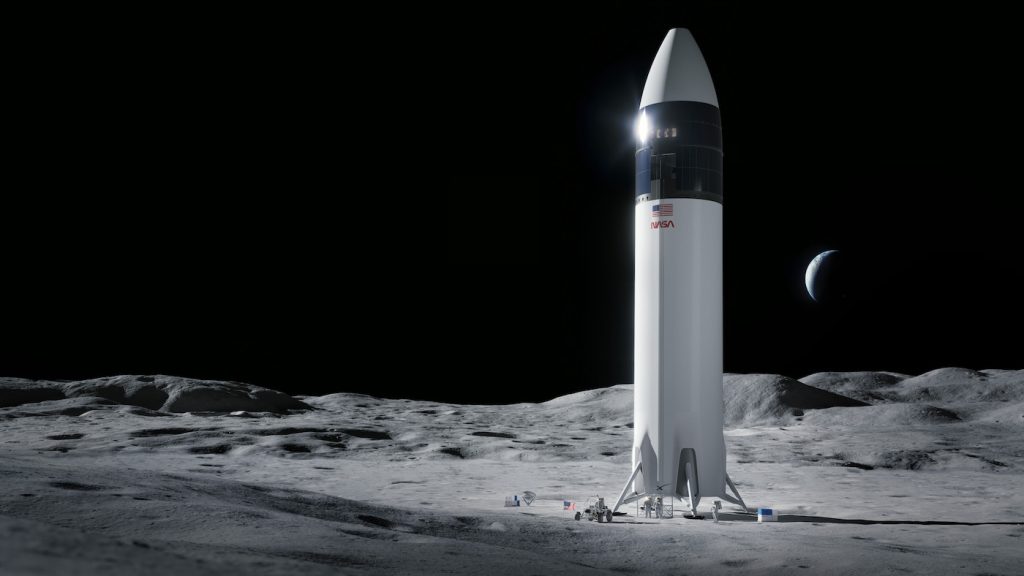
The Artemis program timeline continues with Artemis IV, currently planned for 2028. Artemis IV is now expected to become NASA’s next major attempt at landing astronauts on the moon.
Future Artemis missions will continue developing:
- Lunar surface infrastructure
- Long-duration habitats
- Commercial lunar transportation systems
- Technologies needed for eventual human missions to Mars
Through partnerships with SpaceX, Blue Origin, ESA, CSA, and other international agencies, NASA hopes the Artemis program will establish a long-term human presence beyond Earth for the first time in history.
Artemis Frequently Asked Questions
What is the Artemis program?
The Artemis program is NASA’s long-term initiative to return humans to the moon, establish sustainable lunar exploration, and develop technologies needed for future missions to Mars. The program includes the Orion spacecraft, Space Launch System (SLS) rocket, Lunar Gateway, and commercial lunar landers developed by companies like SpaceX and Blue Origin.
When did Artemis II launch?
Artemis II launched successfully in April 2026 and became the first crewed mission to travel around the moon since Apollo 17 in 1972. The mission lasted approximately 9 days and safely returned astronauts aboard the Orion spacecraft to Earth.
Who flew on Artemis II?
The Artemis II crew included:
- Commander Reid Wiseman
- Pilot Victor Glover
- Mission Specialist Christina Koch
- Mission Specialist Jeremy Hansen
The mission marked the first lunar mission to include a Canadian astronaut, a woman, and a person of color on a deep-space mission.
Was Artemis II successful?
Yes — Artemis II was considered a major success by NASA. The mission successfully tested Orion’s life support systems, navigation, communications, and crew operations in deep space before safely splashing down in the Pacific Ocean.
What is Artemis III?
Artemis III is NASA’s next major Artemis mission and is currently planned for 2027. The mission will focus on testing docking procedures and operations between Orion and commercial lunar landing systems developed by SpaceX and Blue Origin before future crewed moon landings occur.
Who is on the Artemis III crew?
NASA announced the Artemis III crew as:
- Commander Randy Bresnik
- Pilot Luca Parmitano
- Mission Specialist Andre Douglas
- Mission Specialist Frank Rubio
Will Artemis III land astronauts on the moon?
NASA’s Artemis plans have evolved, and Artemis III is now expected to focus primarily on orbital testing and lunar landing system integration rather than an immediate crewed lunar landing. Future Artemis missions are expected to continue preparing for sustained human lunar exploration.
What is the Lunar Gateway?
The Lunar Gateway is a planned space station that will orbit the moon and support future Artemis missions. It will serve as a staging point for lunar landings, scientific research, and future deep-space exploration missions.
What role does SpaceX play in Artemis?
SpaceX is developing the Starship Human Landing System (HLS), which NASA plans to use for transporting astronauts between lunar orbit and the moon’s surface during future Artemis missions.