
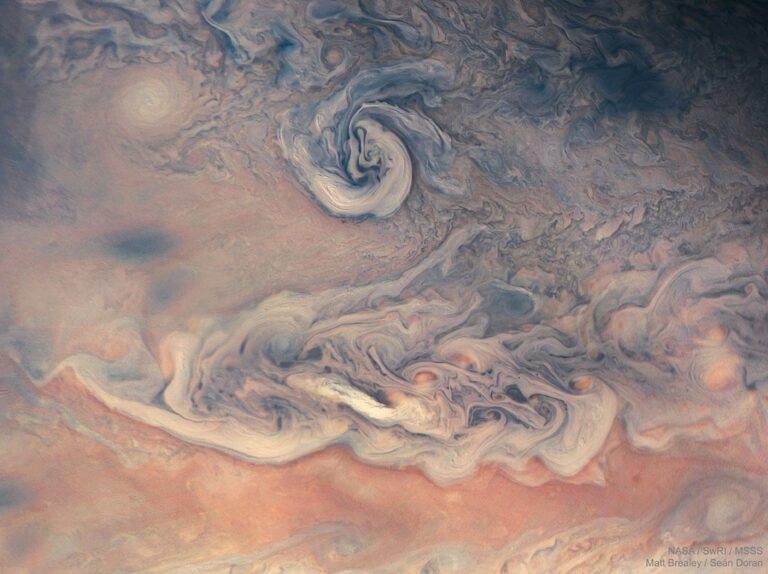
Space Images November 22, 2026
Explanation: What creates the colors in Jupiter's clouds? No one is sure. The thick atmosphere of Jupiter is mostly hydrogen and helium, elements which are colorless at the low temperatures of the Jovian cloud tops.…
Get the Space Launch Schedule your way with our apps, content, and supporter benefits.
View the launch schedule, receive notifications, and watch live video on iOS or Android.
Support us on Patreon for just $3/month and enjoy an ad-free website experience.
Receive the daily launch schedule and follow our latest launch coverage on social media.
Daily, weekly, monthly, and latest space images from NASA and ESA sources.
Explanation: What creates the colors in Jupiter's clouds? No one is sure. The thick atmosphere of Jupiter is mostly hydrogen and helium, elements which are colorless at the low temperatures of the Jovian cloud tops.…
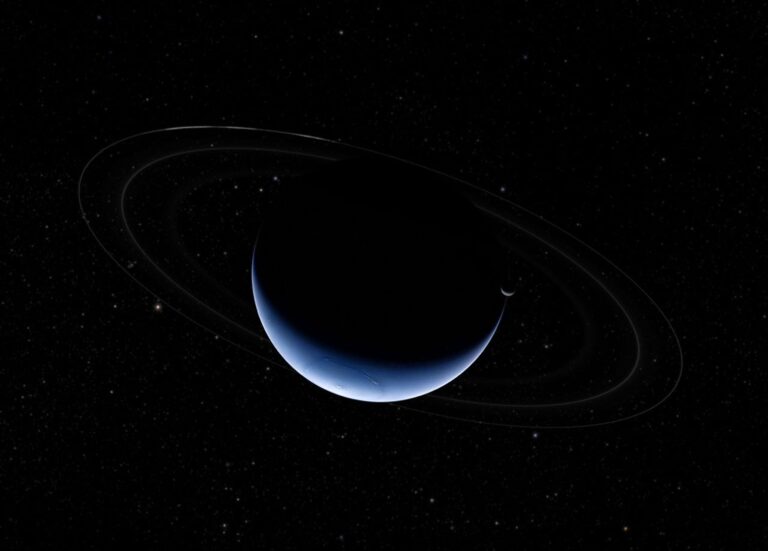
Explanation: Cruising through the outer solar system, the Voyager 2 spacecraft made its closest approach to Neptune on August 25, 1989, the only spacecraft to visit the most distant ice giant planet. Based on the…
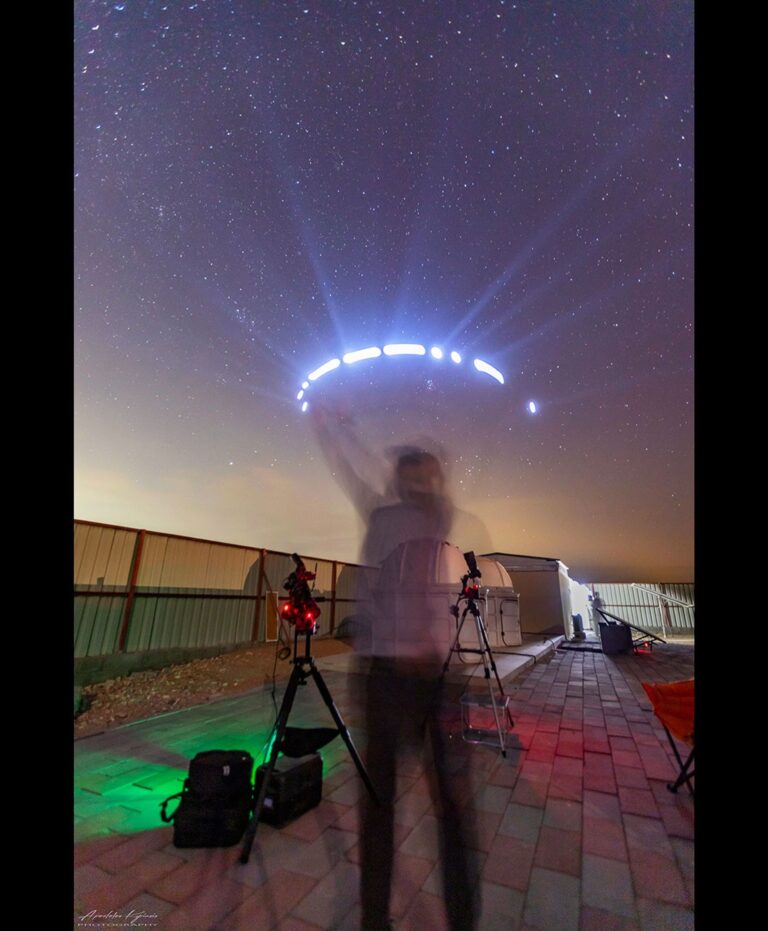
Explanation: On November 17, fans of interstellar spaceflight around planet Earth were invited to shine a message into the night sky. Traced by a flashlight beam switched on and off, the dashes and dots of…
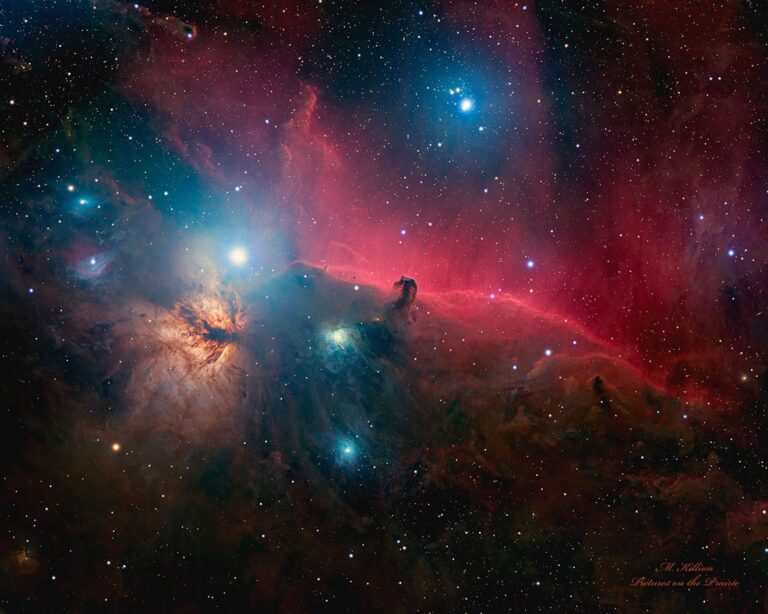
Explanation: Today's image could have been a painting. But what do these colors mean? The brightest star, left of the center, is blue Alnitak (the Girdle): a triple star system best known for being the…
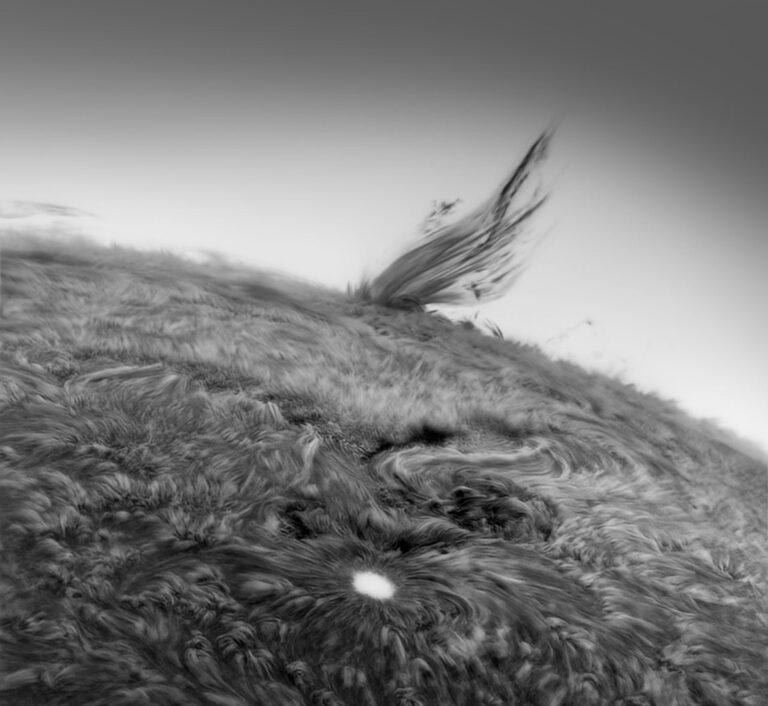
Explanation: What a flare for the chromatic! Today’s image combines a series of images taken over ten minutes capturing the Sun’s chromosphere, the layer of the Sun’s atmosphere above its surface where the temperature rises.…
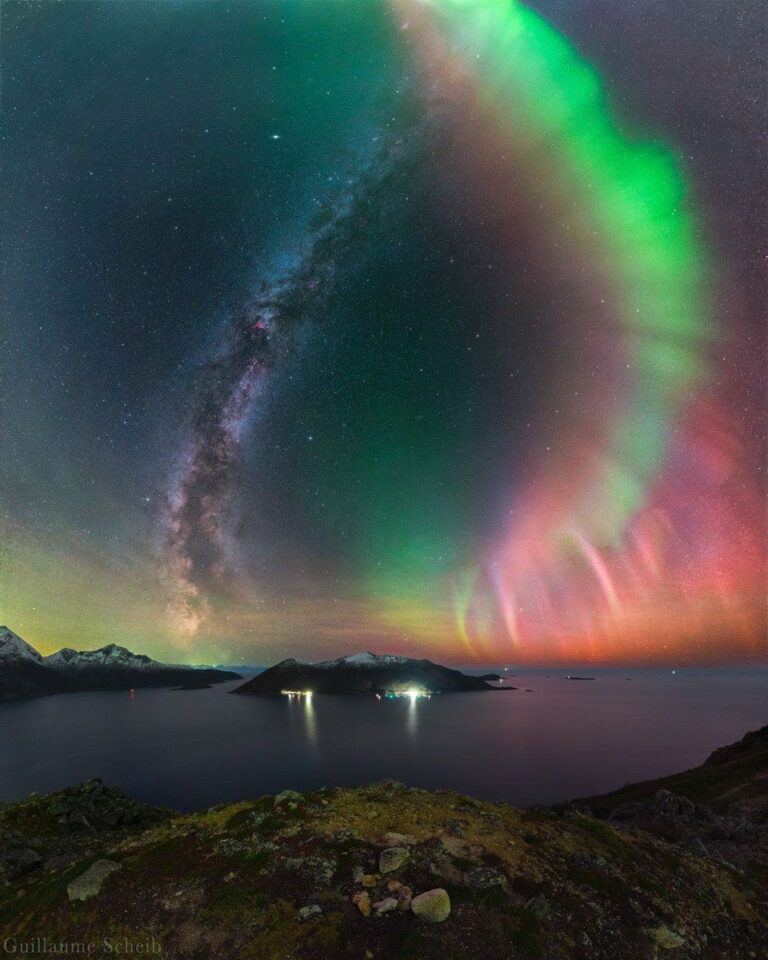
Explanation: Are these two giant arches battling for control of the sky? No, but it sure looks like it! The arch on the left is the central band of our Milky Way Galaxy, an ancient system…
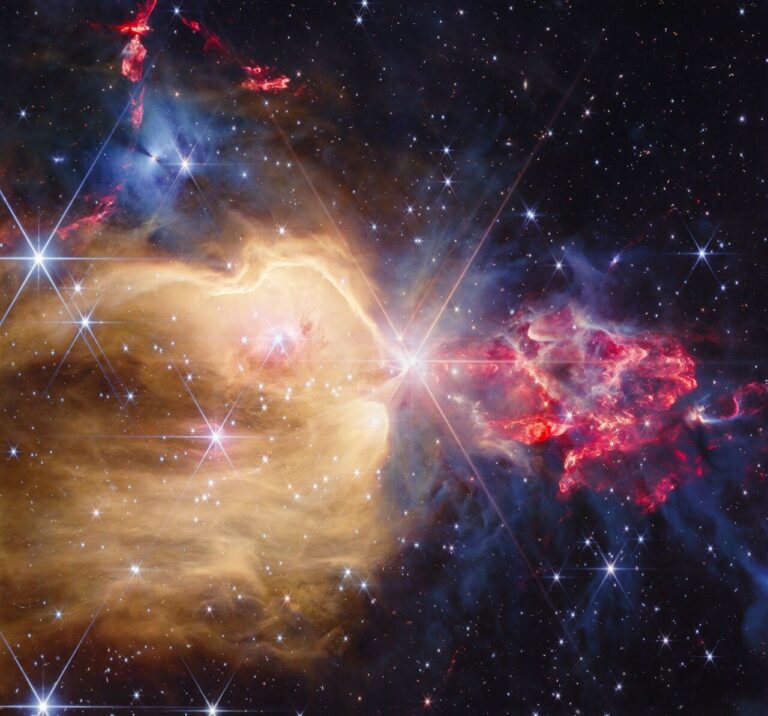
Explanation: How do stars form? To help answer this question, NASA used the James Webb Space Telescope to take the featured detailed image of the star-forming region NGC 7129 in infrared light. Star formation progresses…
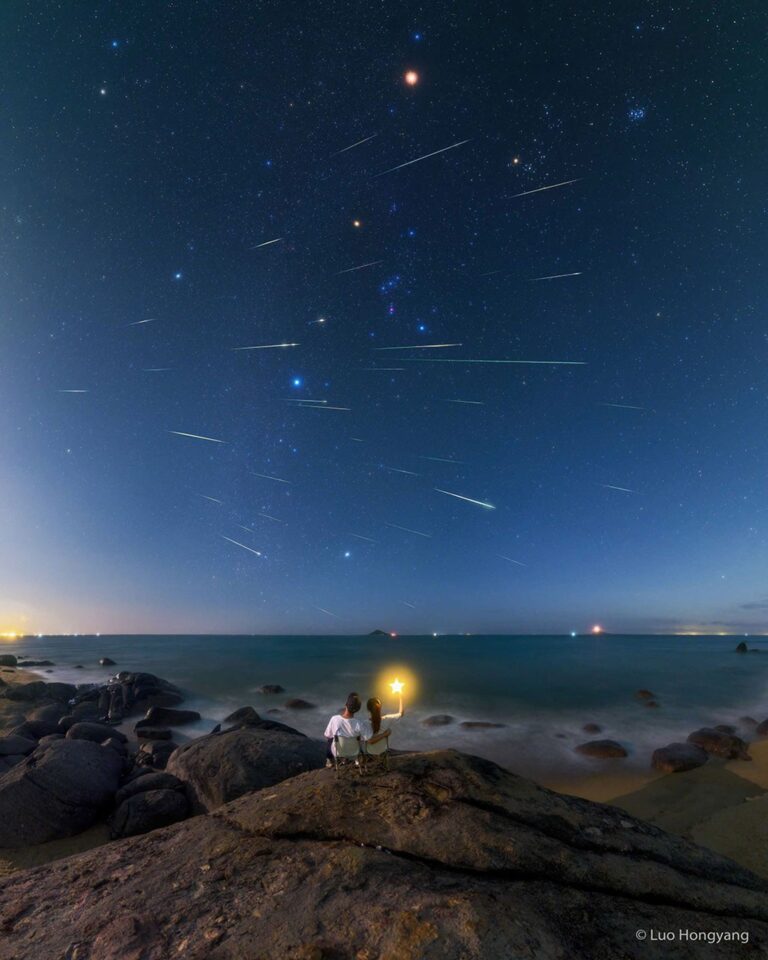
Explanation: Where will the next meteor appear? Even during a meteor shower, it is practically impossible to know. Therefore, a good way to enjoy a meteor shower is to find a place where you can…
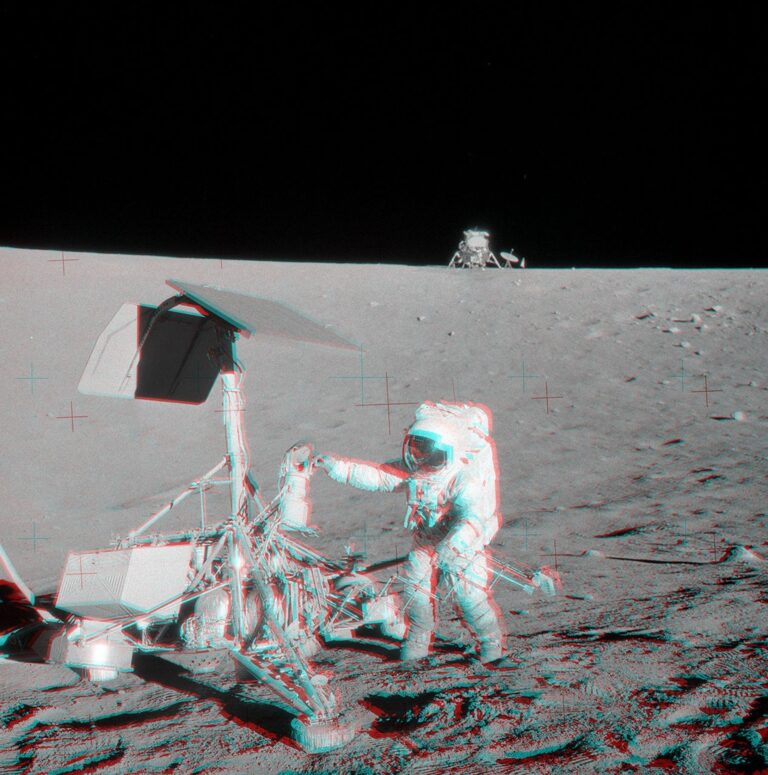
Explanation: Put on your red/blue glasses and gaze across the western Ocean of Storms on the surface of the Moon. The 3D anaglyph shows Apollo 12 astronaut Pete Conrad visiting the Surveyor 3 spacecraft in…
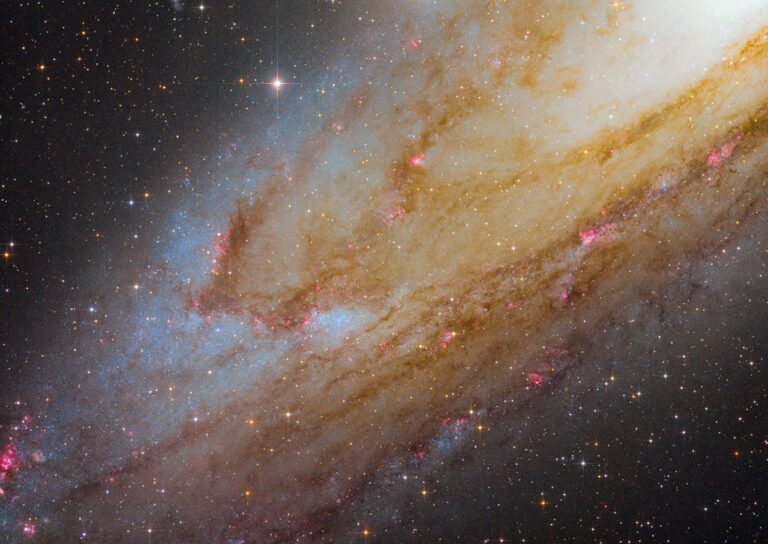
Explanation: The large stellar association cataloged as NGC 206 is nestled within the dusty arms of the neighboring Andromeda galaxy along with the galaxy's pinkish star-forming regions. Also known as M31, the spiral galaxy is…
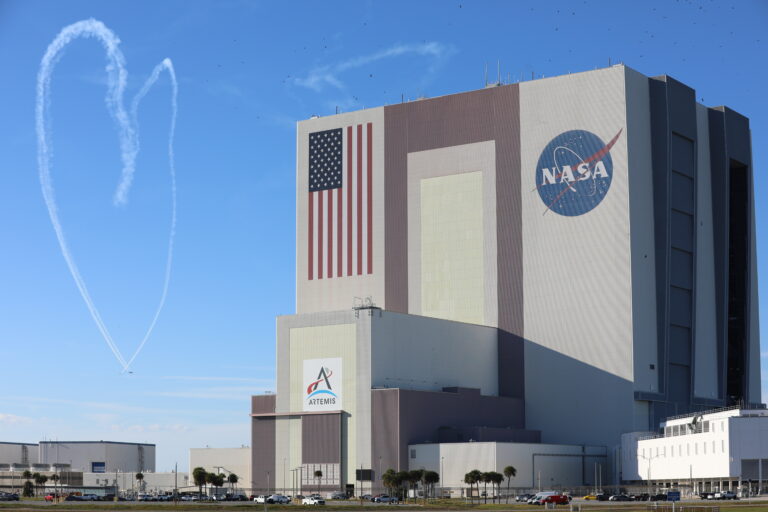
The U.S. Air Force Thunderbirds create a heart-shaped smoke trail during a flight maneuver near NASA’s Vehicle Assembly Building during the agency’s MAX POWER expo and air show on Sunday, Nov. 8, 2026, at NASA’s…
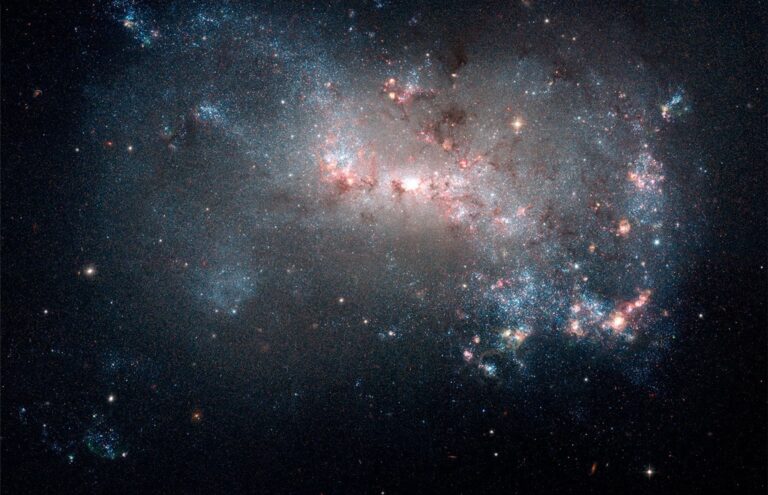
Explanation: Don’t judge a galaxy by its size. Our home galaxy, the Milky Way, is about 100,000 light years across. This huge expanse of space contains hundreds of billions of stars! The smallest galaxies, called…
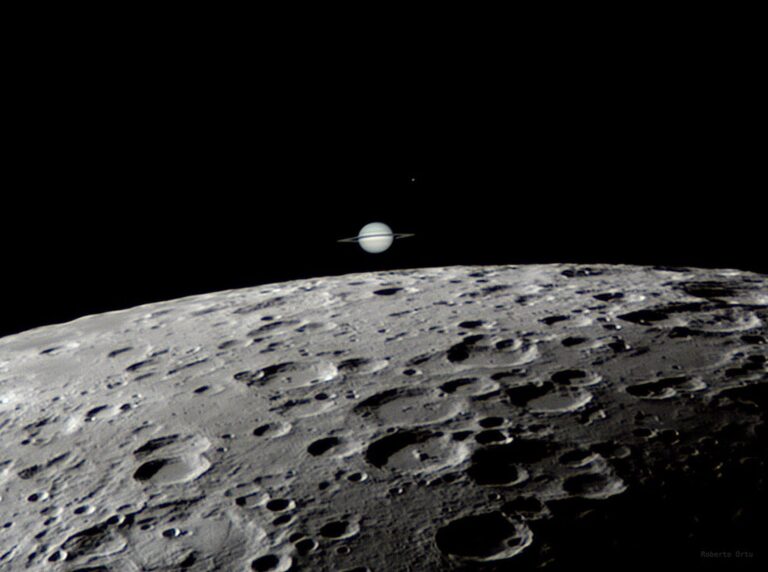
Explanation: Sometimes Saturn disappears. It doesn't really go away, of course -- it just disappears from our view when Earth's Moon moves in front. Such a Saturnian eclipse, more formally called an occultation, was visible in early 2025 along a small swath of Earth --…
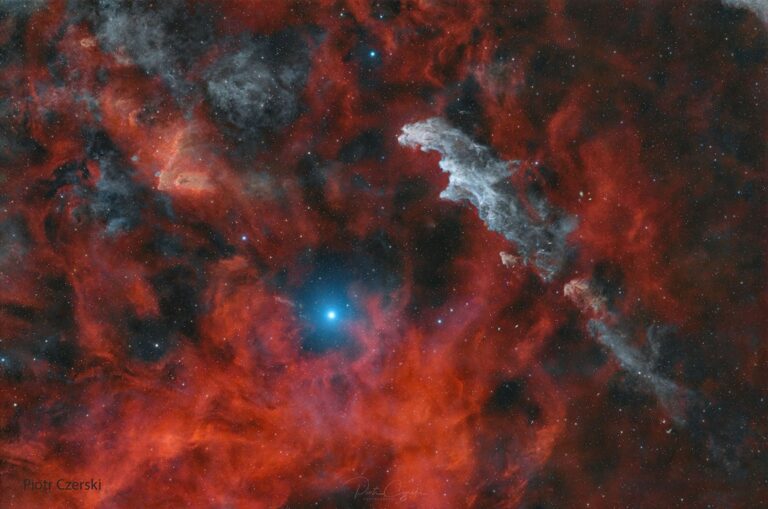
Explanation: Does the blue nebula look like the head of a witch? The nebula is known popularly as the Witch Head Nebula because, it is said, the nebula's shape resembles a Halloween-style caricature of a…