Never Miss a Rocket Launch

Get the Space Launch Schedule your way with our apps, content, and supporter benefits.

Get Our Mobile App

View the launch schedule, receive notifications, and watch live video on iOS or Android.

Go Ad-Free

Support us on Patreon for just $3/month and enjoy an ad-free website experience.

Get Social

Receive the daily launch schedule and follow our latest launch coverage on social media.

Space Images November 16, 2026

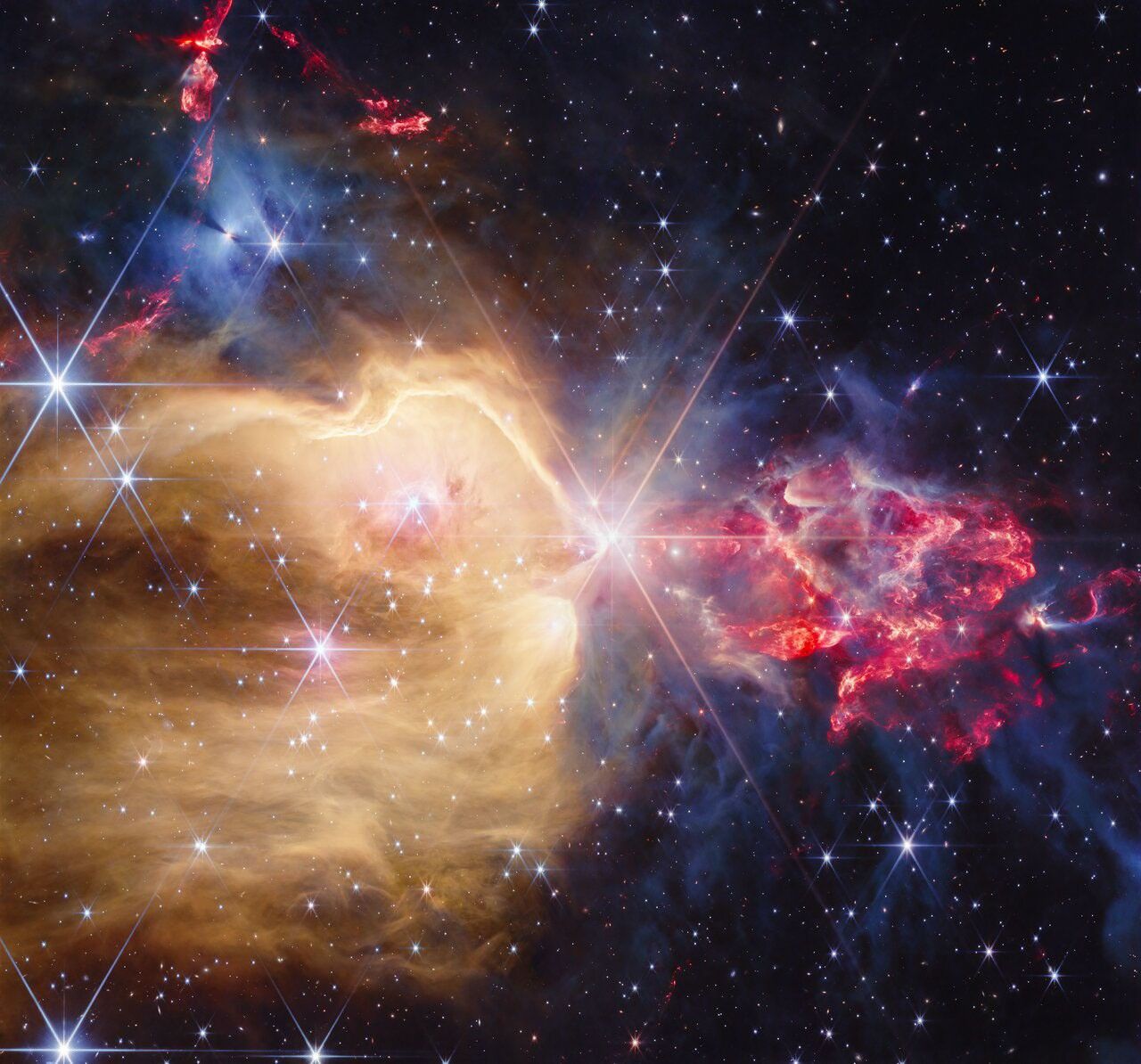
NGC 7129: Star Formation with Jets from Webb
NASA APOD

A young star cluster filled with many stars that display Webb’s unique eight-pronged diffraction pattern. At its center is a yellow star that sports the largest diffraction pattern. To its left, there is a region filled with yellow dust and gas that extends from the star to the left and the bottom, covering about two-thirds of the frame. The yellow region has several embedded blue stars of different sizes. The top third, which lies outside the yellow region, has a few bright protostars, within dense gray gas. These stars illuminate the gas, making it appear blue. A few red outflows from other protostars are visible above this grayish-blue region. To the right of the central star, there is a clumpy, flame-like plume of red dust and gas with protostars that emit a soft white light within. The plume is surrounded by more dense gray gas and dust. It is about one third the size of the yellow region. There are several background galaxies strewn throughout.
NASA, ESA, CSA, STScI, JWST; Processing: A. Pagan (STScI)

Explanation: How do stars form? To help answer this question, NASA used the James Webb Space Telescope to take the featured detailed image of the star-forming region NGC 7129 in infrared light. Star formation progresses when gravity pulls together massive amounts of gas, but soon things can get complicated when previously formed stars emit powerful jets and winds — and some then explode. Opaque dust can form in the cool atmospheres of stars and, when dispersed, can obstruct visible-light images. Many stars can be seen to be forming in the featured image, with the young stars on the left, in the gold-colored gas, typically being more mature than the young stars on the right — in the red region. Jets and winds likely cause the filamentary nature of the red-colored gas. Studying stars at different stages of development bolsters understanding about what physical processes are most important and when.Tomorrow's picture: sky duel

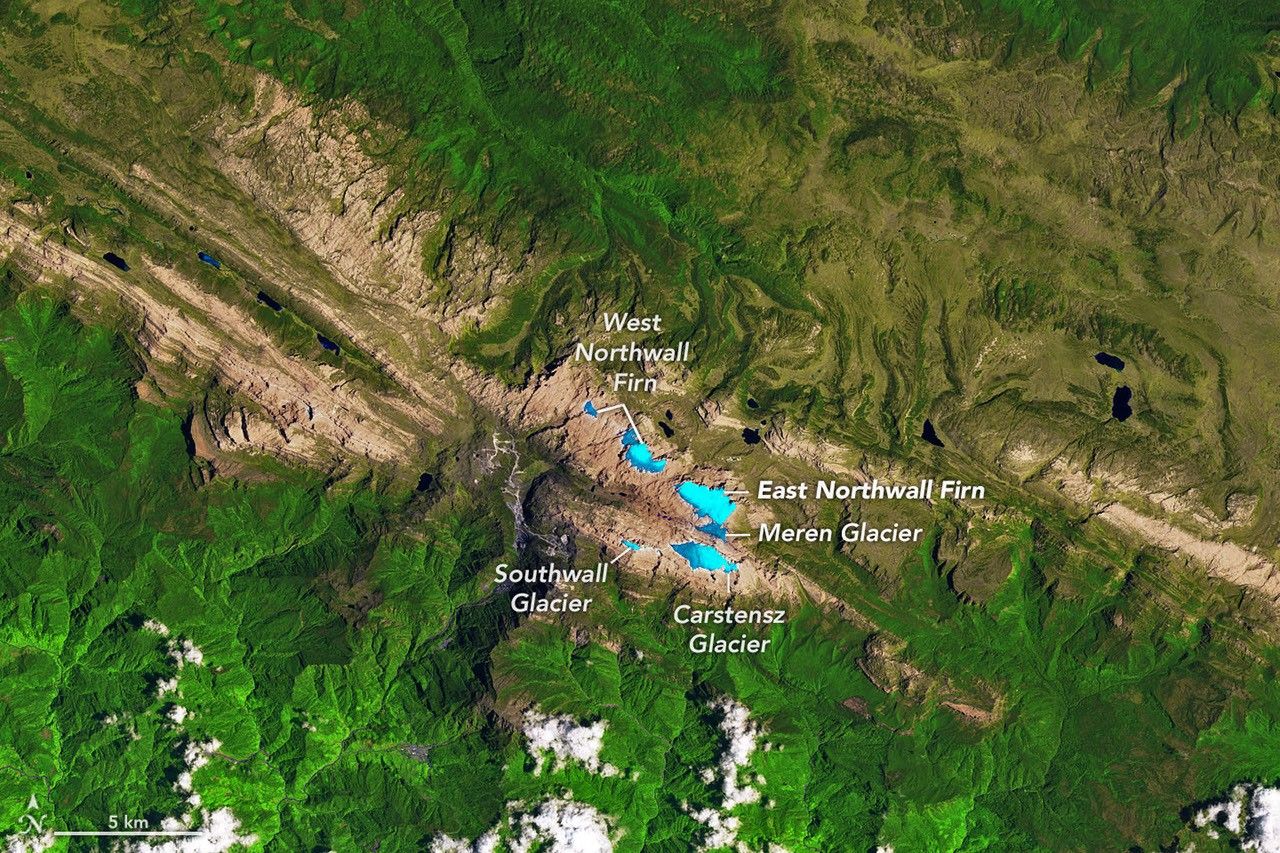
The Last Ice on Puncak Jaya
NASA Earth Observatory

A false-color satellite image from 1988 shows mountain ridges of Indonesia’s Sudirman Range. Bare rock appears brown, and glacial ice, shown in blue, caps several of the highest ridges. Vegetation at lower elevations appears green.
NASA Earth Observatory

Ice near the summit of the Indonesian mountain peak has shrunk to scattered patches too small to flow like glaciers.

guest
0 Comments