Never Miss a Rocket Launch

Get the Space Launch Schedule your way with our apps, content, and supporter benefits.

Get Our Mobile App

View the launch schedule, receive notifications, and watch live video on iOS or Android.

Go Ad-Free

Support us on Patreon for just $3/month and enjoy an ad-free website experience.

Get Social

Receive the daily launch schedule and follow our latest launch coverage on social media.

Space Images November 17, 2026

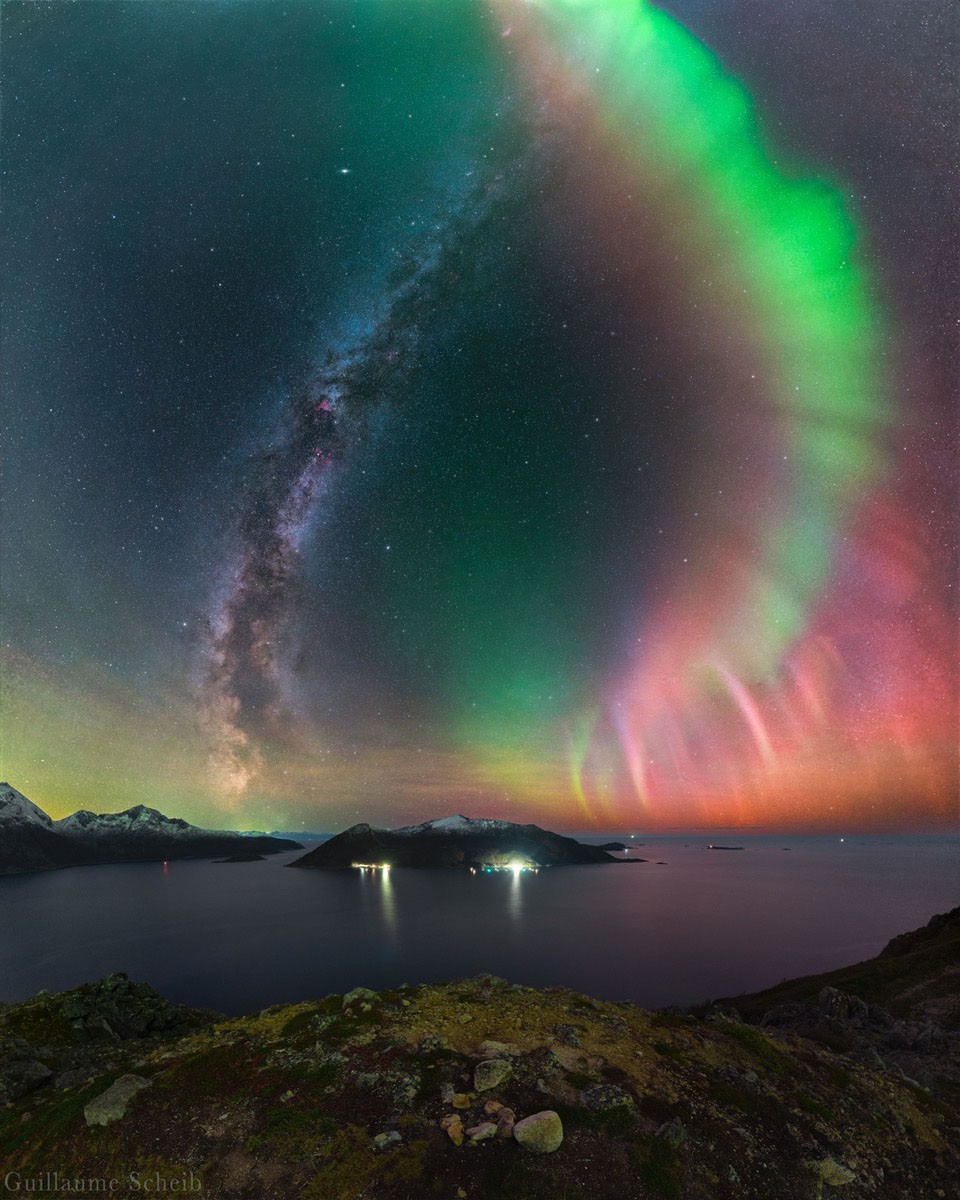
Milky Way versus Aurora
NASA APOD

A starry night sky is seen above water and some islands. In the night sky are two bright arches that are nearly vertical. On the left is the textured Milky Way and on the right is a smoother ribbon of aurora. Please see the explanation for more detailed information.
Guillaume Scheib

Explanation: Are these two giant arches battling for control of the sky? No, but it sure looks like it! The arch on the left is the central band of our Milky Way Galaxy, an ancient system of stars, gas, and dust that predates our Earth and is very far away. The arch on the right, by contrast, is an auroral ribbon that is only hours old, composed of energized atoms and molecules, and is close by — right in Earth's upper atmosphere. These chance-superposed titans have our Sun in common, a stellar member of the Milky Way that ejects energetic particles which create auroras. Far behind the middle of the auroral arch is the Big Dipper. Even farther in the distance is the Andromeda galaxy — the bright spot near the top of the frame, just left of center. The featured image was taken about a month ago from Kvaløya in northern Norway.Tomorrow's picture: open space

Tossing Fireworks from Cloud to Cloud
NASA Earth Observatory

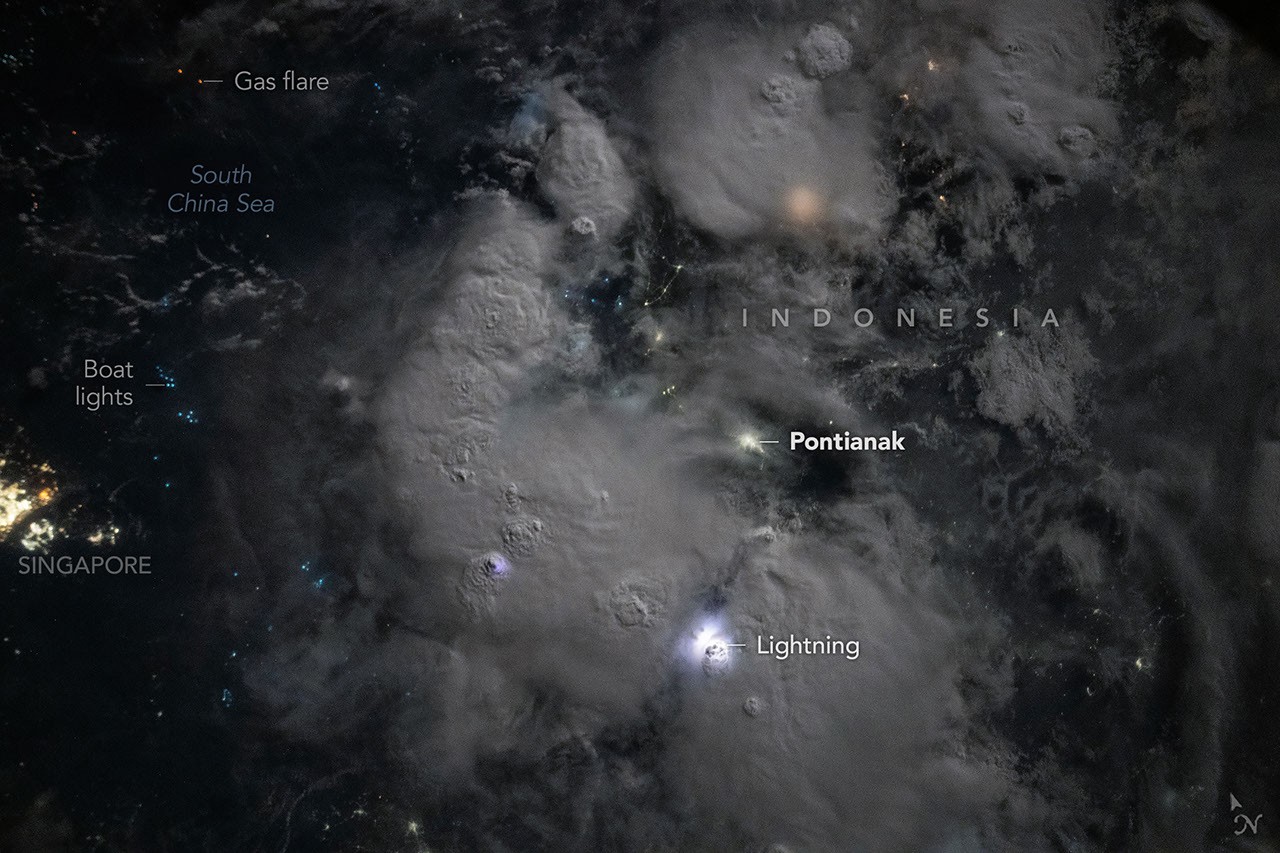
A nighttime photo looks down on the tops of thunderstorms rising over the South China Sea. Flashes of lightning illuminate parts of the storm clouds. Blue fishing boat lights, orange gas flares, and yellow city lights appear as specks scattered across the dark water and land surfaces visible around the edges of the clouds.
NASA Earth Observatory

For many astronauts, the spectacular sight of lightning stands out when looking back at Earth from the International Space Station.

guest
0 Comments