
NASA Details Artemis III Flight Plan at Artemis Acceleration Briefing
Last updated: October 23, 2026
NASA laid out its most detailed Artemis flight plan yet on Friday, October 23, at an “Artemis Acceleration” briefing at Kennedy Space Center. Administrator Jared Isaacman, Associate Administrator Amit Kshatriya, and Artemis program manager Jeremy Parsons confirmed that Artemis III remains on track to launch in summer 2027 — and walked through exactly how the three-rocket, 14-day mission will unfold, along with the SpaceX and Blue Origin lander milestones that must happen before astronauts land on the Moon in 2028.
Artemis III: A Three-Rocket Flight Plan
Artemis III will not land on the Moon — as we explained when NASA restructured the mission, it is now a crewed rehearsal in low Earth orbit. What Friday’s briefing added is the choreography, and it involves three of the most powerful rockets in the world flying in sequence:
- First up, Blue Moon. Blue Origin launches a Blue Moon Mark 2 test lander on a New Glenn rocket from Launch Complex 36A at Cape Canaveral Space Force Station. The lander can loiter in orbit for up to a month, waiting for the crew.
- Then the crew. NASA launches the four Artemis III astronauts aboard the Space Launch System and Orion from Launch Complex 39B. On day three of the mission, Orion docks with Blue Moon — and the astronauts climb aboard the lander to test its life-support systems and controls.
- Finally, Starship. SpaceX launches a Starship test lander from Launch Complex 39A. On day eight, Orion undocks from Blue Moon and docks with the Starship’s nose for about two hours — a docking-only test, with no crew transfer into Starship.
The rest of the 14-day flight is filled with Orion systems checks, spacesuit evaluations, human research, and technology demonstrations. Parsons called the campaign likely the most complicated launch campaign ever undertaken — three heavy-lift rockets, three launch pads, and one crew, all choreographed in orbit.
First Look Inside Starship’s Moon Cabin
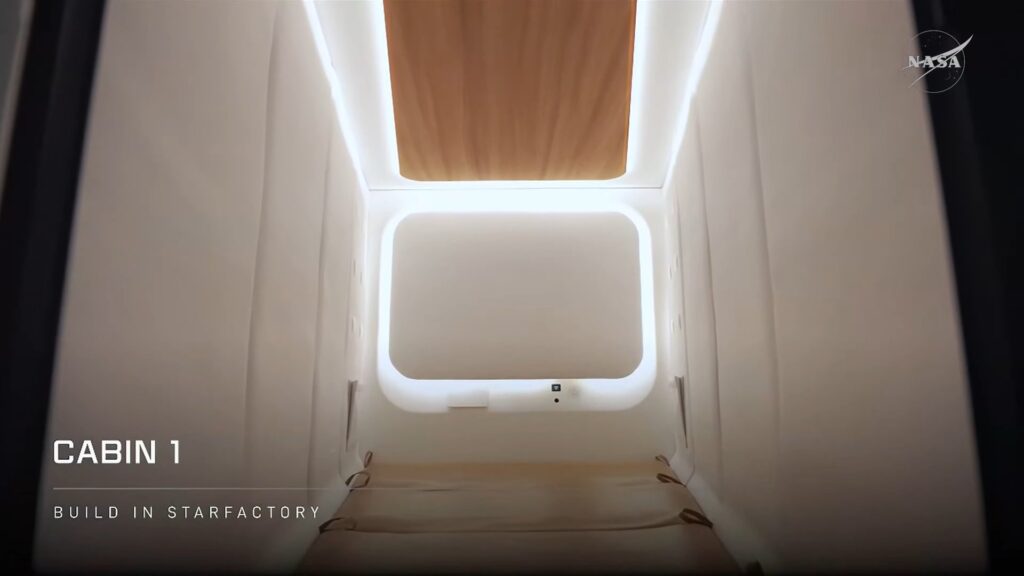
The briefing also gave the public its first real look at the crew cabin SpaceX is building for its Starship lunar lander. Photos showed “Cabin 1” under construction inside the Starfactory at Starbase, Texas — padded walls, window openings cut into the steel hull, and technicians fitting out the structure.
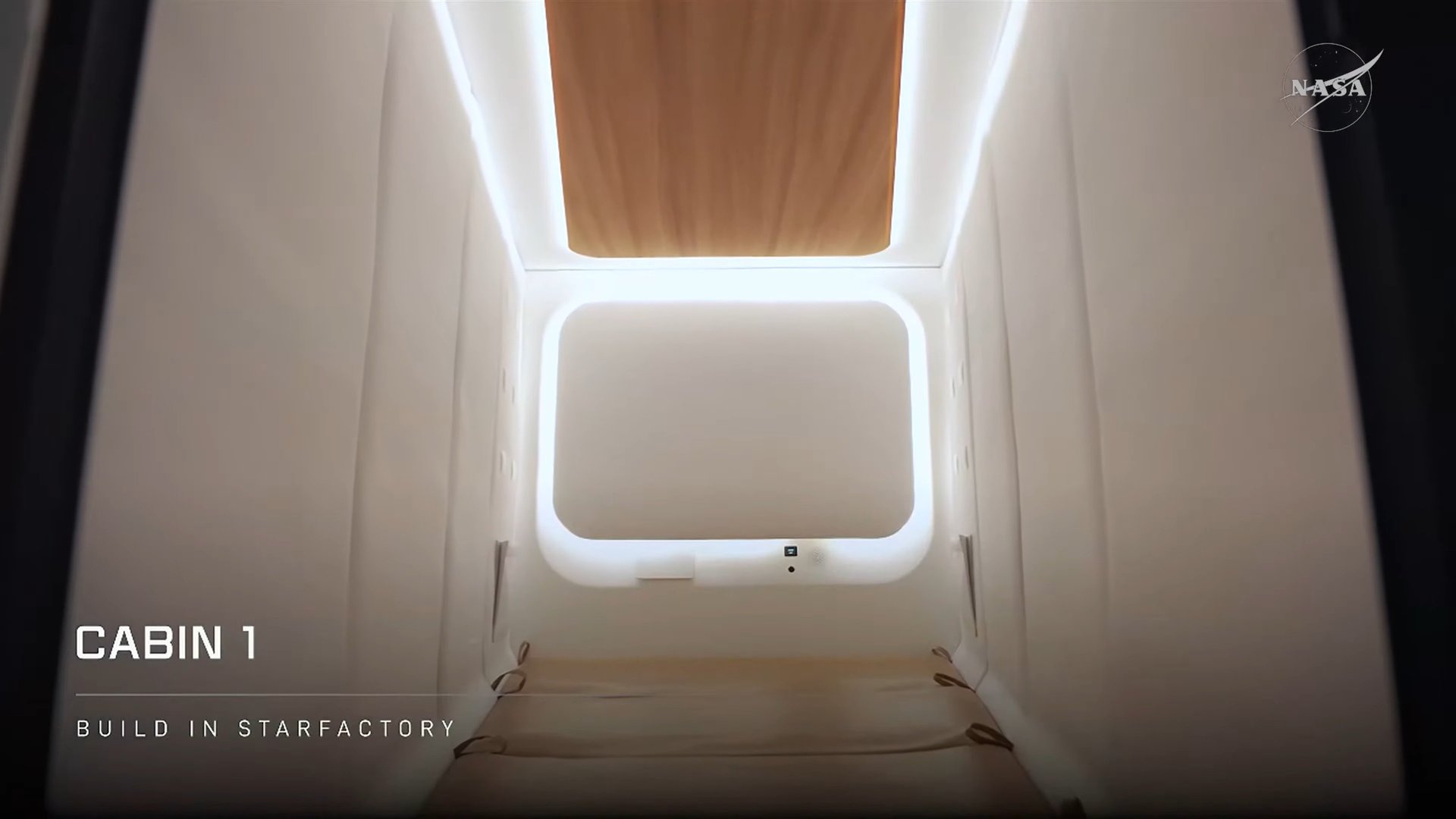
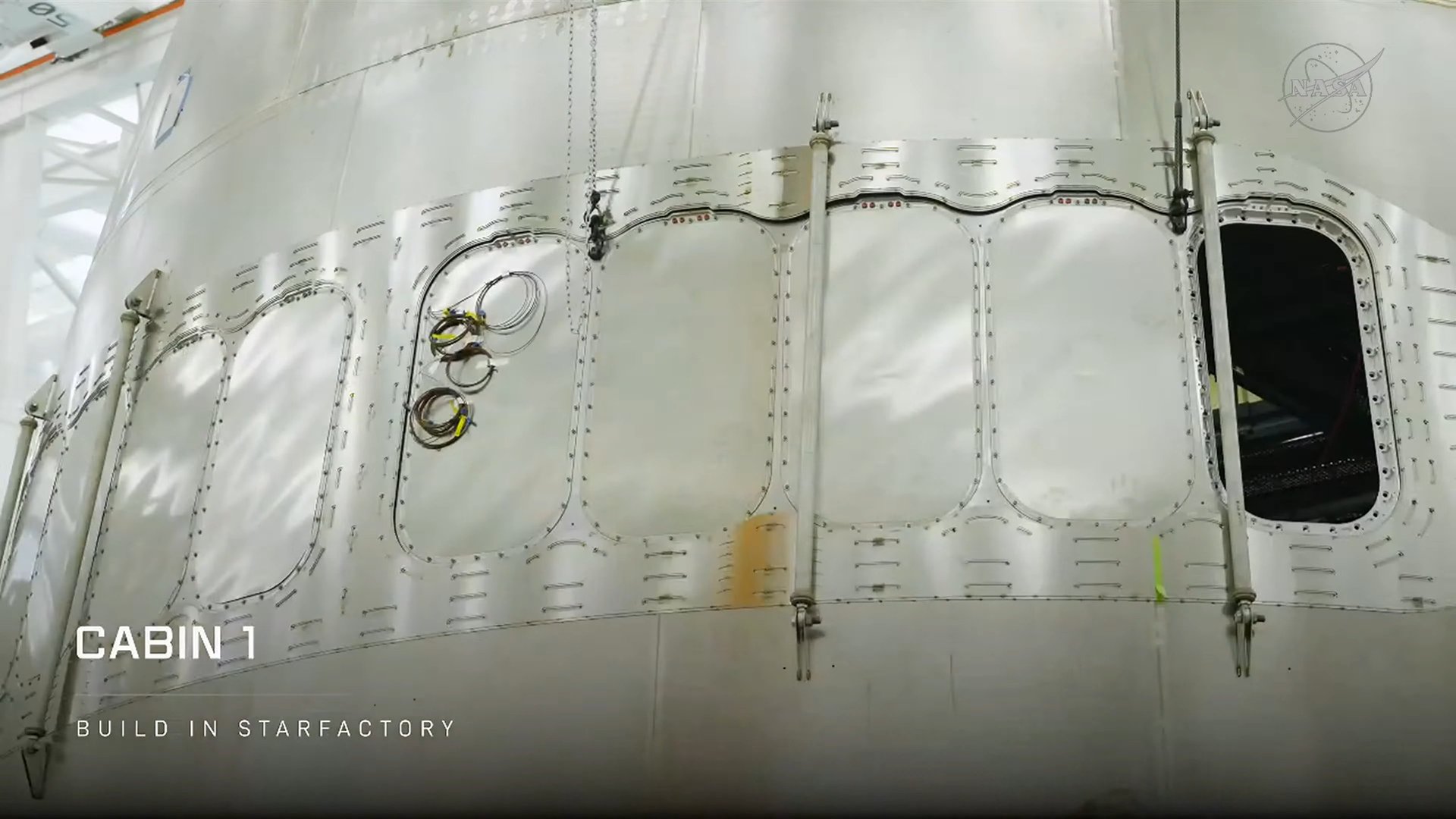
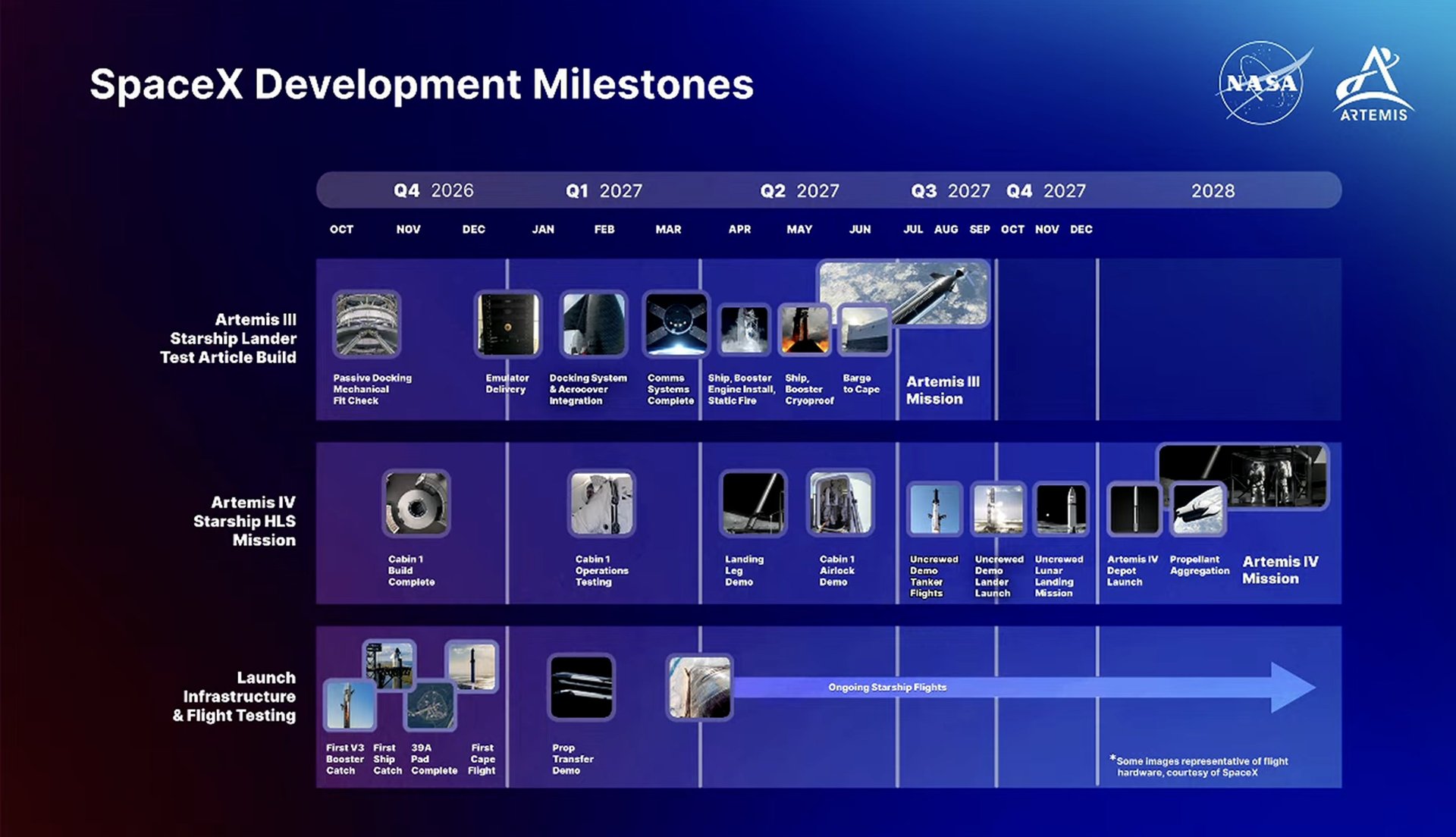
SpaceX’s milestone chart has Cabin 1 fully built this quarter, with operations testing in the first quarter of 2027 and an airlock demonstration in the second quarter. The Artemis III crew will not go inside Starship — their test vehicle is a docking target only — so the cabin is really about Artemis IV and beyond: hardware engineers can test now, and future crews can train in it later.
SpaceX’s Road to an Uncrewed Moon Landing
The updated SpaceX milestones, first presented at the International Astronautical Congress on October 5 and detailed again Friday, run through the 2028 crewed landing:
- Early 2027: a ship-to-ship propellant transfer demonstration, using two Starships — one launching from Launch Complex 39A in Florida and one from Starbase in Texas
- Q1 2027: Cabin 1 operations testing
- Spring 2027: a landing leg demonstration, plus the cabin airlock demo in Q2
- Q3 2027: uncrewed demo tanker flights
- Late 2027: an uncrewed Starship landing on the Moon
Refueling drew the sharpest questions. A day earlier, NASA’s Aerospace Safety Advisory Panel had aired an estimate of roughly 22 tanker launches to fill a Starship lander, while Elon Musk has argued for 6 to 8. Parsons said the early 2027 transfer demo will teach both teams a lot, and that efficiency gains should bring the count closer to the high single digits; Isaacman added that a faster Starship launch cadence — from every two weeks toward weekly — and more mass delivered to orbit should cut the number further.
Closer to home, Parsons said Starship Flight 15 is expected in November with Raptor engine improvements, and that SpaceX’s first Starship launch from Florida should follow in the coming months.
Blue Origin’s Lander Timeline
Blue Origin’s path runs in parallel. Its Blue Moon Mark 2 test lander — the one the Artemis III crew will board in orbit — is progressing toward integration with New Glenn early next year, with qualification of its BE-7 engine due in the second quarter of 2027.
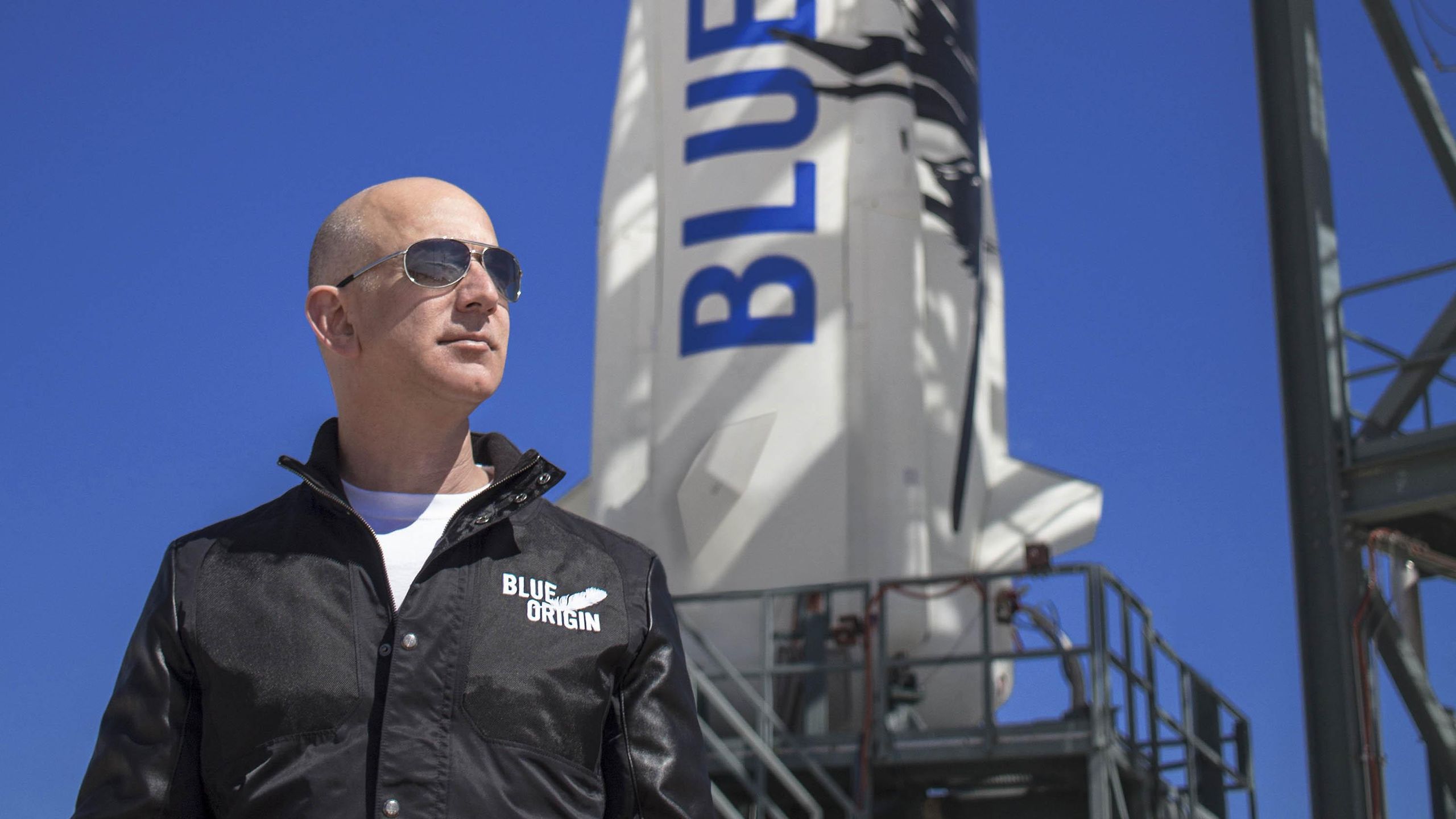
Beyond Artemis III, Blue Origin plans to fly its uncrewed Mark 1 cargo lander, named Endurance, to the lunar surface in 2027 under NASA’s commercial lunar payload program. An uncrewed Mark 2 demonstration flight follows in the fourth quarter of 2027 — alongside the first flight of the more powerful New Glenn 9×4 variant — with an uncrewed Mark 2 landing attempt on the Moon targeted for the first quarter of 2028.
The 2028 Landing — and the Decision NASA Hasn’t Made
None of Friday’s updates moved the headline goal: NASA still plans to land astronauts near the Moon’s south pole on Artemis IV in 2028, with a possible second landing on Artemis V the same year. But Isaacman was clear that one big call remains open — NASA has not decided whether SpaceX’s Starship or Blue Origin’s Blue Moon will carry the Artemis IV crew. Both companies first have to prove their landers uncrewed, on the timelines above, which is why the next 15 months of test flights matter so much.
The briefing also touched on the groundwork for NASA’s Moon Base: analysis of Artemis II’s Orion heat shield showed it performed as expected, with significantly less cracking and char loss than Artemis I; spacesuit provider Axiom Space is developing a second, lighter “Sortie Suit” at roughly half the weight of its primary suit; the VIPER ice-hunting rover is set to launch in 2027; and the first lunar terrain vehicles from Astrolab and Lunar Outpost are on schedule for flight-ready hardware by the end of 2027. When the 2028 crew lands, Isaacman noted, a rover and the first elements of a permanent presence should already be waiting for them.
Track every mission in our NASA Artemis program timeline, and see what’s launching next on the 2026 launch schedule.
Frequently Asked Questions
When will Artemis III launch?
NASA confirmed at its October 23, 2026 Artemis Acceleration briefing that Artemis III remains on track for summer 2027. The crewed mission will spend about 14 days in low Earth orbit testing the commercial lunar landers — it will not land on the Moon.
What will the Artemis III crew do in orbit?
The crew will dock Orion with two test landers. First, they will board Blue Origin’s Blue Moon Mark 2 (docked on day three) to test its life-support systems and controls. Then, on day eight, Orion will dock with a SpaceX Starship test lander for about two hours — a docking-only test with no crew transfer into Starship. The rest of the 14-day flight covers Orion systems checks, spacesuit evaluations, research, and technology demonstrations.
When will SpaceX land Starship on the Moon?
SpaceX’s NASA milestone chart targets an uncrewed Starship lunar landing in late 2027. Before that, the company must fly a ship-to-ship propellant transfer demonstration in early 2027, a landing leg demo in spring 2027, and uncrewed tanker demo flights in the third quarter of 2027.
When will Blue Origin land on the Moon?
Blue Origin plans to fly its uncrewed Mark 1 cargo lander, Endurance, to the lunar surface in 2027, launch an uncrewed Mark 2 demonstration in late 2027, and attempt an uncrewed Mark 2 landing in the first quarter of 2028.
Which lander will carry the Artemis IV crew to the Moon?
NASA has not decided yet. Administrator Jared Isaacman confirmed in October 2026 that the choice between SpaceX’s Starship and Blue Origin’s Blue Moon for the Artemis IV landing — targeted for 2028 — is still open, and will depend on each lander proving itself in uncrewed tests first.