
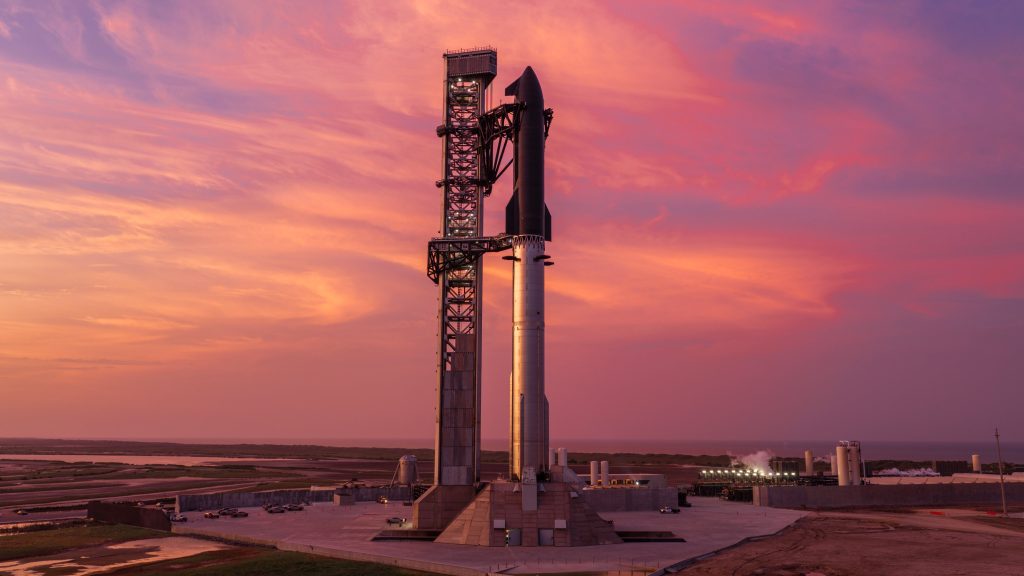
When Is the Next Starship Launch? Flight 15 Date, Time & How to Watch
Last updated: October 14, 2026.
The question Rocket Monkey hears more than any other right now is simple: when is the next Starship launch? On September 28, 2026, Starship Flight 14 became the first Starship flight ever to reach orbit, deploying 26 Starlink V3 satellites before a shortened flight ended with a splashdown in the Pacific Ocean north of Hawaii. The milestone has everyone asking what comes next, so here is everything we know, and everything we still do not know, about Starship Flight 15.
What We Know About Starship Flight 15
First, the honest answer: SpaceX has not announced an official launch date for Flight 15. What exists are forecasts. Earlier air-traffic planning slides circulated through the CADENA system and reported by NASASpaceflight listed Flight 15 no earlier than October 19, 2026, but that target has already slipped. On October 10, Elon Musk said at the X Takeover event in Austin, Texas, that Flight 15 was “hopefully four to six weeks away”, which points to roughly November 7 through 21. Treat that as a forecast, not a launch date: he said hopefully, and Starship schedules have a long history of slipping.
The hardware is moving. Ship 42 and Booster 22, the expected Flight 15 vehicles, have completed cryogenic testing, with engine work, static fires, and a full post-flight review of Flight 14 still ahead. That review matters: Flight 14 was not clean. Booster 21 lost a Raptor engine about 76 seconds after liftoff, and Ship 41 lost a Raptor Vacuum engine during ascent. Both vehicles still finished their missions, but SpaceX will want to understand those anomalies before flying again.
The big storyline is the double catch. Musk confirmed on October 10 that SpaceX plans to try catching both the Super Heavy booster and the Starship upper stage with the launch tower’s chopstick arms on Flight 15. It would be the first time anyone has caught an orbital-class upper stage. SpaceX has already run a simulated catch test with Ship 42, which is a strong hint about the ambition for this flight, and Musk has put the odds of a successful first try near 50 to 60 percent.
What We Do Not Know Yet
Quite a lot. SpaceX itself has not confirmed the mission profile, so the double catch is Musk’s stated plan, not an official SpaceX announcement, and it could still change. We do not know the launch window, and we do not know whether the flight will target another ocean splashdown or attempt a return to the launch site.
Then there is the Florida question. FAA planning material circulated in early October points to a November 8 target for Flight 15 and a December 10 target for the next flight, which would be the first Starship launch from Florida’s Launch Complex 39A. Both dates are unconfirmed by SpaceX and remain very tentative, and LC-39A still needs activation work and licensing. Treat Florida as a possibility, not a plan.
For the latest confirmed information, keep an eye on our Starship program status page and the 2026 launch schedule, which we update as dates firm up.
How to Watch the Next Starship Launch
When a date is finally set, SpaceX will webcast the flight live, typically starting about 30 minutes before liftoff. We will embed the stream and post the exact liftoff time on our rocket launch live stream page.
What to expect on launch day: Starship test flights get no firm daily schedule until SpaceX announces one, and holds and scrubs are common, so check back on the day itself. If you are watching from Texas near Starbase, listen for the sonic booms of anything coming back. And if you dream of seeing a launch in person, our Florida launch viewing guide covers the best spots on the Space Coast.
Why Flight 15 Matters
Flight 14 proved Starship can reach orbit and deliver real payloads. Flight 15 is about proving it can come home. A successful catch of the booster, and especially of the ship, would be the clearest signal yet that SpaceX’s fully reusable vision is within reach. Musk has even suggested the booster and ship caught on Flight 15 could fly again on Flight 16, though catching a vehicle and flying it again are separate milestones. It would also set the tempo for everything riding on Starship, from the Artemis lunar landings to the Starlink V3 constellation.
Until SpaceX makes it official, treat every date you see as a rumor with a source. We will update this article the moment a real target is announced. Never miss a Starship launch: follow Space Launch Schedule on Facebook, check the website, or get launch alerts from the iOS or Android app.
Frequently Asked Questions
When is Starship Flight 15 launching?
SpaceX has not announced an official date. On October 10, Elon Musk said Flight 15 was “hopefully four to six weeks away”, which points to roughly November 7 through 21, 2026. That is a forecast, not a launch date. Check our 2026 launch schedule for updates as the date firms up.
Will Flight 15 attempt to catch the booster?
Musk confirmed the plan on October 10: SpaceX intends to try catching both the Super Heavy booster and the Starship upper stage with the tower’s chopstick arms. It would be the first-ever catch of an orbital-class upper stage. SpaceX has not published an official mission profile, so the plan could still change.
Will Flight 15 launch from Florida?
Probably not this flight. FAA planning material points to a December 10 target for the first Starship launch from Launch Complex 39A in Florida, but that date is unconfirmed by SpaceX and the pad still needs licensing and activation work. Flight 15 is expected to fly from Starbase, Texas.
How can I watch Starship Flight 15 live?
SpaceX webcasts every Starship test flight live, usually starting about 30 minutes before liftoff. We embed the stream on our rocket launch live stream page once a date is announced.
What happened during Starship Flight 14?
On September 28, 2026, Booster 21 and Ship 41 completed the first orbital Starship flight, deploying 26 Starlink V3 satellites. The flight suffered engine anomalies, one Raptor lost on the booster and one Raptor Vacuum lost on the ship, and was cut short, ending with a splashdown in the Pacific Ocean north of Hawaii. Read the full story on our Starship program status page.