
Artemis III Won’t Land on the Moon Anymore — the New Plan Explained
Last updated: October 12, 2026.
For years, Artemis III was the star of NASA’s return to the Moon. It was going to be the mission that finally put astronauts back on the lunar surface, more than half a century after Apollo 17 left it in 1972. That is no longer the plan. In February 2026, NASA Administrator Jared Isaacman announced that Artemis III will stay in Earth orbit, and the first Artemis landing moves to a later mission. Here is what changed, why NASA made the call, and what the new Artemis III will actually do.
What Artemis III Was Supposed to Be
Under the original Artemis architecture, the sequence was simple. Artemis I sent an uncrewed Orion capsule around the Moon in 2022. Artemis II carried four astronauts on a lunar flyby in April 2026, the first crewed mission beyond Earth orbit since Apollo 17. Then Artemis III would do the big one: launch four astronauts on an SLS rocket, meet SpaceX’s Starship lunar lander in orbit around the Moon, and send two crew members down to the lunar south pole.
That plan assumed the commercial lunar landers would be ready. They were not, and NASA decided that finding out at the Moon was the wrong way to learn it.
The New Plan: A Dress Rehearsal in Earth Orbit
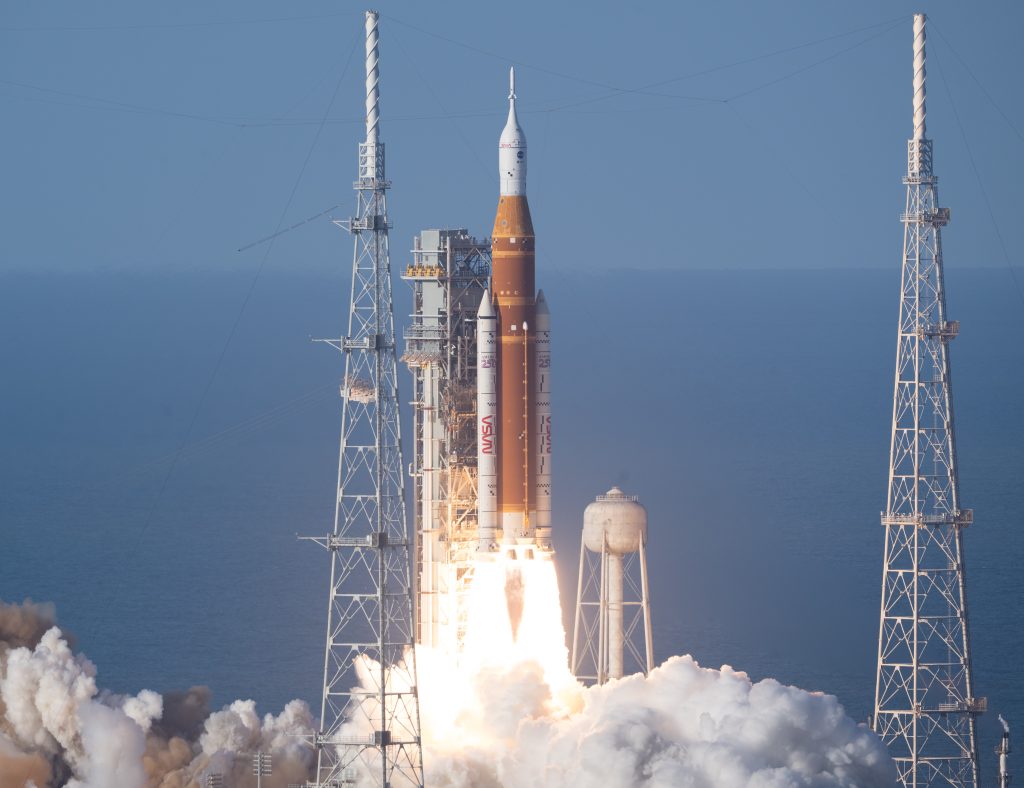
Artemis III is now a crewed demonstration mission in low Earth orbit, currently targeted for no earlier than June 2027. The ride is unchanged: NASA’s Space Launch System rocket lifting off from Launch Complex 39B at Kennedy Space Center, with four astronauts riding inside the Orion capsule.
But instead of heading for the Moon, Orion will settle into an orbit roughly 290 miles above Earth, a little higher than the International Space Station. Test versions of the commercial lunar landers will be waiting there: SpaceX’s Starship human landing system and Blue Origin’s Blue Moon. Orion will rendezvous and dock with the landers so the crew can rehearse the exact procedures that a future landing will depend on: approach, docking, hatch opening, and moving between vehicles.
At least one astronaut is expected to climb aboard a lander to check out its hatches, life-support connections, and the new Axiom spacesuits being built for lunar surface walks. Think of it as a full dress rehearsal with the audience (Earth) only a few hundred miles away instead of a quarter-million.
Why NASA Changed Course
The short answer is lander readiness. The human landing system hardware, being built by SpaceX and Blue Origin under commercial contracts, still faced major development milestones, including proving the storage and transfer of super-cold propellants and demonstrating docking in orbit. NASA’s Aerospace Safety Advisory Panel warned that the landing system carried significant mission-level risks, and Isaacman concluded that flying straight to the Moon with unproven landers was, in his words, not a pathway to success.
Rather than stack a first-ever landing on top of the first crewed test of two brand-new landers, NASA split the job in two. First, prove the rendezvous, docking, and crew transfer in Earth orbit, where an abort means coming home in hours. Land later, with the procedures already rehearsed.
A second, quieter reason the new profile makes sense is Orion’s heat shield. After Artemis I came home with unexpected char loss on its heat shield, NASA changed how it manufactures the Avcoat material. Artemis III will be the redesigned shield’s first crewed flight, and coming home from Earth orbit at about 17,500 mph is a far gentler reentry than a lunar return at roughly 25,000 mph. Reentry energy scales with the square of velocity, so the new mission gives the new shield a lower-stakes debut before anyone trusts it with a Moon-speed return.
Meet the Artemis III Crew
NASA named the four-person crew on June 9, 2026. Commander Randy Bresnik is a veteran of shuttle flights and long-duration station missions. Pilot Luca Parmitano flies for the European Space Agency and brings experience from two station expeditions. Mission specialists Andre Douglas and Frank Rubio round out the crew; Rubio previously spent a full year aboard the International Space Station. Astronaut Bob Hines was named as the backup crew member.
Notably, the crew will spend slightly longer aboard Orion than the nine days the Artemis II astronauts logged, giving them more time to work through the docking test objectives.
When Will Artemis III Launch?
The official target remains no earlier than June 2027, though NASA officials caution that large spaceflight schedules are hard to guarantee. Hardware is already coming together at Kennedy Space Center: both solid rocket boosters for the Artemis III SLS are being stacked in the Vehicle Assembly Building, the core stage is getting its RS-25 engines installed, and Orion’s crew module has been mated to its European-built service module and powered up for integrated testing.
If you want to watch it leave Florida, our Florida space tourist travel guide covers the best viewing spots around Kennedy Space Center.
What Comes Next: Artemis IV and the Real Landing
The landing was not canceled, it was moved. Under the revised architecture, Artemis IV, targeted for early 2028, is now slated to be the first mission to return astronauts to the lunar surface, with two crew members expected to spend about a week near the lunar south pole. Artemis V would follow in late 2028 for the second landing.
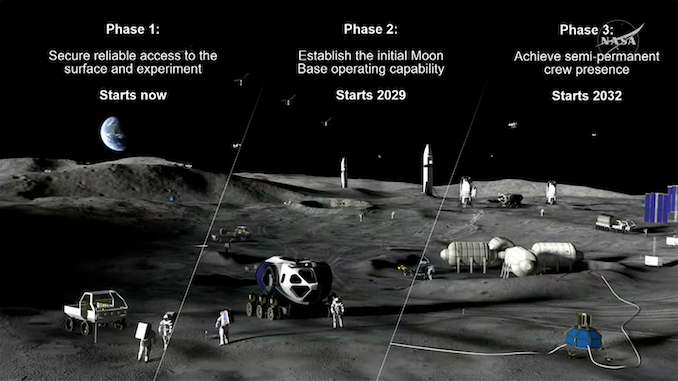
NASA also added a cargo mission to the manifest. Before crews arrive, uncrewed lander variants from SpaceX and Blue Origin are supposed to deliver up to 15 tons of equipment per trip to the surface: habitats, power systems, and science rovers that turn the Moon from a flags-and-footprints destination into a place astronauts can actually work from.
Then the question hangs over it all: China. Beijing is working toward its own crewed lunar landing around 2030, and every slip in the American schedule feeds the will-China-get-there-first debate. NASA bets that rehearsing the hard parts in Earth orbit makes the eventual landing safer and, more importantly, repeatable. Apollo proved America could visit the Moon. Artemis is trying to prove it can stay, and NASA decided a practice run was worth the wait.
For the full mission-by-mission picture, see our NASA Artemis program timeline, which tracks every mission from Artemis I through the planned landings.
Frequently Asked Questions
Will Artemis III land on the Moon?
No. Under the plan NASA announced in February 2026, Artemis III will no longer attempt a lunar landing. It is now a crewed Earth-orbit mission that will test rendezvous and docking between the Orion spacecraft and prototype lunar landers. The first Artemis crewed Moon landing is now planned for Artemis IV in early 2028.
Why did NASA change the Artemis III mission?
The commercial lunar landers built by SpaceX and Blue Origin were not ready for a crewed landing attempt. NASA’s safety advisers warned the human landing system carried significant mission-level risks, so NASA split the work: Artemis III will rehearse docking and crew transfer in Earth orbit first, and the landing will move to Artemis IV.
Who is on the Artemis III crew?
Commander Randy Bresnik, European Space Agency pilot Luca Parmitano, and mission specialists Andre Douglas and Frank Rubio. NASA announced the crew on June 9, 2026, with astronaut Bob Hines named as the backup crew member.
When will Artemis III launch?
NASA is targeting no earlier than June 2027 for launch from Launch Complex 39B at Kennedy Space Center in Florida aboard the Space Launch System rocket. That date is a target, not a firm commitment, and depends on lander readiness and hardware processing.
When will astronauts land on the Moon now?
Artemis IV, targeted for early 2028, is now planned as the first Artemis mission to land astronauts on the lunar surface near the south pole. Artemis V would follow in late 2028. China is separately working toward a crewed lunar landing around 2030.