Breakthroughs in Spaceflight: The NASA Artemis Program
The NASA Artemis program timeline outlines humanity’s return to the moon and eventual journey to Mars. In 1969, the first American Astronauts were sent to the moon as representatives of the Apollo program, with the intent of being the first people to step foot on the moon. Now, more than 50 years later, the Artemis program is a representation of humanity’s return to outer space, the moon, and eventually, Mars. Specifically, the program seeks to land the first woman and the first person of color on the lunar surface by the end of the third launch cycle, while simultaneously developing innovative technologies to reach Mars.
Previous Accomplishments
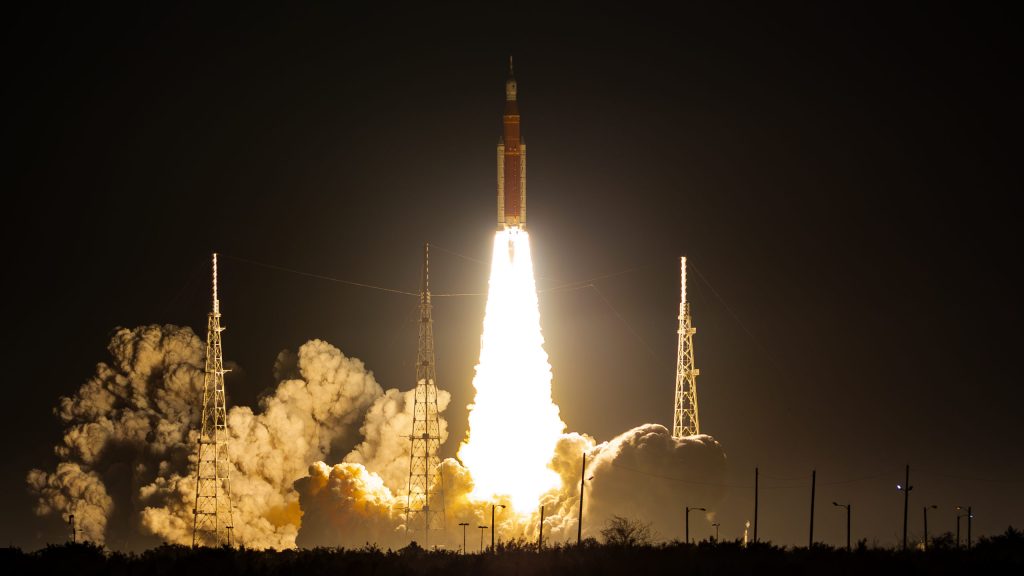
The first mission of the Artemis program took flight on Wednesday, November 16th, 2022, after being postponed four times due to a variety of engine problems, leaks, and weather concerns. The mission traveled a total of 1.4 million miles, curving directly past the moon and lasting a total of 25 days, before historically splashing down in the Pacific Ocean.
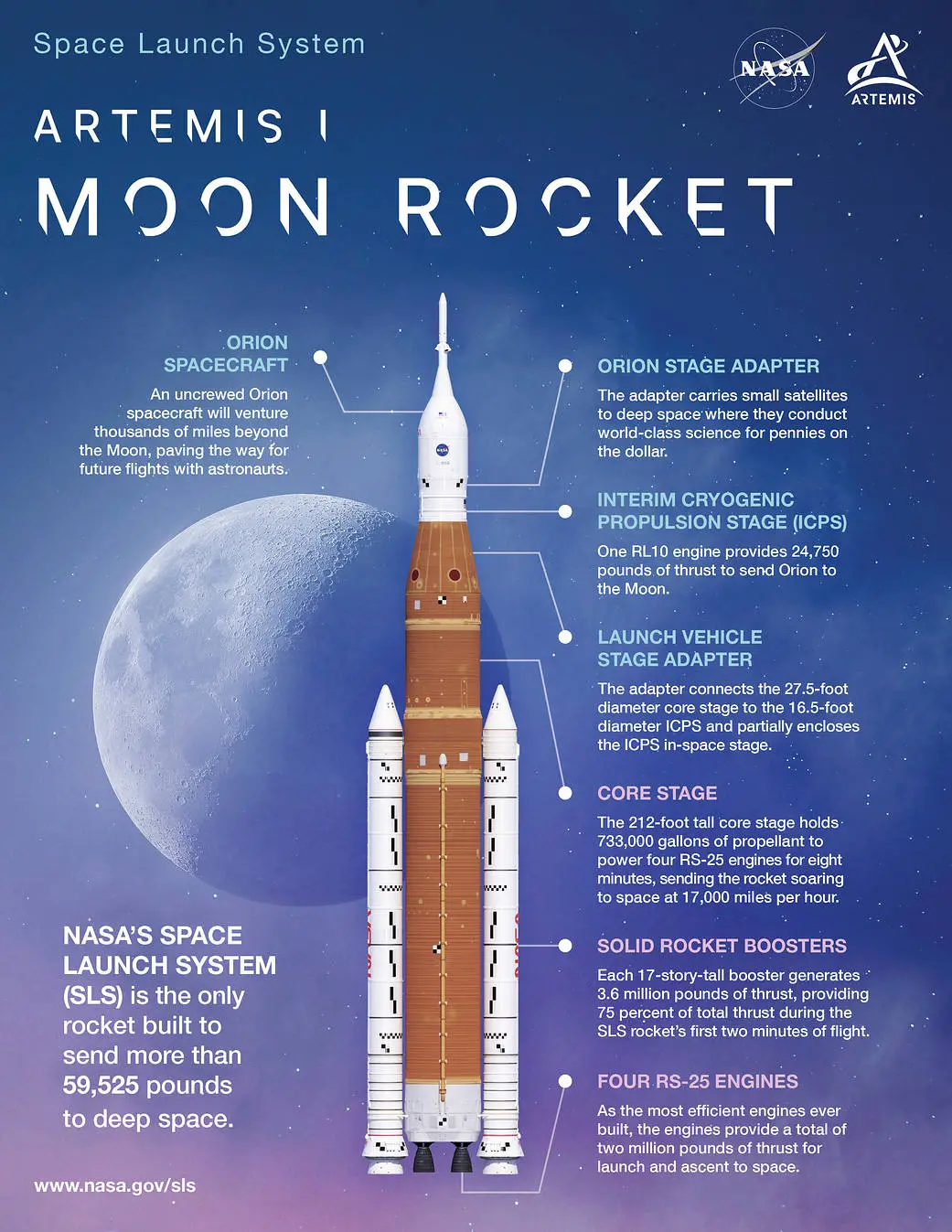
Artemis I was an uncrewed test flight that had various purposes in the realm of spaceflight, including testing the Space Launch System and Orion spacecraft and setting a margin for future lunar exploration. Due to the complexity of Artemis’ future missions, it requires a structure that is capable of propelling more than 500 thousand gallons of liquid hydrogen, an astronaut-containing spacecraft, and multiple additional adapters. Therefore, NASA created the Space Launch System (SLS), made of four main engines and three separate stages, which became the most powerful rocket in the world upon its launch. Located on top of the SLS is the Orion capsule, containing a crew module, service module, and launch abort system. Each of these components are vital to ensuring the success of the future Artemis missions. As part of the Artemis program timeline, Artemis I successfully tested the SLS and Orion spacecraft.
Current NASA Artemis Mission Status
With the Artemis I mission successfully completed, NASA recently announced an updated timeline for the upcoming series of missions. Originally targeted for launch in November of 2024, according to the Artemis program timeline, Artemis II is now scheduled for no earlier than February 2026. With crew safety at the forefront of their development, these scheduling adjustments follow the discovery of issues with batteries and a circulatory component essential to ventilation and temperature controls. Certain stages of the mission have already arrived at Kennedy Space Center for testing and configuration, including the core stage of the SLS, which was delivered in July.

Artemis II will be a historic mission as a 10-day crewed spaceflight for the first time in almost 50 years. Aboard this mission will be Commander Reid Wiseman, Pilot Victor Glover, and Mission Specialists Christina Koch and Jeremy Hansen. Ultimately, the astronauts will make a figure eight around the moon, extending 230 thousand miles away from Earth before looping back and splashing down in the Pacific Ocean.
Success in this mission is critical in reaching the next steps of exploratory spaceflight, aiming to conduct science on the moon and preparing for human life on Mars.
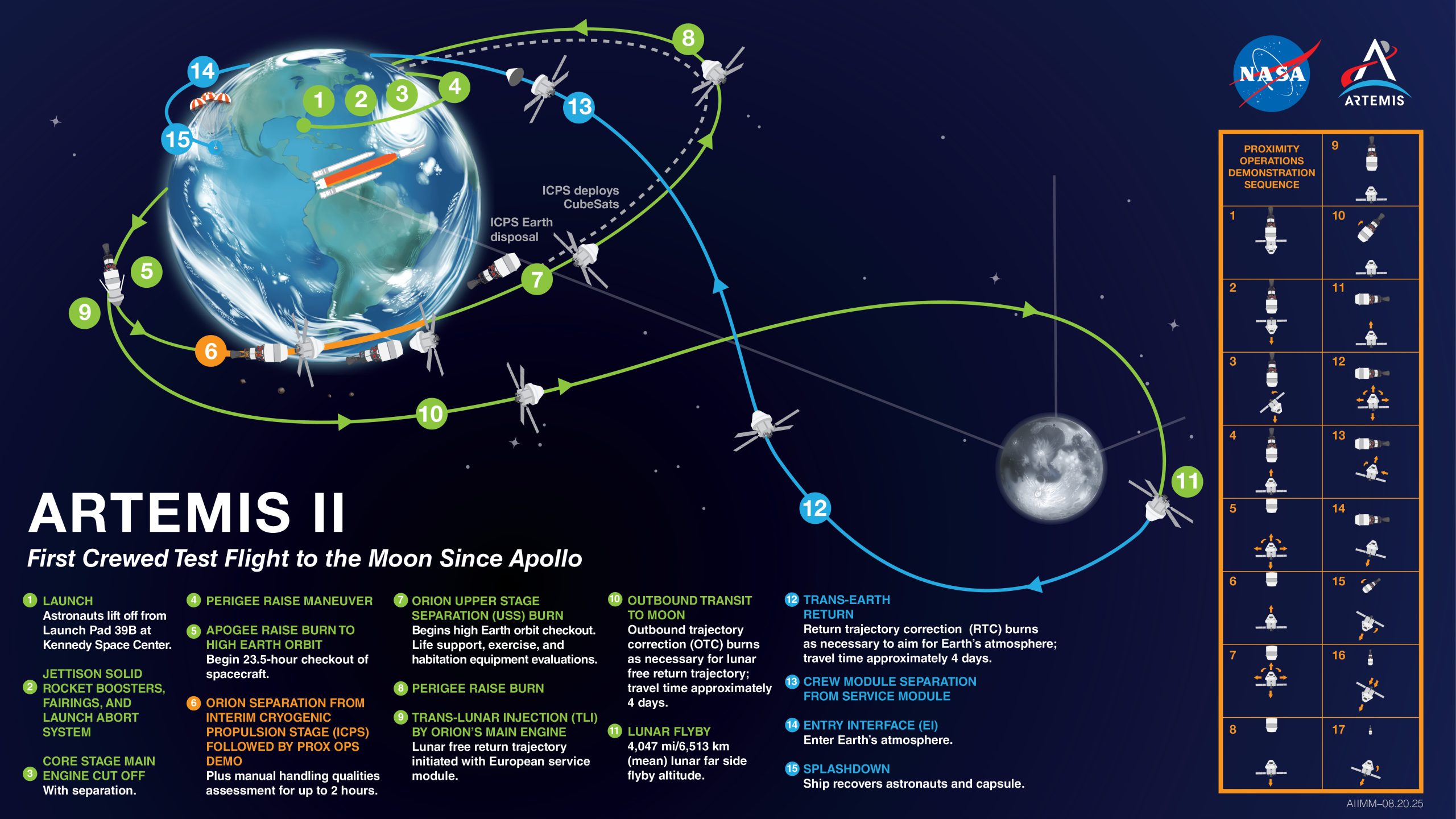
(https://www.nasa.gov/image-article/artemis-ii-map-2/)
Key Next Steps of the NASA Artemis Program Timeline
So far, there are three additional launches scheduled within the Artemis program. Artemis II, as mentioned earlier, will be the first crewed test flight of Orion and the SLS on a fly-by path around the moon before returning to Earth, and is scheduled for late 2025.
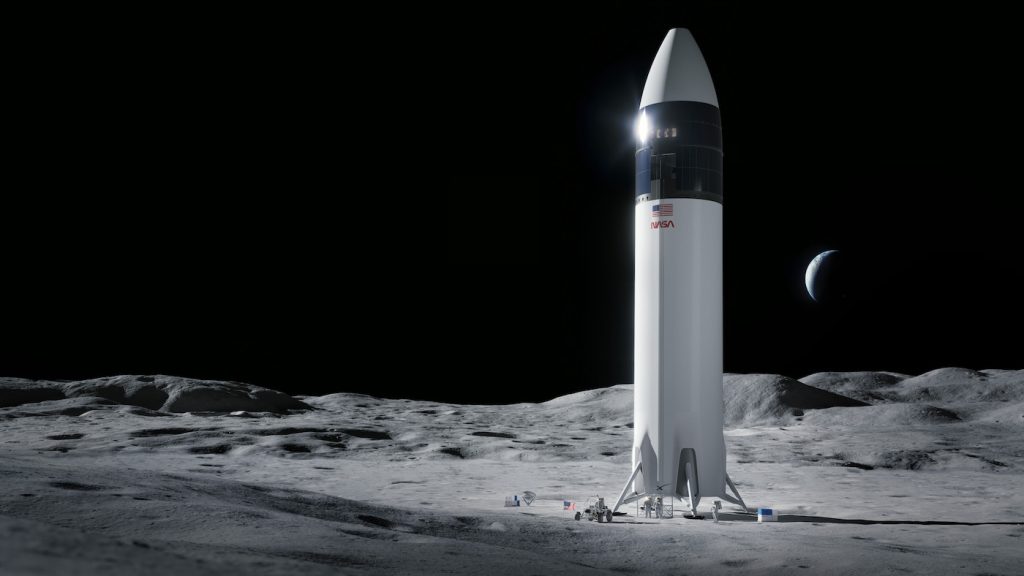
The Artemis program timeline continues with Artemis III, which will land the first woman and first person of color on the lunar surface. Astronauts will spend approximately a week on the lunar surface, conducting a variety of experiments before returning home to Earth. A key step in this mission will be the integration of the Human Landing System (HLS), which will transport astronauts directly from lunar orbit to the lunar surface. This system is currently being developed by SpaceX and will revolutionize spaceflight through its ability to carry as many as 100 passengers.
The fourth and final planned stage in the Artemis program is Artemis IV, scheduled for 2028. Before this mission can take effect, the Lunar Gateway (a space station in lunar orbit) must be built as a docking point for future missions to the lunar surface and eventually to Mars. Artemis IV plans to dock with the Lunar Gateway, delivering additional modules and assisting in the assembly and expansion, before making another crewed landing to the surface of the moon.
Following the Artemis program timeline provides a roadmap of NASA’s path toward lunar exploration and future Mars missions. Through each of these missions, NASA and SpaceX hope to eventually bridge the gap between Earth and Mars, and hope to someday colonize the Red Planet!
FAQ Section
What is the Artemis program?
The Artemis program is NASA’s initiative to return humans to the moon, land the first woman and first person of color on the lunar surface, and develop technologies for future Mars missions.
When did Artemis I launch?
Artemis I launched on November 16, 2022, as an uncrewed test flight to evaluate the Space Launch System (SLS) and Orion spacecraft.
What is the Artemis program timeline for future missions?
Artemis II is planned for February 2026 as the first crewed test flight, Artemis III is set for late 2026 for the first crewed lunar landing, and Artemis IV is scheduled for 2028 to dock with the Lunar Gateway and support lunar exploration.
Who will participate in Artemis II and Artemis III?
Artemis II astronauts include Commander Reid Wiseman, Pilot Victor Glover, and Mission Specialists Christina Koch and Jeremy Hansen. Artemis III will include the first woman, first person of color, and a next male astronaut to land on the moon.
What is the purpose of the Lunar Gateway in the Artemis program?
The Lunar Gateway is a space station in lunar orbit that will serve as a docking point for lunar missions and support future missions to the moon and Mars, including Artemis IV.
