
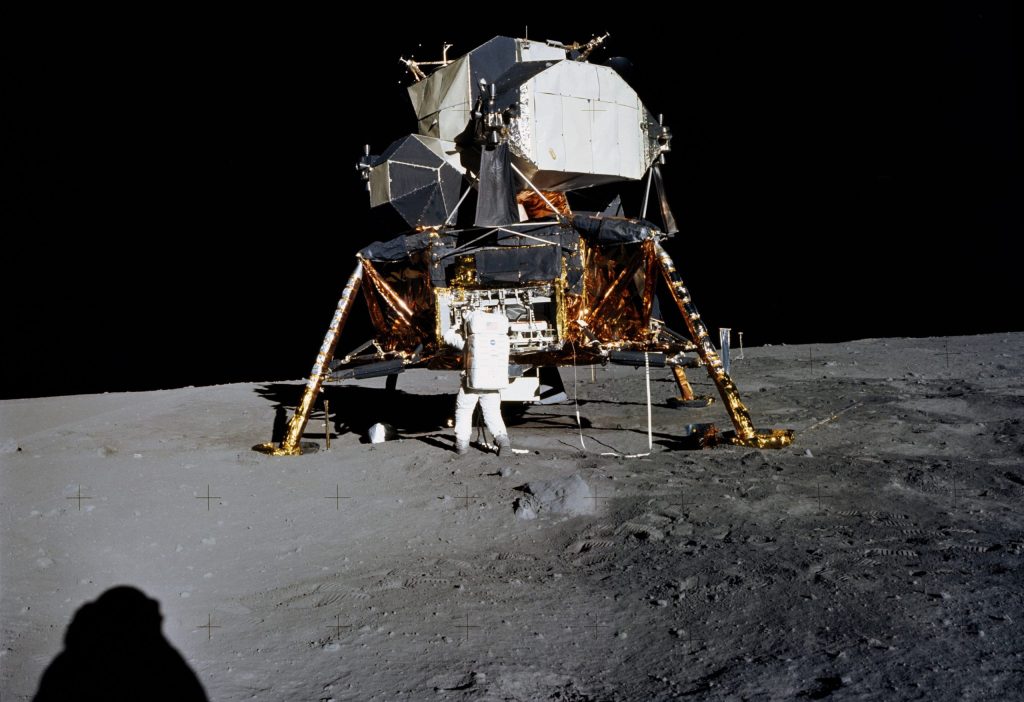
Apollo 11 Moon Landing: Celebrating Humanity’s Giant Leap
Last updated: September 30, 2026.
July 16 marks the anniversary of the launch of the Apollo 11 Moon Landing mission, one of the most significant milestones in human history. The Apollo 11 mission forever changed humanity’s relationship with space, proving that reaching beyond Earth was not only possible but achievable through innovation, courage, and determination.
On this day in 1969, astronauts Neil Armstrong, Buzz Aldrin, and Michael Collins began their ground-breaking journey toward the moon, an adventure that embodied the sheer magnitude of human potential and courage. Get more details and watch the historic launch.
A Leap for Mankind
The Apollo 11 Moon landing anniversary is most closely associated with July 20, 1969, the day Neil Armstrong became the first human to step onto the lunar surface. His now-immortal words, “That’s one small step for man, one giant leap for mankind,” echoed across the world and symbolized a shared victory for all of humanity.
Broadcast live to millions, the Moon landing represented technological mastery, global unity, and the realization of a dream that once belonged only to science fiction.
The Journey to the Moon
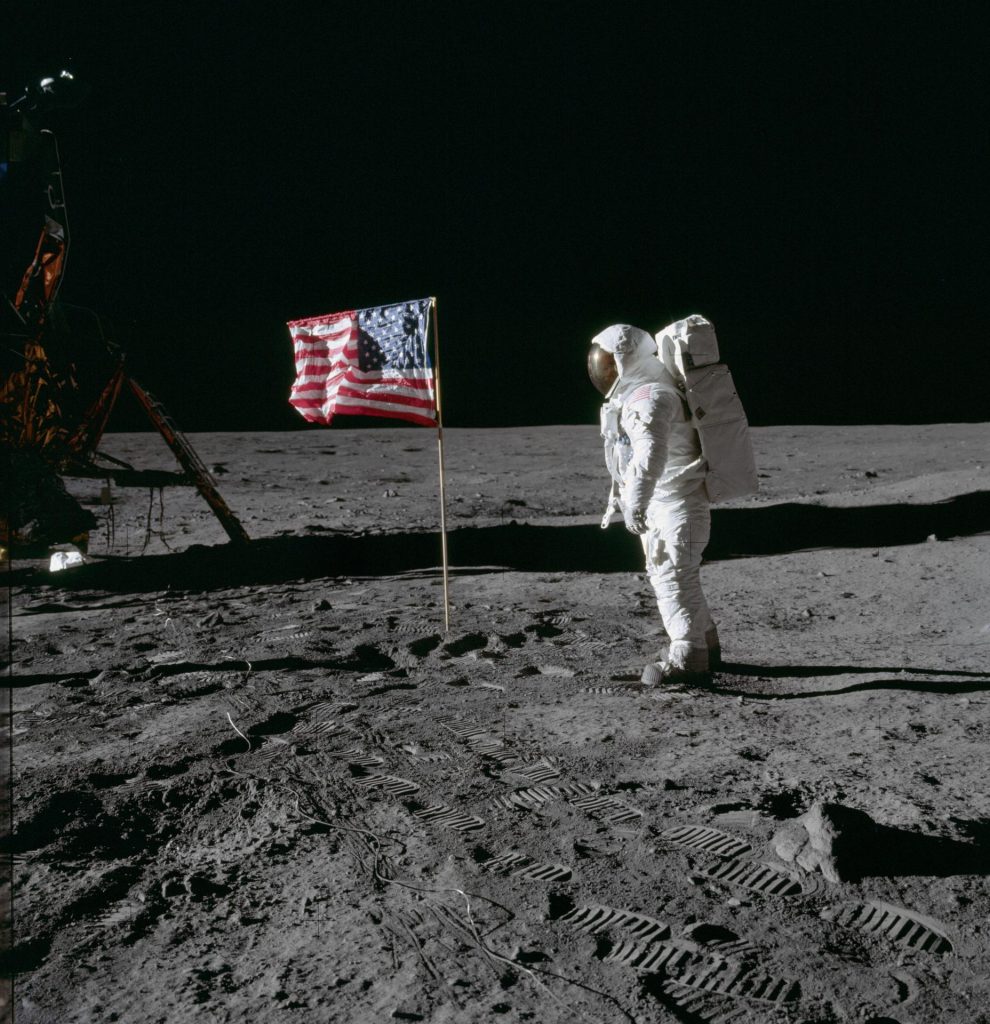
The journey that led to the Apollo 11 Moon landing began atop the mighty Saturn V rocket, the most powerful rocket ever flown at the time — surpassed in raw thrust only recently by SpaceX’s Starship. In just 76 hours, Apollo 11 traveled approximately 238,855 miles from Earth to lunar orbit.
Despite limited onboard computing power and a spacecraft no larger than a family car, the mission succeeded through meticulous planning, rigorous testing, and precise execution—demonstrating that human ingenuity could overcome immense challenges.
Remembering the Astronauts
As we honor the Apollo 11 Moon landing anniversary, it’s important to remember the distinct roles of each astronaut:
- Armstrong, and Aldrin became the first humans to walk on the Moon, conducting experiments and collecting lunar samples.
- Michael Collins, orbiting the Moon alone in the Command Module, played a vital role in ensuring the mission’s success and the crew’s safe return to Earth.
The Apollo 11 Moon Landing Legacy Continues
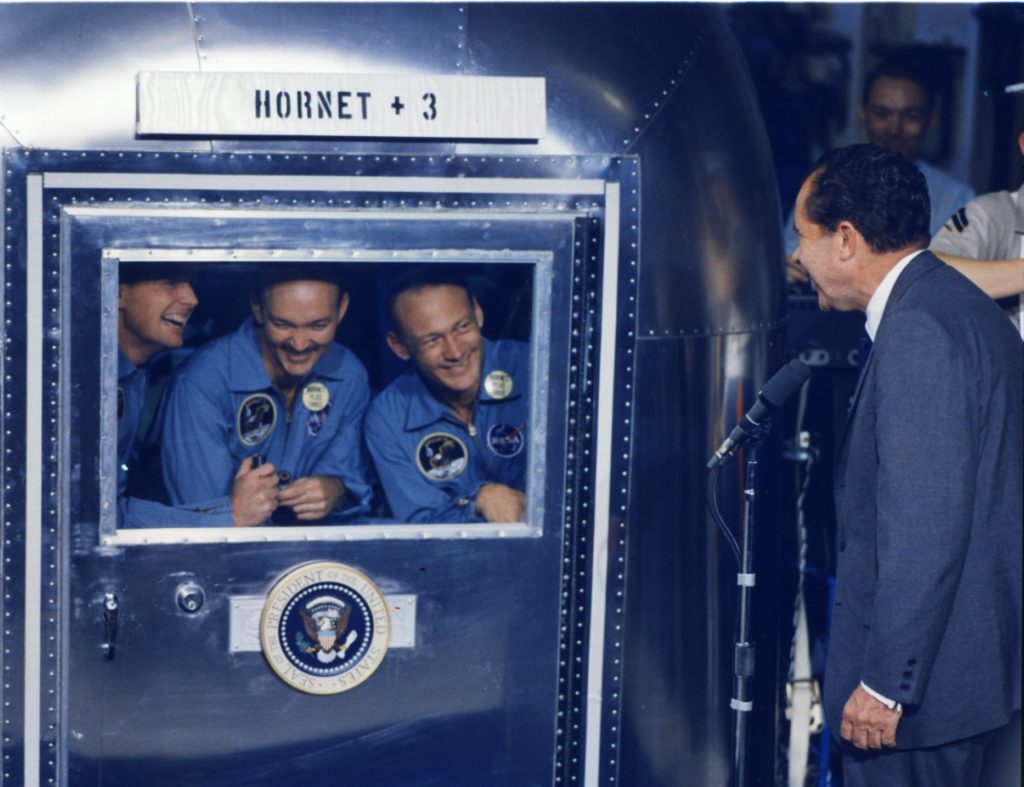
The Apollo 11 Moon landing anniversary is not just a celebration of NASA or the United States—it represents a triumph for all humankind. The mission marked the culmination of the Space Race and laid the foundation for decades of scientific discovery and space exploration.
Today, the legacy of Apollo 11 lives on through renewed lunar missions, the Artemis program, and private spaceflight initiatives aiming to establish a long-term human presence on the Moon and eventually Mars.
Celebrating the Anniversary
As we celebrate the Apollo 11 Moon landing anniversary, we reflect on the bravery of the astronauts, the scientists and engineers behind the mission, and the global unity it inspired. The Moon remains a silent witness to this extraordinary achievement, continuing to ignite curiosity and ambition in future generations.
Looking ahead, future anniversaries may celebrate humanity’s first steps on Mars or beyond—but Apollo 11 will always stand as the moment we proved the impossible was within reach.
On July 20, take a moment to look up at the Moon and remember one of humanity’s greatest achievements. Happy Moon Landing Day.
Apollo 11 Moon Landing: Celebrating Humanity's Giant Leap FAQ
When is the Apollo 11 Moon landing anniversary?
The Apollo 11 Moon landing anniversary is July 20 — the date in 1969 when Neil Armstrong became the first human to step onto the lunar surface. The mission itself launched four days earlier, on July 16, 1969, atop a Saturn V rocket. Check our Space Launch Schedule to follow the Artemis program’s return to the Moon.
Who were the three astronauts on Apollo 11?
Apollo 11’s crew consisted of Commander Neil Armstrong, Lunar Module Pilot Buzz Aldrin, and Command Module Pilot Michael Collins. Armstrong and Aldrin walked on the Moon and collected lunar samples while Collins remained in lunar orbit, ensuring the crew’s safe return to Earth. Each role was vital to the mission’s success.
What rocket launched Apollo 11 to the Moon?
Apollo 11 launched aboard the Saturn V — the most powerful rocket ever flown at the time, surpassed in raw thrust only recently by SpaceX’s Starship. Despite onboard computing power weaker than a modern smartphone, the Saturn V carried the crew roughly 238,855 miles to the Moon. Modern heavy-lift rockets continue this legacy on missions covered in our space news section.
How long did it take Apollo 11 to reach the Moon?
Apollo 11 traveled from Earth to lunar orbit in approximately 76 hours — just over three days. The spacecraft, no larger than a family car, covered roughly 238,855 miles through meticulous planning and precise execution. The full round trip, including the lunar landing and return to Earth, lasted 8 days, 3 hours, and 18 minutes.
What did Neil Armstrong say when he stepped on the Moon?
Neil Armstrong’s famous words were: “That’s one small step for man, one giant leap for mankind.” Broadcast live to millions worldwide on July 20, 1969, the phrase symbolized a shared victory for all humanity. The legacy continues today through NASA’s Artemis program and private missions aiming to establish a lasting lunar presence.