
Saturn V (National Aeronautics and Space Administration)
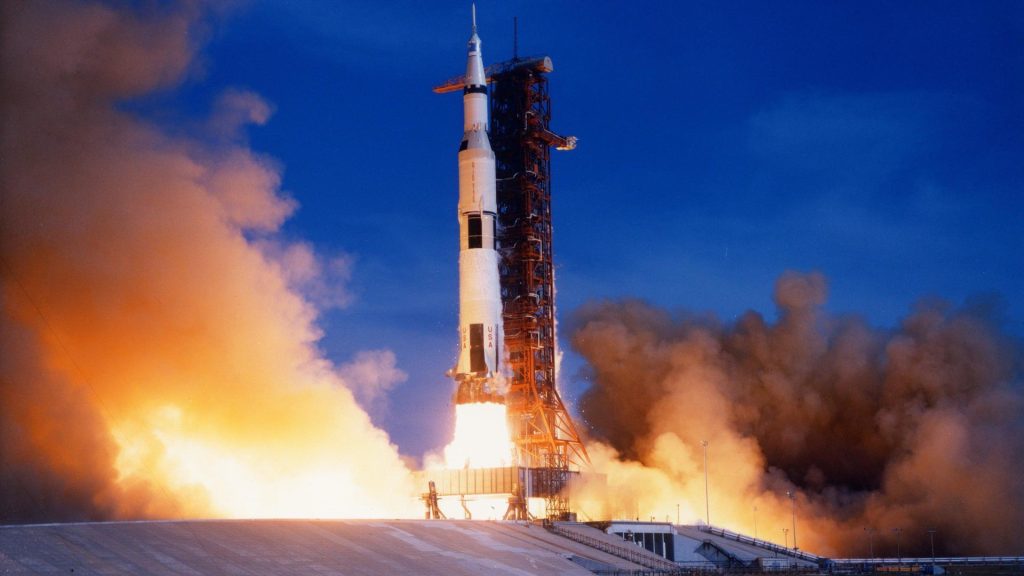
The Saturn V is a non-reusable, inactive launch vehicle manufactured by National Aeronautics and Space Administration (established in 1958). It undertook its inaugural launch on 11/09/1967.
The Saturn V was a human-rated expendable rocket used by NASA between 1967 and 1973. Most notably, the Saturn V took the Apollo program to the Moon. It still remains the world's tallest, heaviest, and most powerful rocket ever brought to operational status and is the only launch vehicle to take humans beyond LEO.
Saturn V Specifications
| Variant | V |
|---|---|
| Length | 110.6 m |
| Diameter | 10.1 m |
| Stages | 3 |
| Launch Mass | 2970 T |
| Takeoff Thrust | 35100 kN |
| LEO Capacity | 140000 kg |
Saturn V Launch Record
| Total Launches | 13 |
|---|---|
| Successful Launches | 12 |
| Failed Launches | 1 |
| Consecutive Successful Launches | 11 |
Manufacturer
Administrator: Jared Isaacman
The National Aeronautics and Space Administration is an independent agency of the executive branch of the United States federal government responsible for the civilian space program, as well as aeronautics and aerospace research. NASA have many launch facilities but most are inactive. The most commonly used pad will be LC-39B at Kennedy Space Center in Florida.
Program
The Apollo program was the third United States human spaceflight program carried out by the National Aeronautics and Space Administration (NASA), which succeeded in landing the first humans on the Moon from 1969 to 1972.