
SpaceX Starlink Group 31-2 (Starship Flight 15) Starship
Trajectory
Trajectory profiles are typically finalized by the range a week prior to launch. Check back here for the trajectory and launch visibility map as the launch window approaches.
Learn more about rocket launch trajectories (opens in a new tab)
About the Starlink Group 31-2 (Starship Flight 15) Mission
| Type | Communications |
|---|---|
| Orbit | Low Earth Orbit |
15th test flight of the two-stage Starship launch vehicle and 4th flight of Starship V3. Second Starship flight to deploy satellites (a group of Starlink satellites known as Starlink Group 31-2) into stable Low Earth Orbit and first ever to attempt returning the Starship 2nd stage back to the launch site.
The ship is expected to fly at an altitude approximately 275 km above Earth and complete approximately 14 orbits around the planet for more than 22 hours, with the ship expected to attempt returning back to Starbase, Texas on its launch pad by pad arms catching.
The booster’s primary test objective on Flight 15 will be executing a successful launch, ascent, stage separation, boostback burn, and landing by pad arms catching. This will also be the 1st Starship V3 booster to attempt returning to its launch site.
Starship will deliver 26 Starlink V3 satellites to orbit for the second time, which aim to greatly expand the network's capacity and user speeds. Each Starlink V3 satellite will add 1 Tbps of capacity to the constellation. 3 of the satellites have been modified with a suite of cameras to scan Starship’s heatshield and transmit imagery down to operators.
This launch is part of SpaceX's Starlink satellite internet constellation, a global broadband network designed to provide high-speed internet coverage worldwide. The Starlink mega-constellation uses thousands of satellites in low Earth orbit to deliver reliable internet connectivity to underserved and remote areas across the globe.
Learn about SpaceX's Starlink satellite internet constellation (opens in a new tab)
This mission will be launched aboard SpaceX's Starship, the world's most powerful rocket and the first fully reusable super heavy-lift launch vehicle. Starship is designed to carry crew and cargo to Earth orbit, the Moon, Mars, and beyond, representing a revolutionary advancement in space transportation technology with its unprecedented payload capacity and complete reusability.
Explore SpaceX Starship development and flight history (opens in a new tab)

Launch Pad & Location
Orbital Launch Pad 2
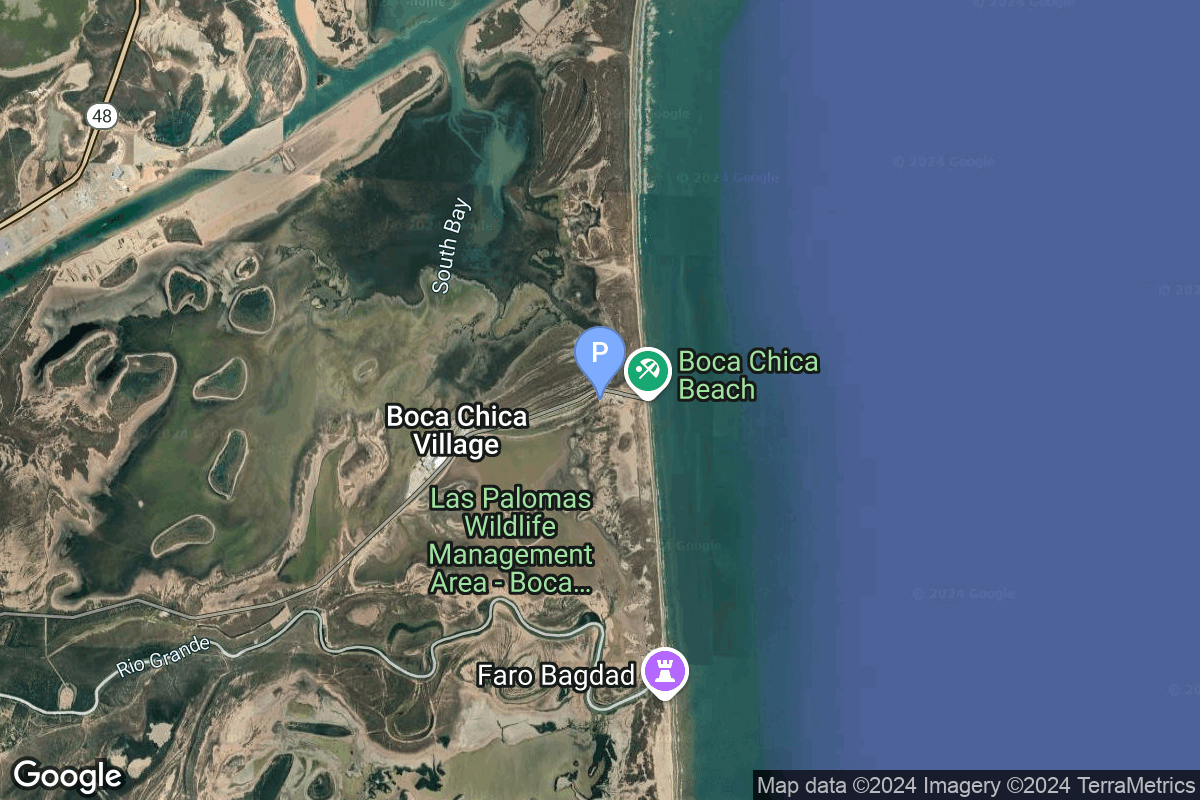
SpaceX Starbase, TX, USA
| Launches | 3 |
|---|---|
| Orbital Launch Attempts | 1 |
| Total Launches | 23 |
Starbase is an industrial complex for Starship rockets and the headquarters of the American aerospace manufacturer company SpaceX. Located near Brownsville, Texas, United States, it has been under construction since the late 2010s by SpaceX. Starbase is composed of a spaceport near the Gulf of Mexico, a production facility at the Boca Chica village, and a small structure test site along the Texas State Highway 4.
SpaceX Starship V3 Rocket
Third development version of the Starship reusable two-stage super heavy-lift launch vehicle.
| Length | 124.4 m |
|---|---|
| Diameter | 9.0 m |
| Stages | 2 |
| Launch Mass | 5,250.0 T |
| Takeoff Thrust | 80,807.0 kN |
| LEO Capacity | 100,000 kg |
| Maiden Flight | 5/22/2026 |
Mission Spacecraft
Ship 42
Ship 42 (S42) is the spacecraft assigned to this mission. It is a SpaceX Reuseable Upper Stage designed for More than 100 tons to Earth orbit and will travel to Low Earth Orbit.
Fourth V3 Starship to fly with various enhancements, to be used on the 15th Starship test flight, the 2nd Starship flight to deploy satellites into stable Low Earth Orbit. It is the first ever Starship 2nd stage to attempt returning to its launch pad. Third-generation second stage of the two-stage Starship super heavy-lift launch vehicle. Unknown at this stage
| Type | Reuseable Upper Stage |
|---|---|
| Agency | SpaceX |
| Serial Number | S42 |
| Status | Active |
| Destination | Low Earth Orbit |
| Maiden Flight | 5/22/2026 |
| Human Rated | No |
| Height | 52.1 m |
| Diameter | 9.0 m |
Booster Landing & Recovery
Core Booster 22
| Serial Number | Booster 22 |
|---|---|
| Last Flight | unknown |
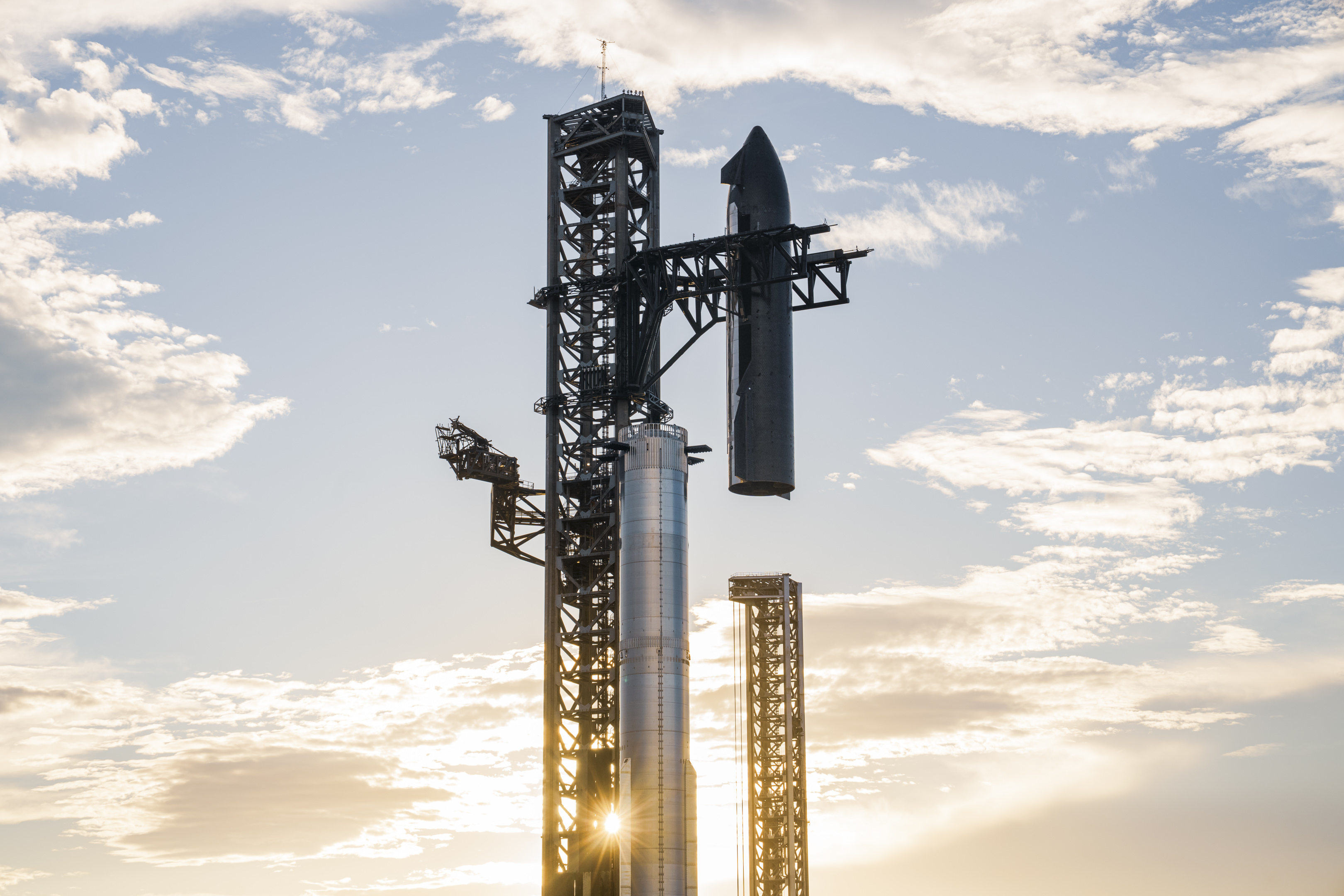
Fourth Block 3 Super Heavy booster to fly with various enhancements including Raptor 3 engines, integrated interstage and 3 grid fins instead of 4 used. To be used on the 15th Starship flight test, the 2nd Starship flight to deploy satellites into stable Low Earth Orbit. It is the first Starship V3 booster to attempt landing back on its launch pad. The Super Heavy Booster 22 will attempt to return the launch site at Starbase.
Orbital Launch Mount B - OLM-B
Return to Launch Site - RTLS
A return to launch site usually means that after stage separation the booster flips and does a burn back towards the launch site, landing near where it initially launched from.
A sonic boom may occur during booster recovery as the first stage returns to the landing zone. This atmospheric phenomenon creates a loud sound as the rocket breaks the sound barrier during its descent.
Understand rocket booster landing sonic booms (opens in a new tab)
About SpaceX
Space Exploration Technologies Corp., known as SpaceX, is an American aerospace manufacturer and space transport services company headquartered in Hawthorne, California. It was founded in 2002 by entrepreneur Elon Musk with the goal of reducing space transportation costs and enabling the colonization of Mars. SpaceX operates from many pads, on the East Coast of the US they operate from SLC-40 at Cape Canaveral Space Force Station and historic LC-39A at Kennedy Space Center. They also operate from SLC-4E at Vandenberg Space Force Base, California, usually for polar launches. Another launch site is being developed at Boca Chica, Texas.
| Total Launches | 744 |
|---|---|
| Successful | 729 |
| Failed | 15 |
| Pending | 135 |
| Consecutive Success | 229 |

Frequently Asked Questions
When is the SpaceX Starship Starlink Group 31-2 (Starship Flight 15) launch scheduled?
The SpaceX Starship Starlink Group 31-2 (Starship Flight 15) launch is currently scheduled for:
.
Launch times are subject to change based on weather conditions, technical readiness, and range availability. Check back regularly for the most up-to-date launch time and status updates.
Where is the SpaceX Starship Starlink Group 31-2 (Starship Flight 15) mission launching from?
The SpaceX Starship rocket will launch from Orbital Launch Pad 2 at SpaceX Starbase, TX, USA. Starbase is an industrial complex for Starship rockets and the headquarters of the American aerospace manufacturer company SpaceX. Located near Brownsville, Texas, United States, it has been under construction since the late 2010s by SpaceX. Starbase is composed of a spaceport near the Gulf of Mexico, a production facility at the Boca Chica village, and a small structure test site along the Texas State Highway 4. For viewing location recommendations and tips, check the launch location details above.
What rocket is being used for the Starlink Group 31-2 (Starship Flight 15) mission?
The Starlink Group 31-2 (Starship Flight 15) mission will launch aboard a SpaceX Starship rocket. Third development version of the Starship reusable two-stage super heavy-lift launch vehicle. Detailed rocket specifications and performance data are available in the rocket details above.
Will the SpaceX Starship booster for Starlink Group 31-2 (Starship Flight 15) attempt a landing?
Yes, the Starship first stage booster will attempt a Return to Launch Site at a designated landing zone. Booster recovery allows SpaceX to reuse rocket components, significantly reducing launch costs. Watch the live stream to see the landing attempt in real-time. Learn more about the landing details.
What weather conditions could delay the SpaceX Starship Starlink Group 31-2 (Starship Flight 15) launch?
The SpaceX Starship Starlink Group 31-2 (Starship Flight 15) launch can be delayed by various weather conditions including lightning within 10 nautical miles, high winds (especially upper-level winds), thick cloud layers, precipitation, and poor visibility. Weather must be favorable at the launch site, downrange landing zones, and abort landing sites. Check the launch weather forecast above for current conditions and probability of favorable weather.
How can I get updates if the SpaceX Starship Starlink Group 31-2 (Starship Flight 15) launch is delayed?
This page is updated in real-time with the latest SpaceX Starship launch status, including any delays or scrubs for the Starlink Group 31-2 (Starship Flight 15) mission. You can also check our space launch schedule for the most current information. Enable push notifications through our mobile app to receive instant alerts about launch status changes, weather holds, or new launch times. We recommend following official SpaceX live streams for the most immediate range updates.
Last Updated
Last Updated:
-
Updated payload name.
-
GO for launch, pending regulatory approval.
-
NET November 13.
-
NET November.
-
Adding launch