
Why Rocket Launches Don’t Go Straight Up: Understanding Rocket Launch Trajectories
Last updated: September 30, 2026.
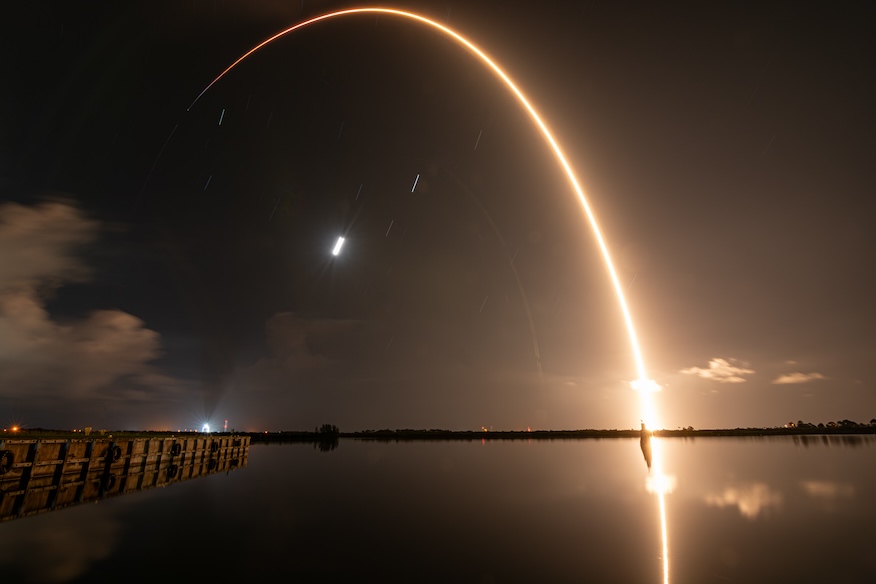
Watching a rocket launch is an unforgettable experience, and understanding a rocket launch trajectory can make it even more fascinating. While rockets don’t travel straight up into space, their carefully calculated flight paths—including the critical gravity turn launch maneuver—ensure efficient travel into orbit. While it might seem most logical for a rocket to take the seemingly shortest path out of Earth’s atmosphere, the reality is far more complex. All rockets follow carefully calculated curved paths known as a “gravity turn,” a maneuver used to launch a craft into or out of orbit while using minimal fuel, optimizing efficiency and ensuring mission success. This article explores the science behind such trajectories and explains how rockets reach orbit to complete critical tasks such as deploying satellites, reaching other planets, and journeying to space stations.
Overcoming Earth’s Atmosphere
Rockets begin their journey with a near-vertical ascent in order to quickly escape the thickest and most difficult portion of Earth’s atmosphere. The atmosphere exerts a significant amount of drag on the rocket during its initial stages of flight. Therefore, through a vertical ascension at first, the rocket will minimize the time spent in the most dense layers of the atmosphere, reducing its fuel consumption and high amounts of structural stress.
However, as the rocket continues to gain altitude, continuing straight decreases efficiency, as the ultimate goal is to reach orbital velocity. Orbital velocity is the velocity at which a rocket or other moving body revolves around a center point. The velocity of this orbit depends on the distance between the object and the center of the Earth. For Low Earth Orbit (LEO) specifically, orbital velocity is approximately 17,000 miles per hour or 7.8 kilometers per second.
Gravity Turn Launch: A Key Rocket Trajectory Maneuver
In order to reach a proper orbital position, the gravity turn is a critical phase of the launch in which the rocket will gradually tilt its nose downrange (horizontal). For a rocket to escape the atmosphere, there are two key steps that must be achieved: rising faster than gravity pulling it back towards the surface, and accumulating enough sideways momentum at a high enough altitude. These two steps are crucial, as without sufficient enough horizontal velocity, the rocket would fall back to the Earth’s surface.
The gravity turn combines these two steps into a single maneuver, maximizing efficiency by conserving fuel and limiting the structural stress placed on the spacecraft. Similarly, this maneuver also takes full advantage of Earth’s gravity in order to help shape the rocket’s trajectory, minimizing the need for additional engine burns. This is executed by the spacecraft’s guidance or “engine gimbaling system,” which allows for engine adjustments and steering into a proper trajectory.
Achieving Orbit: How Rockets Reach Their Mission Trajectory
After completing its vertical ascent and downrange tilt, a rocket undergoes a process called orbital insertion. The spacecraft’s trajectory is adjusted by either decelerating or accelerating using various forms of propulsion systems such as solid propellant thrusters, cold gas propulsion systems, or electric propulsion systems. Once the rocket reaches its required altitude and speed, main engine cutoff (MECO) occurs. At this point, the rocket’s first stage has shut down and the first and second stages have separated. Now, any payload on board, such as a satellite, is able to be released into orbit, while its inertia and Earth’s gravity continues to pull it forward. Achieving orbit requires many precise calculations and adjustments to ensure that the payload remains in the desired trajectory without escaping Earth’s gravity or falling back to the surface.
Launching to the ISS: Rocket Trajectories for Space Station Missions
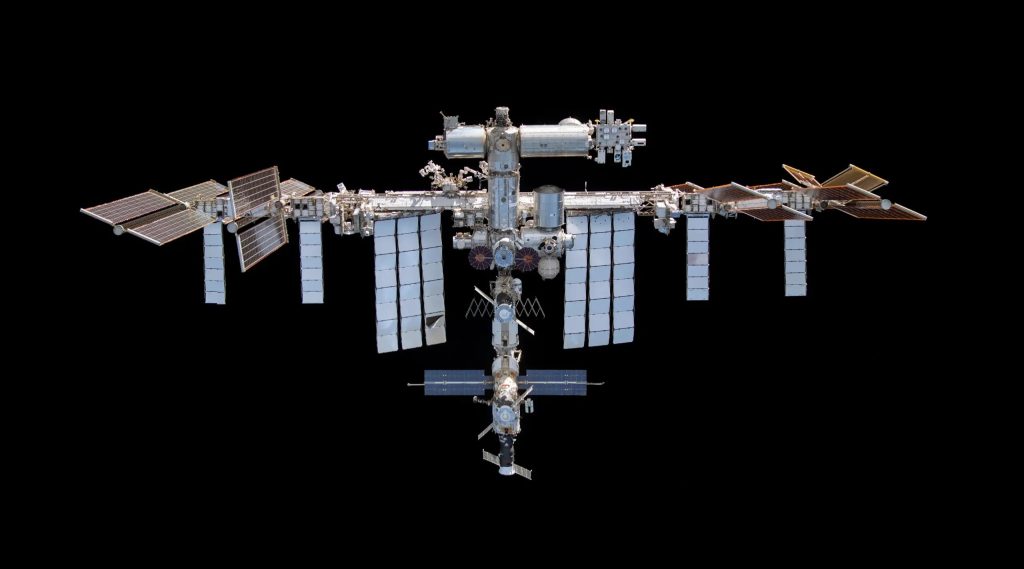
The ISS orbits Earth at an altitude of about 260 miles and travels at about 17,000 miles per hour. Therefore, reaching the ISS involves a series of precise calculations to ensure accurate timing and coordination.
The Launch Window
Rockets targeting the ISS must launch within a specific time frame when the station’s orbital plane aligns with the launch site. This ensures that the spacecraft can adjust its trajectory to intercept the ISS’s orbit without requiring any excessive fuel for corrections.
Orbital Synchronization
Orbital synchronization is a crucial part of determining a rocket’s launch time as the rocket needs to reach the same orbital altitude and inclination as the ISS in order to be able to dock with it. Essentially, the rocket launches when the ISS passes overhead at the point where the rocket reaches the required orbital altitude. Though this allows for quick docking once in orbit, it creates a very short launch window that must be carefully planned out and calculated.
Docking With the Space Station
After matching the ISS’s orbit, the spacecraft makes several intermediate orbits and precise engine burns allowing it to synchronize speed and position with the station. Docking is a highly choreographed and automated process that can take hours or even days, depending on the mission.
Understanding Rocket Launch Trajectories for Satellites and Interplanetary Missions
Satellite Deployment
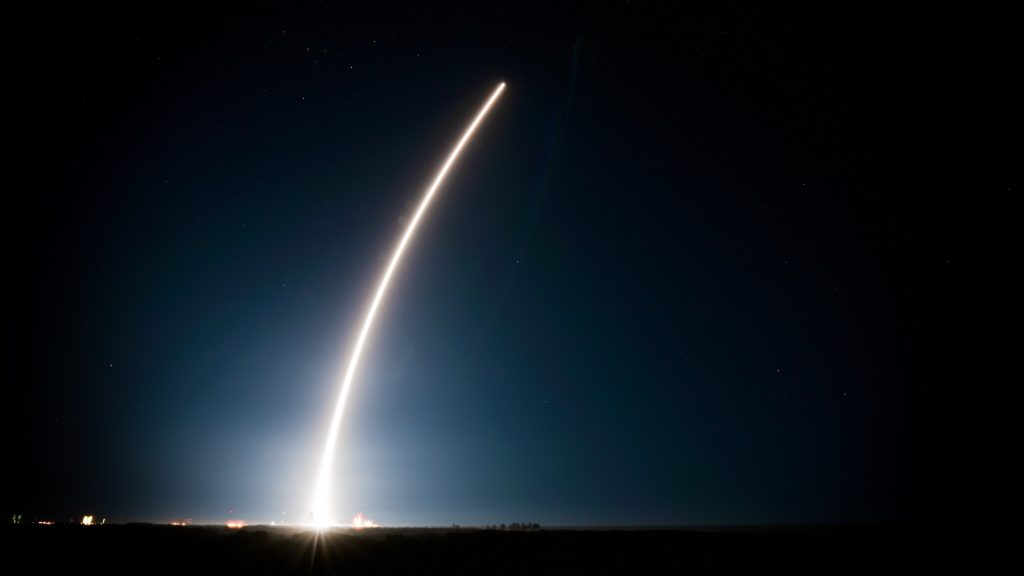
Satellites are generally deployed into various orbits depending on their function. The first is Geostationary Orbit which occurs when the rocket travels to a specific altitude where the satellite’s orbital period matches the Earth’s rotation. This altitude is approximately 36,000 kilometers and allows the satellite to remain stationary relative to the Earth’s surface, making it an ideal orbit for communication and weather monitoring satellites. The Second orbit is a polar orbit, which occurs when rockets follow a near-polar trajectory, allowing it to pass over every region of the Earth as it rotates beneath them. Due to its ability to provide complete coverage, these orbits are generally suited for Earth observation missions.
Interplanetary Missions
When discussing missions beyond the Earth, such as to the Moon or Mars, rockets follow specialized trajectories combining horizontal velocity with multiple engine burns. These burns allow the rocket to escape Earth’s gravity and enter a transfer orbit towards its target destination. A transfer orbit is an elliptical orbit that a spacecraft uses when moving from one orbit to another. Some common transfer orbits include the Hohmann transfer orbit, where spacecraft are moved between orbits of different altitudes on a coplanar setting, and the Lunar Transfer orbit, which occurs between Low Earth Orbit and a Lunar orbit. Timing and navigation are critical points in ensuring spacecraft safety and efficient transport to its destination.
Advanced Navigation Systems
Many of today’s modern rockets are equipped with advanced guidance and navigation systems in order to calculate and adjust trajectories automatically and in real-time. These systems rely on the use of sensors, computers, and GPS technology to ensure that the spacecraft follows the most efficient path to complete its mission objective, and simultaneously accounts for independent variables such as atmosphere conditions, wind, and engine functions.
Conclusion
Understanding the science behind a rocket launch trajectory and how rockets follow precise flight paths enhances appreciation for these complex missions. Whether launching to the ISS or deploying satellites, every gravity turn launch is critical for mission success. Whether the mission is to deploy a satellite or resupply the ISS, the rocket’s trajectory is carefully calculated to ensure mission success.
Witness the Next Launch!
Want to see a rocket launch up close? Check out the Space Launch Schedule for a detailed guide on the best viewing locations, accommodations, and additional tips for an unforgettable experience!
Understanding Rocket Launch Trajectories and the Gravity Turn FAQ
Why don’t rockets go straight up into space?
Going straight up is the shortest path out of the atmosphere, but it isn’t how you get to orbit — an object that goes straight up simply falls back down. To stay in orbit, a spacecraft must travel sideways at roughly 28,000 km/h (about 17,500 mph) so that as it falls toward Earth, it keeps missing the planet. That’s why every rocket curves over and flies horizontally during ascent. Watch a launch arc overhead in our live rocket launch streams.
What is a gravity turn in a rocket launch?
A gravity turn is the carefully calculated curved flight path rockets follow to reach orbit using minimal fuel. The rocket first climbs nearly vertically to punch quickly through the thickest part of the atmosphere, then gradually pitches over so gravity naturally bends its trajectory into a horizontal arc. By letting gravity do the steering instead of forcing the turn with thrust, the rocket saves an enormous amount of propellant. Learn more launch science in our space news.
Why do rockets launch toward the east?
Most rockets launch eastward to get a free speed boost from Earth’s rotation, which spins eastward at up to 1,670 km/h (1,040 mph) at the equator. Launching with the planet’s spin means the rocket needs less of its own fuel to reach orbital velocity. That’s also why launch sites like Cape Canaveral in Florida sit as close to the equator as practical. Find Florida launches on our launch schedule.
How fast does a rocket need to go to reach orbit?
To stay in low Earth orbit, a spacecraft must reach about 7.8 kilometers per second — roughly 28,000 km/h or 17,500 mph — moving parallel to Earth’s surface. Reaching the edge of space is easy by comparison; it’s the sideways speed that requires nearly all of a rocket’s fuel and is the whole reason for the gravity turn trajectory. Compare the rockets that achieve it in our rocket database.
Can I see a rocket’s trajectory during a live launch?
Yes — during the first few minutes of a launch you can watch the rocket pitch over from vertical to a curved arc, and the engine plume often becomes visible across a wide area as it climbs into thinner air. Onboard cameras and tracking views in our live rocket launch streams show the trajectory bending toward the horizon in real time, and our viewing guide helps you pick a spot to watch it arc overhead in person.