
SpaceX Flight 13 Starship
Rocket Launch Video Streams
Weather Forecast During Launch
The forecast calls for a temperature of 93°F, clear skies, 0% cloud cover and a wind speed of 18mph.
Rocket Launch Trajectory & Flight Path
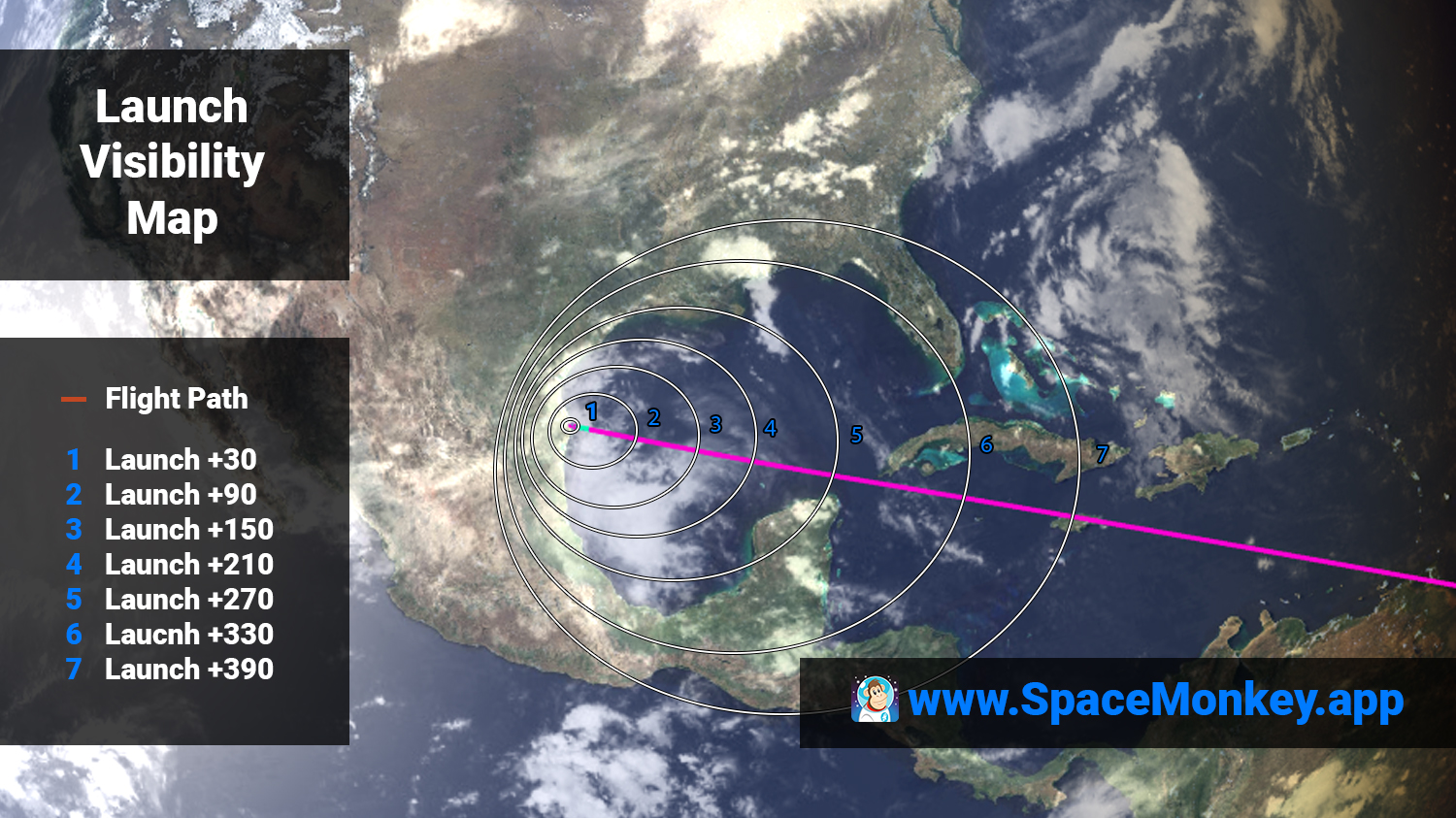
Track the complete rocket launch trajectory with real-time flight data from FlightClub.io (opens in a new tab). View detailed telemetry including rocket velocity, altitude progression, thrust levels, acceleration, orbital insertion parameters, and 3D flight path visualization throughout all mission phases from liftoff to orbit.
Learn about rocket launch trajectory physics (opens in a new tab)
About the Flight 13 Mission
| Type | Test Flight |
|---|---|
| Orbit | Suborbital |
13th test flight of the two-stage Starship launch vehicle. Second flight of Starship V3.
For the first time, Starship will carry 20 V3 Starlink satellites to space, which will extend solar arrays and antennas and will attempt to connect with ground stations in South Africa and the larger Starlink constellation via high-capacity lasers.
6 of the satellites have been modified with a suite of cameras to scan Starship’s heat shield and transmit imagery down to operators to continue testing methods of analyzing Starship’s heat shield readiness for return to launch site on future missions. Several tiles on Starship have been painted white to simulate missing tiles and serve as imaging targets in the test.
This mission will be launched aboard SpaceX's Starship, the world's most powerful rocket and the first fully reusable super heavy-lift launch vehicle. Starship is designed to carry crew and cargo to Earth orbit, the Moon, Mars, and beyond, representing a revolutionary advancement in space transportation technology with its unprecedented payload capacity and complete reusability.
Explore SpaceX Starship development and flight history (opens in a new tab)

Launch Pad & Location
Orbital Launch Pad 2
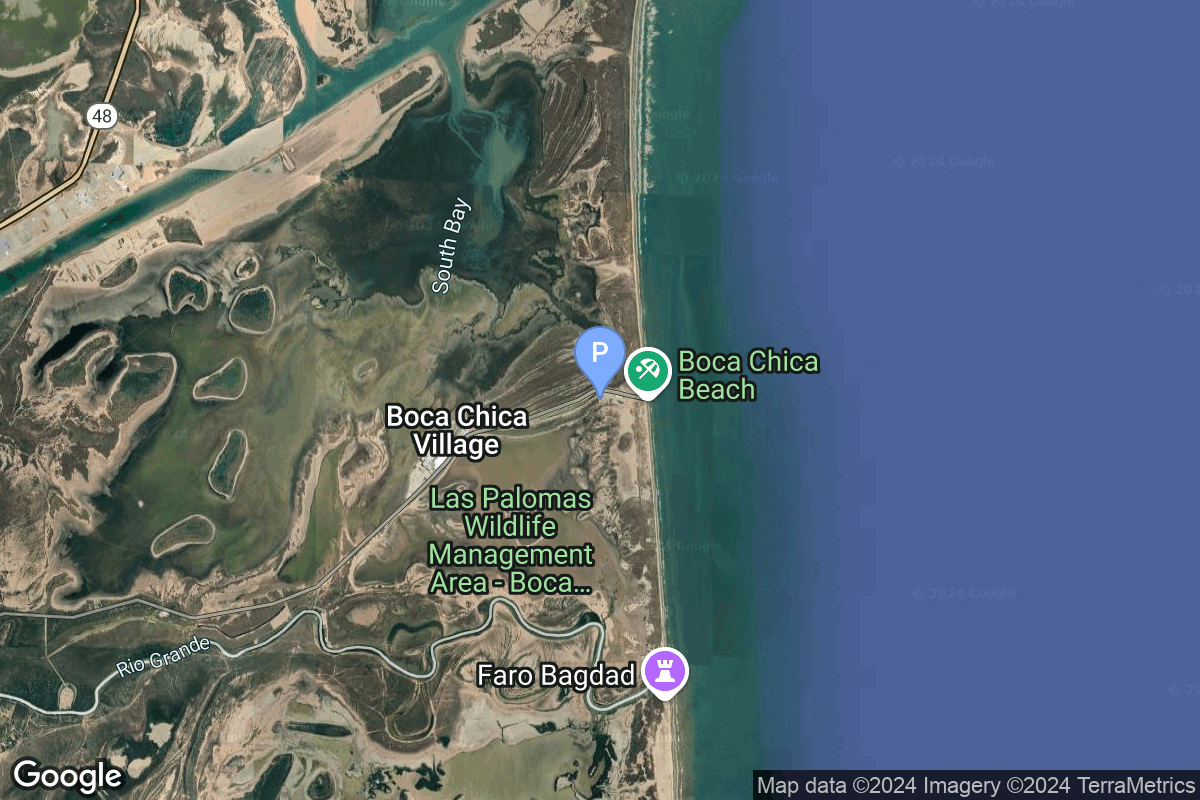
SpaceX Starbase, TX, USA
| Launches | 3 |
|---|---|
| Orbital Launch Attempts | 1 |
| Total Launches | 23 |
Starbase is an industrial complex for Starship rockets and the headquarters of the American aerospace manufacturer company SpaceX. Located near Brownsville, Texas, United States, it has been under construction since the late 2010s by SpaceX. Starbase is composed of a spaceport near the Gulf of Mexico, a production facility at the Boca Chica village, and a small structure test site along the Texas State Highway 4.
Rocket Launch Timeline
Track every phase of the rocket launch with our detailed mission timeline. From T-minus countdown events and pre-launch preparations through liftoff, stage separation, and orbital insertion, follow each critical milestone in real-time. Our comprehensive launch sequence timeline includes payload integration, propellant loading, engine ignition, and post-launch telemetry tracking.
| Time | Event |
|---|---|
| T- 00 : 50 : 00 | GO for Prop Load Launch director verifies go for propellant load |
| T- 00 : 36 : 33 | Stage 1 LOX Load Start of liquid oxygen loading in the first stage |
| T- 00 : 35 : 00 | Stage 1 LNG Load Start of liquid methane loading in the first stage |
| T- 00 : 34 : 14 | Stage 2 LNG Load Start of liquid methane loading in the second stage |
| T- 00 : 34 : 13 | Stage 2 LOX Load Start of liquid oxygen loading in the second stage |
| T- 00 : 21 : 40 | Engine Chill Start of engine chilling |
| T- 00 : 02 : 50 | Stage 1 Propellant Load Complete End of propellant loading in the first stage |
| T- 00 : 02 : 10 | Stage 2 Propellant Load Complete End of propellant loading in the second stage |
| T- 00 : 00 : 30 | GO for Launch Launch director verifies go for launch |
| T- 00 : 00 : 17 | Flame Deflector Activation Activation of the flame deflector ahead of engine ignition |
| T- 00 : 00 : 03 | Ignition Start of the engine ignition sequence |
| T+ 00 : 00 : 00 | Liftoff First upwards movement of the rocket |
| T+ 00 : 00 : 00 | Excitement Guaranteed Excitement guaranteed |
| T+ 00 : 00 : 58 | Max-Q Maximum dynamic pressure |
| T+ 00 : 02 : 18 | MECO Cut-off of the main engine |
| T+ 00 : 02 : 21 | Stage 2 Separation Separation of the second stage from the first |
| T+ 00 : 02 : 25 | Booster Boostback Burn Startup Start of the booster boostback burn |
| T+ 00 : 03 : 03 | Booster Boostback Burn Shutdown End of the booster boostback burn |
| T+ 00 : 06 : 27 | Stage 1 Landing Burn Start of the first stage landing burn |
| T+ 00 : 06 : 53 | Stage 1 Landing Landing of the first stage |
| T+ 00 : 08 : 05 | SECO-1 First cut-off of the second engine |
| T+ 00 : 16 : 40 | Payload Deployment Sequence Start Start of the payload deployment sequence |
| T+ 00 : 27 : 39 | Payload Deployment Sequence End End of the payload deployment sequence. |
| T+ 00 : 38 : 58 | SEB-2 2nd burn of the second engine |
| T+ 00 : 47 : 30 | Atmospheric Entry Start of the atmospheric re-entry |
| T+ 01 : 02 : 23 | Starship Transonic Starship passing through the transonic regime |
| T+ 01 : 03 : 01 | Starship Subsonic Starship reaches a subsonic velocity |
| T+ 01 : 05 : 01 | Starship Landing Burn Start of the Starship orbital stage landing burn |
| T+ 01 : 05 : 03 | Landing Flip Flip maneuver to set the orientation for landing |
| T+ 01 : 05 : 12 | Starship Landing Landing of the Starship orbital stage |
| T+ 01 : 05 : 19 | Starship Landing Landing of the Starship orbital stage |
| T+ 01 : 05 : 21 | Starship Landing Landing of the Starship orbital stage |
SpaceX Starship V3 Rocket
Third development version of the Starship reusable two-stage super heavy-lift launch vehicle.
| Length | 124.4 m |
|---|---|
| Diameter | 9.0 m |
| Stages | 2 |
| Launch Mass | 5,250.0 T |
| Takeoff Thrust | 80,807.0 kN |
| LEO Capacity | 100,000 kg |
| Maiden Flight | 5/22/2026 |
Mission Spacecraft
Ship 40
Ship 40 (S40) was the spacecraft used for this mission. It is a SpaceX Reuseable Upper Stage designed for More than 100 tons to Earth orbit and traveled to Suborbital.
Second V3 Starship, used on the 13th Starship test flight. Third-generation second stage of the two-stage Starship super heavy-lift launch vehicle. Unknown at this stage
| Type | Reuseable Upper Stage |
|---|---|
| Agency | SpaceX |
| Serial Number | S40 |
| Status | Active |
| Destination | Suborbital |
| Maiden Flight | 5/22/2026 |
| Mission End | 7/24/2026 |
| Flights | 1 |
| Human Rated | No |
| Height | 52.1 m |
| Diameter | 9.0 m |
Booster Landing & Recovery
Core Booster 20
| Serial Number | Booster 20 |
|---|---|
| Last Flight | 07/24/2026 |
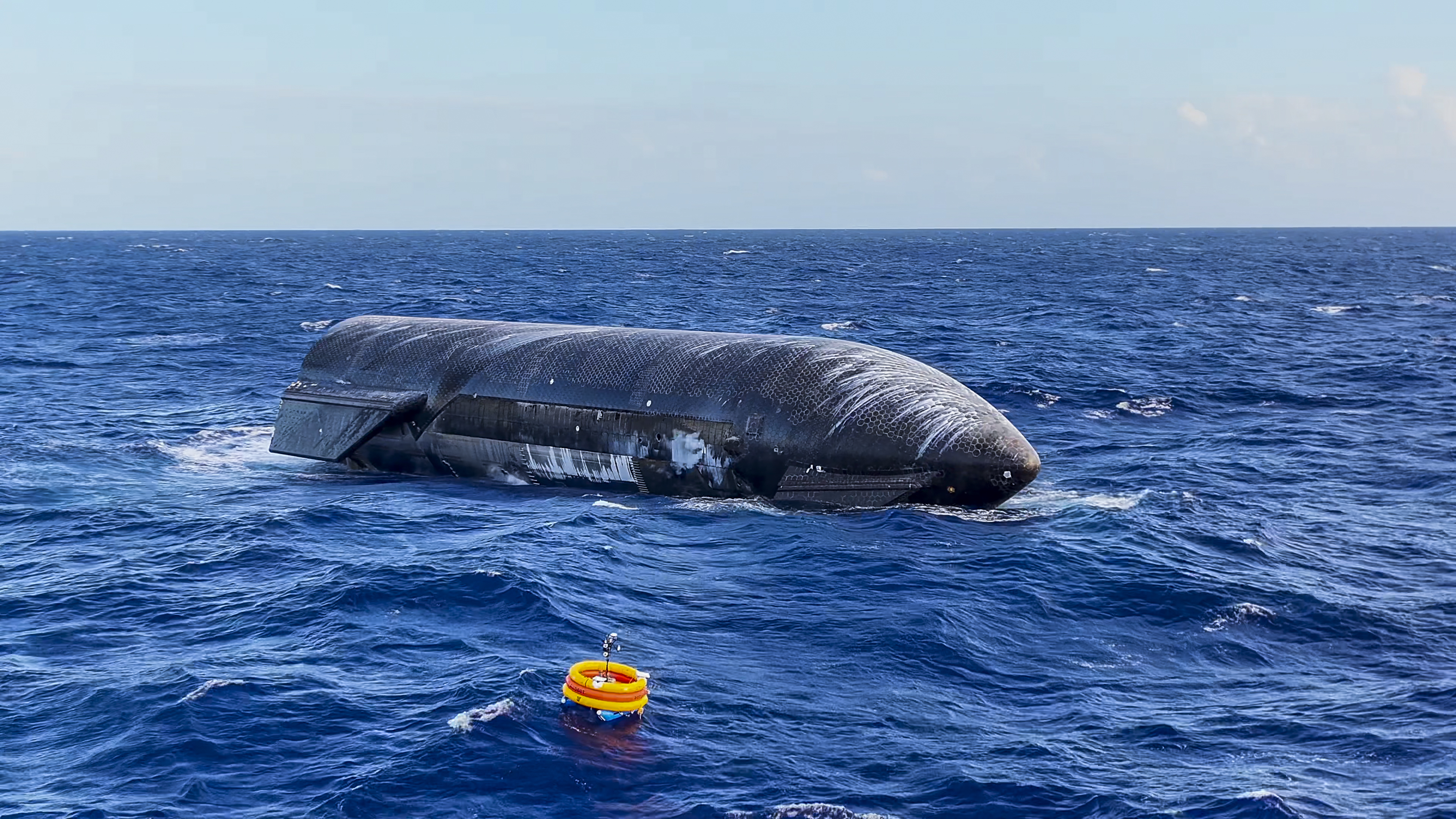
Second Block 3 Super Heavy booster to fly with various enhancements including Raptor 3 engines, integrated interstage and 3 grid fins instead of 4 used. Used on the 13th Starship flight test. It was lost at splashdown, having completed a nominal boostback burn, but performed its landing burn with fewer engines than planned. The Super Heavy Booster 20 attempted to perform a soft splashdown in the Gulf of Mexico, but not all of the planned engines ignited during the landing burn and the booster splashed down at higher speeds than planned.
Gulf of Mexico - GOM
Gulf of Mexico
Ocean - Ocean
No recovery attempt
Track the booster recovery and droneship return to port (opens in a new tab)
About SpaceX
Space Exploration Technologies Corp., known as SpaceX, is an American aerospace manufacturer and space transport services company headquartered in Hawthorne, California. It was founded in 2002 by entrepreneur Elon Musk with the goal of reducing space transportation costs and enabling the colonization of Mars. SpaceX operates from many pads, on the East Coast of the US they operate from SLC-40 at Cape Canaveral Space Force Station and historic LC-39A at Kennedy Space Center. They also operate from SLC-4E at Vandenberg Space Force Base, California, usually for polar launches. Another launch site is being developed at Boca Chica, Texas.
| Total Launches | 735 |
|---|---|
| Successful | 720 |
| Failed | 15 |
| Pending | 131 |
| Consecutive Success | 220 |

Frequently Asked Questions
When was the SpaceX Starship Flight 13 launch scheduled?
The SpaceX Starship Flight 13 launch was scheduled for:
.
Where can I watch the SpaceX Starship Flight 13 launch video?
You can watch the SpaceX Starship launch video on this page. The official video includes full mission coverage with multiple camera angles, onboard views, and expert commentary covering pre-launch procedures, liftoff, stage separation, and payload deployment.
Where did the SpaceX Starship Flight 13 mission launch from?
The SpaceX Starship rocket launched from Orbital Launch Pad 2 at SpaceX Starbase, TX, USA. Starbase is an industrial complex for Starship rockets and the headquarters of the American aerospace manufacturer company SpaceX. Located near Brownsville, Texas, United States, it has been under construction since the late 2010s by SpaceX. Starbase is composed of a spaceport near the Gulf of Mexico, a production facility at the Boca Chica village, and a small structure test site along the Texas State Highway 4.
What rocket was used for the Flight 13 mission?
The Flight 13 mission launched aboard a SpaceX Starship rocket. Third development version of the Starship reusable two-stage super heavy-lift launch vehicle. Detailed rocket specifications and performance data are available in the rocket details above.
Did the SpaceX Starship booster for Flight 13 attempt a landing?
Yes, the Starship first stage booster attempted a Ocean at a designated landing zone. Booster recovery allows SpaceX to reuse rocket components, significantly reducing launch costs. Learn more about the landing details.
What weather conditions could have delayed the SpaceX Starship Flight 13 launch?
The SpaceX Starship Flight 13 launch could have been delayed by various weather conditions including lightning within 10 nautical miles, high winds (especially upper-level winds), thick cloud layers, precipitation, and poor visibility. Weather must be favorable at the launch site, downrange landing zones, and abort landing sites.
How can I get updates if the SpaceX Starship Flight 13 launch was delayed?
This page was updated in real-time with the latest SpaceX Starship launch status, including any delays or scrubs for the Flight 13 mission. You can also check our space launch schedule for historical launch information. Our mobile app provides push notifications for instant alerts about launch status changes. Official SpaceX live streams provided the most immediate range updates during the launch window.
Last Updated
Last Updated:
-
Ship has splashed down.
-
Liftoff.
-
Unofficial Re-stream by SPACE AFFAIRS has started
-
Now targeting Jul 24 at 22:51 UTC
-
Rescheduled to July 24 due to launch site weather.
-
Delayed to NET July 23.
-
Setting GO.
-
NET July 20, TBC.
-
Reverted back to NET July TBD pending more information.
-
Scrubbed for the day.
-
Abort at ignition.
-
Unofficial Re-stream by SPACE AFFAIRS has started
-
Tweaked T-0.
-
Tweaked T-0.
-
GO for launch.
-
NET July 15, TBC.
-
NET July 14, TBC.
-
NET July.
-
Adding launch