
Arianespace SEOSAT-Ingenio & Taranis Vega
Rocket Launch Video Streams
About the SEOSAT-Ingenio & Taranis Mission
| Type | Earth Science |
|---|---|
| Orbit | Sun-Synchronous Orbit |
| Launch Cost | $37,000,000 |
SEOSAT-Ingenio is a high-resolution optical imaging mission of Spain - the flagship mission of the Spanish space strategic plan. Its mission is devoted to ensure an even coverage of the areas of national interest, providing a large operational capability in the capture of high-resolution multi-spectral land optical images for numerous user groups, as well as supporting and optimizing the development in Spain of teledetection-based applications in Spain. The overall mission objective is to provide information for applications in cartography, land use, urban management, water management, environmental monitoring, risk management and security.
TARANIS (Tool for the Analysis of RAdiation from lightNIngand Sprites), the Celtic god of thunder and lightning, is the first satellite designed to observe luminous, radiative and electromagnetic phenomena occurring at altitudes of 20 to 100 km over thunderstorms. Discovered 20 years ago, such transient luminous events (TLEs) such as red sprites, blue jets, elves, sprite halos, etc. remain shrouded in mystery. They are sometimes accompanied by terrestrial gamma-ray flashes (TGFs). The TARANIS microsatellite will fly over thousands of TLEs and TGFs for at least four years and will be capable of detecting these events and recording their luminous and radiative signatures at high resolution, as well as the electromagnetic perturbations they set off in Earth’s upper atmosphere. The payload includes numerous sensors to observe the TLEs and to perform in-situ measurements of perturbations caused on the local plasma (fields, waves and particles).
AVUM upper stage tumbled uncontrollably during the first burn because cables in the engine control system were improperly connected.
Launch Pad & Location
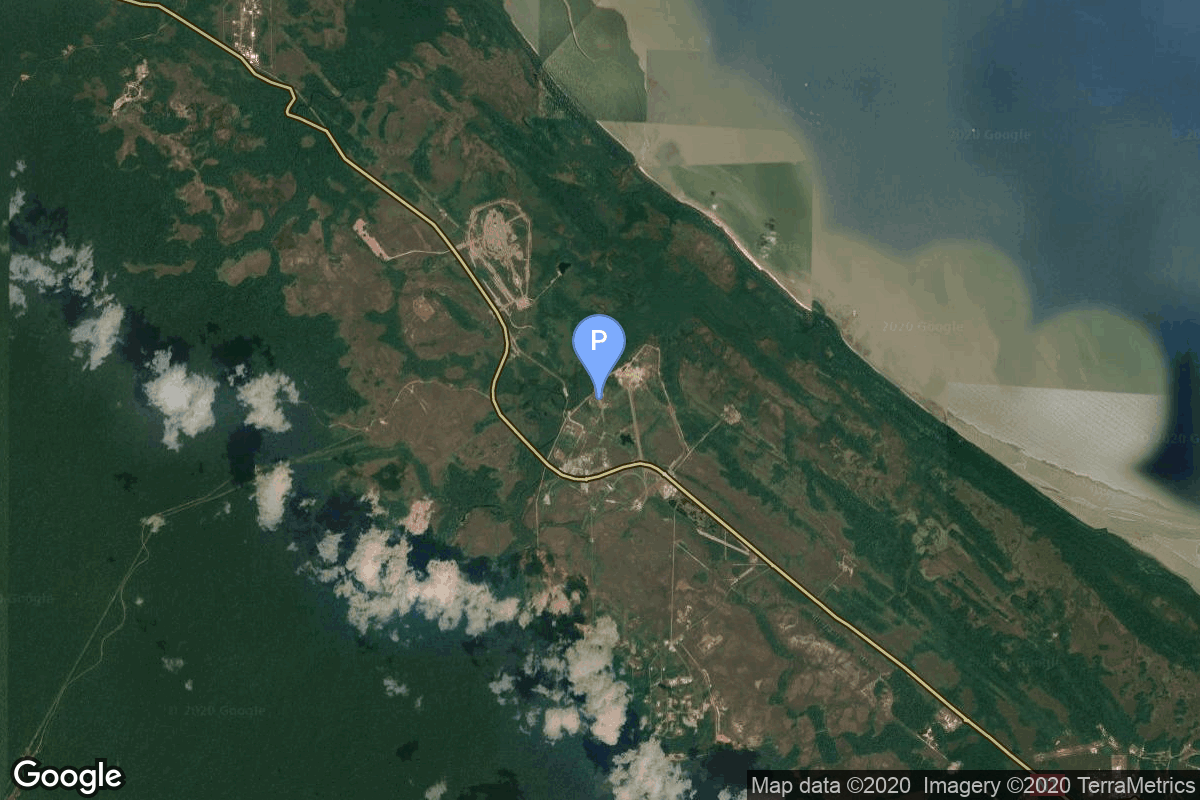
Ariane Launch Area 1 (ELV)
Guiana Space Centre, French Guiana
| Launches | 55 |
|---|---|
| Orbital Launch Attempts | 55 |
| Total Launches | 333 |
The Guiana Space Centre is a European spaceport to the northwest of Kourou in French Guiana, a region of France in South America. Kourou is located at a latitude of 5°. In operation since 1968, it is a suitable location for a spaceport because of its equatorial location and open sea to the east.
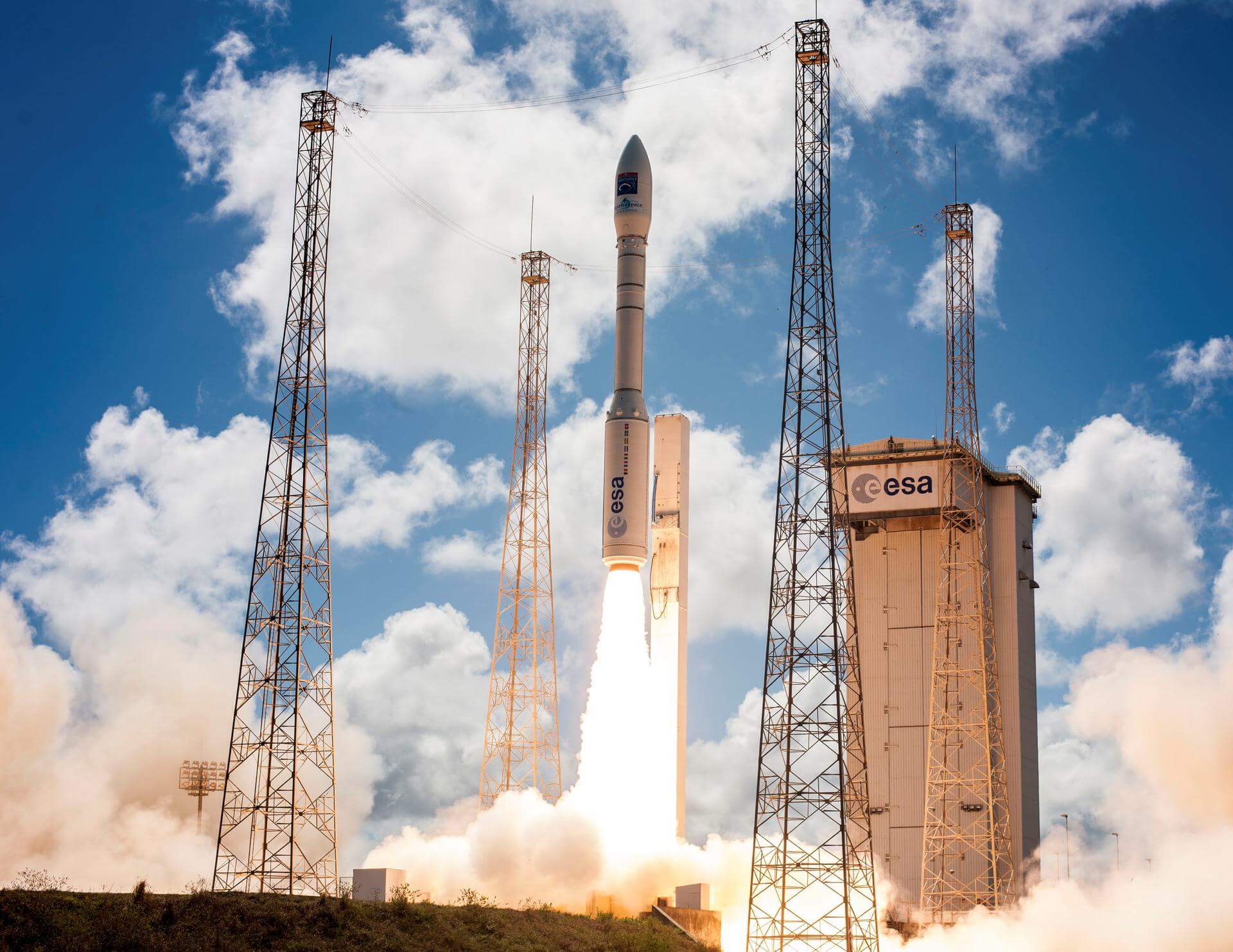
Avio S.p.A Vega Rocket
Vega is the smallest lifter in the current Arianespace family.
| Length | 29.9 m |
|---|---|
| Diameter | 3.0 m |
| Stages | 4 |
| Launch Mass | 137.0 T |
| Takeoff Thrust | 2,974.0 kN |
| LEO Capacity | 1,500 kg |
| SSO Capacity | 1,450 kg |
| Launch Cost | $37,000,000 |
| Maiden Flight | 2/13/2012 |
About Arianespace
Arianespace SA is a multinational company founded in 1980 as the world's first commercial launch service provider. It undertakes the production, operation, and marketing of the Ariane programme. Their vehicles launch exclusively from French Guiana in South America.
| Total Launches | 326 |
|---|---|
| Successful | 311 |
| Failed | 15 |
| Pending | 29 |
| Consecutive Success | 14 |
Frequently Asked Questions
When was the Arianespace Vega SEOSAT-Ingenio & Taranis launch scheduled?
The Arianespace Vega SEOSAT-Ingenio & Taranis launch was scheduled for:
.
Where can I watch the Arianespace Vega SEOSAT-Ingenio & Taranis launch video?
You can watch the Arianespace Vega launch video on this page. The official video includes full mission coverage with multiple camera angles, onboard views, and expert commentary covering pre-launch procedures, liftoff, stage separation, and payload deployment.
Where did the Arianespace Vega SEOSAT-Ingenio & Taranis mission launch from?
The Arianespace Vega rocket launched from Ariane Launch Area 1 (ELV) at Guiana Space Centre, French Guiana. The Guiana Space Centre is a European spaceport to the northwest of Kourou in French Guiana, a region of France in South America. Kourou is located at a latitude of 5°. In operation since 1968, it is a suitable location for a spaceport because of its equatorial location and open sea to the east.
What rocket was used for the SEOSAT-Ingenio & Taranis mission?
The SEOSAT-Ingenio & Taranis mission launched aboard a Arianespace Vega rocket. Vega is the smallest lifter in the current Arianespace family. Detailed rocket specifications and performance data are available in the rocket details above.
What weather conditions could have delayed the Arianespace Vega SEOSAT-Ingenio & Taranis launch?
The Arianespace Vega SEOSAT-Ingenio & Taranis launch could have been delayed by various weather conditions including lightning within 10 nautical miles, high winds (especially upper-level winds), thick cloud layers, precipitation, and poor visibility. Weather must be favorable at the launch site, downrange landing zones, and abort landing sites.
How can I get updates if the Arianespace Vega SEOSAT-Ingenio & Taranis launch was delayed?
This page was updated in real-time with the latest Arianespace Vega launch status, including any delays or scrubs for the SEOSAT-Ingenio & Taranis mission. You can also check our space launch schedule for historical launch information. Our mobile app provides push notifications for instant alerts about launch status changes. Official Arianespace live streams provided the most immediate range updates during the launch window.
Last Updated
Last Updated:
-
Arianespace confirmed the mission is lost.
-
Added webcast links.