
Stoke Space AstroForge Autonomy-1 (Demo Flight) Nova
Trajectory
Trajectory profiles are typically finalized by the range a week prior to launch. Check back here for the trajectory and launch visibility map as the launch window approaches.
Learn more about rocket launch trajectories (opens in a new tab)
About the AstroForge Autonomy-1 (Demo Flight) Mission
| Type | Test Flight |
|---|---|
| Orbit | Low Earth Orbit |
First launch of Stoke Space’s Nova launch vehicle.
Asteroid mining technologies company AstroForge's Autonomy-1 will fly on this launch. Autonomy-1 will be the first full-scale flight demonstration of AstroForge's own spacecraft artificial intelligence model, Solo.
The spacecraft will be tested for functionality in orbit without being commanded from the ground, and will transmit telemetry and science data back to Earth without human interference, including from COMPASS, a heliophysics science payload from NASA Goddard.
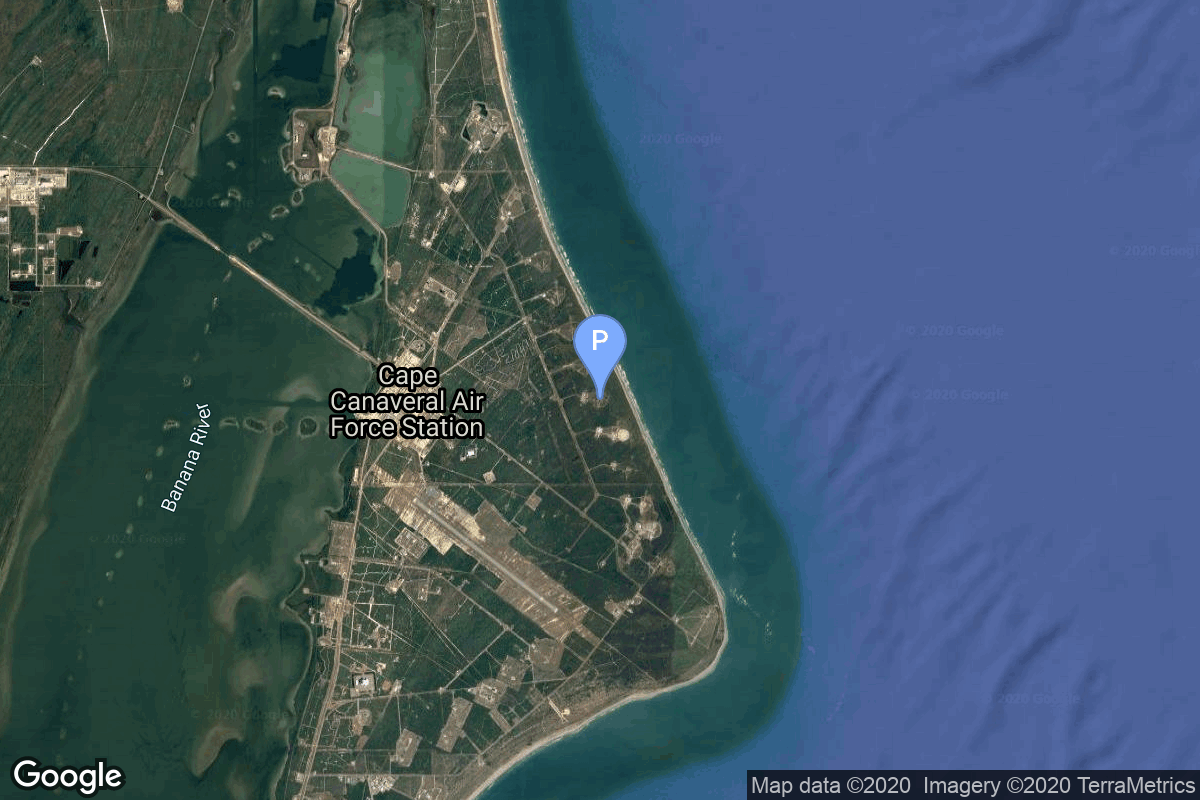
Launch Pad & Location
Space Launch Complex 14
Cape Canaveral SFS, FL, USA
| Launches | 20 |
|---|---|
| Orbital Launch Attempts | 16 |
| Total Launches | 1129 |
Cape Canaveral Space Force Station (CCSFS) is an installation of the United States Space Force's Space Launch Delta 45, located on Cape Canaveral in Brevard County, Florida.
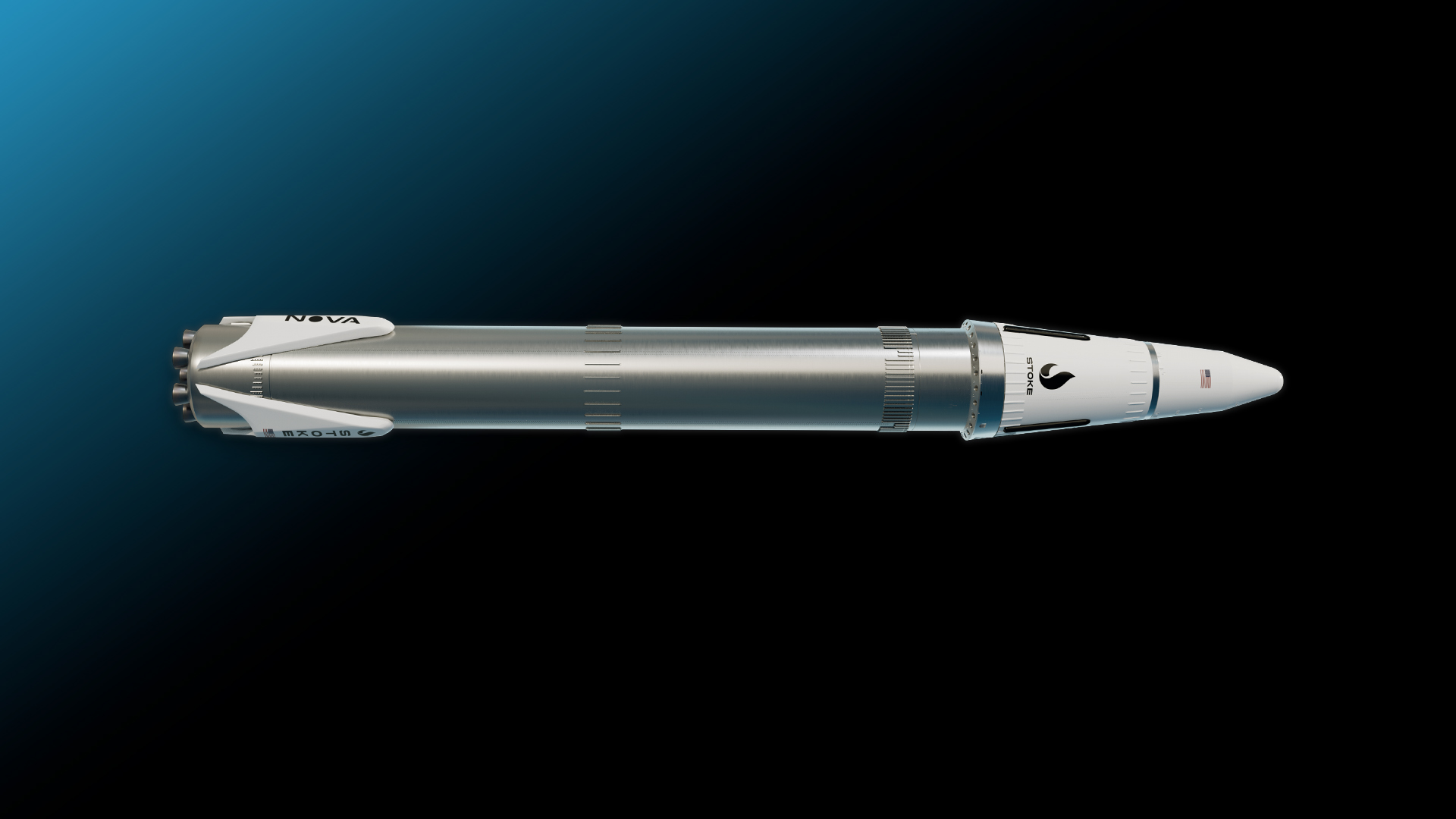
Stoke Space Nova Rocket
Stoke Space’s Nova launch vehicle is a planned fully reusable 2-stage rocket.
The 1st stage uses 7 Zenith Full-flow staged-combustion (FFSC) engines using Liquified natural gas/liquid oxygen (LNG/LOX) as fuel, with restartable capability and landing legs for landing.
The 2nd stage is unconventionally designed around a 24-thrust chamber liquid hydrogen/liquid oxygen (LH2/LOX) expander cycle rocket engine that surrounds a regeneratively cooled heat shield, thus enabling the upper stage to return to Earth from orbit without thermal tiles. The nozzle accommodates deep throttle operation even in the presence of atmospheric pressure and serves as an actively cooled metallic heat shield during atmospheric reentry. There is also a center passive bleed that aims to create an aerospike engine-like effect for improved efficiency.
| Length | 40.2 m |
|---|---|
| Diameter | 4.2 m |
| Stages | 2 |
| Launch Mass | 227.0 T |
| Takeoff Thrust | 3,110.0 kN |
| LEO Capacity | 3,000 kg |
| GTO Capacity | 2,500 kg |
About Stoke Space
Stoke Space Technologies is an American space launch company based in the Seattle suburb of Kent, Washington.
| Pending | 1 |
|---|

Frequently Asked Questions
When is the Stoke Space Nova AstroForge Autonomy-1 (Demo Flight) launch scheduled?
The Stoke Space Nova AstroForge Autonomy-1 (Demo Flight) launch is currently scheduled for:
.
Launch times are subject to change based on weather conditions, technical readiness, and range availability. Check back regularly for the most up-to-date launch time and status updates.
Where is the Stoke Space Nova AstroForge Autonomy-1 (Demo Flight) mission launching from?
The Stoke Space Nova rocket will launch from Space Launch Complex 14 at Cape Canaveral SFS, FL, USA. Cape Canaveral Space Force Station (CCSFS) is an installation of the United States Space Force's Space Launch Delta 45, located on Cape Canaveral in Brevard County, Florida. For viewing location recommendations and tips, check the launch location details above.
What rocket is being used for the AstroForge Autonomy-1 (Demo Flight) mission?
The AstroForge Autonomy-1 (Demo Flight) mission will launch aboard a Stoke Space Nova rocket. Stoke Space’s Nova launch vehicle is a planned fully reusable 2-stage rocket. The 1st stage uses 7 Zenith Full-flow staged-combustion (FFSC) engines using Liquified natural gas/liquid oxygen (LNG/LOX) as fuel, with restartable capability and landing legs for landing. The 2nd stage is unconventionally designed around a 24-thrust chamber liquid hydrogen/liquid oxygen (LH2/LOX) expander cycle rocket engine that surrounds a regeneratively cooled heat shield, thus enabling the upper stage to return to Earth from orbit without thermal tiles. The nozzle accommodates deep throttle operation even in the presence of atmospheric pressure and serves as an actively cooled metallic heat shield during atmospheric reentry. There is also a center passive bleed that aims to create an aerospike engine-like effect for improved efficiency. Detailed rocket specifications and performance data are available in the rocket details above.
What weather conditions could delay the Stoke Space Nova AstroForge Autonomy-1 (Demo Flight) launch?
The Stoke Space Nova AstroForge Autonomy-1 (Demo Flight) launch can be delayed by various weather conditions including lightning within 10 nautical miles, high winds (especially upper-level winds), thick cloud layers, precipitation, and poor visibility. Weather must be favorable at the launch site, downrange landing zones, and abort landing sites. Check the launch weather forecast above for current conditions and probability of favorable weather.
How can I get updates if the Stoke Space Nova AstroForge Autonomy-1 (Demo Flight) launch is delayed?
This page is updated in real-time with the latest Stoke Space Nova launch status, including any delays or scrubs for the AstroForge Autonomy-1 (Demo Flight) mission. You can also check our space launch schedule for the most current information. Enable push notifications through our mobile app to receive instant alerts about launch status changes, weather holds, or new launch times. We recommend following official Stoke Space live streams for the most immediate range updates.
Last Updated
Last Updated:
-
Updated payload identity (see also https://www.astroforge.com/updates-collection/introducing-autonomy-1-the-first-autonomous-space-mission-powered-by-solo).
-
NET early 2027
-
Added launch.