
SpaceX Nancy Grace Roman Space Telescope Falcon Heavy
Rocket Launch Video Streams
Weather Forecast During Launch
According to weather officials, there's a 70% chance of favorable weather conditions at the time of the launch. Officials are monitoring weather conditions with concerns related to Cumulus Cloud Rule, Surface Electric Fields Rule. The forecast calls for a temperature of 76°F, scattered clouds, 47% cloud cover and a wind speed of 4mph.
Rocket Launch Trajectory & Flight Path
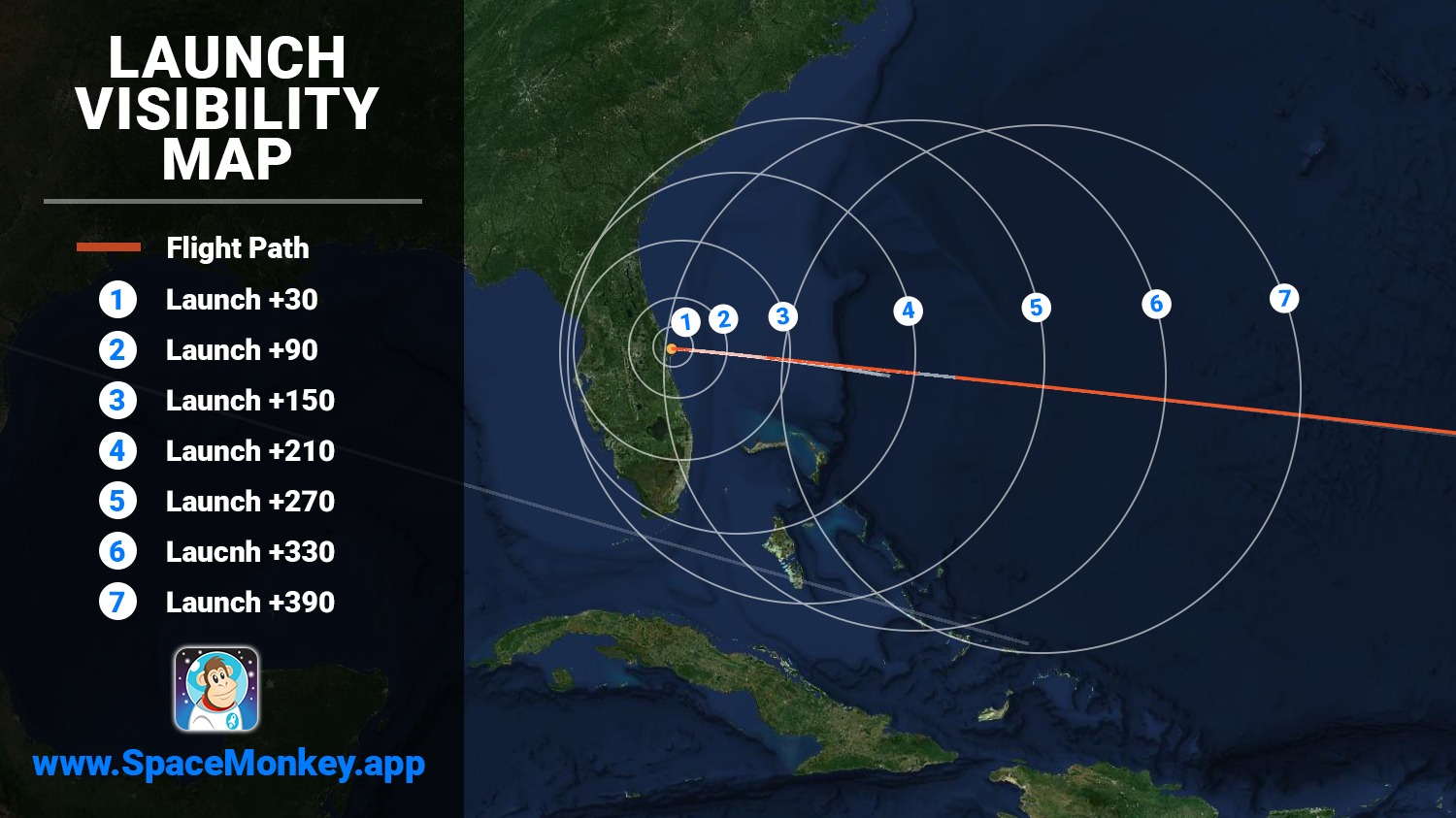
Track the complete rocket launch trajectory with real-time flight data from FlightClub.io . View detailed telemetry including rocket velocity, altitude progression, thrust levels, acceleration, orbital insertion parameters, and 3D flight path visualization throughout all mission phases from liftoff to orbit.
Rocket Launch Timeline
Track every phase of the rocket launch with our detailed mission timeline. From T-minus countdown events and pre-launch preparations through liftoff, stage separation, and orbital insertion, follow each critical milestone in real-time. Our comprehensive launch sequence timeline includes payload integration, propellant loading, engine ignition, and post-launch telemetry tracking.
| Time | Event |
|---|---|
| T- 00 : 53 : 00 | GO for Prop Load Launch director verifies go for propellant load |
| T- 00 : 50 : 00 | Stage 1 Propellant Load Start of propellant loading in the first stage |
| T- 00 : 45 : 00 | Stage 1 LOX Load Start of liquid oxygen loading in the first stage |
| T- 00 : 35 : 00 | Stage 2 Propellant Load Start of propellant loading in the second stage |
| T- 00 : 18 : 30 | Stage 2 LOX Load Start of liquid oxygen loading in the second stage |
| T- 00 : 07 : 00 | Engine Chill Start of engine chilling |
| T- 00 : 00 : 59 | Startup The onboard computer takes control over the countdown and runs last checks |
| T- 00 : 00 : 45 | GO for Launch Launch director verifies go for launch |
| T- 00 : 00 : 20 | Tank Press Fuel tanks are pressurized to flight levels |
| T- 00 : 00 : 06 | Ignition Start of the engine ignition sequence |
| T+ 00 : 00 : 00 | Liftoff First upwards movement of the rocket |
| T+ 00 : 01 : 08 | Max-Q Maximum dynamic pressure |
| T+ 00 : 02 : 24 | SBECO Cut-off of the side boosters |
| T+ 00 : 02 : 27 | Boosters Separation Separation of the side boosters |
| T+ 00 : 02 : 32 | Boosters Flip Flip maneuver of the side boosters |
| T+ 00 : 02 : 43 | Boosters Boostback Burn Startup Start of the boosters boostback burn |
| T+ 00 : 03 : 48 | Boosters Boostback Burn Shutdown End of the boosters boostback burn |
| T+ 00 : 03 : 51 | MECO Cut-off of the main engine |
| T+ 00 : 03 : 54 | Stage 2 Separation Separation of the second stage from the first |
| T+ 00 : 04 : 00 | SES-1 First start of the second engine |
| T+ 00 : 04 : 15 | Fairing Separation Separation of the payload fairing |
| T+ 00 : 06 : 19 | Boosters Entry Burn Startup Start of the boosters atmospheric entry burn |
| T+ 00 : 06 : 29 | Boosters Entry Burn Shutdown End of the boosters atmospheric entry burn |
| T+ 00 : 07 : 23 | Boosters Landing Burn Start of the boosters landing burn |
| T+ 00 : 07 : 40 | Boosters Landing Landing of the boosters |
| T+ 00 : 08 : 28 | SECO-1 First cut-off of the second engine |
| T+ 00 : 24 : 33 | SES-2 Second start of the second engine |
| T+ 00 : 26 : 32 | SECO-2 Second cut-off of the second engine |
| T+ 00 : 31 : 31 | Payload Separation Final deployment of the payload from the rocket |
About the Nancy Grace Roman Space Telescope Mission
| Type | Astrophysics |
|---|---|
| Orbit | Sun-Earth L2 |
| Launch Cost | $90,000,000 |
The Nancy Grace Roman Space Telescope is a NASA infrared space telescope with a 2.4 m (7.9 ft) wide field of view primary mirror and two scientific instruments. The Wide-Field Instrument (WFI) is a 300.8-megapixel multi-band visible and near-infrared camera, providing a sharpness of images comparable to that achieved by the Hubble Space Telescope over a 0.28 square degree field of view, 100 times larger than imaging cameras on the Hubble. The Coronagraphic Instrument (CGI) is a high-contrast, small field of view camera and spectrometer covering visible and near-infrared wavelengths using novel starlight-suppression technology. Roman objectives include a search for extra-solar planets using gravitational microlensing, and probing the expansion history of the Universe and the growth of cosmic structure, with the goal of measuring the effects of dark energy, the consistency of general relativity, and the curvature of spacetime.
Launch Pad & Location
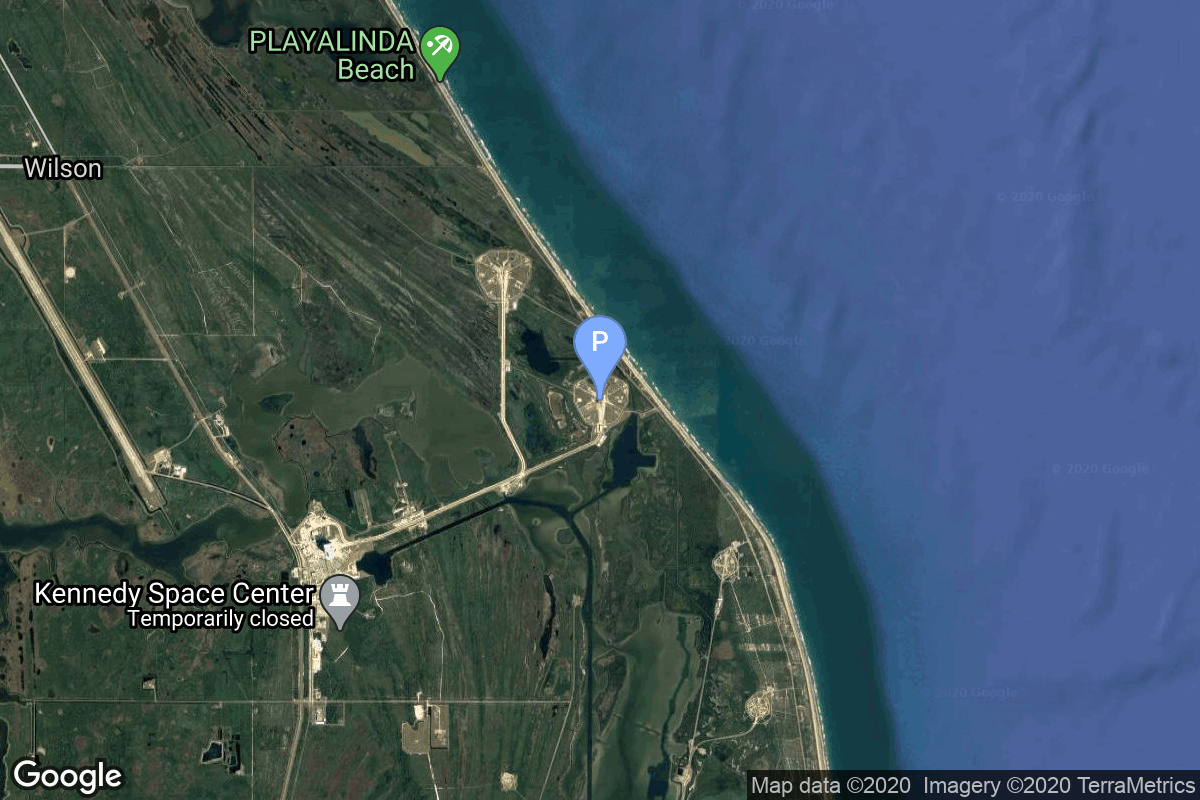
Launch Complex 39A
Kennedy Space Center, FL, USA
| Launches | 223 |
|---|---|
| Orbital Launch Attempts | 222 |
| Total Launches | 282 |
The John F. Kennedy Space Center, located on Merritt Island, Florida, is one of NASA's ten field centers. Since 1968, KSC has been NASA's primary launch center of American spaceflight, research, and technology. Launch operations for the Apollo, Skylab and Space Shuttle programs were carried out from Kennedy Space Center Launch Complex 39 and managed by KSC. Located on the east coast of Florida, KSC is adjacent to Cape Canaveral Space Force Station (CCSFS).
SpaceX Falcon Heavy Rocket
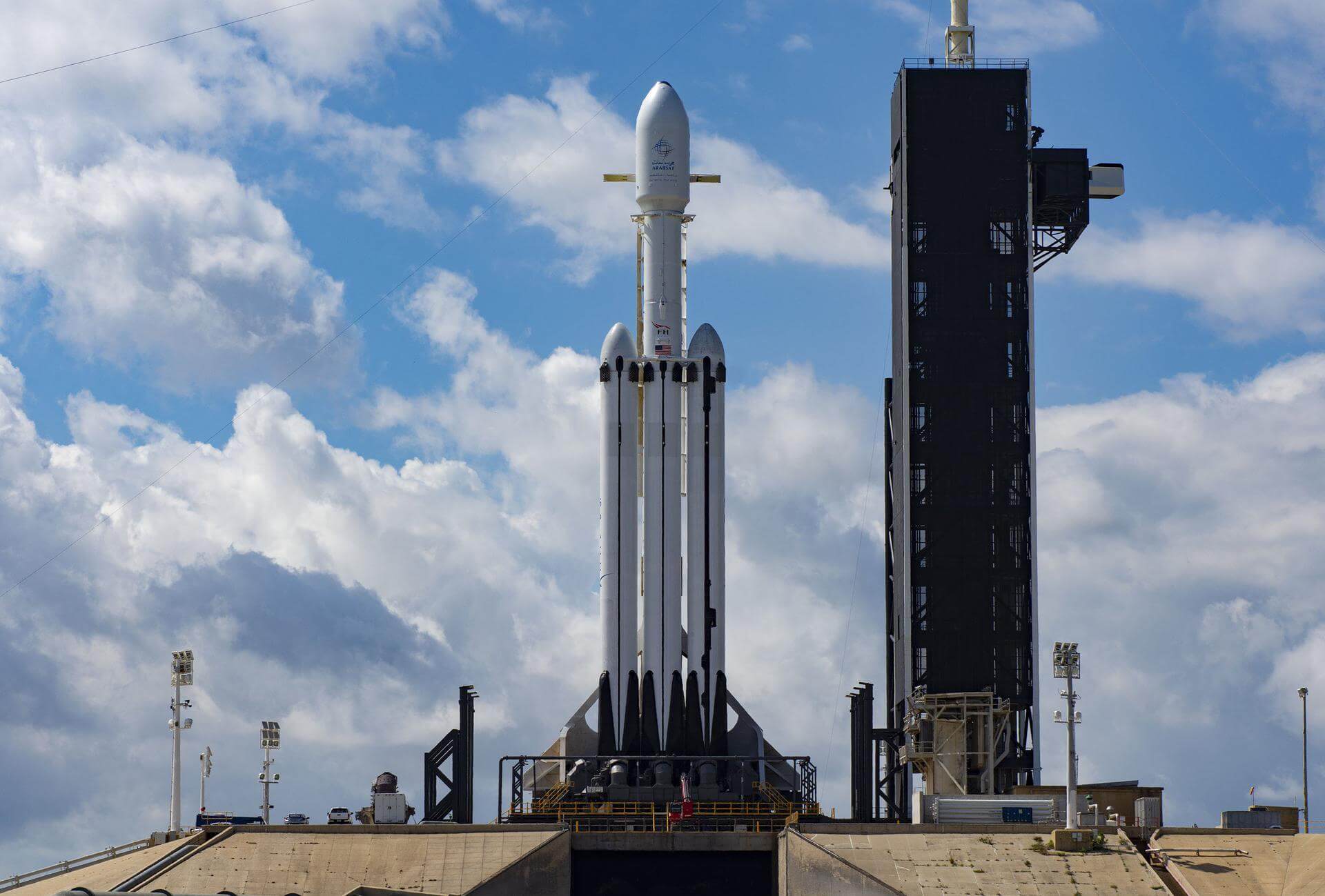
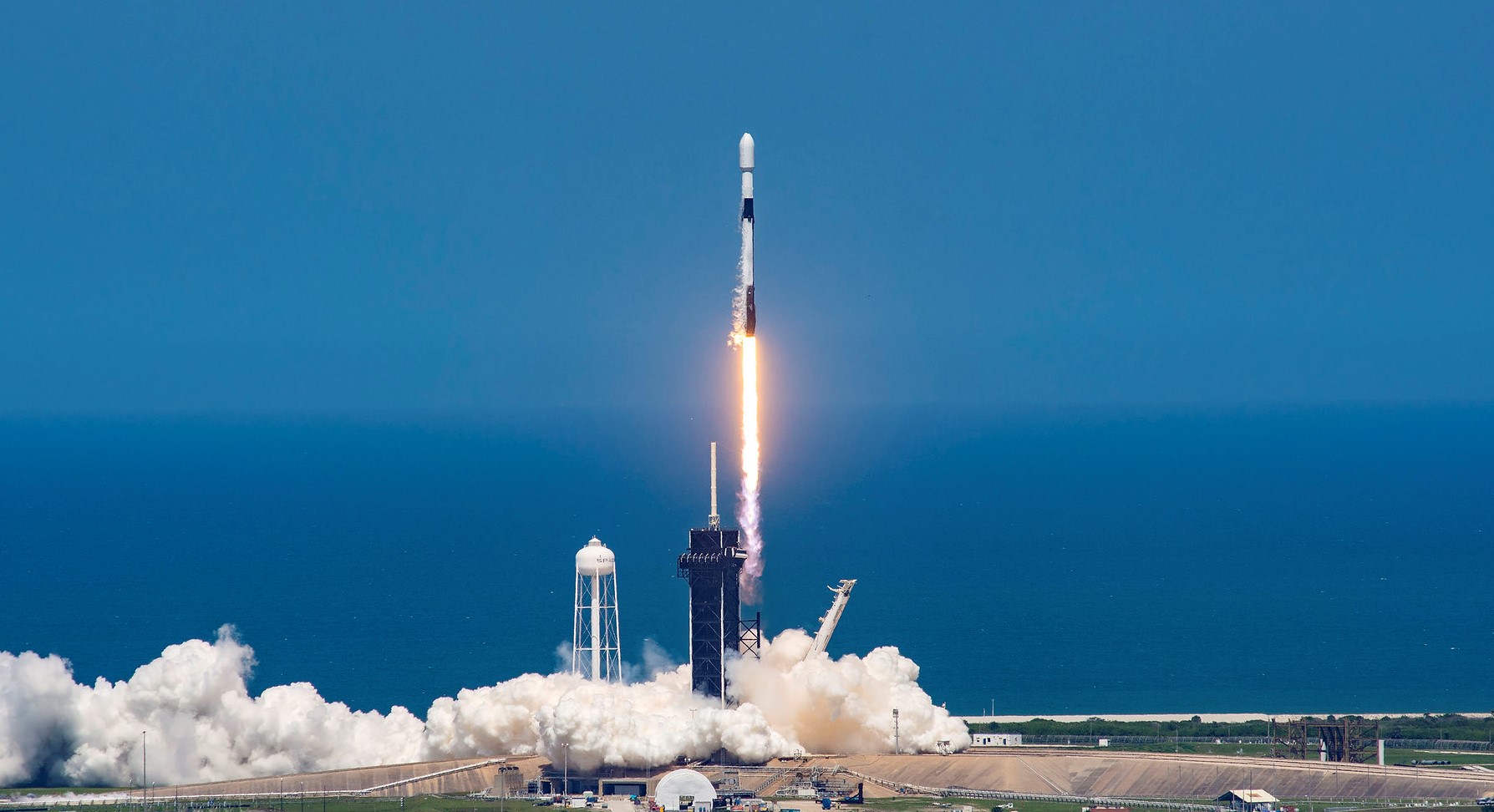
The Falcon Heavy is a variant of the Falcon 9 full thrust launch vehicle and consists of a standard Falcon 9 rocket core, with two additional boosters derived from the Falcon 9 first stage.
Booster Landing & Recovery
Strap-On Booster B1104
| Serial Number | B1104 |
|---|---|
| Last Flight | 08/30/2026 |
| Successful Landings | 1 |
| Details | Falcon 9 booster. |
The Falcon Heavy side booster B1104 has landed back at the launch site at Landing Zone 40 after its 1st flight.
Landing Zone 40 - LZ-40
Landing Pad at SLC-40 for Falcon 9 boosters. Built as an replacement for LZ-1 & LZ-2.
Return to Launch Site - RTLS
A return to launch site usually means that after stage separation the booster flips and does a burn back towards the launch site, landing near where it initially launched from.
A sonic boom may occur during booster recovery as the first stage returns to the landing zone. This atmospheric phenomenon creates a loud sound as the rocket breaks the sound barrier during its descent.
Strap-On Booster B1072
| Serial Number | B1072 |
|---|---|
| Last Flight | 08/30/2026 |
| Successful Landings | 3 |
| Details | Falcon Heavy side booster first flown during the GOES-U mission. |
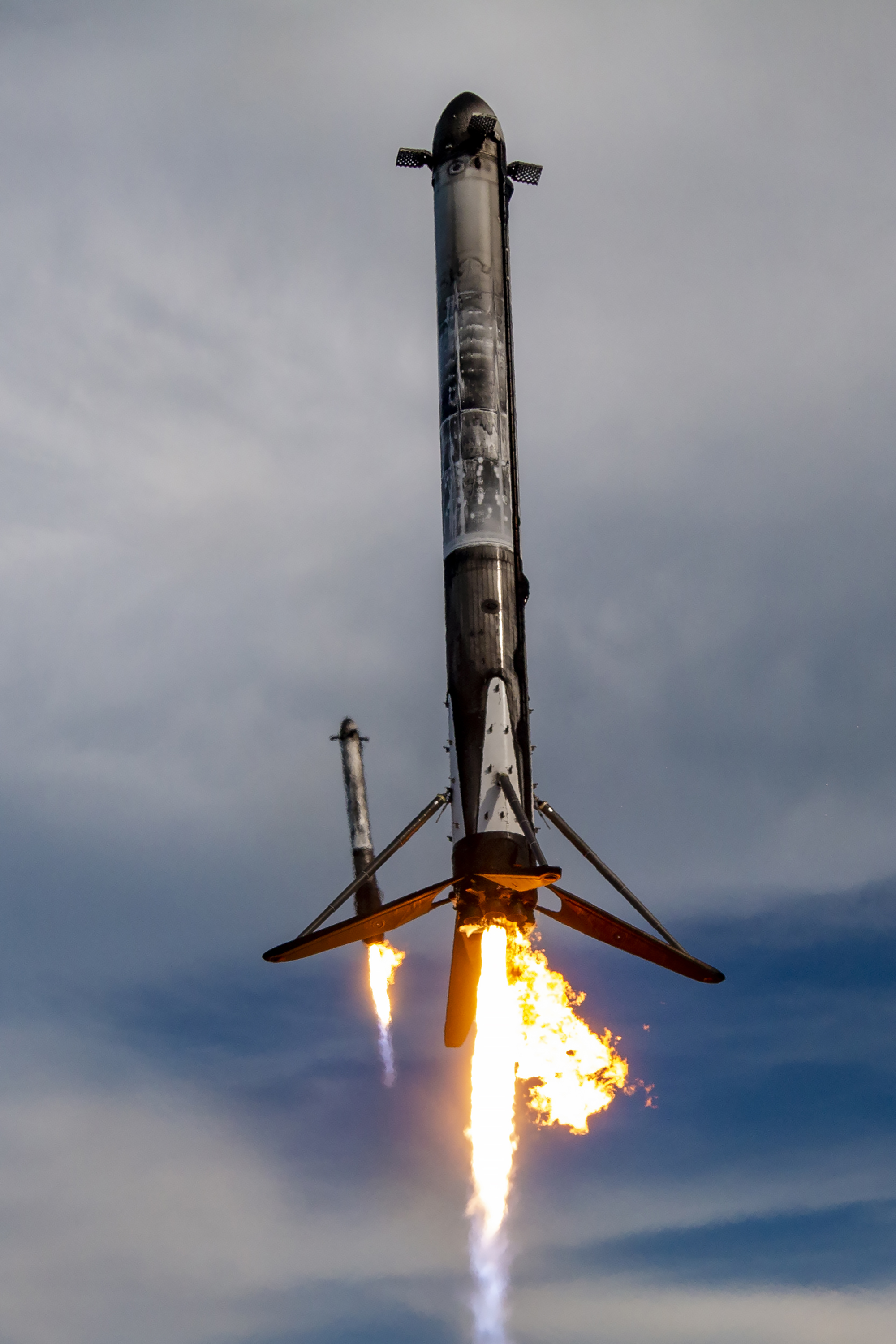
The Falcon Heavy side booster B1072 has landed back at the launch site at Landing Zone 2 after its 3rd flight.
Landing Zone 2 - LZ-2
LZ-2 Pad located at Cape Canaveral Space Force Station at the previous LC-13. Directly next to LZ-1
Return to Launch Site - RTLS
A return to launch site usually means that after stage separation the booster flips and does a burn back towards the launch site, landing near where it initially launched from.
A sonic boom may occur during booster recovery as the first stage returns to the landing zone. This atmospheric phenomenon creates a loud sound as the rocket breaks the sound barrier during its descent.
Core B1105
| Serial Number | B1105 |
|---|---|
| Last Flight | 08/30/2026 |
| Details | Falcon Heavy core booster expended during the launch of the Nancy Grace Roman Space Telescope. |
The Falcon Heavy center core B1105 will be expended.
Atlantic Ocean - ATL
Atlantic Ocean
Expended - EXP
Vehicle did not perform any landing operations after launch
About SpaceX
Space Exploration Technologies Corp., known as SpaceX, is an American aerospace manufacturer and space transport services company headquartered in Hawthorne, California. It was founded in 2002 by entrepreneur Elon Musk with the goal of reducing space transportation costs and enabling the colonization of Mars. SpaceX operates from many pads, on the East Coast of the US they operate from SLC-40 at Cape Canaveral Space Force Station and historic LC-39A at Kennedy Space Center. They also operate from SLC-4E at Vandenberg Space Force Base, California, usually for polar launches. Another launch site is being developed at Boca Chica, Texas.

Frequently Asked Questions
When was the SpaceX Falcon Heavy Nancy Grace Roman Space Telescope launch scheduled?
The SpaceX Falcon Heavy Nancy Grace Roman Space Telescope launch was scheduled for:
.
Where can I watch the SpaceX Falcon Heavy Nancy Grace Roman Space Telescope launch video?
You can watch the SpaceX Falcon Heavy launch video on this page. The official video includes full mission coverage with multiple camera angles, onboard views, and expert commentary covering pre-launch procedures, liftoff, stage separation, and payload deployment.
Where did the SpaceX Falcon Heavy Nancy Grace Roman Space Telescope mission launch from?
The SpaceX Falcon Heavy rocket launched from Launch Complex 39A at Kennedy Space Center, FL, USA. The John F. Kennedy Space Center, located on Merritt Island, Florida, is one of NASA's ten field centers. Since 1968, KSC has been NASA's primary launch center of American spaceflight, research, and technology. Launch operations for the Apollo, Skylab and Space Shuttle programs were carried out from Kennedy Space Center Launch Complex 39 and managed by KSC. Located on the east coast of Florida, KSC is adjacent to Cape Canaveral Space Force Station (CCSFS).
What rocket was used for the Nancy Grace Roman Space Telescope mission?
The Nancy Grace Roman Space Telescope mission launched aboard a SpaceX Falcon Heavy rocket. The Falcon Heavy is a variant of the Falcon 9 full thrust launch vehicle and consists of a standard Falcon 9 rocket core, with two additional boosters derived from the Falcon 9 first stage. Detailed rocket specifications and performance data are available in the rocket details above.
Did the SpaceX Falcon Heavy booster for Nancy Grace Roman Space Telescope attempt a landing?
Yes, the Falcon Heavy first stage booster attempted a Return to Launch Site at a designated landing zone. Booster recovery allows SpaceX to reuse rocket components, significantly reducing launch costs. Learn more about the landing details.
What weather conditions could have delayed the SpaceX Falcon Heavy Nancy Grace Roman Space Telescope launch?
The SpaceX Falcon Heavy Nancy Grace Roman Space Telescope launch could have been delayed by various weather conditions including lightning within 10 nautical miles, high winds (especially upper-level winds), thick cloud layers, precipitation, and poor visibility. Weather must be favorable at the launch site, downrange landing zones, and abort landing sites.
How can I get updates if the SpaceX Falcon Heavy Nancy Grace Roman Space Telescope launch was delayed?
This page was updated in real-time with the latest SpaceX Falcon Heavy launch status, including any delays or scrubs for the Nancy Grace Roman Space Telescope mission. You can also check our space launch schedule for historical launch information. Our mobile app provides push notifications for instant alerts about launch status changes. Official SpaceX live streams provided the most immediate range updates during the launch window.
Last Updated
Last Updated:
-
Launch success with telescope solar panels/sunshade deployed.
-
Payload deployed.
-
Liftoff!
-
Updated launch weather, 70% GO.
-
Official Webcast by NASA has started
-
Now targeting Aug 30 at 11:26 UTC
-
Updated launch weather, 50% GO (launch window per https://x.com/spaceflightnow/status/2093717878302216462).
-
Now targeting Aug 30 at 11:25 UTC
-
Updated launch weather, 60% GO.
-
GO for launch.
-
Tweaked T-0.
-
Setting GO.
-
Added tentative launch time.
-
NET August 30.
-
NET late August.
-
May move up to NET early September.
-
NET September 28.
-
NET September.
-
Adding launch NET October 2026