Don't Be Such A Square (STP-S30)
Electron
Rocket Lab
Rocket Launch Videos
Weather Forecast During Launch
According to weather officials, there's a 80% chance of favorable weather conditions at the time of the launch.
Trajectory
View comprehensive details including the rocket's trajectory, velocity, altitude, thrust, and more at FlightClub.io.
Rocket Launch Timeline
Enhance your rocket launch experience with a detailed timeline! From pre-launch preparations to post-launch milestones, a well-structured schedule ensures every step—payload prep, safety checks, and liftoff—runs smoothly. Stay informed and follow the action with precision.
| T- 00 : 02 : 00 | Startup The onboard computer takes control over the countdown and runs last checks |
| T- 00 : 00 : 02 | Ignition Start of the engine ignition sequence |
| T+ 00 : 00 : 00 | Liftoff First upwards movement of the rocket |
| T+ 00 : 01 : 11 | Supersonic Vehicle is supersonic |
| T+ 00 : 01 : 14 | Max-Q Maximum dynamic pressure |
| T+ 00 : 02 : 40 | MECO Cut-off of the main engine |
| T+ 00 : 02 : 44 | Stage 2 Separation Separation of the second stage from the first |
| T+ 00 : 02 : 47 | SES Start of the second engine |
| T+ 00 : 03 : 41 | Fairing Separation Separation of the payload fairing |
| T+ 00 : 06 : 40 | Battery Hotswap Electron Second stages switches to a new set of batteries and jettisons the depleted ones. |
| T+ 00 : 09 : 19 | SECO Cut-off of the second engine |
| T+ 00 : 09 : 23 | Kick Stage Separation Separation of the kick stage from the previous stage |
| T+ 00 : 53 : 44 | Kick Stage Ignition Start of the kick stage engine |
| T+ 00 : 55 : 30 | Kick Stage Cut-off Cut-off of the kick stage engine |
| T+ 00 : 55 : 30 | Payload Separation Final deployment of the payload from the rocket |
Mission
Don't Be Such A Square (STP-S30)
- Type: Technology
- Orbit: Low Earth Orbit
- Launch Cost: $6,000,000
STP-S30 is a complex mission that will deliver research experiments and technology demonstrations to orbit for the DoD and contribute to future space systems development. The projected primary payload, DISKSat, will demonstrate sustained very low earth orbit (VLEO) flight and test a unique, 1-meter diameter, disk-shaped satellite bus that is designed to increase on-orbit persistence.
Location
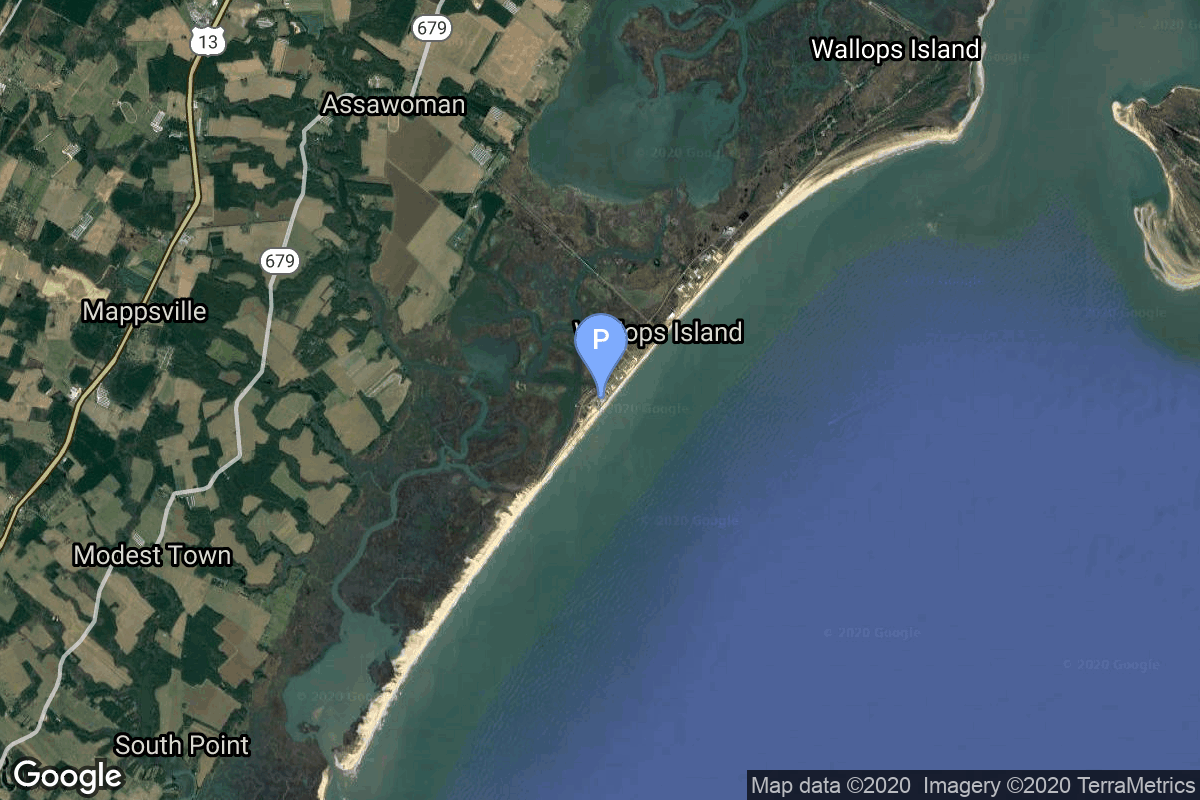
Rocket Lab Launch Complex 2 (Launch Area 0 C)
Wallops Flight Facility, Virginia, USA
Rocket Lab Launch Complex 2 (Launch Area 0 C) has witnessed the launch of 10 rockets, including 4 orbital launch attempts. While Wallops Flight Facility, Virginia, USA, has been the site for 84 rocket launches.
Wallops Flight Facility is a rocket launch site on Wallops Island on the Eastern Shore of Virginia, United States, just east of the Delmarva Peninsula and north-northeast of Norfolk. The facility is operated by the Goddard Space Flight Center in Greenbelt, Maryland, and primarily serves to support science and exploration missions for NASA and other federal agencies. WFF includes an extensively instrumented range to support launches of more than a dozen types of sounding rockets; small expendable suborbital and orbital rockets; high-altitude balloon flights carrying scientific instruments for atmospheric and astronomical research; and, using its Research Airport, flight tests of aeronautical research aircraft, including uncrewed aerial vehicles.
Rocket
Rocket Lab Electron
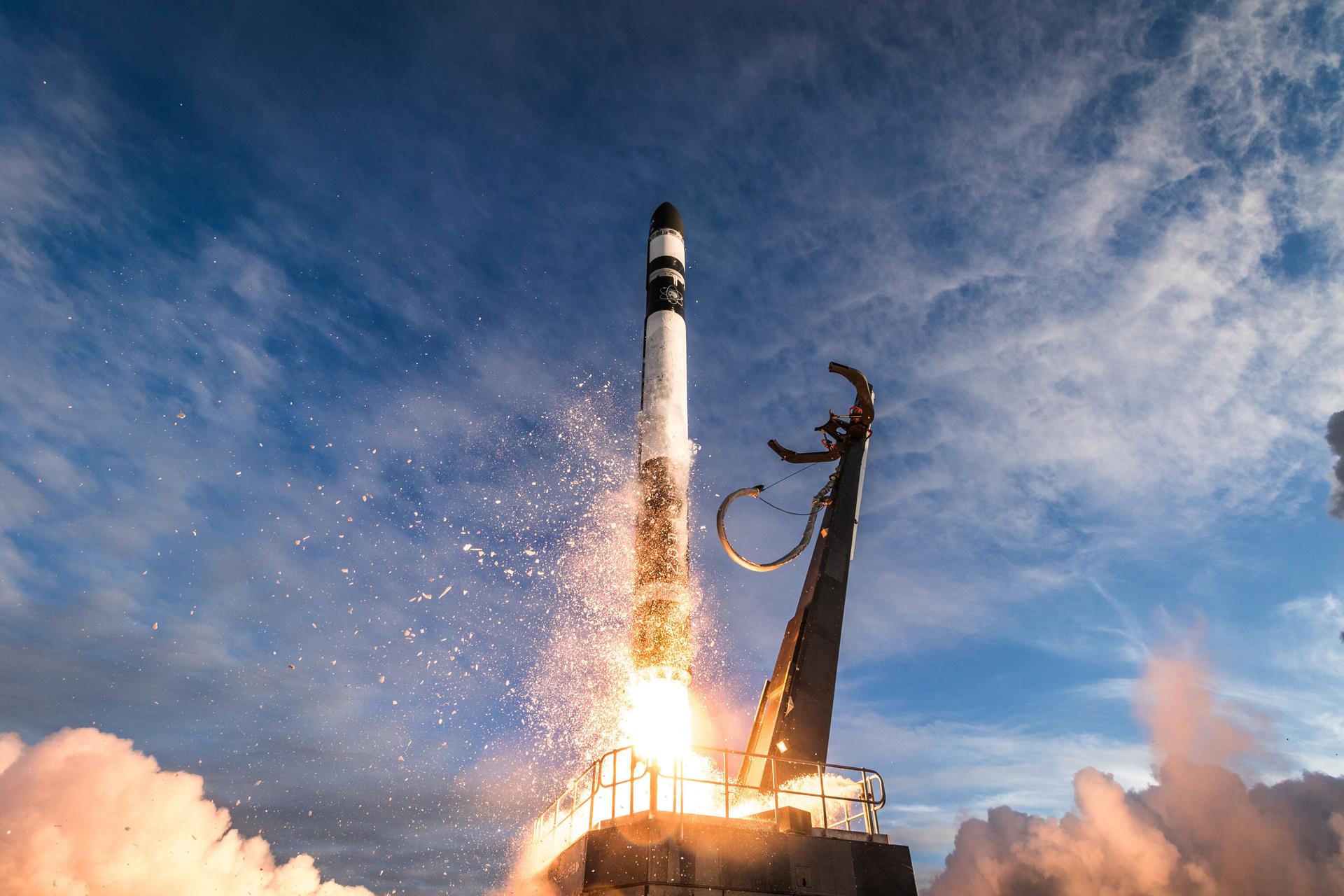
Electron is a two-stage orbital expendable launch vehicle (with an optional third stage) developed by the American aerospace company Rocket Lab. Electron is a small-lift launch vehicle designed to launch small satellites and cubesats to sun-synchronous orbit and low earth orbit. The Electron is the first orbital class rocket to use electric-pump-fed engines, powered by the 9 Rutherford engines on the first stage. It is also used as a suborbital testbed (called HASTE) for hypersonics research.
Agency
Rocket Lab
Rocket Lab is an American aerospace manufacturer with a wholly owned New Zealand subsidiary. The company develops lightweight, cost-effective commercial rocket launch services. The Electron Program was founded on the premise that small payloads such as CubeSats require dedicated small launch vehicles and flexibility not currently offered by traditional rocket systems. Its rocket, the Electron, is a light-weight rocket and is now operating commercially. The company is also producing a variety of spacecrafts and spacecrafts components.