
United Launch Alliance Amazon Leo (LA-06) Atlas V 551
Rocket Launch Video Streams
Weather Forecast During Launch
According to weather officials, there's a 80% chance of favorable weather conditions at the time of the launch. Officials are monitoring weather conditions with concerns related to Cumulus Cloud Rule. The forecast calls for a temperature of 74°F, broken clouds, 55% cloud cover and a wind speed of 13mph.
Rocket Launch Trajectory & Flight Path
Track the complete rocket launch trajectory with real-time flight data from FlightClub.io (opens in a new tab). View detailed telemetry including rocket velocity, altitude progression, thrust levels, acceleration, orbital insertion parameters, and 3D flight path visualization throughout all mission phases from liftoff to orbit.
Learn about rocket launch trajectory physics (opens in a new tab)
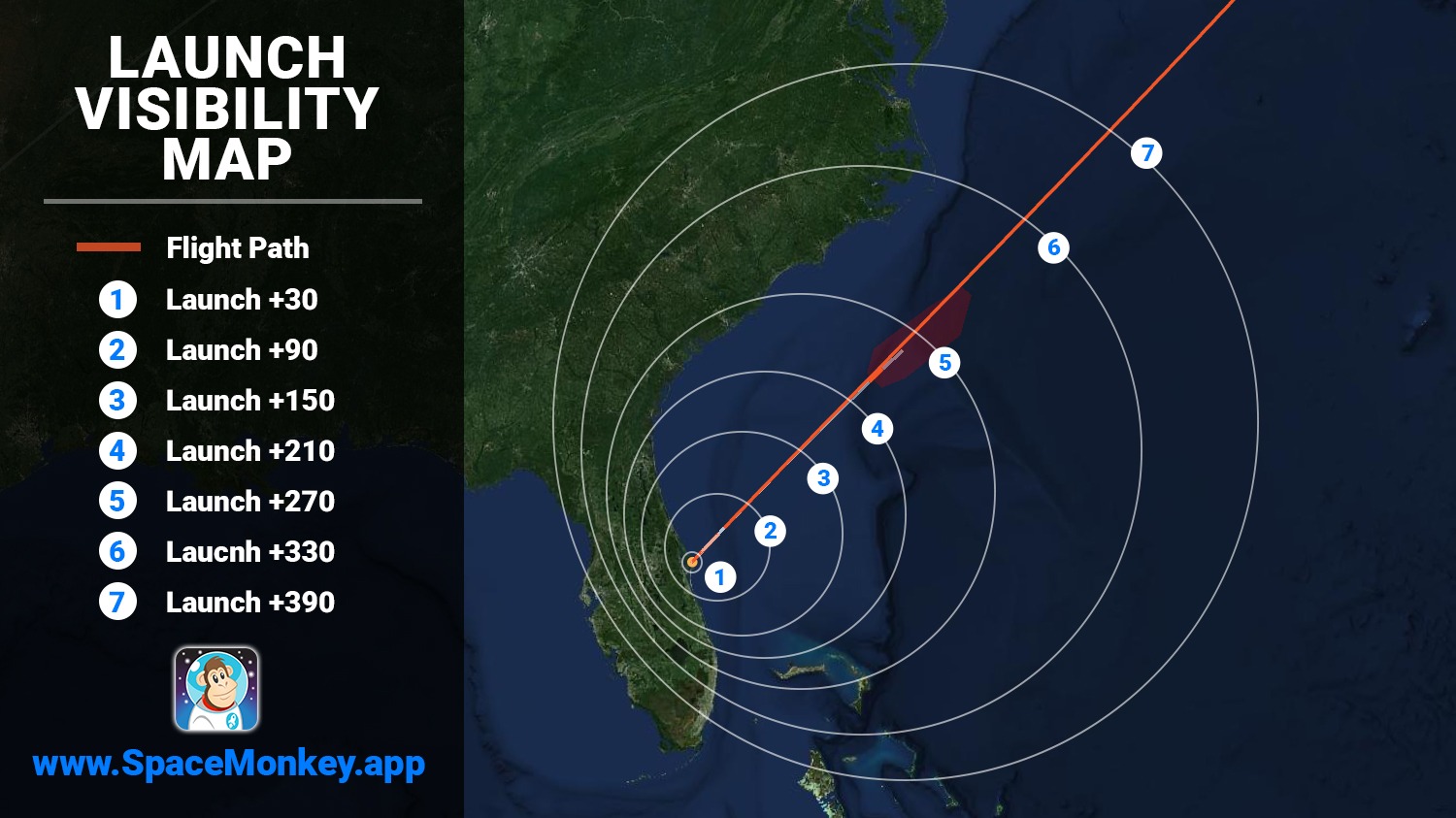
Rocket Launch Timeline
Track every phase of the rocket launch with our detailed mission timeline. From T-minus countdown events and pre-launch preparations through liftoff, stage separation, and orbital insertion, follow each critical milestone in real-time. Our comprehensive launch sequence timeline includes payload integration, propellant loading, engine ignition, and post-launch telemetry tracking.
| Time | Event |
|---|---|
| T- 00 : 00 : 00 | Ignition Start of the engine ignition sequence |
| T+ 00 : 00 : 01 | Liftoff First upwards movement of the rocket |
| T+ 00 : 00 : 00 | Supersonic Vehicle is supersonic |
| T+ 00 : 00 : 00 | Max-Q Maximum dynamic pressure |
| T+ 00 : 01 : 00 | Boosters Separation Separation of the side boosters |
| T+ 00 : 03 : 00 | Fairing Separation Separation of the payload fairing |
| T+ 00 : 04 : 00 | BECO Booster Engine Cutoff |
| T+ 00 : 04 : 00 | Stage 2 Separation Separation of the second stage from the first |
| T+ 00 : 04 : 00 | SES-1 First start of the second engine |
| T+ 00 : 18 : 21 | SECO-1 First cut-off of the second engine |
| T+ 00 : 21 : 10 | Payload Deployment Sequence Start Start of the payload deployment sequence |
| T+ 00 : 37 : 41 | Payload Deployment Sequence End End of the payload deployment sequence. |
| T+ 00 : 54 : 00 | SES-2 Second start of the second engine |
| T+ 00 : 55 : 00 | SECO-2 Second cut-off of the second engine |
About the Amazon Leo (LA-06) Mission
| Type | Communications |
|---|---|
| Orbit | Low Earth Orbit |
| Launch Cost | $153,000,000 |
Amazon Leo, formerly known as Project Kuiper, is a mega constellation of satellites in Low Earth Orbit that will offer broadband internet access, this constellation will be managed by Kuiper Systems LLC, a subsidiary of Amazon. This constellation is planned to be composed of 3,276 satellites. The satellites are projected to be placed in 98 orbital planes in three orbital layers, one at 590 km, 610 km and 630 km altitude.
29 satellites are carried on this launch.
This mission supports Amazon Leo, a satellite internet constellation competing with Starlink to provide global broadband coverage. Amazon Leo aims to deploy thousands of satellites in low Earth orbit to deliver fast, affordable internet service to unserved and underserved communities around the world.
Learn about Amazon Leo satellite internet constellation (opens in a new tab)
Launch Pad & Location
Space Launch Complex 41
Cape Canaveral SFS, FL, USA
| Launches | 125 |
|---|---|
| Orbital Launch Attempts | 125 |
| Total Launches | 1119 |
Cape Canaveral Space Force Station (CCSFS) is an installation of the United States Space Force's Space Launch Delta 45, located on Cape Canaveral in Brevard County, Florida.
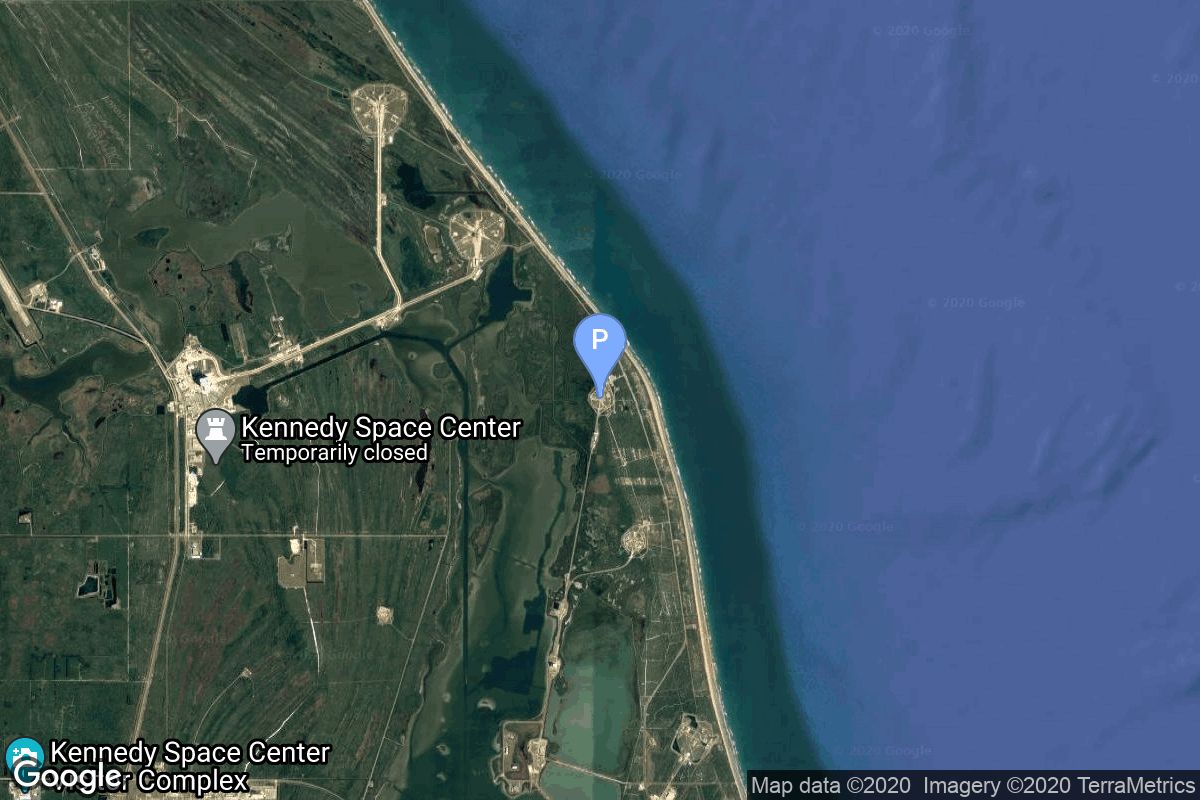
United Launch Alliance Atlas V 551 Rocket
Atlas V is an expendable launch system in the Atlas rocket family. It was formerly operated by Lockheed Martin and is now operated by United Launch Alliance (ULA), a joint venture with Boeing. Each Atlas V rocket uses a Russian-built RD-180 engine burning kerosene and liquid oxygen to power its first stage and an American-built RL10 engine burning liquid hydrogen and liquid oxygen to power its Centaur upper stage. The RD-180 engines are provided by RD Amross, while Aerojet Rocketdyne provides both the RL10 engines and the strap-on boosters used in some configurations. The standard payload fairing sizes are 4 or 5 meters in diameter and of various lengths. Fairings sizes as large as 7.2 m in diameter and up to 32.3 m in length have been considered. The rocket is assembled in Decatur, Alabama and Harlingen, Texas.
| Length | 59.7 m |
|---|---|
| Diameter | 3.8 m |
| Stages | 1-2 |
| Launch Mass | 573.0 T |
| Takeoff Thrust | 12,269.0 kN |
| Apogee | 40,000.0 km |
| LEO Capacity | 18,850 kg |
| GTO Capacity | 8,890 kg |
| GEO Capacity | 3,850 kg |
| Launch Cost | $153,000,000 |
| Maiden Flight | 1/19/2006 |
Learn more about the United Launch Alliance Atlas V 551 Rocket
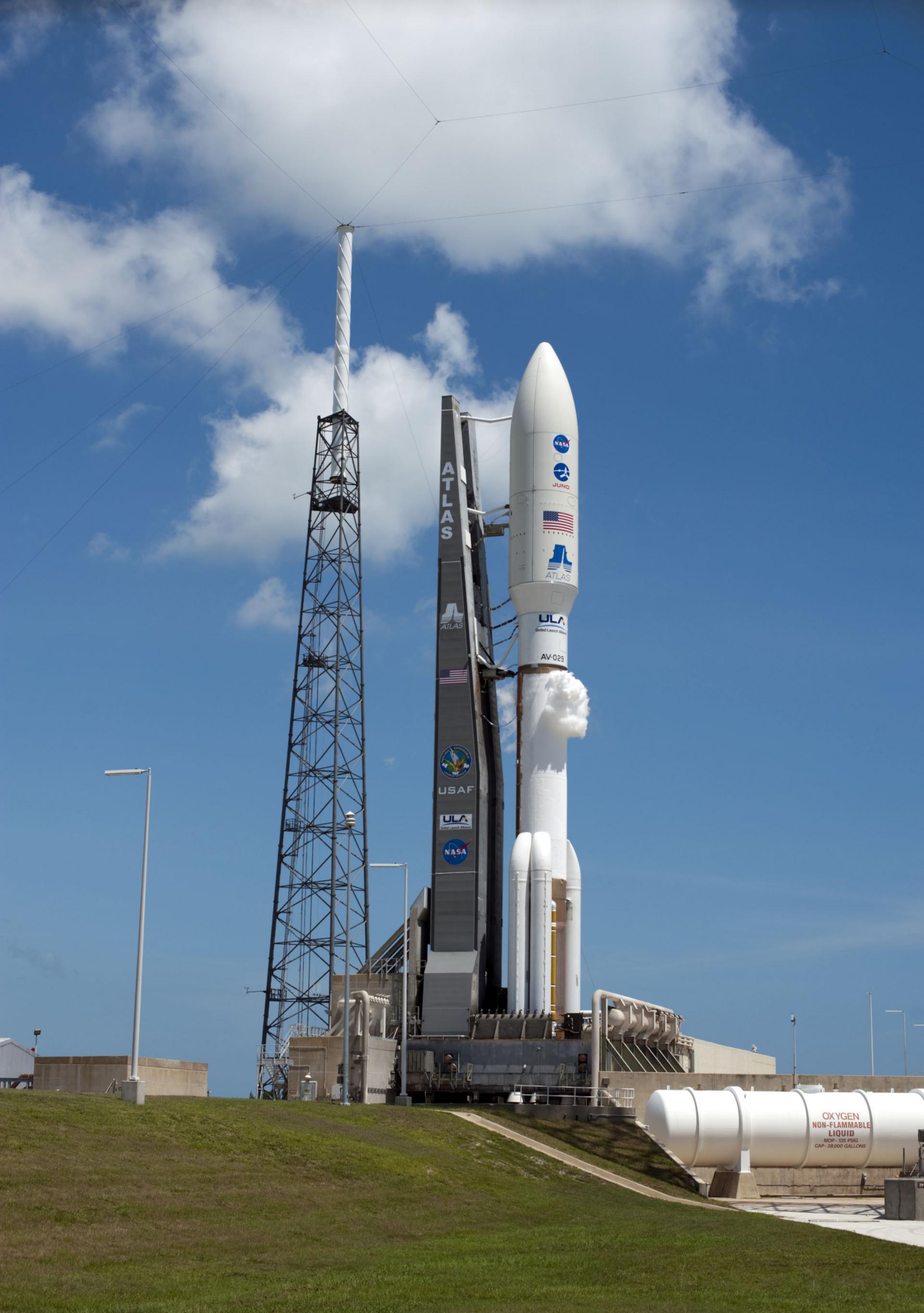
About United Launch Alliance
United Launch Alliance (ULA) is a joint venture of Lockheed Martin Space Systems and Boeing Defense, Space & Security. ULA was formed in December 2006 by combining the teams at these companies which provide spacecraft launch services to the government of the United States. ULA launches from both coasts of the US. They launch their Atlas V vehicle from LC-41 in Cape Canaveral and LC-3E at Vandeberg. Their Delta IV launches from LC-37 at Cape Canaveral and LC-6 at Vandenberg.
| Total Launches | 175 |
|---|---|
| Successful | 175 |
| Pending | 36 |
| Consecutive Success | 175 |

Frequently Asked Questions
When was the United Launch Alliance Atlas V 551 Amazon Leo (LA-06) launch scheduled?
The United Launch Alliance Atlas V 551 Amazon Leo (LA-06) launch was scheduled for:
.
Where can I watch the United Launch Alliance Atlas V 551 Amazon Leo (LA-06) launch video?
You can watch the United Launch Alliance Atlas V 551 launch video on this page. The official video includes full mission coverage with multiple camera angles, onboard views, and expert commentary covering pre-launch procedures, liftoff, stage separation, and payload deployment.
Where did the United Launch Alliance Atlas V 551 Amazon Leo (LA-06) mission launch from?
The United Launch Alliance Atlas V 551 rocket launched from Space Launch Complex 41 at Cape Canaveral SFS, FL, USA. Cape Canaveral Space Force Station (CCSFS) is an installation of the United States Space Force's Space Launch Delta 45, located on Cape Canaveral in Brevard County, Florida.
What rocket was used for the Amazon Leo (LA-06) mission?
The Amazon Leo (LA-06) mission launched aboard a United Launch Alliance Atlas V 551 rocket. Atlas V is an expendable launch system in the Atlas rocket family. It was formerly operated by Lockheed Martin and is now operated by United Launch Alliance (ULA), a joint venture with Boeing. Each Atlas V rocket uses a Russian-built RD-180 engine burning kerosene and liquid oxygen to power its first stage and an American-built RL10 engine burning liquid hydrogen and liquid oxygen to power its Centaur upper stage. The RD-180 engines are provided by RD Amross, while Aerojet Rocketdyne provides both the RL10 engines and the strap-on boosters used in some configurations. The standard payload fairing sizes are 4 or 5 meters in diameter and of various lengths. Fairings sizes as large as 7.2 m in diameter and up to 32.3 m in length have been considered. The rocket is assembled in Decatur, Alabama and Harlingen, Texas. Detailed rocket specifications and performance data are available in the rocket details above.
What weather conditions could have delayed the United Launch Alliance Atlas V 551 Amazon Leo (LA-06) launch?
The United Launch Alliance Atlas V 551 Amazon Leo (LA-06) launch could have been delayed by various weather conditions including lightning within 10 nautical miles, high winds (especially upper-level winds), thick cloud layers, precipitation, and poor visibility. Weather must be favorable at the launch site, downrange landing zones, and abort landing sites.
How can I get updates if the United Launch Alliance Atlas V 551 Amazon Leo (LA-06) launch was delayed?
This page was updated in real-time with the latest United Launch Alliance Atlas V 551 launch status, including any delays or scrubs for the Amazon Leo (LA-06) mission. You can also check our space launch schedule for historical launch information. Our mobile app provides push notifications for instant alerts about launch status changes. Official United Launch Alliance live streams provided the most immediate range updates during the launch window.
Last Updated
Last Updated:
-
Launch success, all satellites deployed.
-
Liftoff.
-
Official Webcast by United Launch Alliance has started
-
New T-0.
-
Updated launch weather, 85% GO.
-
Updated launch weather, 75% GO.
-
Added launch window.
-
NET April 27.
-
NET April 24.
-
NET April.