Login with Patreon to Remove Ads

All the Water on Planet Earth

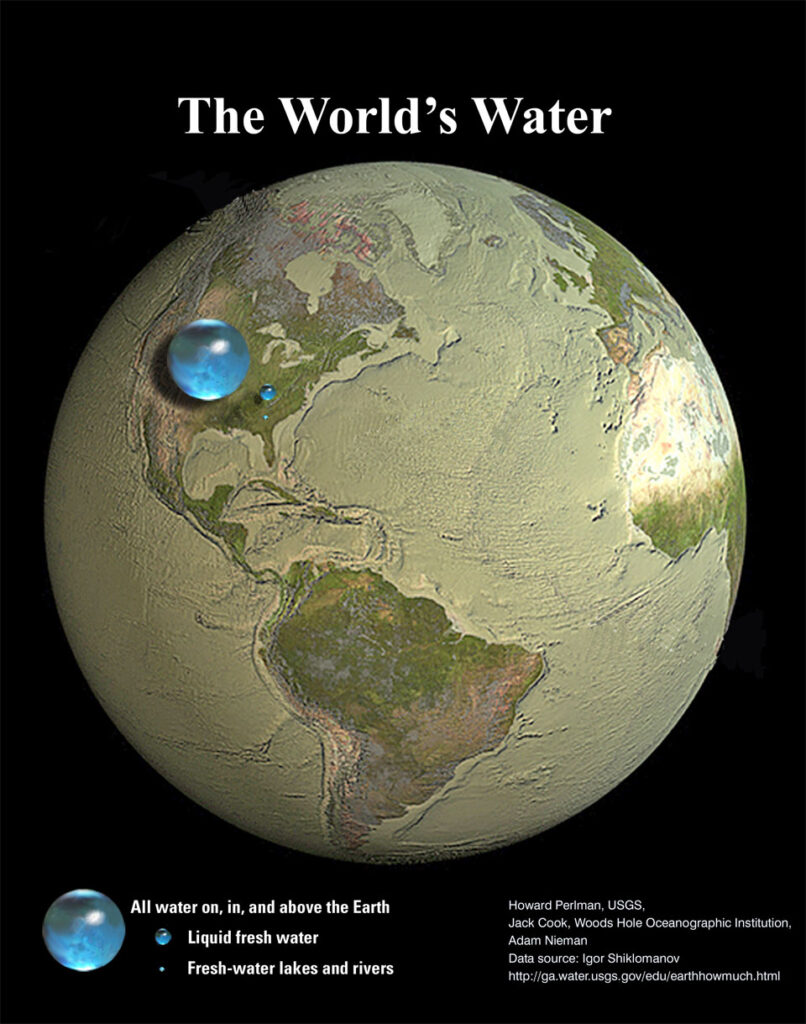
How much of planet Earth is made of water? Very little, actually. Although oceans of water cover about 70 percent of Earth’s surface, these oceans are shallow compared to the Earth’s radius. The featured illustration shows what would happen if all of the water on or near the surface of the Earth were bunched up […]
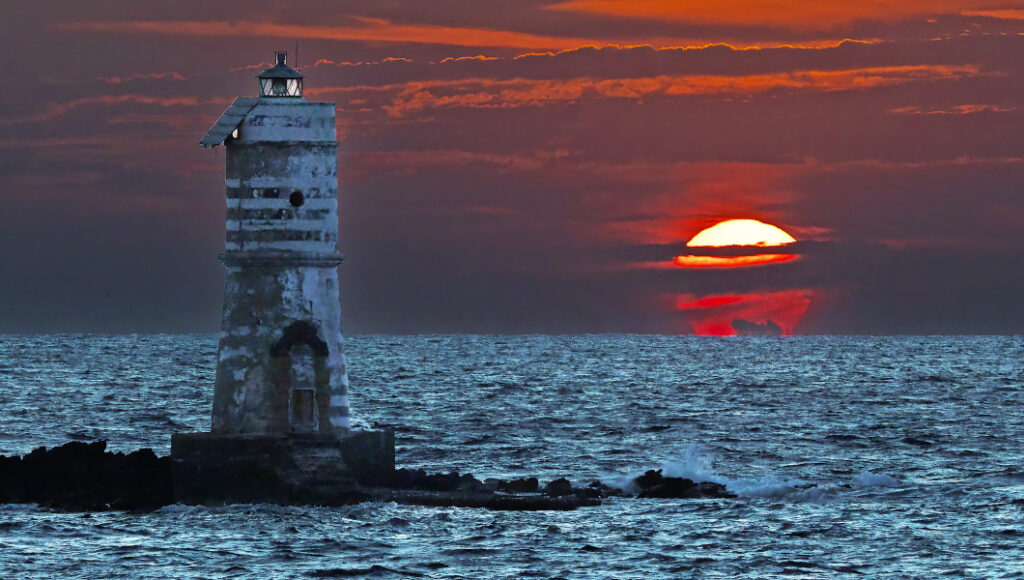
Sardinia Sunset

Copyright: When the sun sets on September 7 When the sun sets on September 7, the Full Moon will rise. And on that date denizens around much of our fair planet, including parts of Antarctica, Australia, Asia, Europe, and Africa can witness a total lunar eclipse, with the Moon completely immersed in Earth’s shadow. As […]

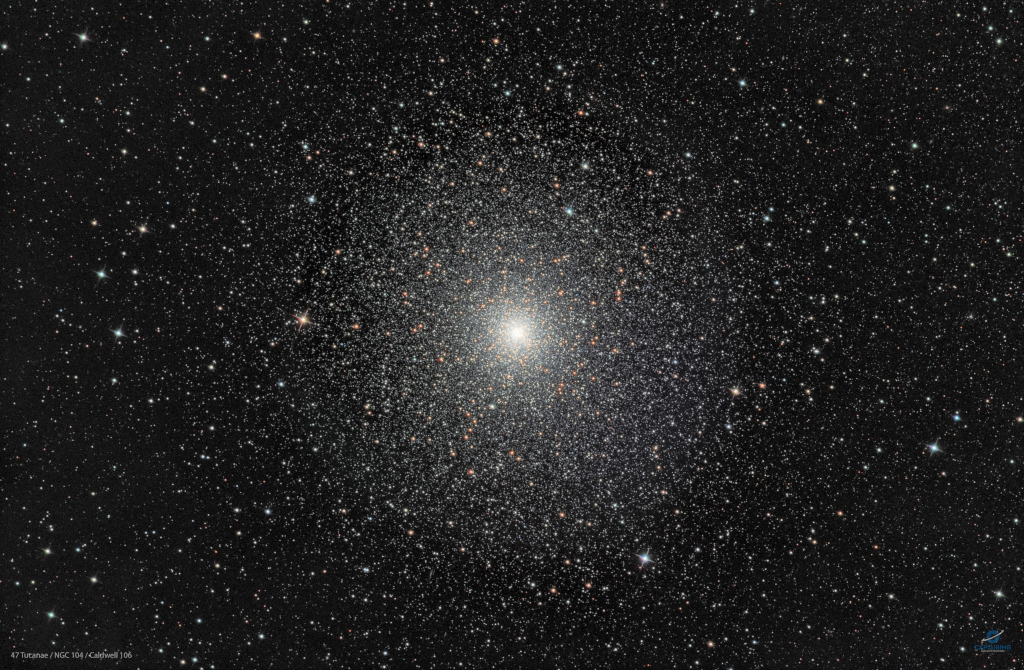
47 Tucanae: Globular Star Cluster

Copyright: Carlos Taylor Also known as NGC 104, 47 Tucanae is a jewel of the southern sky. Not a star but a dense cluster of stars, it roams the halo of our Milky Way Galaxy along with some 200 other globular star clusters. The second brightest globular cluster (after Omega Centauri) as seen from planet […]

NGC 4565: Galaxy on Edge

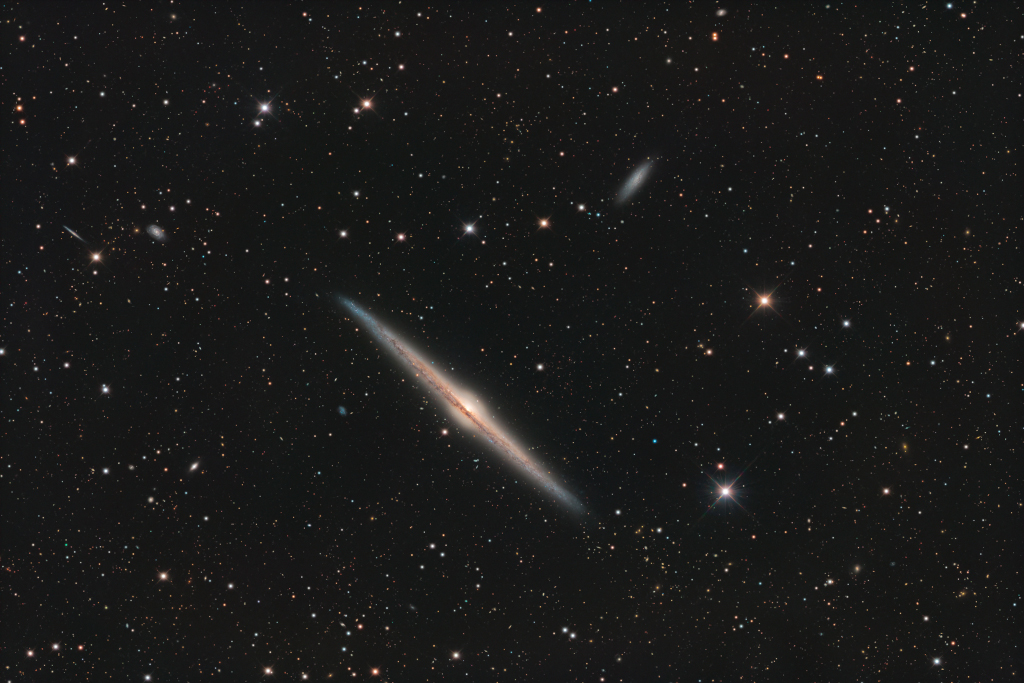
Copyright: José Rodrigues Magnificent spiral galaxy NGC 4565 is viewed edge-on from planet Earth. Also known as the Needle Galaxy for its narrow profile, bright NGC 4565 is a stop on many telescopic tours of the northern sky, in the faint but well-groomed constellation Coma Berenices. This sharp, colorful image reveals the galaxy’s boxy, bulging […]

Cir X-1: Jets in the Africa Nebula

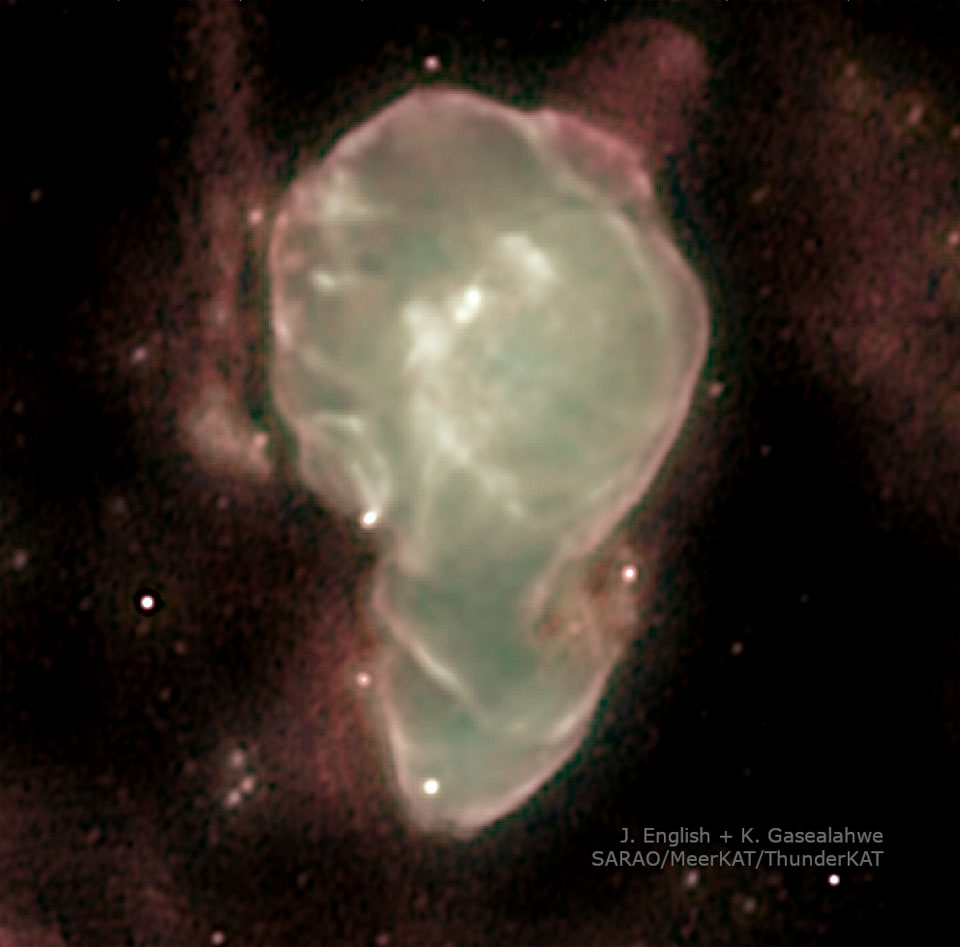
How soon do jets form when a supernova gives birth to a neutron star? The Africa Nebula provides clues. This supernova remnant surrounds Circinus X-1, an X-ray emitting neutron star and the companion star it orbits. The image, from the ThunderKAT collaboration on the MeerKAT radio telescope situated in South Africa, shows the bright core-and-lobe […]

The Horsehead and Flame Nebulas

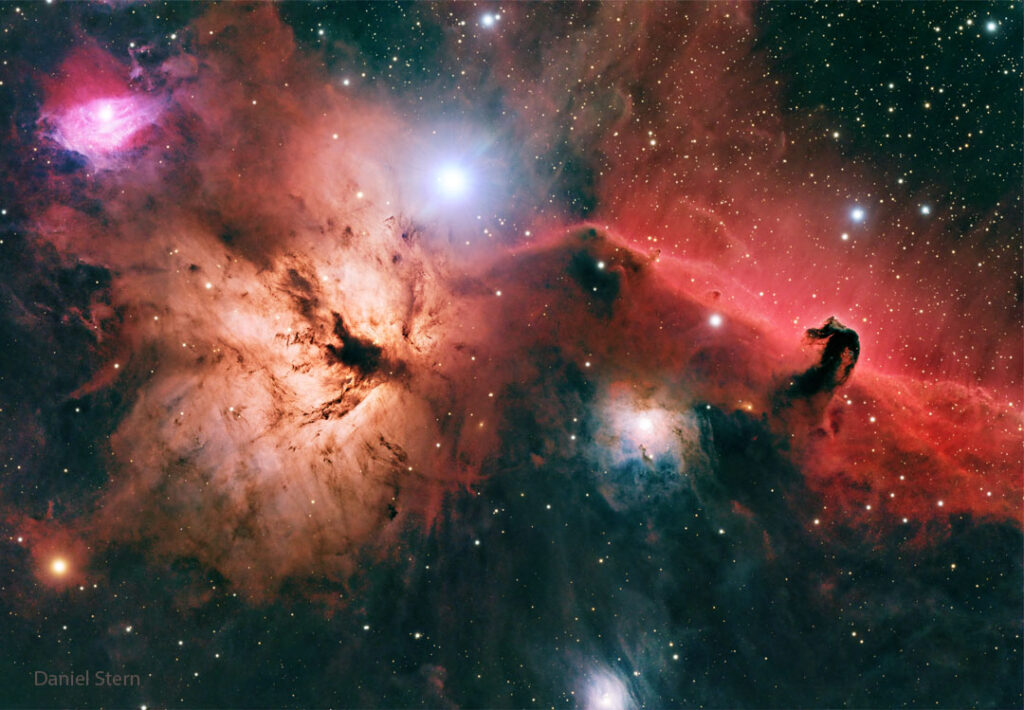
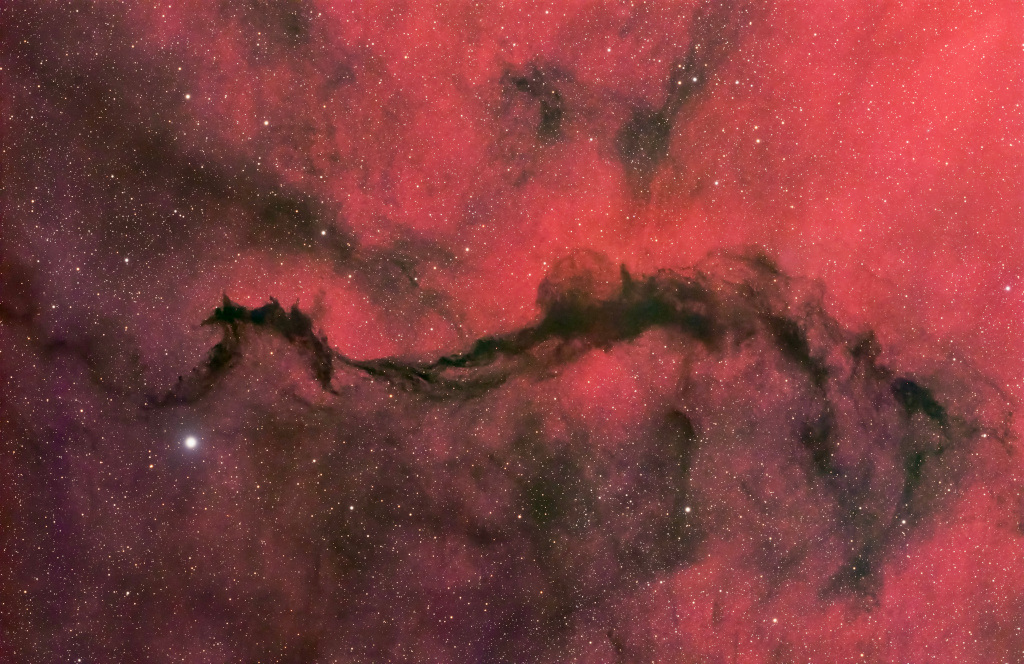
Copyright: Daniel Stern The Horsehead Nebula is one of the most famous nebulae on the sky. It is visible as the dark indentation to the orange emission nebula at the far right of the featured picture. The horse-head feature is dark because it is really an opaque dust cloud that lies in front of the […]

Callisto: Dirty Battered Iceball

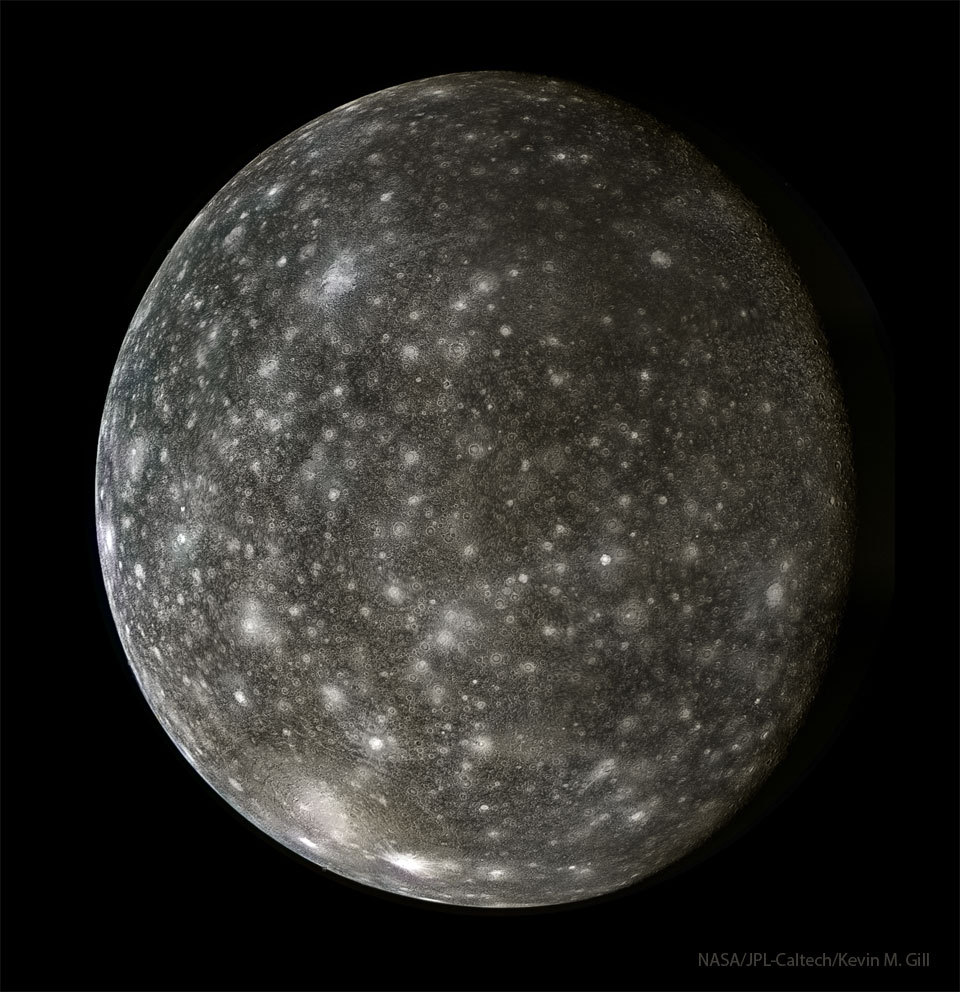
Its surface is the most densely cratered in the Solar System — but what’s inside? Jupiter’s moon Callisto is a battered ball of dirty ice that is larger than the planet Mercury. It was visited by NASA’s Galileo spacecraft in the 1990s and 2000s, but the recently reprocessed featured image is from a flyby of […]

NGC 7027: The Pillow Planetary Nebula

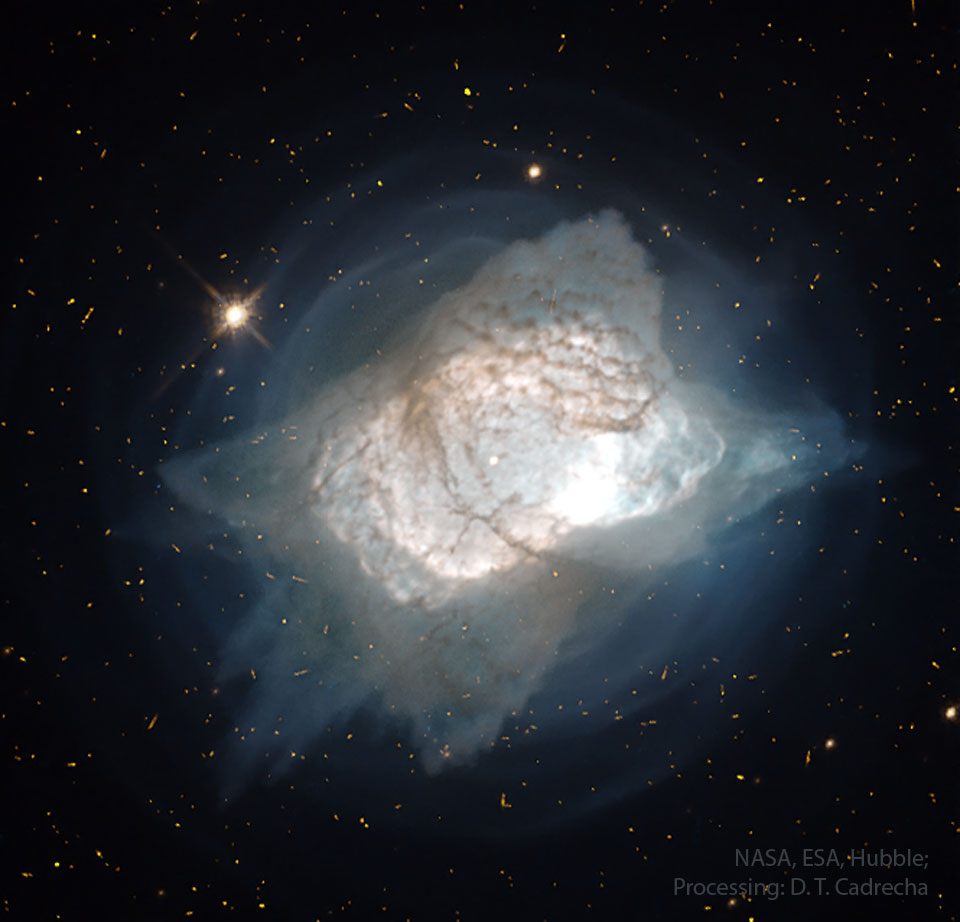
What created this unusual planetary nebula? Dubbed the Pillow Nebula and the Flying Carpet Nebula, NGC 7027 is one of the smallest, brightest, and most unusually shaped planetary nebulas known. Given its expansion rate, NGC 7027 first started expanding, as visible from Earth, about 600 years ago. For much of its history, the planetary nebula […]

A Two Percent Moon

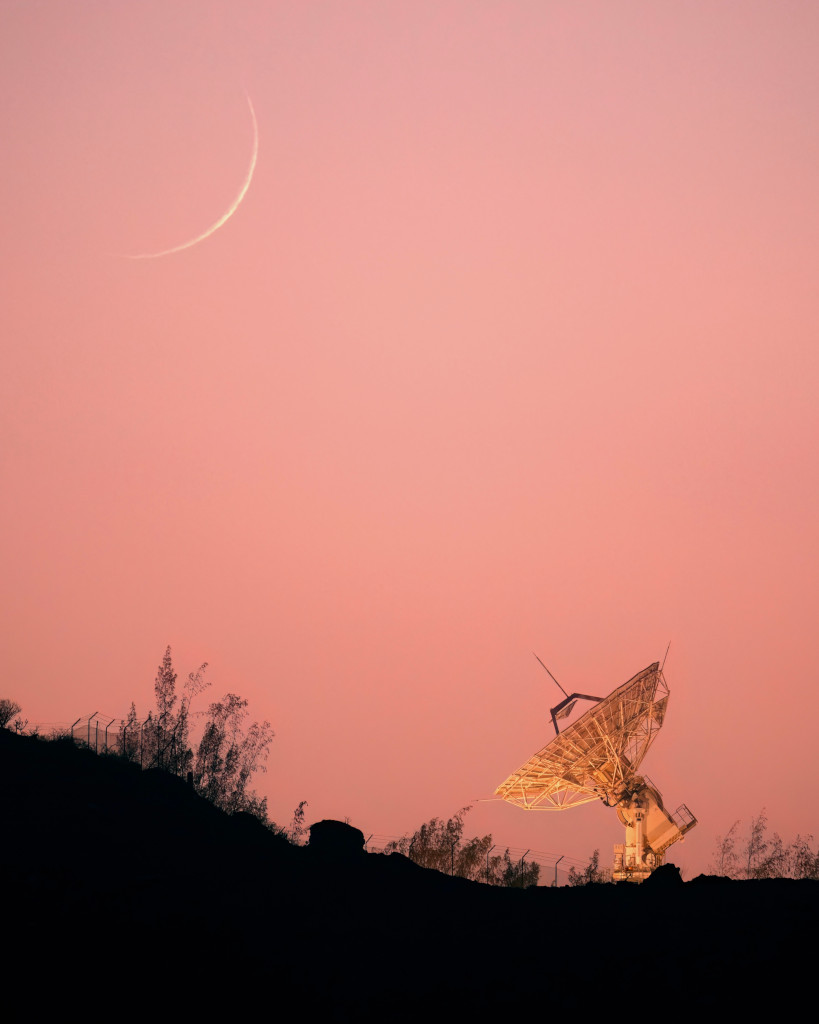
Copyright: Marina Prol A young crescent moon can be hard to see. That’s because when the Moon shows it’s crescent phase (young or old) it can never be far from the Sun in planet Earth’s sky. And even though the sky is still bright, a slender sunlit lunar crescent is cleary visible in this early […]

A Dark Veil in Ophiuchus

Copyright: Katelyn Beecroft The diffuse hydrogen-alpha glow of emission region Sh2-27 fills this cosmic scene. The field of view spans nearly 3 degrees across the nebula-rich constellation Ophiuchus toward the central Milky Way. A Dark Veil of wispy interstellar dust clouds draped across the foreground is chiefly identified as LDN 234 and LDN 204 from […]

Galaxies, Stars, and Dust

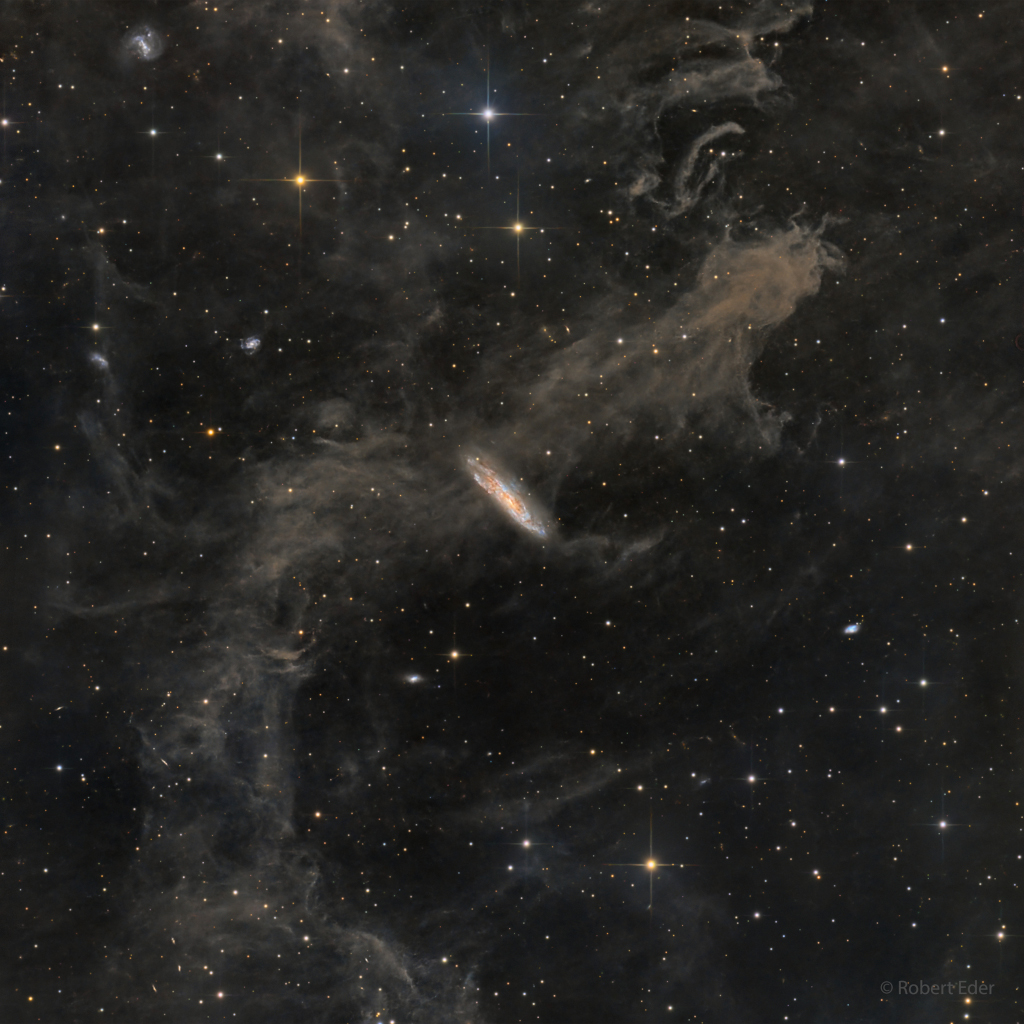
Copyright: Robert Eder This well-composed telescopic field of view covers over a Full Moon on the sky toward the high-flying constellation Pegasus. Of course the brighter stars show diffraction spikes, the commonly seen effect of internal supports in reflecting telescopes, and lie well within our own Milky Way galaxy. The faint but pervasive clouds of […]

WISPIT 2b: Exoplanet Carves Gap in Birth Disk

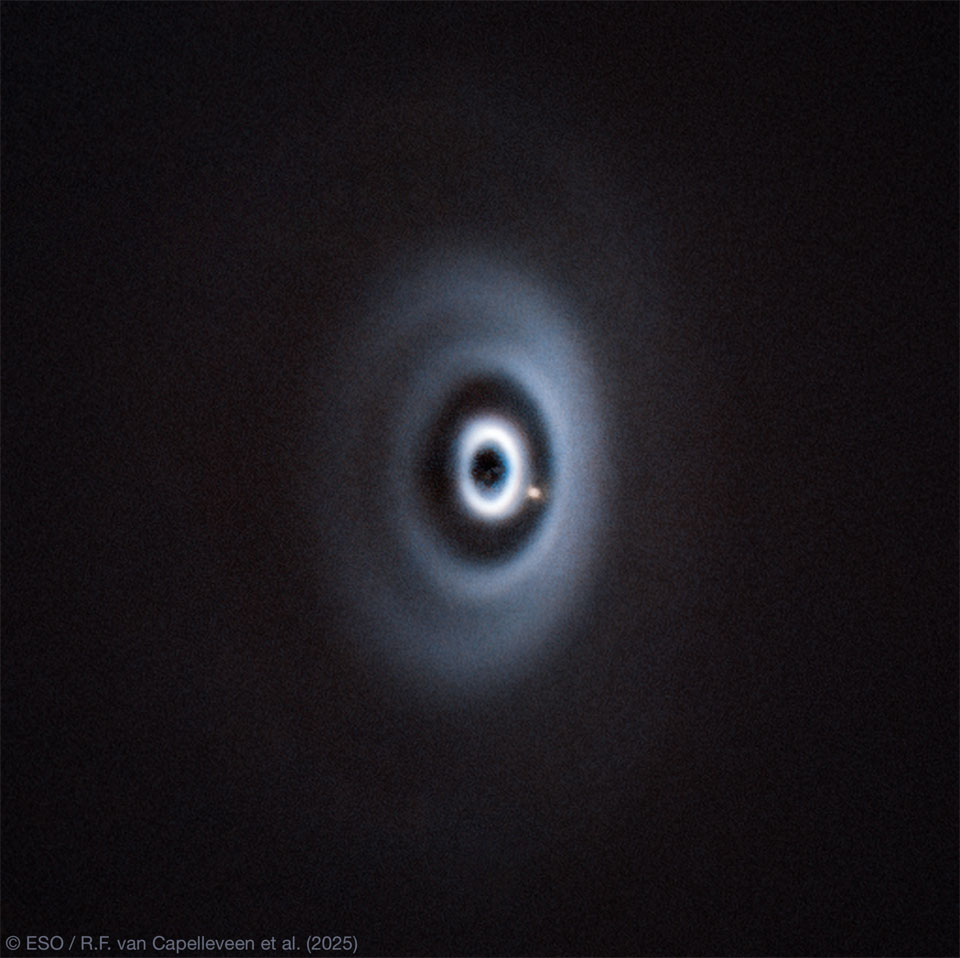
That yellow spot — what is it? It’s a young planet outside our Solar System. The featured image from the Very Large Telescope in Chile surprisingly captures a distant scene much like our own Solar System’s birth, some 4.5 billion years ago. Although we can’t look into the past and see Earth’s formation directly, telescopes […]

A Leaky Solar Prominence

Copyright: Andrea Girones What’s hovering above the Sun? A solar prominence. A prominence is a crest of hot gas expelled from the Sun’s surface that is held aloft by the Sun’s magnetic field. Prominences can last for days, can suddenly explode into space, or just fall back to the Sun. What decides a prominence’s fate […]

The Meteor and the Star Cluster

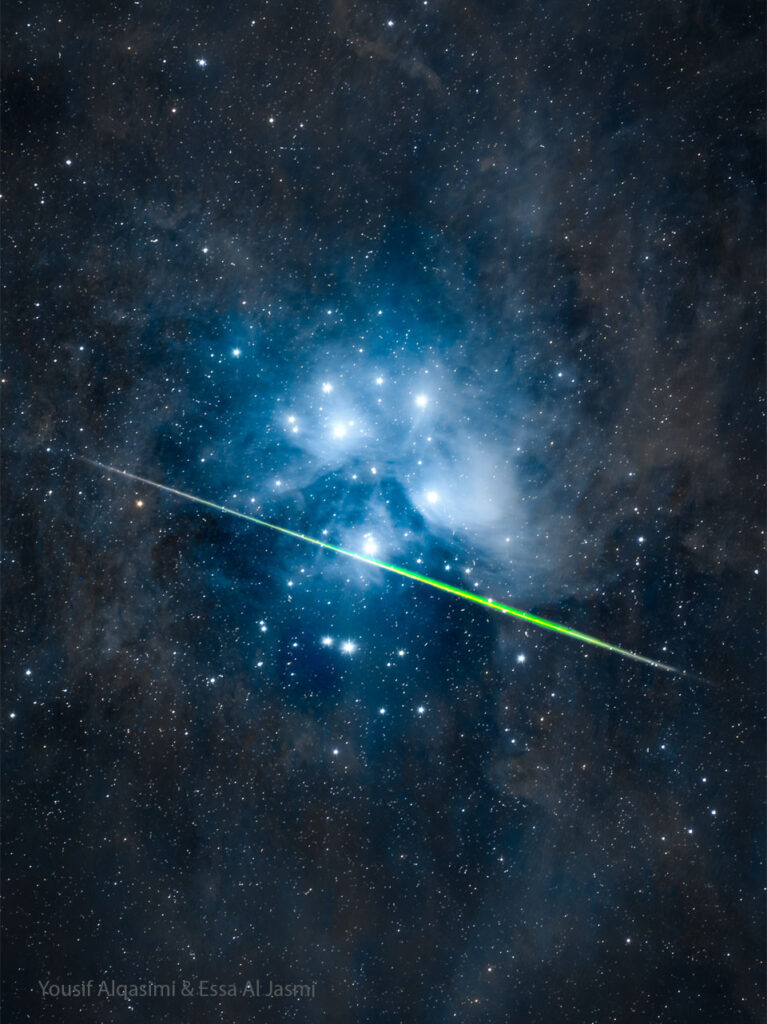
Copyright: Yousif Alqasimi & Essa Al Jasmi Sometimes even the sky surprises you. To see more stars and faint nebulosity in the Pleiades star cluster (M45), long exposures are made. Many times, less interesting items appear on the exposures that were not intended — but later edited out. These include stuck pixels, cosmic ray hits, […]

The Spinning Pulsar of the Crab Nebula

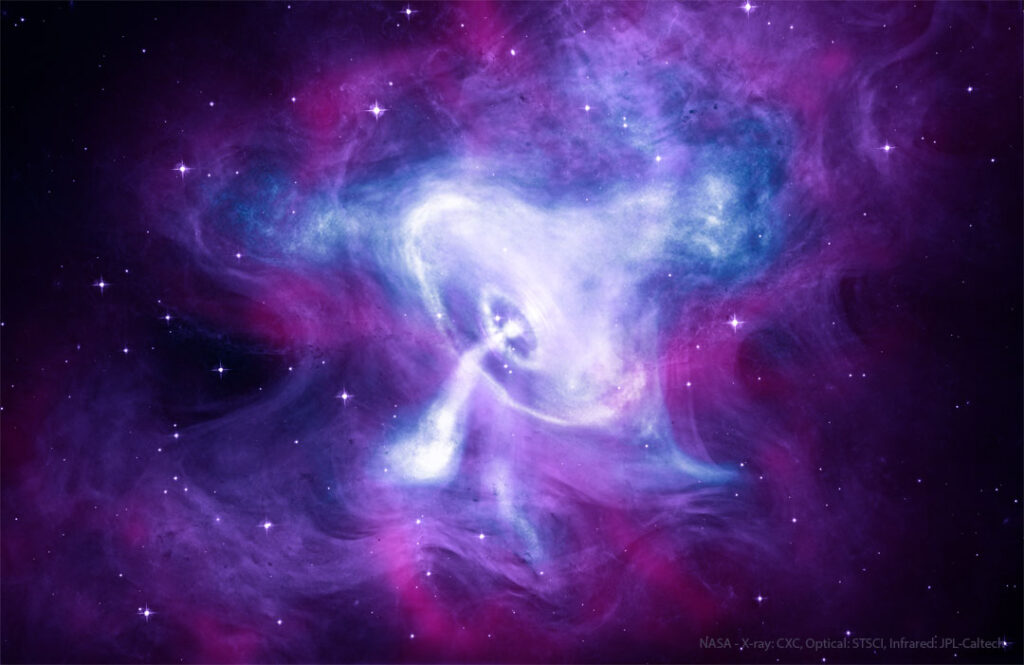
At the core of the Crab Nebula lies a city-sized, magnetized neutron star spinning 30 times a second. Known as the Crab Pulsar, it is the bright spot in the center of the gaseous swirl at the nebula’s core. About twelve light-years across, the spectacular picture frames the glowing gas, cavities and swirling filaments near […]