
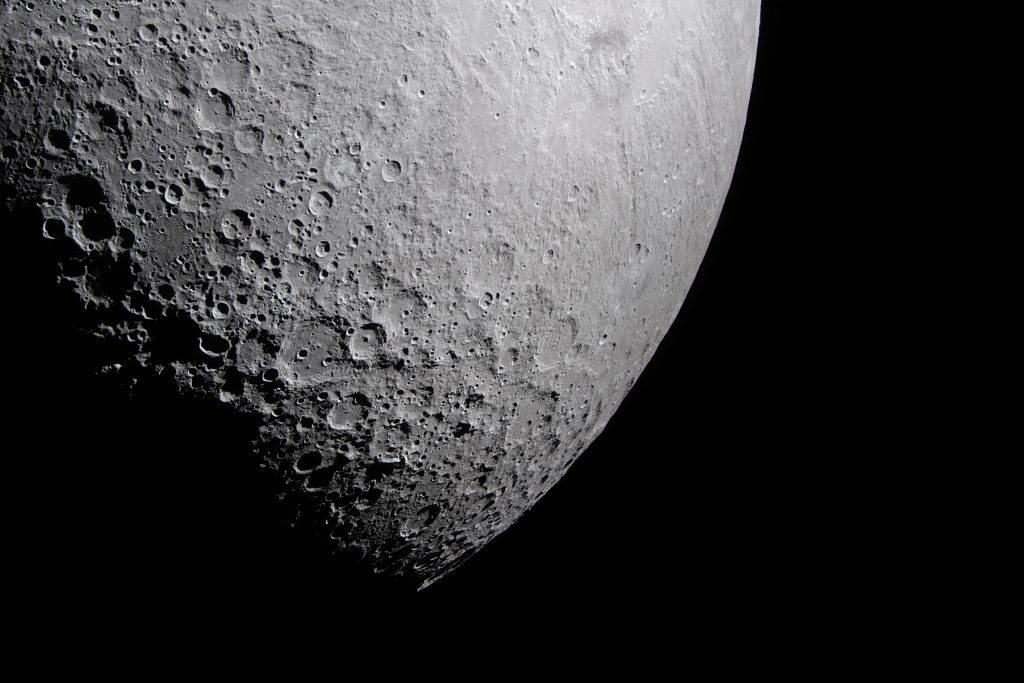
At the Edge of Light
A portion of the Moon’s far side is seen along the terminator—the boundary between lunar day and night—where low-angle sunlight casts long shadows across the surface. Courtesy of NASA Image of the Day
Join our community of space enthusiasts for just $3/month and enjoy an ad-free experience across our app and website. Your support helps us deliver the best rocket launch tracking experience in the galaxy! 🚀
A portion of the Moon’s far side is seen along the terminator—the boundary between lunar day and night—where low-angle sunlight casts long shadows across the surface. Courtesy of NASA Image of the Day
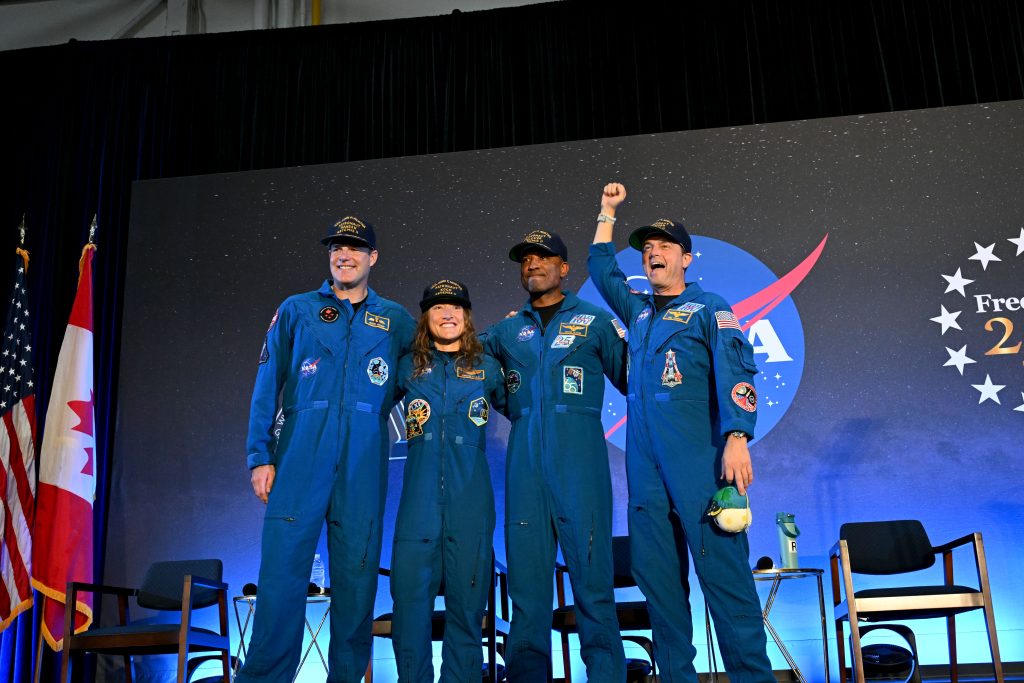
NASA’s Artemis II crew shared brief remarks with friends, family, and colleagues after they landed at Ellington Airport near NASA’s Johnson Space Center in Houston on Saturday, April 11, 2026, after a nearly 10-day journey around the Moon and back to Earth. Courtesy of NASA Image of the Day
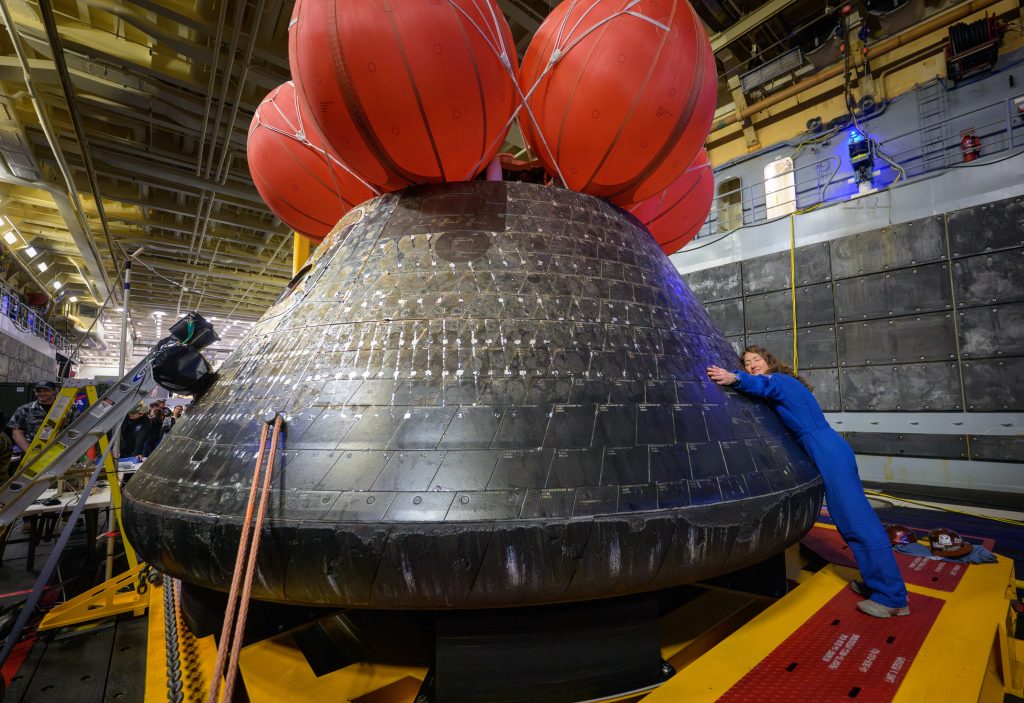
NASA astronaut Christina Koch, Artemis II mission specialist hugs the Orion spacecraft in the well deck of USS John P. Murtha, Saturday, April 11, 2026. Courtesy of NASA Image of the Day
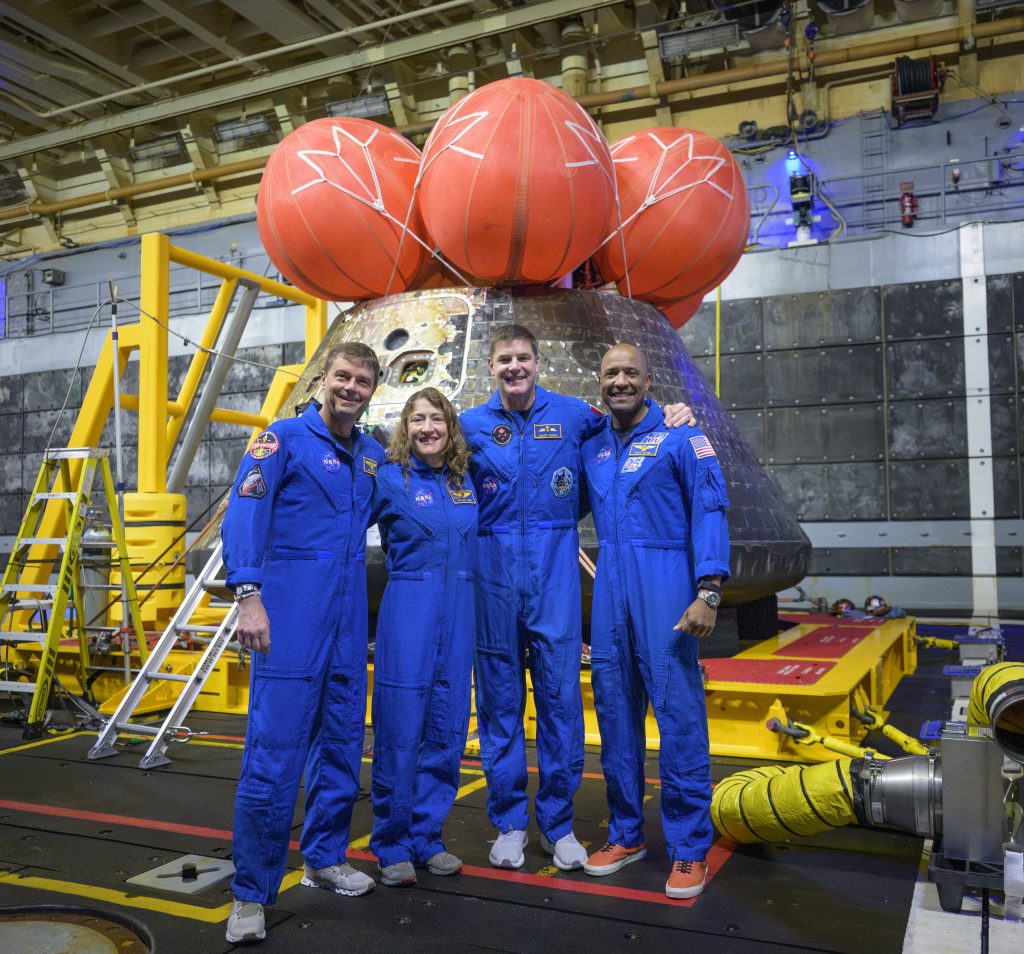
NASA astronauts Reid Wiseman, commander; left, Christina Koch, mission specialist; CSA (Canadian Space Agency) astronaut Jeremy Hansen, mission specialist; and NASA astronaut Victor Glover, Artemis II pilot, right, pose for a group photo after viewing the Orion spacecraft in the well deck of USS John P. Murtha, Saturday, April 11, 2026, in the Pacific Ocean […]
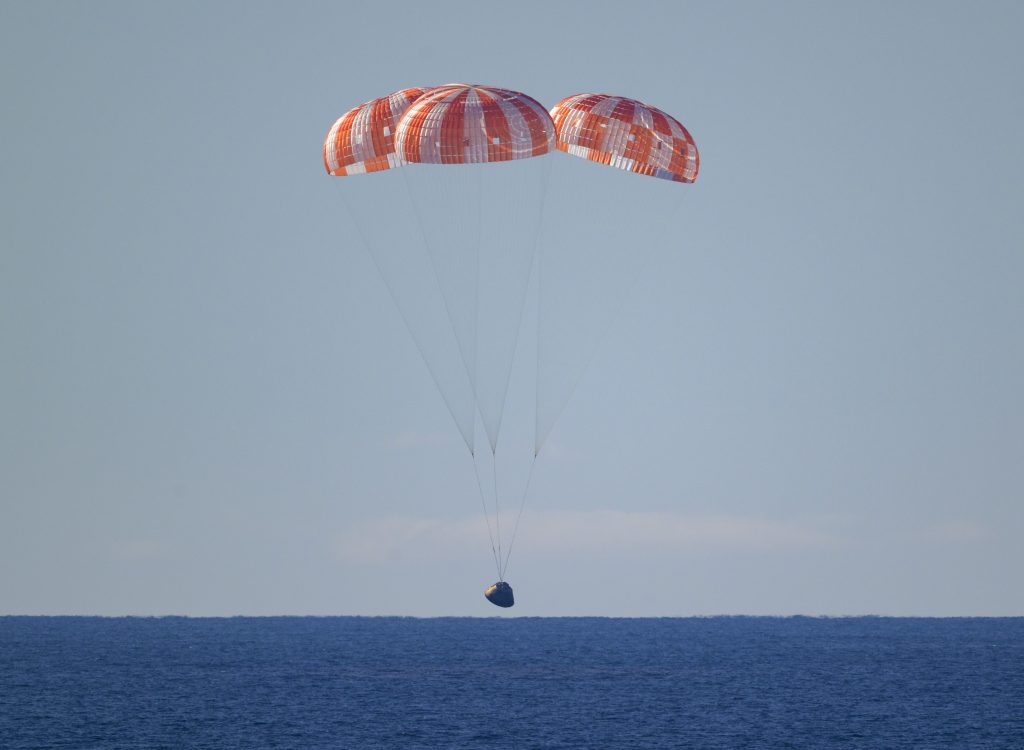
NASA’s Orion spacecraft with Artemis II crewmembers NASA astronauts Reid Wiseman, commander; Victor Glover, pilot; Christina Koch, mission specialist; and CSA (Canadian Space Agency) astronaut Jeremy Hansen, mission specialist aboard is seen under parachutes as it lands in the Pacific Ocean off the coast of California, Friday, April 10, 2026. NASA’s Artemis II mission took […]
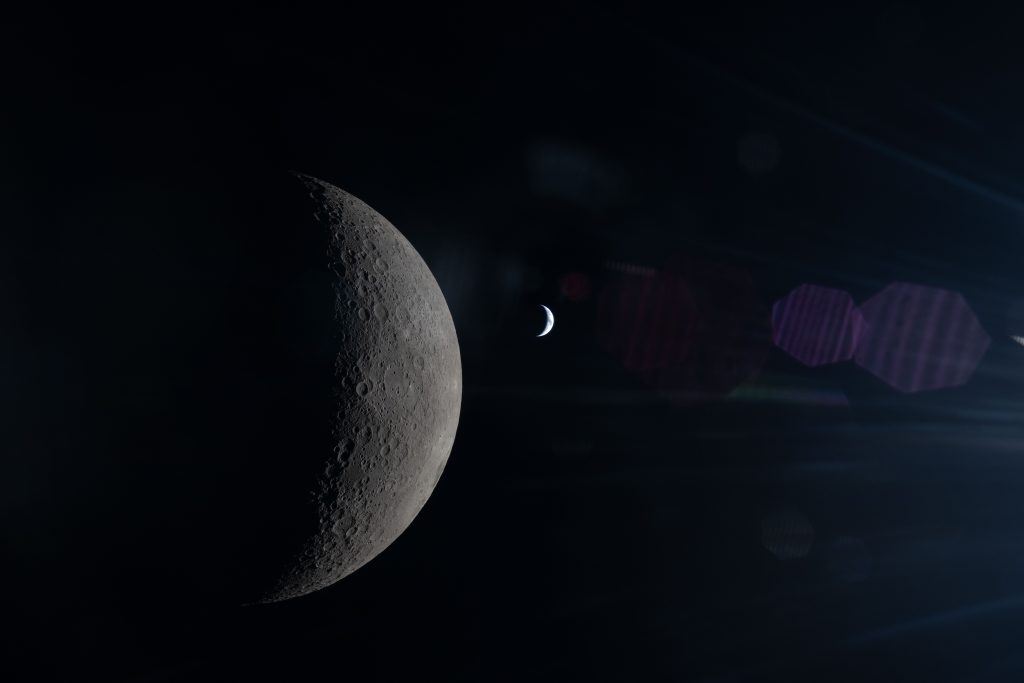
Seen during the Artemis II mission, the Moon and Earth align in the same frame, each partially illuminated by the Sun. Courtesy of NASA Image of the Day
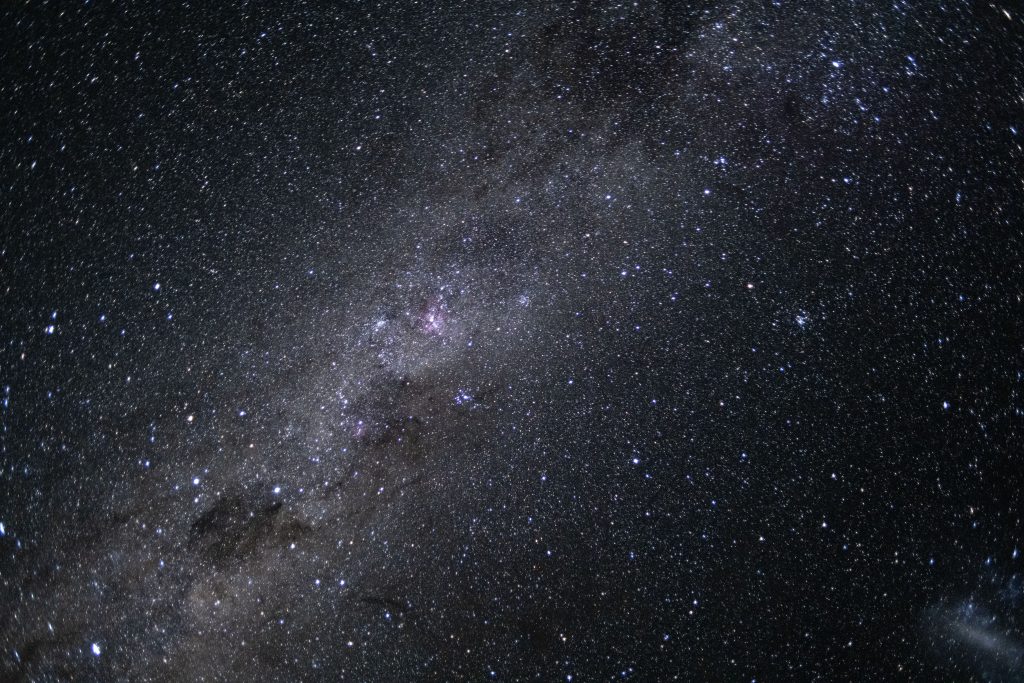
A stunning snapshot in time. The Artemis II crew captured this breathtaking photo of our galaxy, the Milky Way. Courtesy of NASA Image of the Day
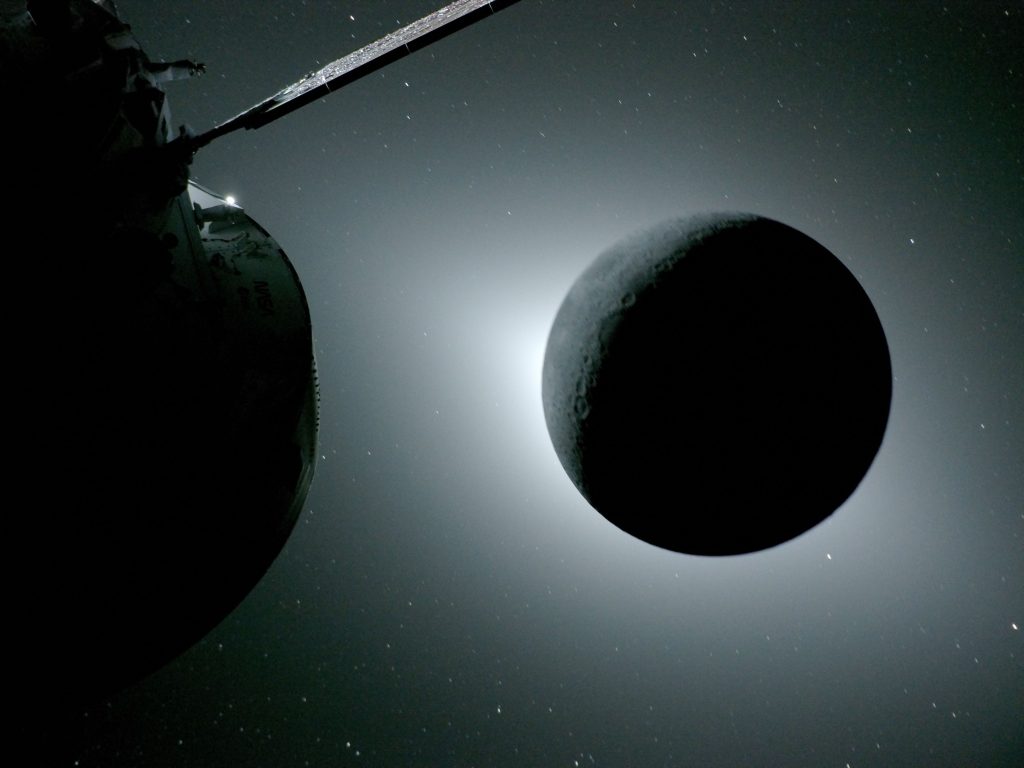
The Moon, seen here backlit by the Sun during a solar eclipse on April 6, 2026, is photographed by one of the cameras on the Orion spacecraft’s solar array wings. Orion is visible in the foreground on the left. Courtesy of NASA Image of the Day
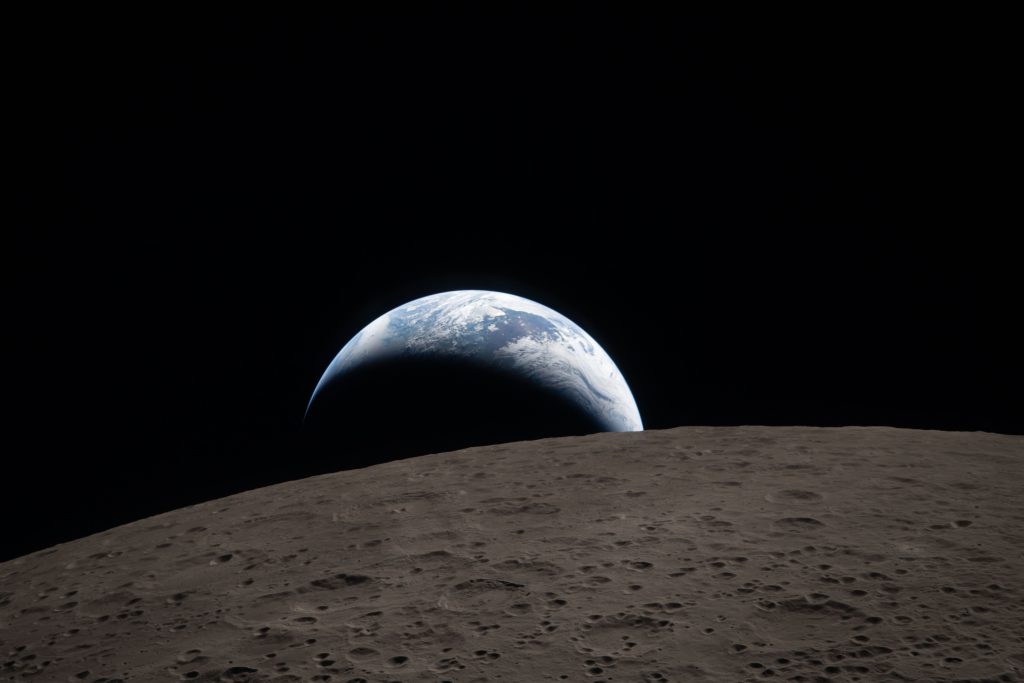
Earthset captured through the Orion spacecraft window at 6:41 p.m. EDT, April 6, 2026, during the Artemis II crew’s flyby of the Moon. Courtesy of NASA Image of the Day
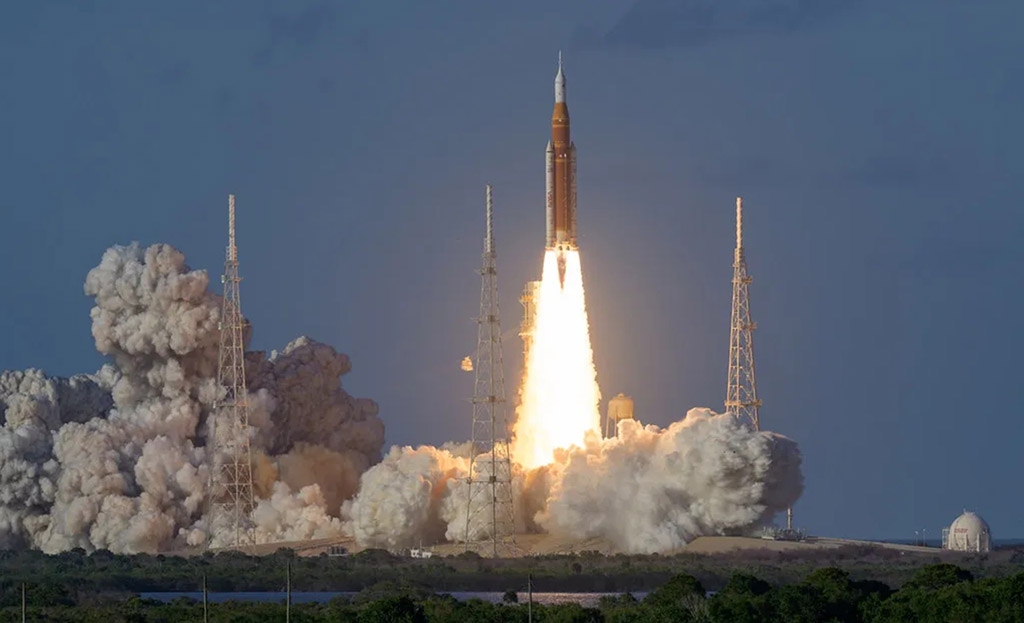
Copyright: NASA/Bill Ingalls; Text: Ogetay Kayali (MTU) We are one small step closer to returning to the Moon. A new chapter in human exploration began yesterday when NASA’s Artemis II launched aboard the Space Launch System (SLS) from Kennedy Space Center. Carrying four astronauts, the Orion spacecraft’s planned lunar flyby will be the first in […]
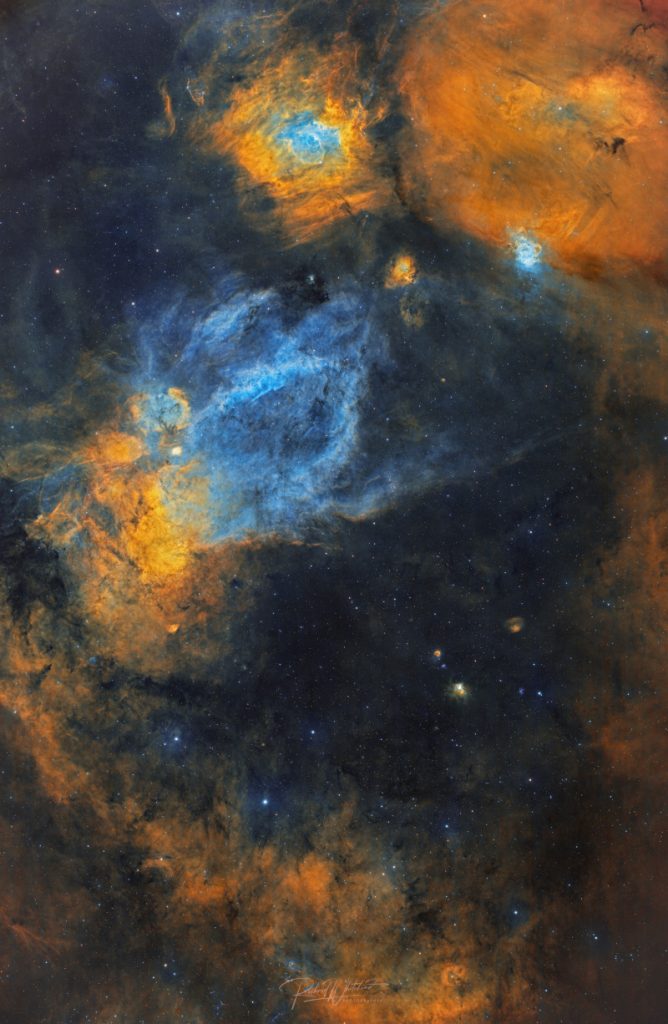
Copyright: Richard Whitehead Text: Keighley Rockcliffe (NASA GSFC, UMBC CSST, CRESST II) What unexpected things do you see when you look up at the night sky? Today’s image resembles an abstract painting, with large swaths of color strewn across a cosmic canvas seemingly without design. Despite the image’s abstract nature, the human mind finds patterns, […]
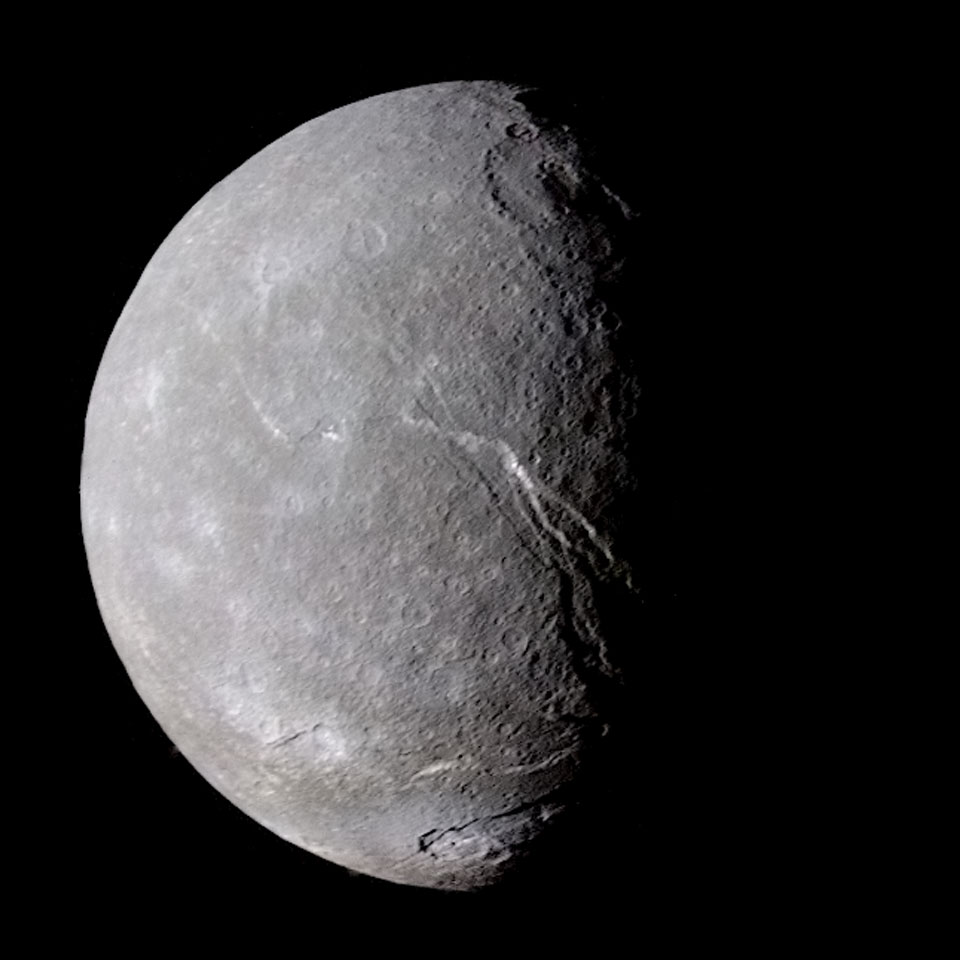
Titania’s tortured terrain is a mix of canyons, cliffs, and craters. NASA’s interplanetary robot spacecraft Voyager 2 passed the largest moon of Uranus in 1986 and took the feature picture. That the trenches of Titania resemble those on another moon of Uranus, Ariel, indicate that Titania underwent some violent surface event possibly related to water […]
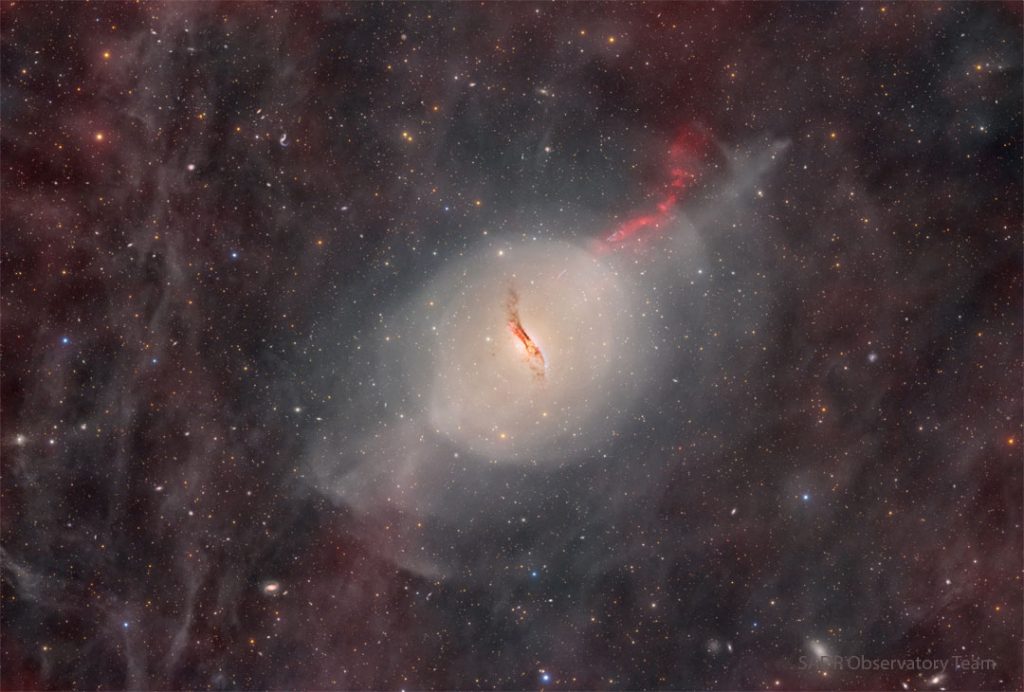
Copyright: SADR Observatory Team: J-C Dalouzy, P. Bazart, M. Dherbécourt, C. Humbert, G. Leroy, J-P Quéau, H. Talbot, & E. Valin What’s happened to the center of this galaxy? Dramatic dust lanes run across the center of unusual elliptical galaxy Centaurus A. These dust lanes are so thick they almost completely obscure the galaxy’s center […]
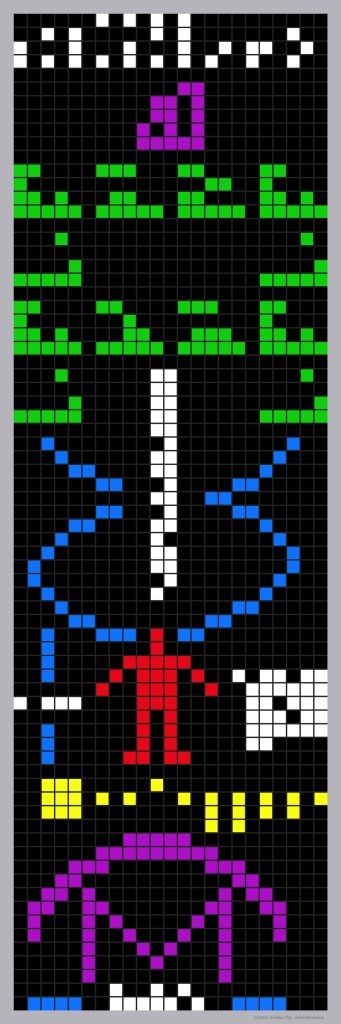
What are these Earthlings trying to tell us? The featured message was broadcast from Earth towards the globular star cluster M13 in 1974. During the dedication of an upgrade to the Arecibo Observatory – then the largest single radio telescope in the world – a string of 1’s and 0’s representing the diagram was sent. […]
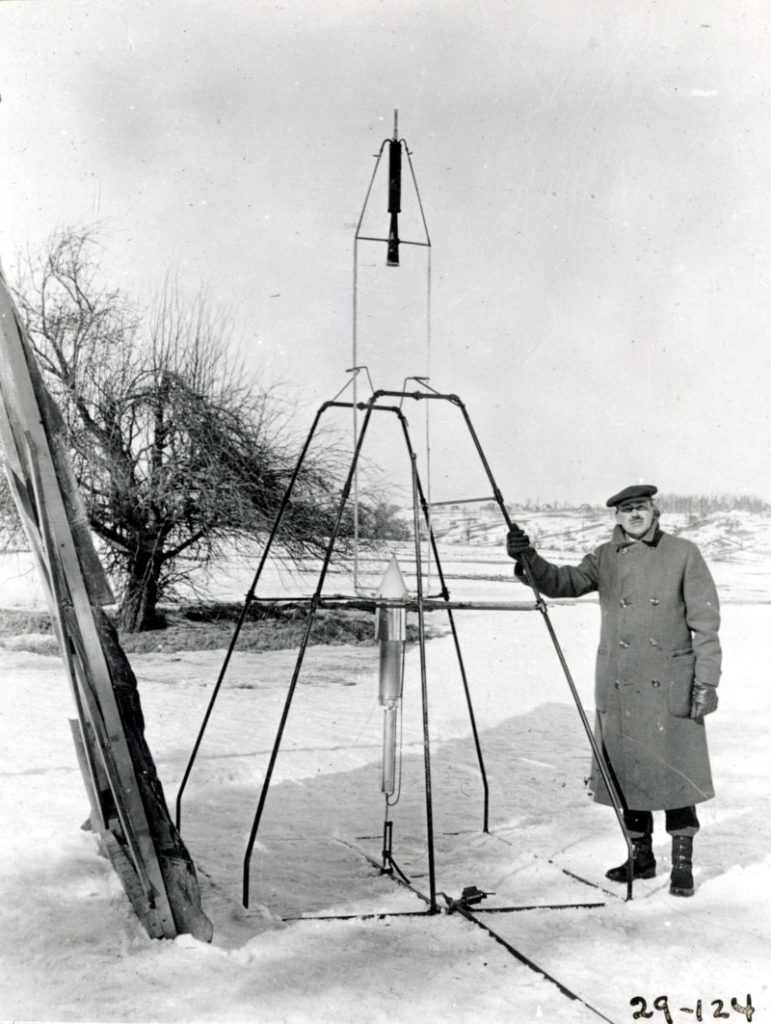
Robert H. Goddard, considered the father of modern rocketry, was born in Worcester Massachusetts in 1882. As a 16 year old, Goddard read H.G. Wells’ science fiction classic “War Of The Worlds” and dreamed of space flight. By 1926 he had designed, built, and flown the world’s first liquid fuel rocket. Launched 100 years ago, […]