Login with Patreon to Remove Ads

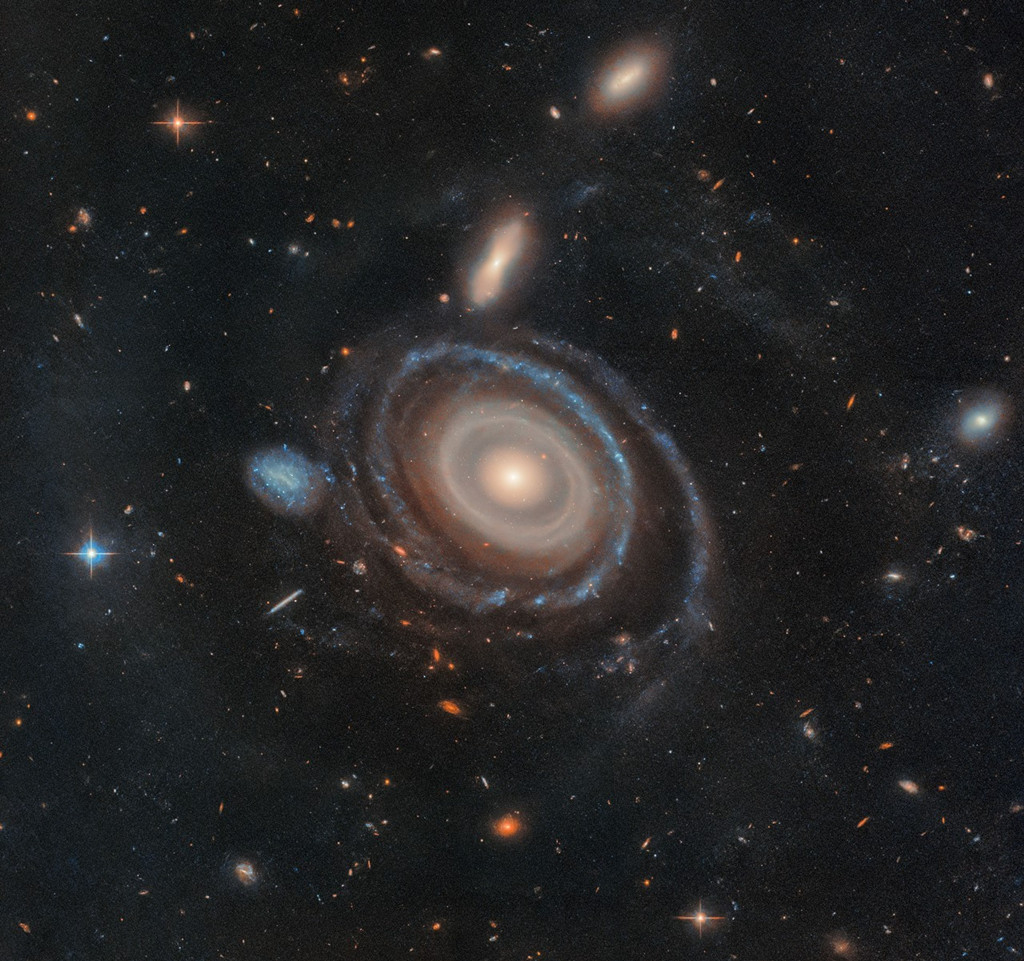
LEDA 1313424: The Bullseye Galaxy

Copyright: The giant galaxy cataloged as LEDA 1313424 is about two and a half times the size of our own Milky Way. Its remarkable appearance in this recently released Hubble Space Telescope image strongly suggests its nickname “The Bullseye Galaxy”. Known as a collisional ring galaxy it has nine rings confirmed by telescopic observations, rippling […]
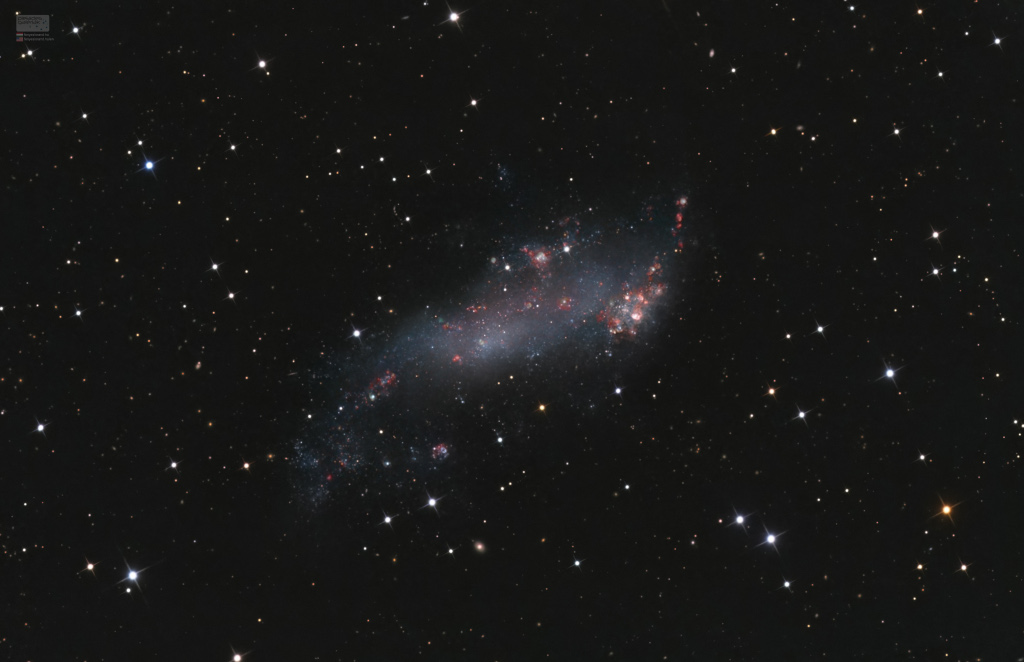

IC 2574: Coddington’s Nebula

Copyright: Lorand Fenyes Grand spiral galaxies often seem to get all the glory, flaunting their young, bright, blue star clusters in beautiful, symmetric spiral arms. But small, irregular galaxies form stars too. In fact dwarf galaxy IC 2574 shows clear evidence of intense star forming activity in its telltale reddish regions of glowing hydrogen gas. […]

Copyright: Courtesy of NASA Astronomy Picture of the Day

Anticrepuscular Rays: A Rainbow Fan over Spain

Copyright: Julene Eiguren Yes, but can your rainbow do this? Late in the day, the Sun set as usual toward the west. However, on this day, the more interesting display was 180 degrees around — toward the east. There, not only was a rainbow visible, but an impressive display of anticrepuscular rays from the rainbow’s […]

Wolf-Rayet Star 124: Stellar Wind Machine

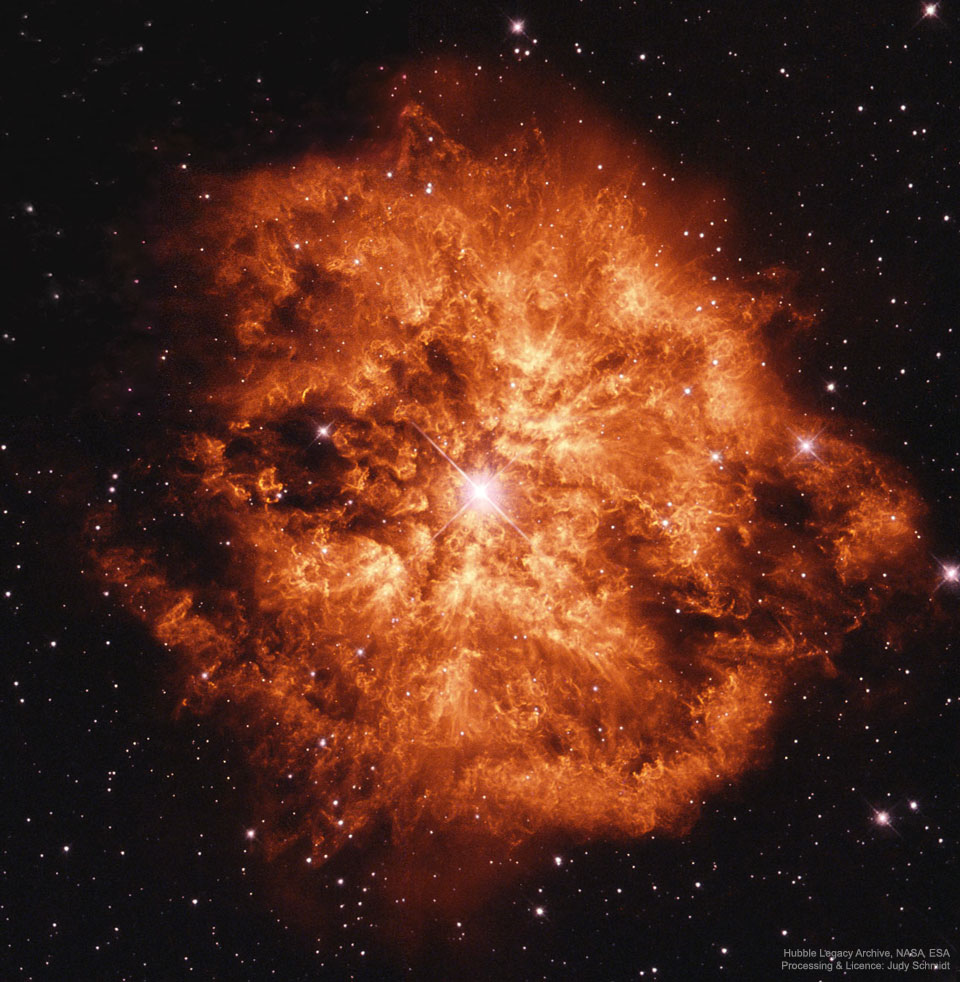
Copyright: Some stars explode in slow motion. Rare, massive Wolf-Rayet stars are so tumultuous and hot that they are slowly disintegrating right before our telescopes. Glowing gas globs each typically over 30 times more massive than the Earth are being expelled by violent stellar winds. Wolf-Rayet star WR 124, visible near the featured image center […]

Comet G3 ATLAS Disintegrates

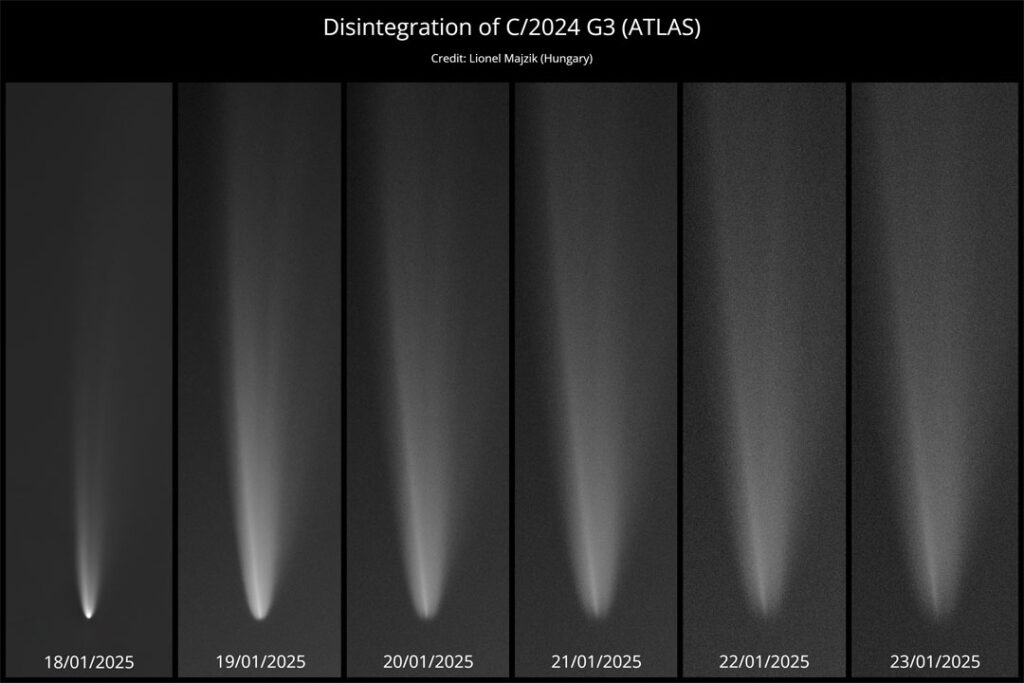
Copyright: What’s happening to Comet G3 ATLAS? After passing near the Sun in mid-January, the head of the comet has become dimmer and dimmer. By late January, Comet C/2024 G3 (ATLAS) had become a headless wonder — even though it continued to show impressive tails after sunset in the skies of Earth’s Southern Hemisphere. Pictured […]

Nacreous Clouds over Sweden

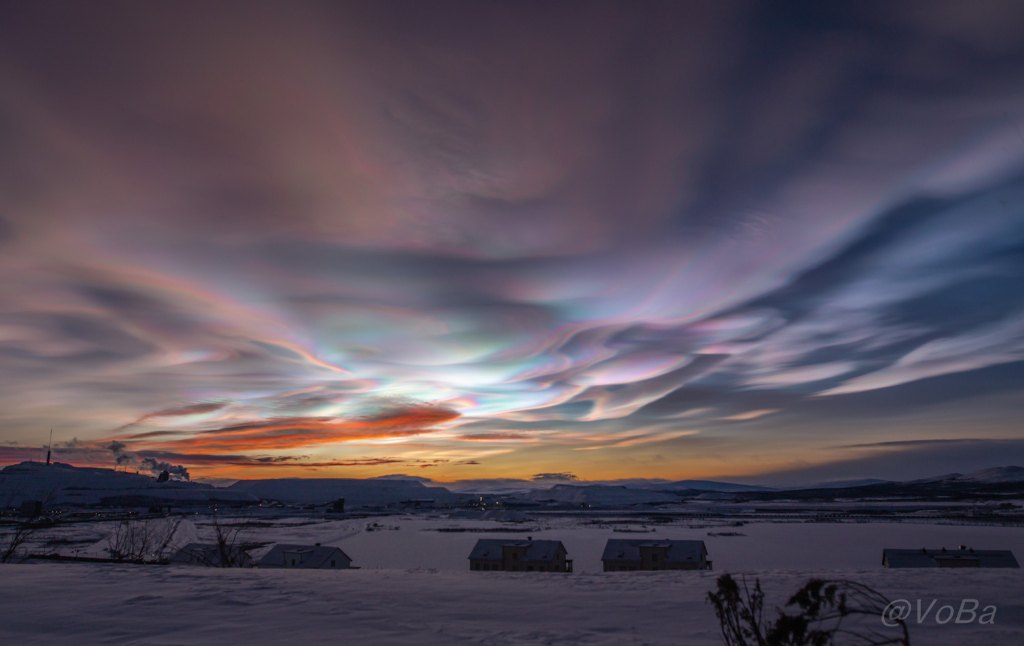
Copyright: Known as nacreous clouds Vivid and lustrous, wafting iridescent waves of color wash across this skyscape from northern Sweden. Known as nacreous clouds or mother-of-pearl clouds, they are rare. But their unforgettable appearance was captured in this snapshot on January 12 with the Sun just below the local horizon. A type of polar stratospheric […]

The Variable Nebula NGC 2261

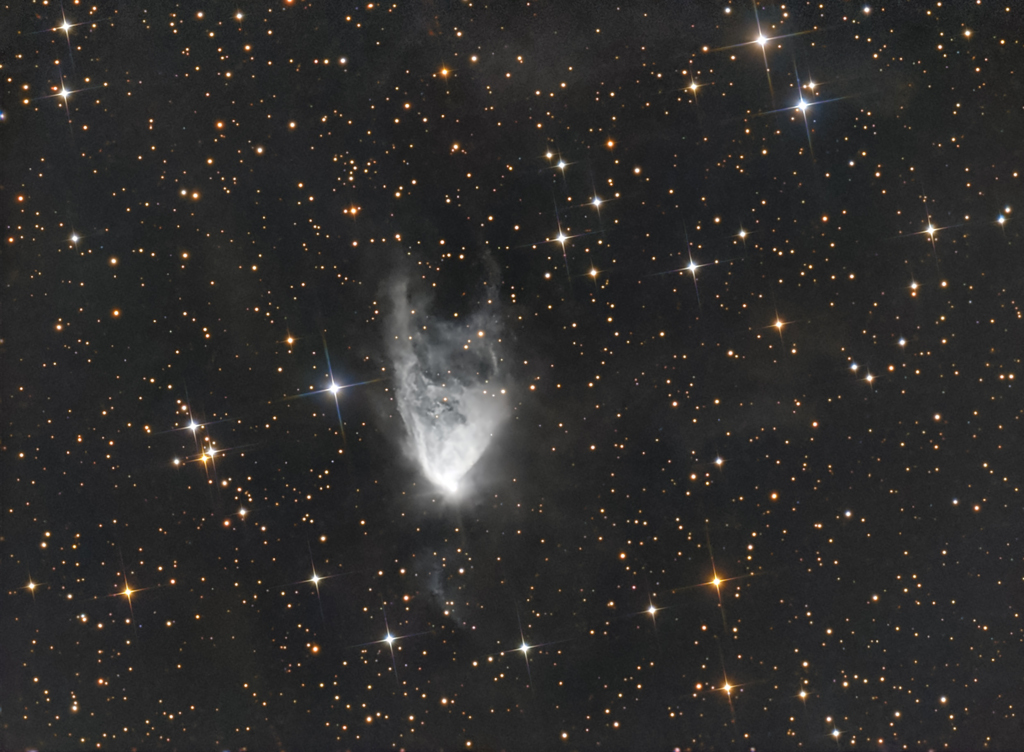
Copyright: Tommy Lease The interstellar cloud of dust and gas captured in this sharp telescopic snapshot is seen to change its appearance noticeably over periods as short as a few weeks. Discovered over 200 years ago and cataloged as NGC 2261, bright star R Monocerotis lies at the tip of the fan-shaped nebula. About one […]

Hydrogen Clouds of M33

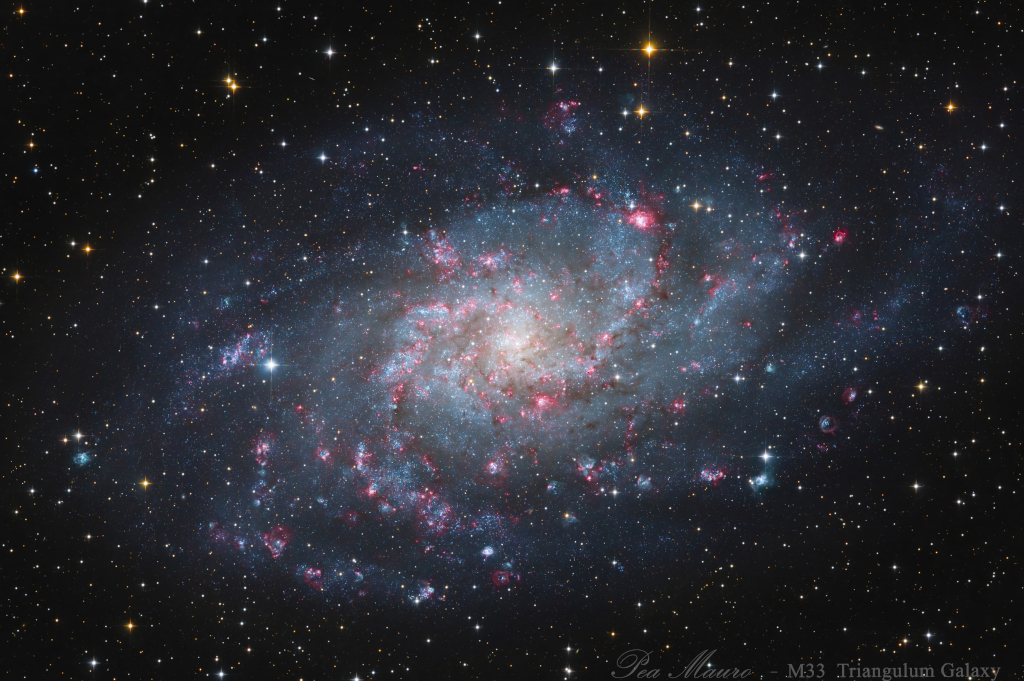
Copyright: Pea Mauro Gorgeous spiral galaxy Messier 33 seems to have more than its fair share of glowing hydrogen gas. A prominent member of the local group of galaxies, M33 is also known as the Triangulum Galaxy and lies a mere 3 million light-years away. The galaxy’s central 60,000 light-years or so are shown in […]

Dust Shells around WR 140 from Webb

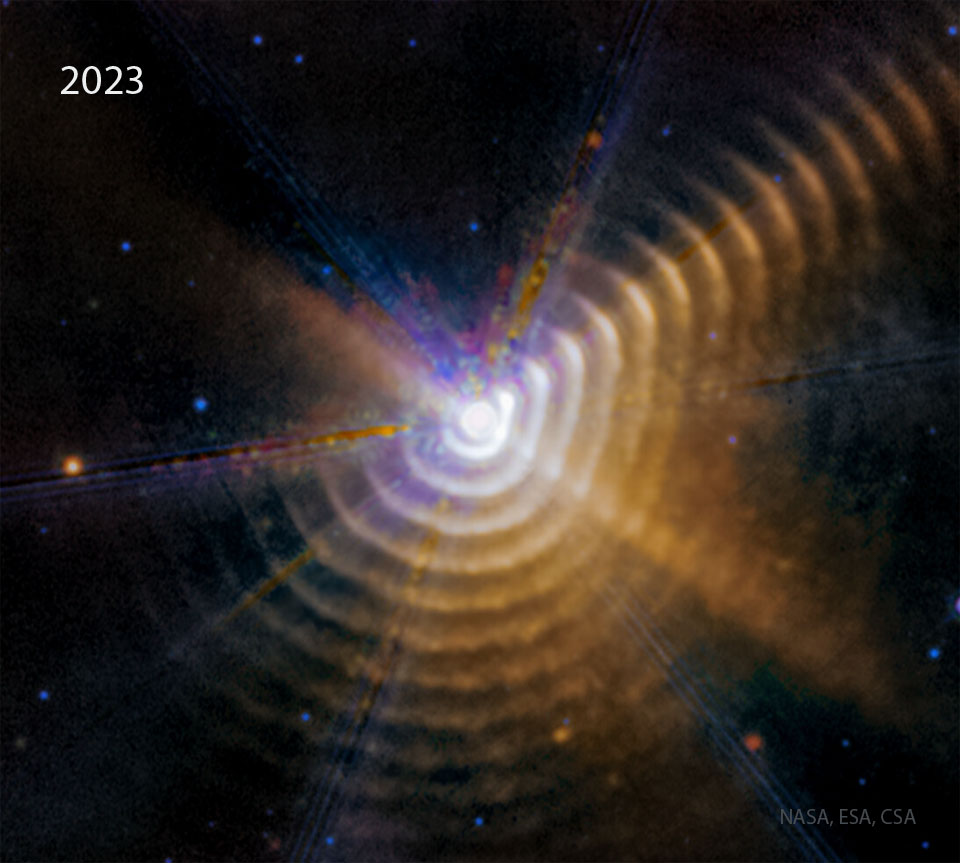
Copyright: What are those strange rings? Rich in dust, the rings are likely 3D shells — but how they were created remains a topic of research. Where they were created is well known: in a binary star system that lies about 6,000 light years away toward the constellation of the Swan (Cygnus) — a system […]

Comet G3 ATLAS over Uruguay

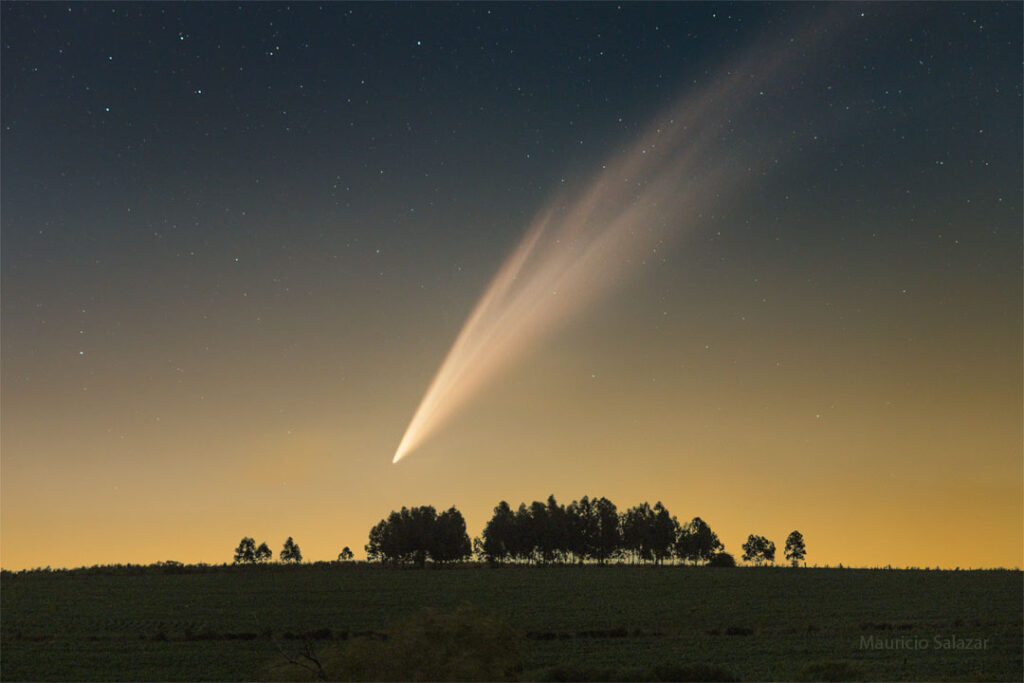
Copyright: Mauricio Salazar Comets can be huge. When far from the Sun, a comet’s size usually refers to its hard nucleus of ice and rock, which typically spans a few kilometers — smaller than even a small moon. When nearing the Sun, however, this nucleus can eject dust and gas and leave a thin tail […]

Pleiades over Half Dome

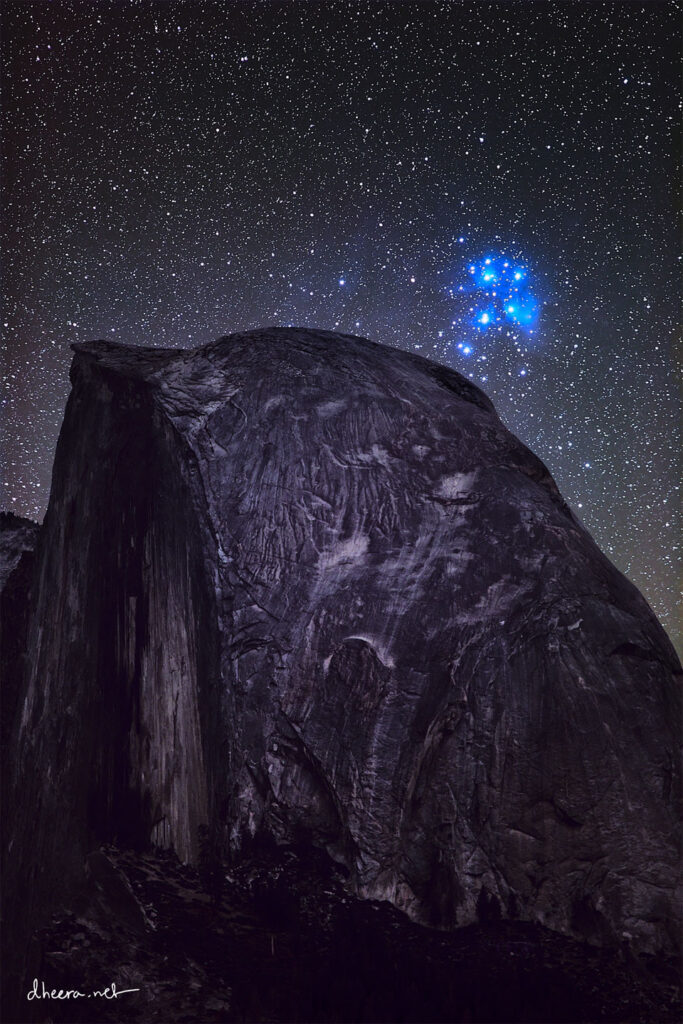
Copyright: Dheera Venkatraman Stars come in bunches. The most famous bunch of stars on the sky is the Pleiades, a bright cluster that can be easily seen with the unaided eye. The Pleiades lies only about 450 light years away, formed about 100 million years ago, and will likely last about another 250 million years. […]

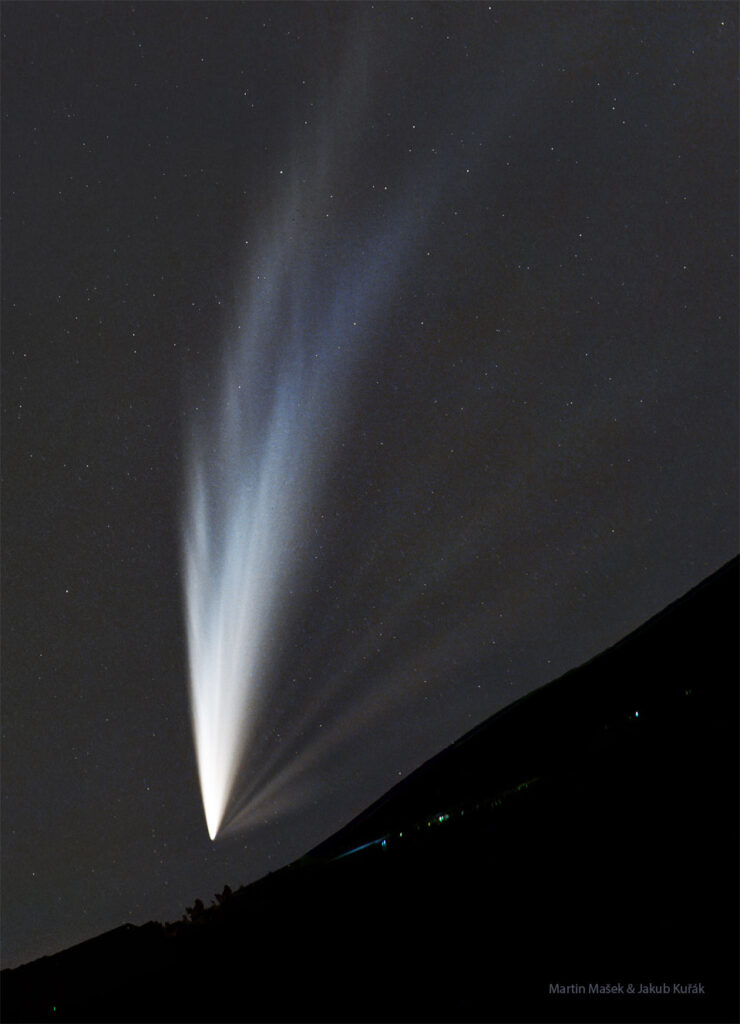
The Many Tails of Comet G3 ATLAS

Copyright: Martin Mašek (FZU, Czech Academy of Sciences) & Jakub Kuřák Why does this comet have so many tails? C/2024 G3 (ATLAS) has developed several long and intricate tails visible from Earth’s southern hemisphere over the past two weeks. Many observers reported seeing the impressive comet without any optical aid above the western horizon just […]

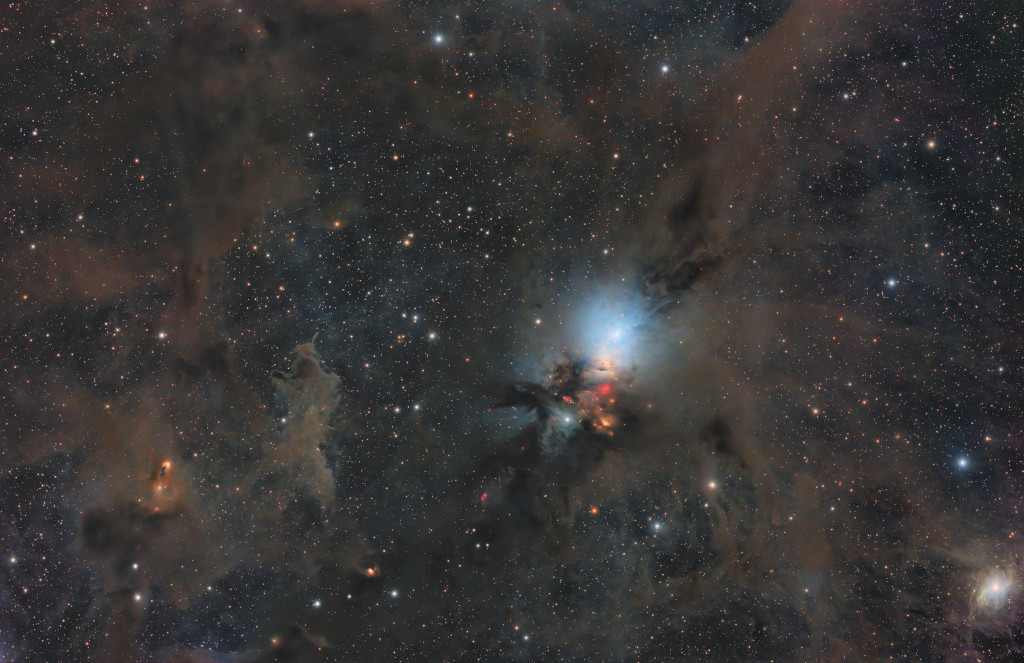
Stardust in the Perseus Molecular Cloud

Copyright: Jeff Schilling Clouds of stardust drift through this deep skyscape, across the Perseus molecular cloud some 850 light-years away. Dusty nebulae reflecting light from embedded young stars stand out in the nearly 4 degree wide field of view. With a characteristic bluish color reflection nebula NGC 1333 is prominent near center. Hints of contrasting […]

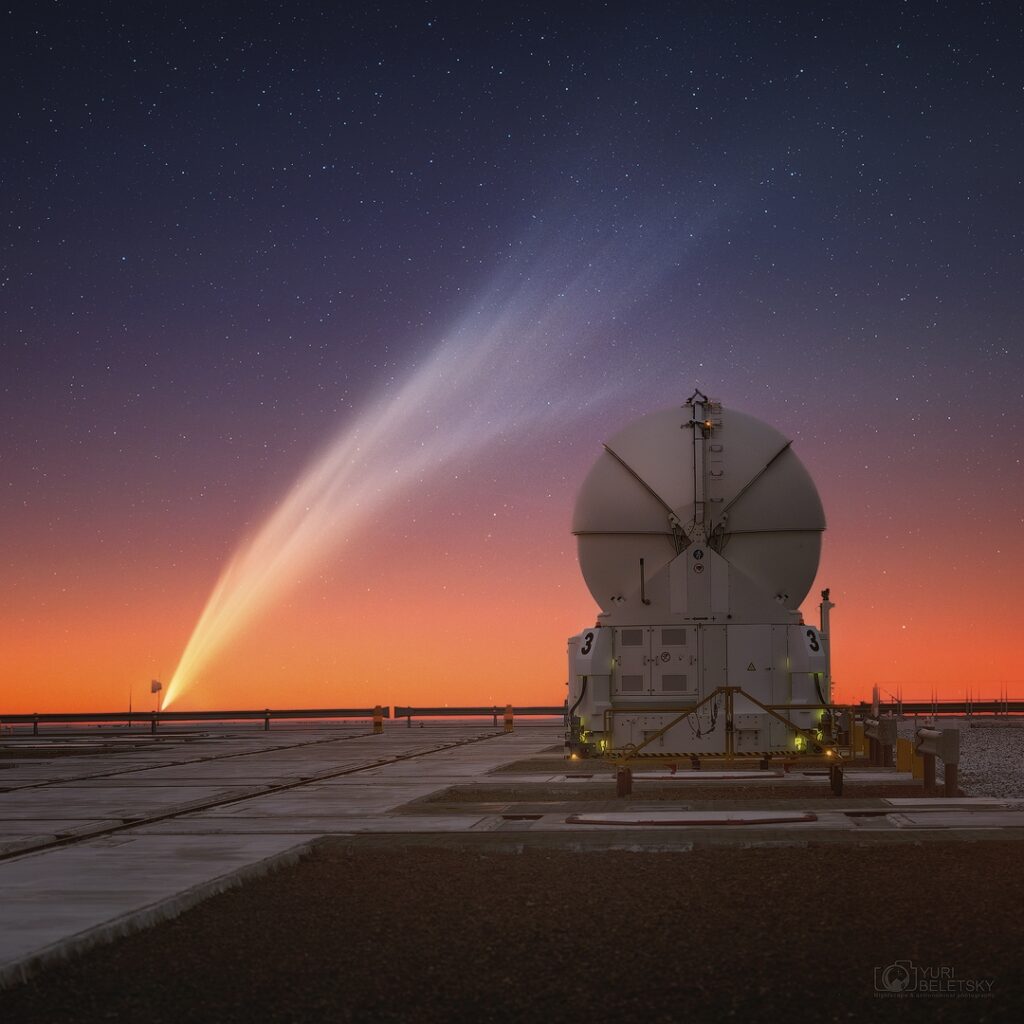
Comet G3 ATLAS: a Tail and a Telescope

Copyright: Yuri Beletsky Comet C/2024 G3 ATLAS has made a dramatic appearance in planet Earth’s skies. A visitor from the distant Oort Cloud, the comet reached its perihelion on January 13. On January 19, the bright comet was captured here from ESO Paranal Observatory in the Atacama desert in Chile. Sporting spectacular sweeping dust tails, […]