
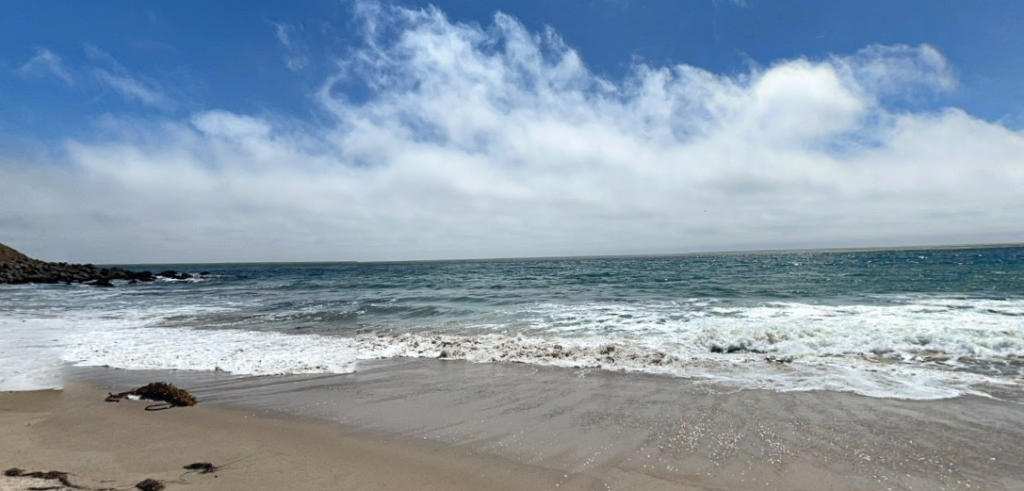
Santa Barbara Coastal Beaches: Vandenberg Rocket Launch Viewing
The Gaviota Coast of Santa Barbara County is a stretch of relatively undeveloped Pacific shoreline dotted with public beaches — Gaviota State Park with its elevated bluffs, Refugio State Beach with easy Highway 101 access and full facilities, and the remote, dark-skied Jalama Beach County Park at the end of a winding 14-mile road. Sitting roughly 25 to 50+ miles southeast of the Vandenberg launch pads — SpaceX’s SLC-4E, Firefly’s SLC-2, and ULA’s SLC-6 — and beneath the southbound ascent corridor, these beaches are the long-distance option for Vandenberg rocket launch viewing: you will not see pad ignition, but you can watch rockets climb over the ocean and catch the famous twilight “jellyfish” plume.
Because Vandenberg rockets launch southward over the ocean, much of the county’s coastline offers open sightlines to the ascent path. These spots are at their best for sunset and sunrise launches — check the rocket launch schedule for upcoming twilight windows — and they double as scenic beach days. See more viewing locations across the region.
Quick Information
- Address: Various beaches along the Gaviota Coast, Santa Barbara County, CA — including Gaviota State Park, Refugio State Beach, and Jalama Beach County Park
- Website: Santa Barbara County Parks
- Hours: Vary by park; Gaviota State Park day use is 7 a.m. to sunset
- Amenities: Vary by beach — restrooms, picnic areas, parking lots, and campgrounds at most parks; Jalama Beach County Park also has a store, grill, and showers
- Fees: Typically $10 day-use vehicle entry at Jalama Beach County Park and Gaviota State Park; fees vary by park
Why Santa Barbara Coastal Beaches is a Great Rocket Launch Viewing Spot
- Positioned under the southbound polar-orbit ascent corridor — rockets climb over the Pacific in full view of the coastline.
- Prime twilight “jellyfish” plume viewing: high-altitude exhaust lit by the sun long after ground-level sunset, visible for hundreds of miles.
- Panoramic ocean foregrounds ideal for wide-angle and long-exposure launch photography.
- Darker skies at remote spots like Jalama Beach give better contrast for night launches.
- Easy Highway 101 access at Gaviota and Refugio, with full facilities — restrooms, picnic areas, and campgrounds.
- Far less crowded than Lompoc-area launch-day lots, with room to spread out.
- Makes a full beach day of a launch — surfing, hiking, and the famous Jalama Beach burger at the park grill.
Helpful Resources
- Rocket Launch Frequently Asked Questions (FAQ)
- Rocket Launch Viewing Guide
- Vandenberg Rocket Launch Viewing
Santa Barbara Coastal Beaches Rocket Launch Viewing FAQs
How far are Santa Barbara beaches from the Vandenberg launch pads?
Approximately 25 to 50+ miles southeast of the pads, depending on the beach — Jalama Beach is the closest to the base, while Gaviota and Refugio are farther east along Highway 101.
Can I see the launch pad or ignition from Santa Barbara County beaches?
No. At this distance you typically see the rocket appear above the horizon 20–60 seconds after liftoff, followed by a bright ascent flame and an expanding plume trail across the sky.
What is the “jellyfish” effect seen after Vandenberg launches?
During twilight launches, sunlight illuminates the rocket’s expanding high-altitude exhaust plume while the ground below is dark, creating a glowing, jellyfish-like cloud that can be seen across Southern California.
Which Santa Barbara beach is best for watching a rocket launch?
Jalama Beach County Park offers the darkest skies and a wide ocean horizon — best for long-exposure photography. Gaviota State Park has elevated bluffs and easy Highway 101 access, while Refugio State Beach offers convenient parking and facilities.
Do I have to pay to watch a launch from these beaches?
Day-use vehicle entry is typically $10 at Jalama Beach County Park and Gaviota State Park, though fees vary by park and can change — check current fees before you go.
When should I arrive for a twilight launch?
Arrive 1–2 hours early to claim a west-facing spot and set up cameras. Liftoff times often slip, so recheck the rocket launch schedule on launch day and stay flexible.