Cygnus Upgraded
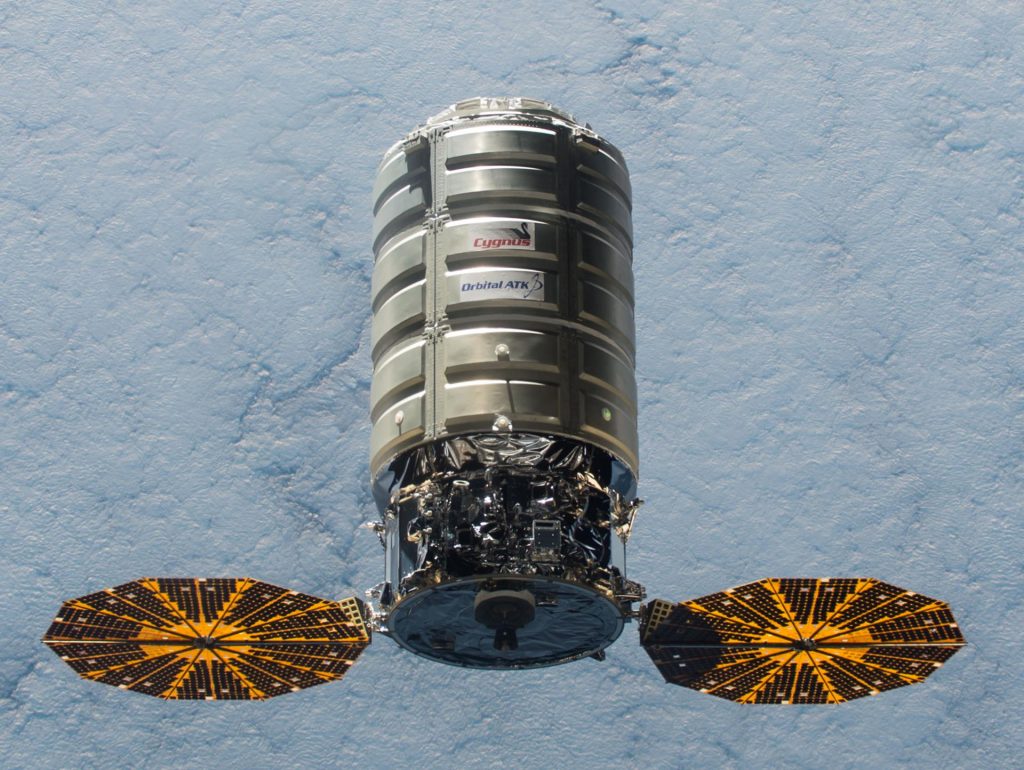
The Cygnus spacecraft is launched aboard Antares to deliver cargo to the ISS and commercial space stations. It has no heatshield so at the end of its mission its used to dispose of waste by burning up in the Earths atmosphere.
- Height: 7.8 m
- Diameter: 3.07 m
- Human Rated: No
- Payload Capacity: 5000 kg
- Flight Life: 1 week to 2 years design life.
History
Cygnus is a spacecraft developed originally by Orbital ATK and then acquired by Northrup Grumman after an acquisition. It is used to transport cargo to the ISS.
The first operational mission of Cygnus to the ISS was in September 2013.
One flight on 28 October 2014 ended in a failure when the Antares launch vehicle, used to launch the Cygnus, exploded shortly after launch. This set back the Cygnus launch schedule over a year. Following the launch anomaly a new version known as 'Cygnus Enhanced' was flown, with an extra 700kg payload capacity. This 'upgraded' variant extends the payload module by 1.5 meters, allowing for a total pressurized cargo capacity of 5000 kg.
Agency
Northrop Grumman Space Systems
Northrup Grumman Space Systems designs, builds and delivers space, defence and aviation-related systems to customers around the world. They aquired Orbital ATK in 2018 along with its launchers and ongoing missions.
