CST-100 Starliner
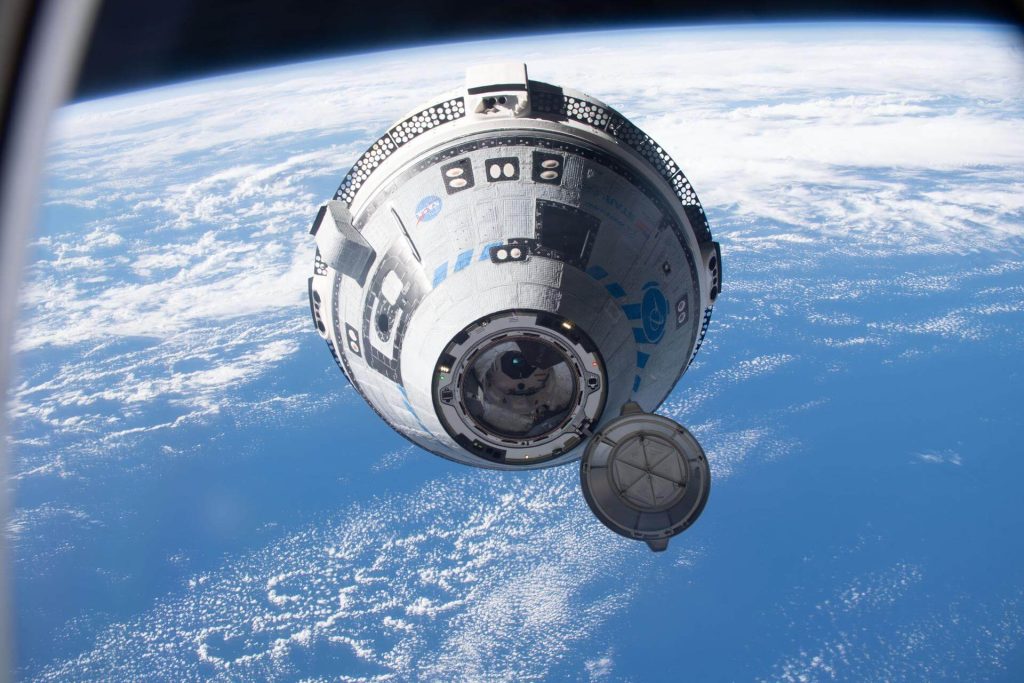
Photo Credit: NASA
The Boeing CST-100 Starliner (Crew Space Transportation) crew capsule is a spacecraft design under construction by Boeing as their entry for NASA's Commercial Crew Development program. Its primary purpose is to transport crew to the International Space Station and to private space stations. It is launched on United Launch Alliance Atlas V Rocket.
- Height: 5.03 m
- Diameter: 4.56 m
- Human Rated: Yes
- Maiden Flight: 8/17/2019
- Crew Capacity: 7
- Flight Life: 210 days docked, 60 hours free flight.
- Spacecraft Flown: 2
- Total Launches: 3
- Successful Launches: 3
- Attempted Landings: 3
- Successful Landings: 3
- Fastest Turnaround: 4 years 167 days 1 hr 53 min 22 sec
History
The design draws upon Boeing's experience with NASA's Apollo, Space Shuttle and ISS programs as well as the Orbital Express project sponsored by the Department of Defense. A variety of validation tests have been underway on test articles since 2011.
The uncrewed orbital flight test launched on December 20, 2019, but after deployment, an 11-hour offset in the mission clock of Starliner caused the spacecraft to do a large engine burn, consumeing to much fuel, to reach the International Space Station, leading to an early return.
A second uncrewed orbital flight test launched on May 19, 2022, which successfully reached the International Space Station.
Agency
Boeing
Boeing as a space agency has recently provided NASA with assistance on sending humans to the ISS from American with both their construction of the CST-100 Starliner crew capsule and their work on the SLS Avionics to return to the moon and beyond. Their ventures in GPS satellite systems and Tracking and Data Relay Satellites provide information about earth-orbiting craft to stations on the ground. They also enable research on the ISS and will be helping with the construction of the Lunar Gateway.
