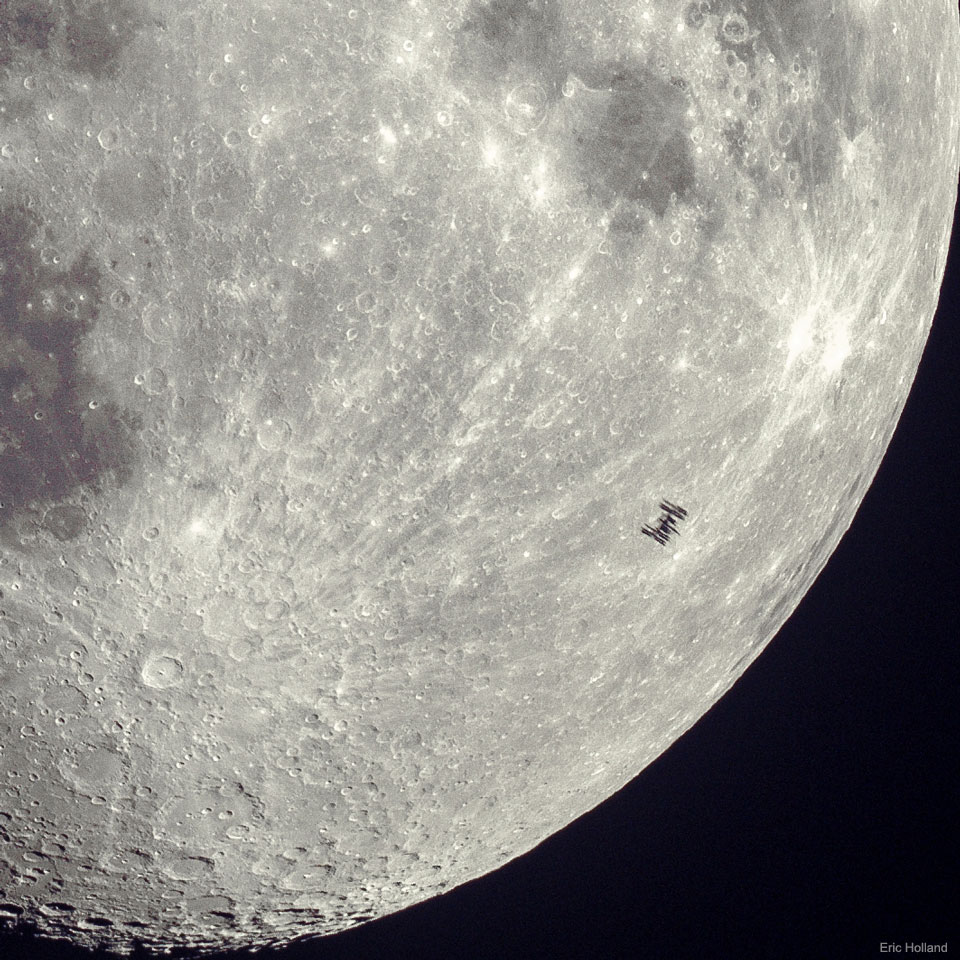
Space Station Silhouette on the Moon
…and trusses. The bright crater Tycho is visible on the lower left, as well as comparatively rough, light colored terrain known as highlands and relatively smooth, dark colored areas known…
…and trusses. The bright crater Tycho is visible on the lower left, as well as comparatively rough, light colored terrain known as highlands and relatively smooth, dark colored areas known…
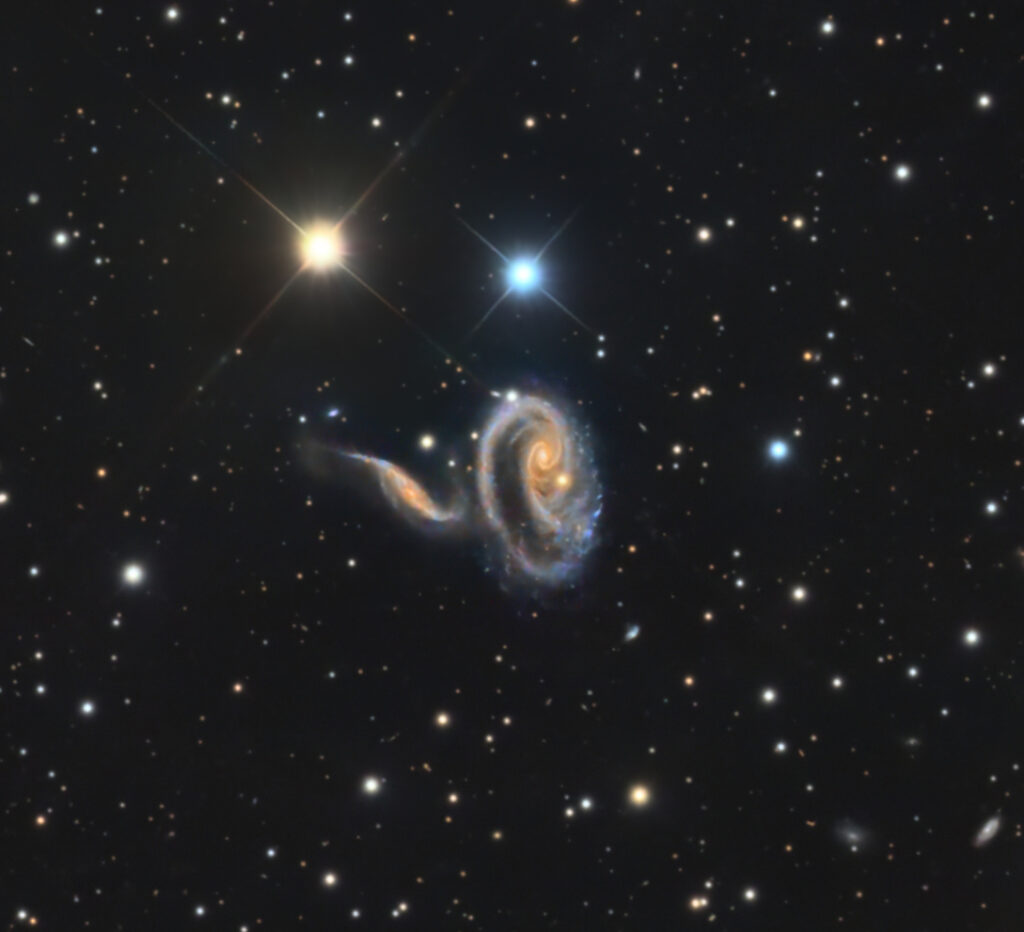
…understood to be common in the universe. Closer to home, the large spiral Andromeda Galaxy is known to be some 2 million light-years away and inexorably approaching the Milky Way….
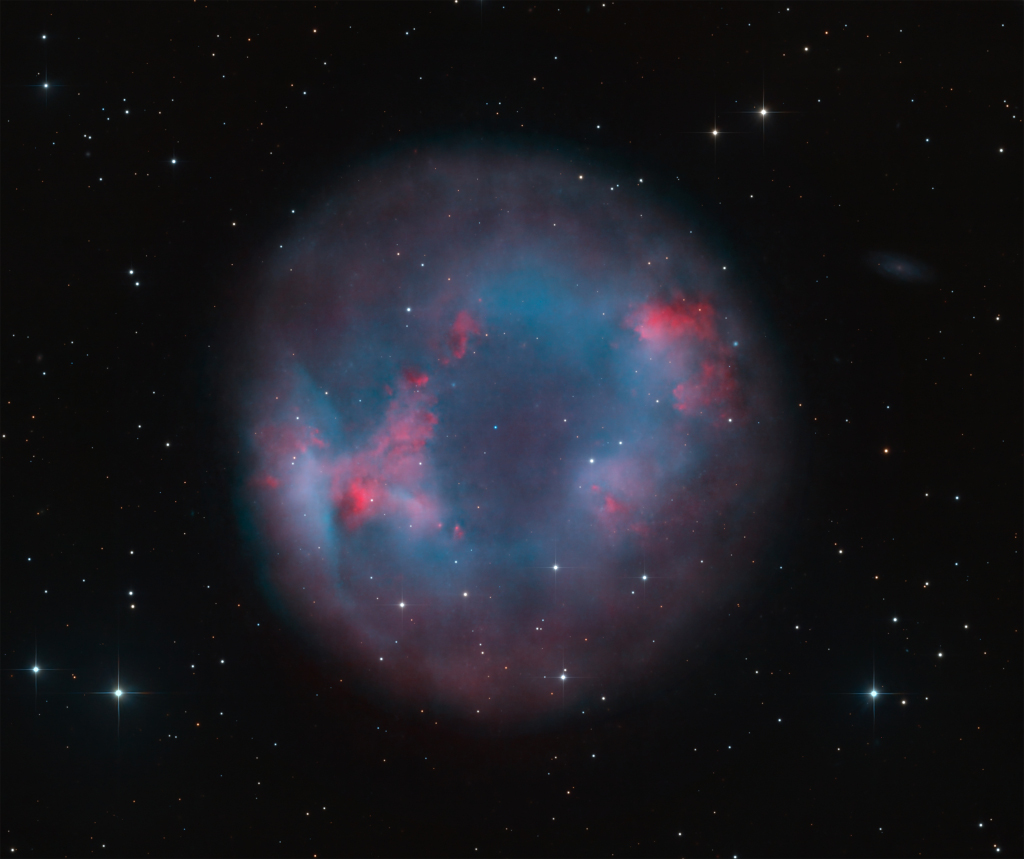
…Posing with scattered Milky Way stars, its generally simple spherical shape about 8 light-years in diameter is revealed in this deep telescopic image. The beautiful and complex shapes seen within…
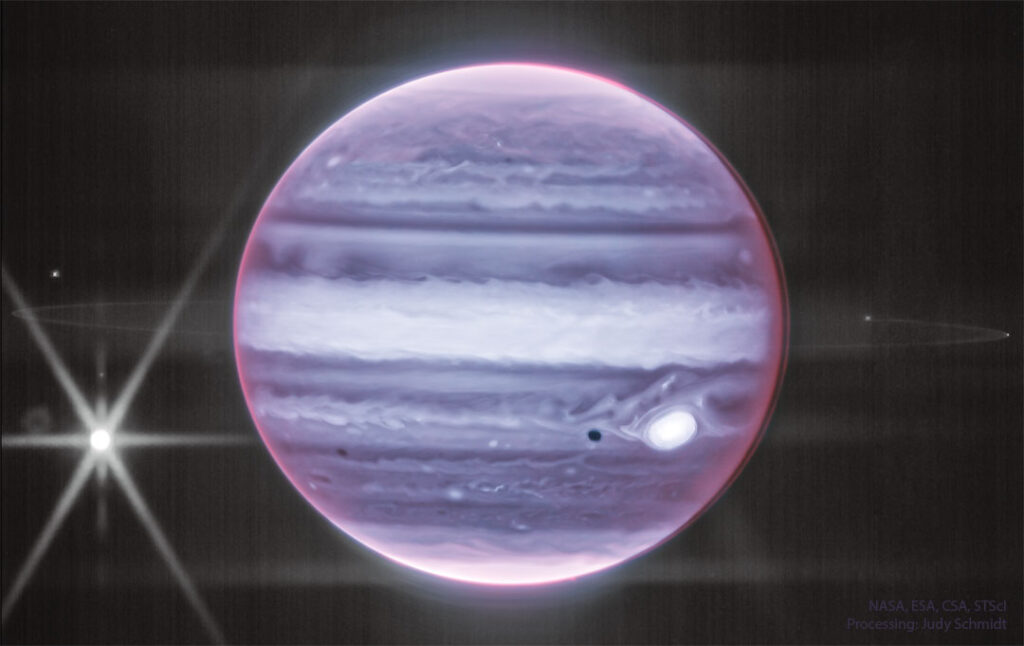
…James Webb Space Telescope shows not only Jupiter and its clouds, but this ring as well. Jupiter’s Great Red Spot (GRS) — in comparatively light color on the right, Jupiter’s…
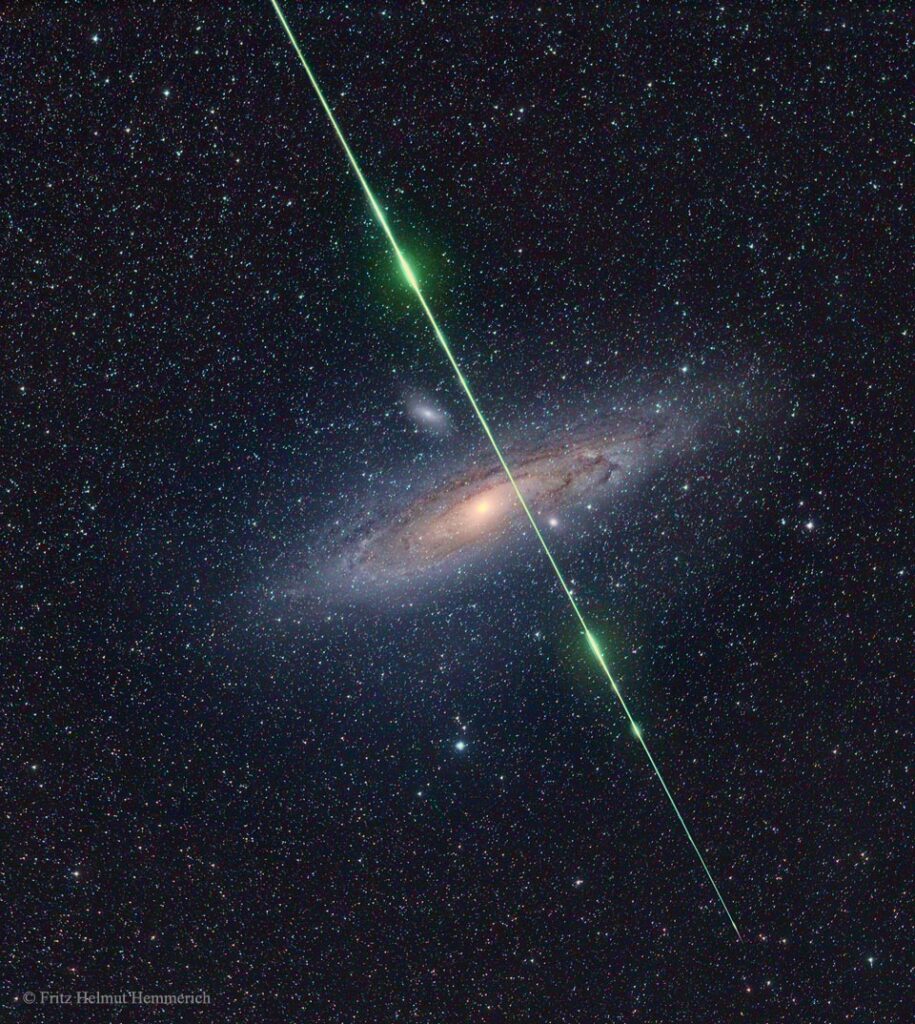
…Shower, a small pebble from deep space crossed right in front of our Milky Way Galaxy’s far-distant companion. The small meteor took only a fraction of a second to pass…
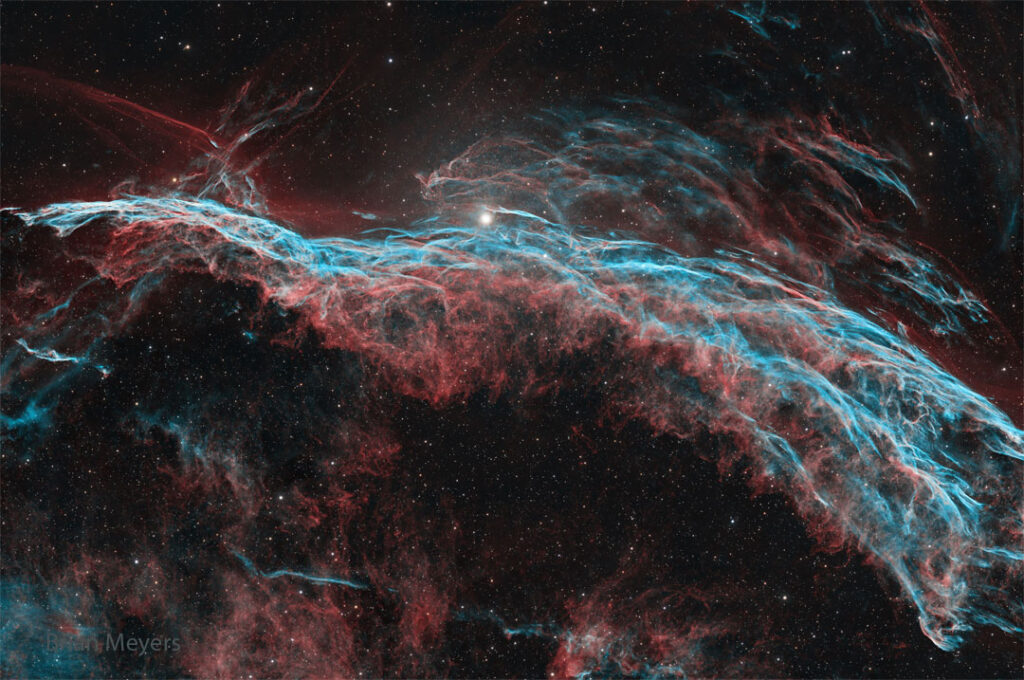
…on, remarkably well separated into atomic hydrogen (red) and oxygen (blue-green) gas. The complete supernova remnant lies about 1400 light-years away towards the constellation Cygnus. This Witch’s Broom actually spans…
Copyright: Here comes Jupiter. NASA’s robotic spacecraft Juno is continuing on its highly elongated orbits around our Solar System’s largest planet. The featured video is from perijove 11 in early…
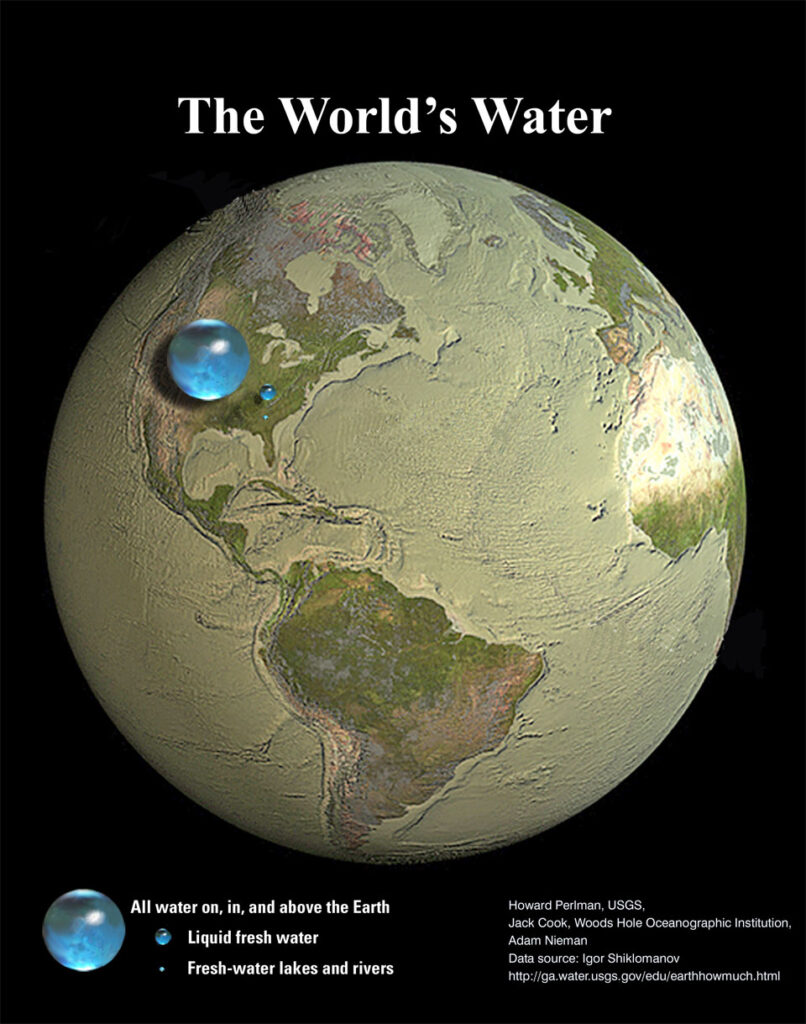
How much of planet Earth is made of water? Very little, actually. Although oceans of water cover about 70 percent of Earth’s surface, these oceans are shallow compared to the…
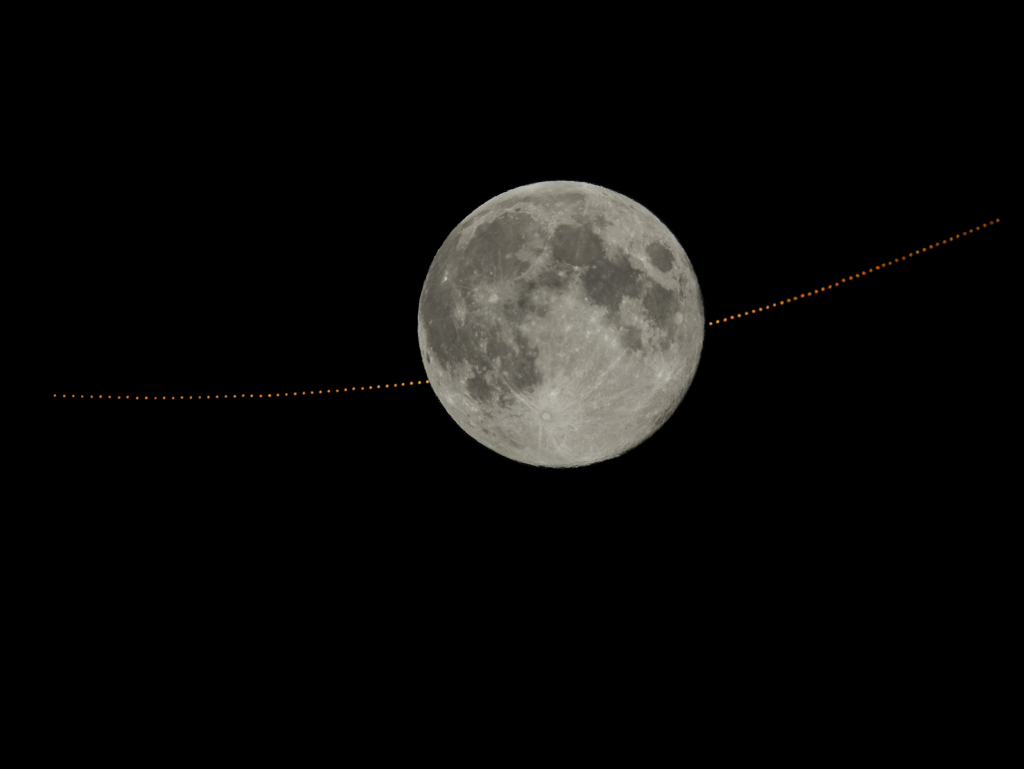
…occulted, passing behind the Moon, when viewed from some locations in North America and northwest Africa. As seen from Richmond, Virginia, USA, this composite image sequence follows the evening lunar…
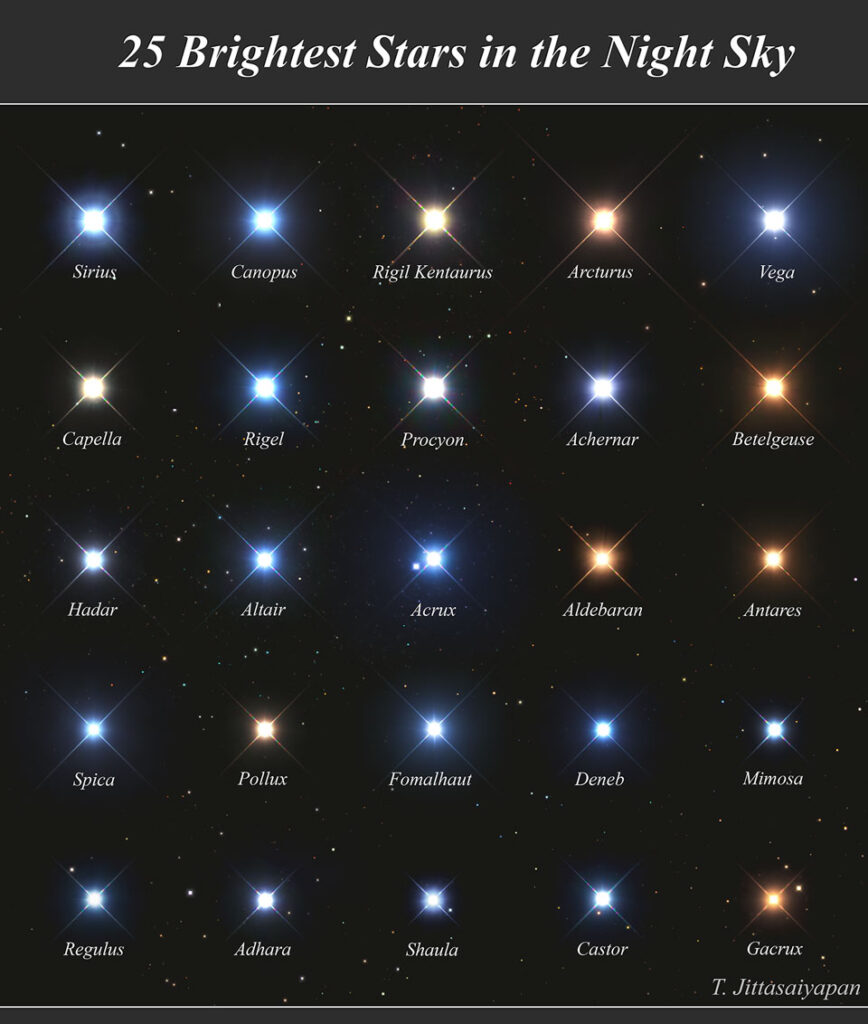
…the interest of clear global communication, however, the International Astronomical Union (IAU) has begun to designate standardized star names. Featured here in true color are the 25 brightest stars in…
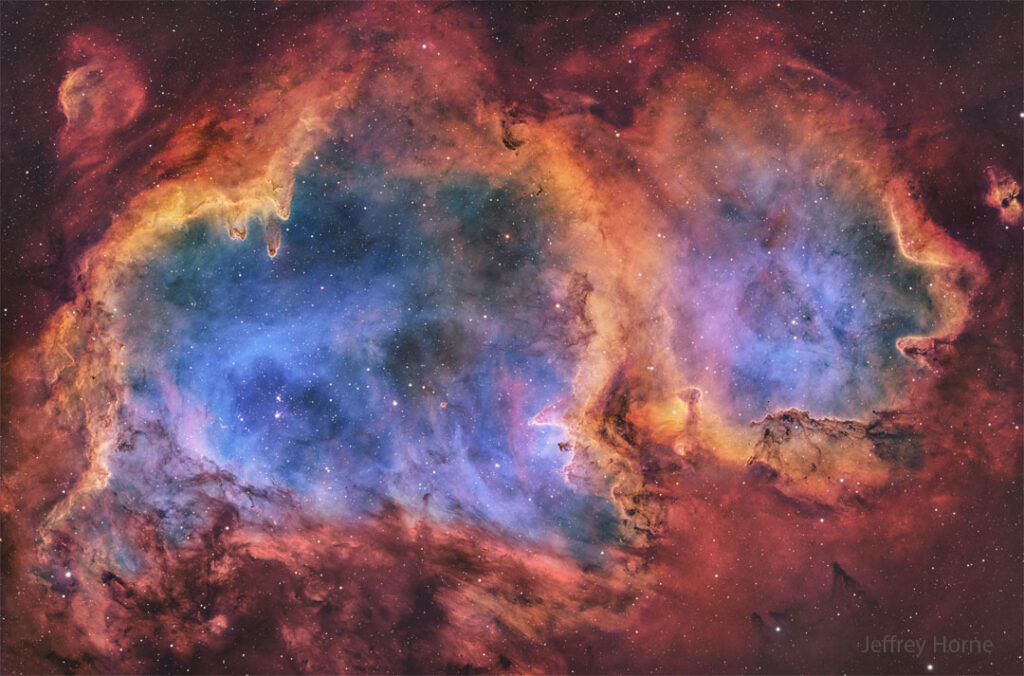
…image, taken from near Nashville, Tennessee, USA, is a composite of 234 hours of exposures made in different colors: red as emitted by hydrogen gas, yellow as emitted by sulfur,…
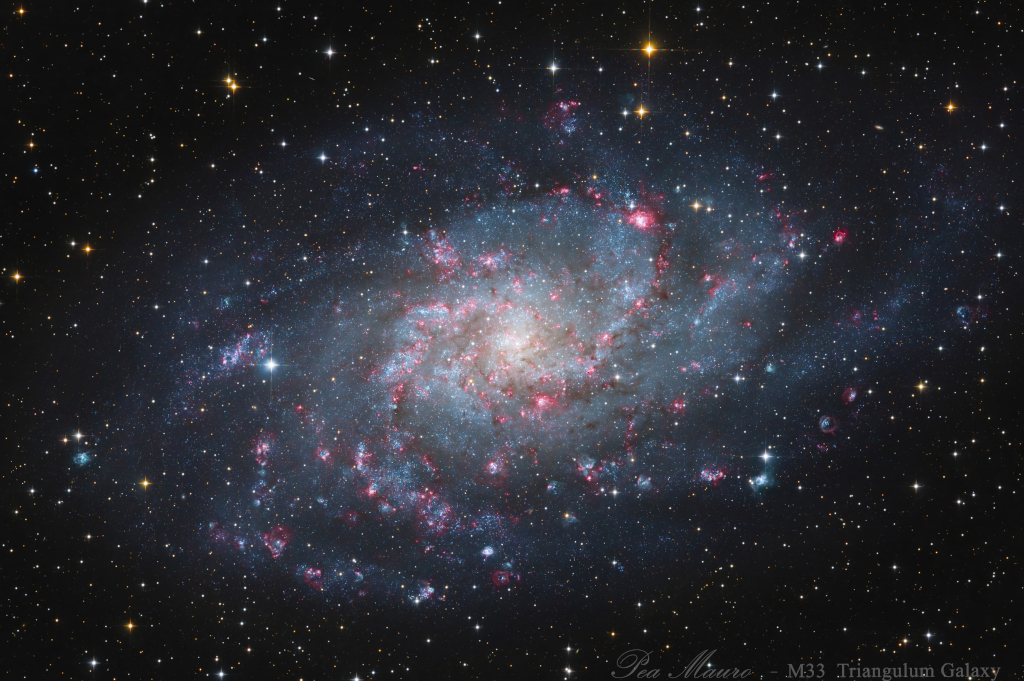
…red glow. In this image, broadband data were combined with narrowband data recorded through a filter that transmits the light of the strongest visible hydrogen and oxygen emission lines. Courtesy…
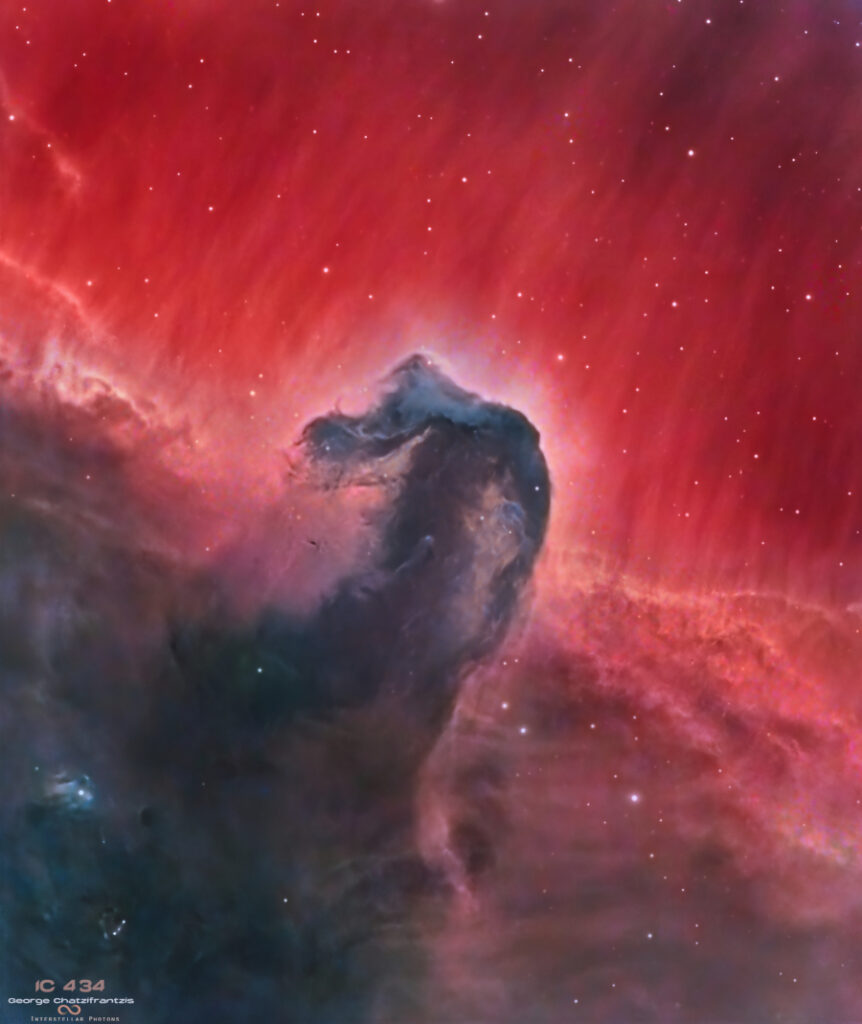
…lies some 1,500 light-years distant, embedded in the vast Orion cloud complex. About five light-years “tall,” the dark cloud is cataloged as Barnard 33, first identified on a photographic plate…
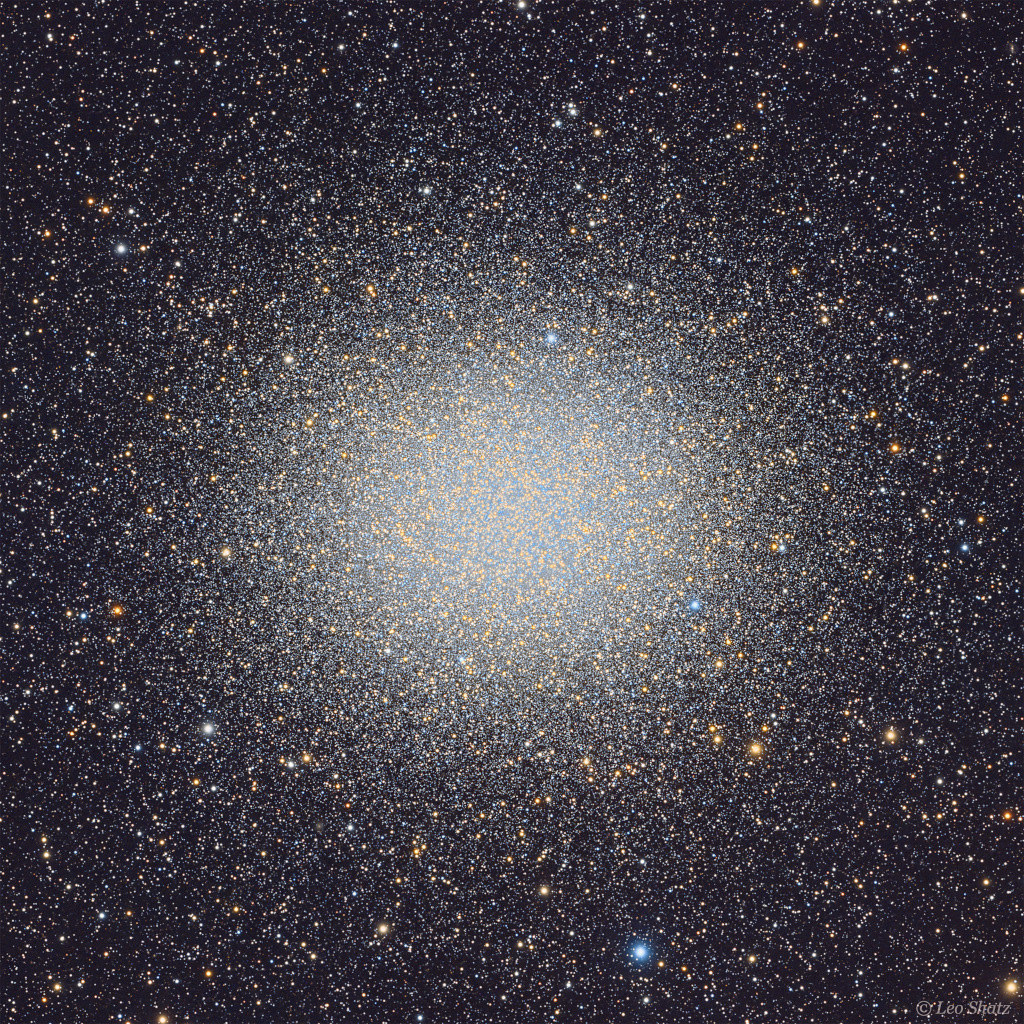
Copyright: Leo Shatz Globular star cluster Omega Centauri packs about 10 million stars much older than the Sun into a volume some 150 light-years in diameter. Also known as NGC…
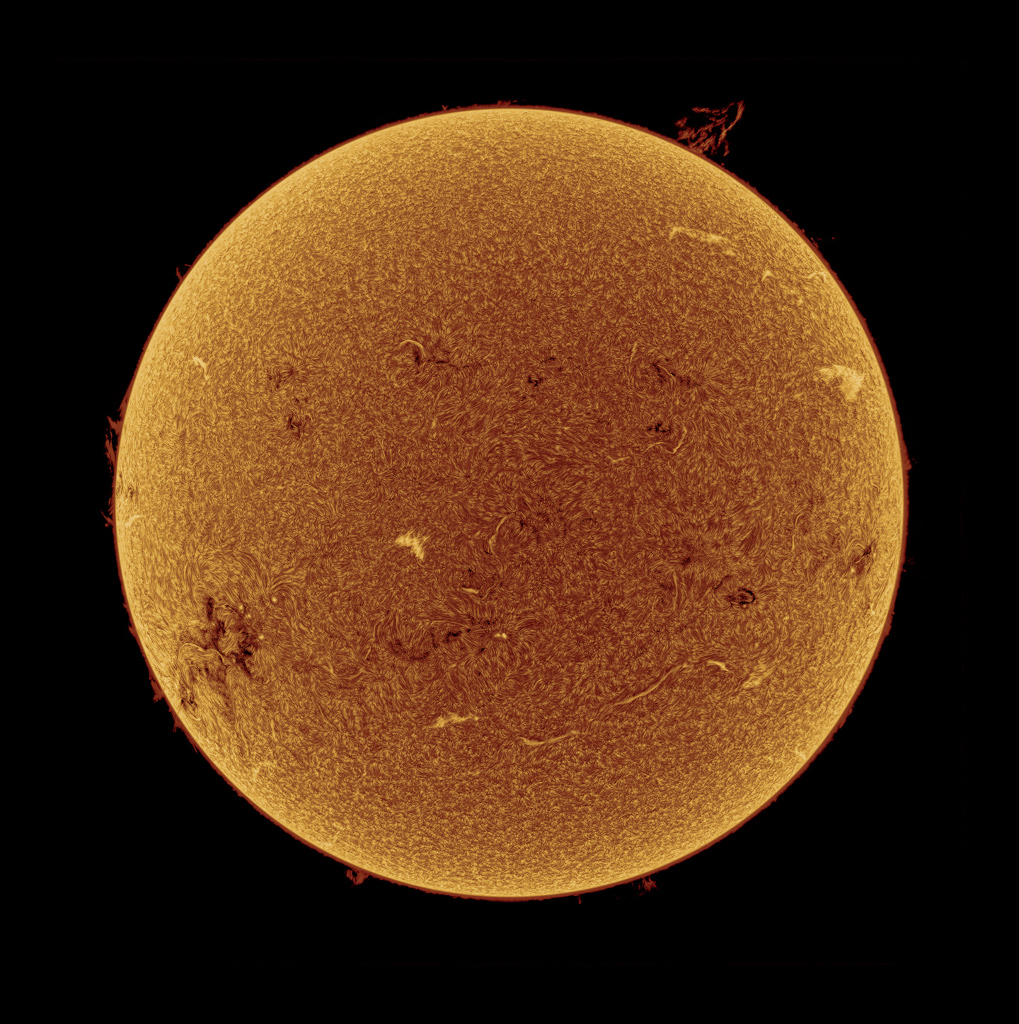
…Sun is called perihelion. This year perihelion is today, January 4, at 13:28 UTC, with the Earth about 147 million kilometers from the Sun. For comparison, at aphelion on last…
