
PSLV (Indian Space Research Organization)
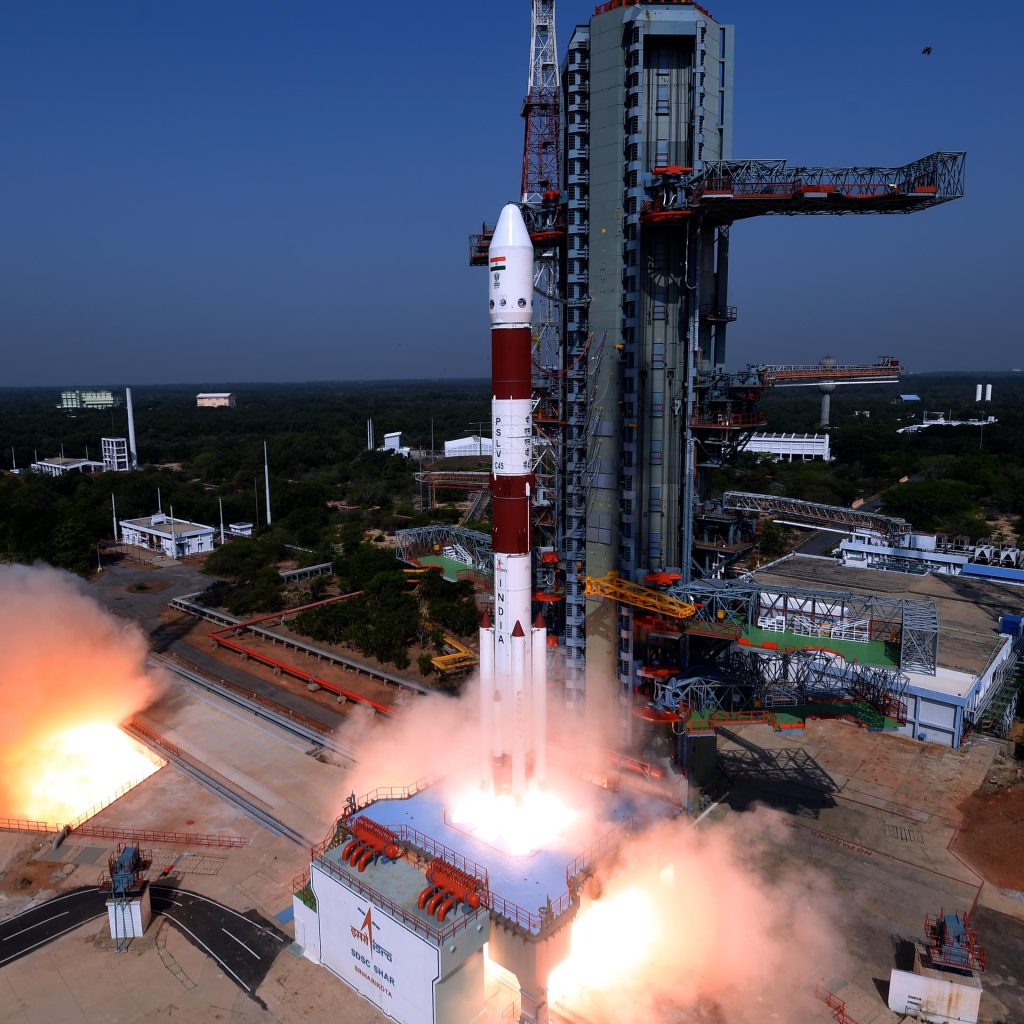
The PSLV is a non-reusable, active launch vehicle manufactured by Indian Space Research Organization (established in 1969). It undertook its inaugural launch on 09/20/1993.
The Polar Satellite Launch Vehicle (PSLV) is an expendable medium-lift launch vehicle designed and operated by the Indian Space Research Organisation (ISRO). It was developed to allow India to launch its Indian Remote Sensing (IRS) satellites into sun-synchronous orbits, a service that was, until the advent of the PSLV in 1993, commercially available only from Russia. PSLV can also launch small size satellites into Geostationary Transfer Orbit (GTO).
PSLV Specifications
| Length | 44 m |
|---|---|
| Diameter | 2.8 m |
| Stages | 4 |
| Launch Mass | 295 T |
| Takeoff Thrust | 4847 kN |
| LEO Capacity | 3800 kg |
| GTO Capacity | 1200 kg |
| SSO Capacity | 1750 kg |
| Launch Cost | $21,000,000 |
PSLV Launch Record
| Total Launches | 12 |
|---|---|
| Successful Launches | 10 |
| Failed Launches | 2 |
| Pending Launches | 3 |
| Consecutive Successful Launches | 8 |
Manufacturer
Chairman: V. Narayanan
The Indian Space Research Organisation (ISRO) is the space agency of the Government of India headquartered in the city of Bangalore. Its vision is to "harness space technology for national development while pursuing space science research and planetary exploration."