
Falcon 9 Block 4 (SpaceX)
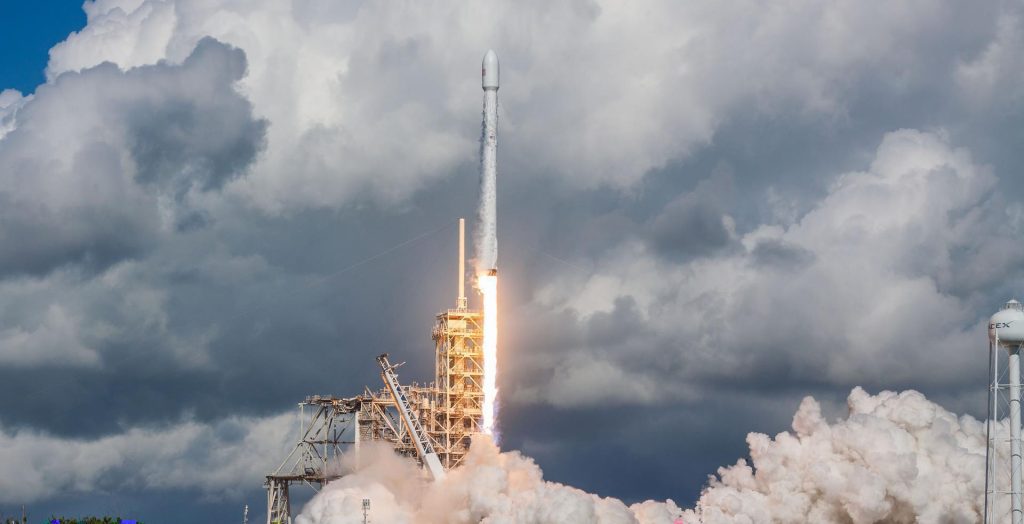
The Falcon 9 Block 4 is a reusable, inactive launch vehicle manufactured by SpaceX (established in 2002). It undertook its inaugural launch on 12/22/2015.
The Full Thrust variants first stage includes all systems necessary for an operational re-use of stages while the second stage is operated as an expendable rocket stage.
Falcon 9 Block 4 Specifications
| Variant | Block 4 |
|---|---|
| Length | 71 m |
| Diameter | 3.65 m |
| Stages | 2 |
| Launch Mass | 546 T |
| Takeoff Thrust | 6804 kN |
| Apogee | 197 km |
| LEO Capacity | 22800 kg |
| GTO Capacity | 8305 kg |
| Launch Cost | $50,000,000 |
Falcon 9 Block 4 Launch Record
| Total Launches | 12 |
|---|---|
| Successful Launches | 12 |
| Consecutive Successful Launches | 12 |
Falcon 9 Block 4 Landing Record
| Attempted Landings | 6 |
|---|---|
| Successful Landings | 6 |
| Consecutive Successful Landings | 6 |
| Fastest Turnaround | 3 days 6 hrs 16 min 47 sec |
Manufacturer
CEO: Elon Musk
Space Exploration Technologies Corp., known as SpaceX, is an American aerospace manufacturer and space transport services company headquartered in Hawthorne, California. It was founded in 2002 by entrepreneur Elon Musk with the goal of reducing space transportation costs and enabling the colonization of Mars. SpaceX operates from many pads, on the East Coast of the US they operate from SLC-40 at Cape Canaveral Space Force Station and historic LC-39A at Kennedy Space Center. They also operate from SLC-4E at Vandenberg Space Force Base, California, usually for polar launches. Another launch site is being developed at Boca Chica, Texas.
Program
Commercial Resupply Services (CRS) are a series of flights awarded by NASA for the delivery of cargo and supplies to the International Space Station.The first CRS contracts were signed in 2008 and awarded $1.6 billion to SpaceX for twelve cargo Dragon and $1.9 billion to Orbital Sciences for eight Cygnus flights, covering deliveries to 2016. The Falcon 9 and Antares rockets were also developed under the CRS program to deliver cargo spacecraft to the ISS.