
Commercial Titan III (Lockheed Martin)
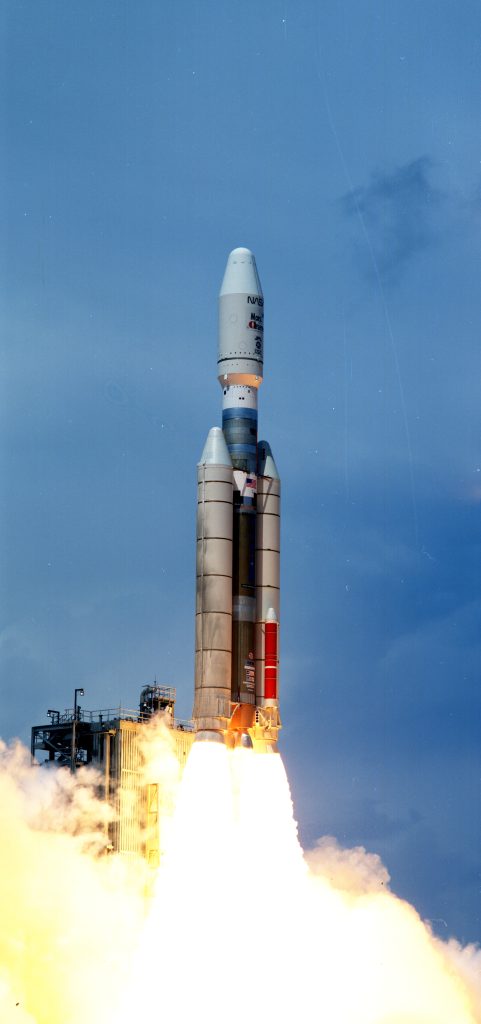
The Commercial Titan III is a non-reusable, inactive launch vehicle manufactured by Lockheed Martin (established in 1953). It undertook its inaugural launch on 01/01/1990.
The Commercial Titan III, also known as CT-3 or CT-III, was an American expendable launch system, developed by Martin Marietta during the late 1980s and flown four times during the early 1990s. It was derived from the Titan 34D, and was originally proposed as a medium-lift expendable launch system for the US Air Force, who selected the Delta II instead. Development was continued as a commercial launch system, and the first rocket flew in 1990. Due to higher costs than contemporary rockets such as the Ariane 4, orders were not forthcoming, and the CT-3 was retired in 1992.
Commercial Titan III Specifications
| Variant | III |
|---|---|
| Length | 47.3 m |
| Diameter | 3.05 m |
| Stages | 2-3 |
| Launch Mass | 680 T |
| LEO Capacity | 14742 kg |
| GTO Capacity | 4990 kg |
Commercial Titan III Launch Record
| Total Launches | 4 |
|---|---|
| Successful Launches | 4 |
| Consecutive Successful Launches | 4 |
Manufacturer
Lockheed Martin's Space Division started in the production of missiles and later ICBM's in the 1950s. Their TITAN missile system was used for 12 Gemini spacecraft and the Voyager probes. They have worked largely in collaboration with NASA on many of their probes, landers, and spacecraft, and hope to play a key role in NASA's return to the moon in 2024.