
South China Sea (launch location 1), Haiyang Oriental Spaceport
South China Sea (launch location 1) is an active launch pad located in China, situated at Haiyang Oriental Spaceport. The pad has witnessed 2 rocket launches, including 2 orbital launch attempts.
South China Sea (launch location 1) Launch Record
| Status | Active |
|---|---|
| Country | China |
| Total Launches | 2 |
| Orbital Launch Attempts | 2 |
| Fastest Turnaround | 20 days, 3 hours, 15 minutes |
Haiyang Oriental Spaceport
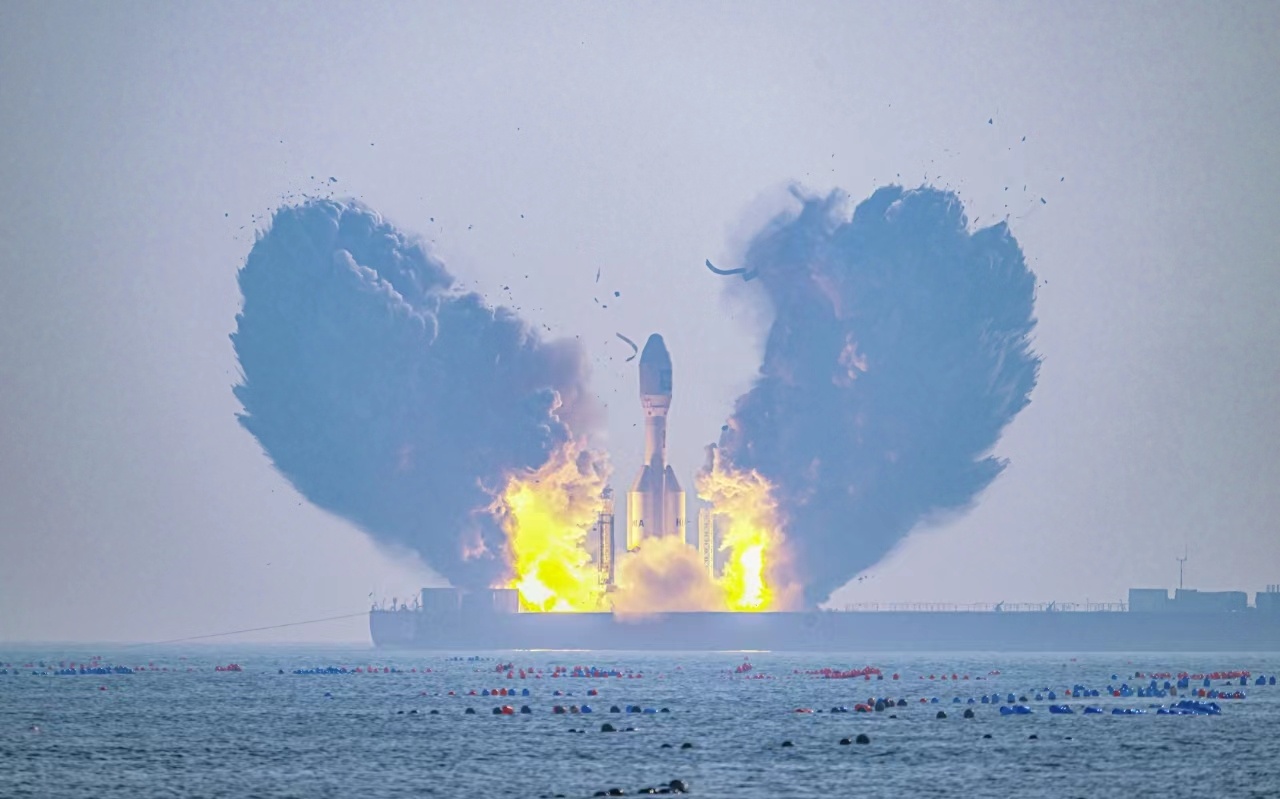
Chinese orbital launch vehicle launches supporting sea port located at Haiyang, Shandong Province, with dedicated piers and rocket/payload processing facilities for Chinese launch vehicles’ sea launches, and (as part of its expansion project) land based launch pads on artificial islands for various test vehicles and launch vehicles of private and government launch services providers.
In operation as a remote base of Taiyuan Satellite Launch Center since 2019.
| Country | China |
|---|---|
| Celestial Body | Earth |
| Total Launches | 27 |
Agency
Chairman & President: Lei Fanpei
The China Aerospace Science and Technology Corporation (CASC) is the main contractor for the Chinese space program. It is state-owned and has a number of subordinate entities which design, develop and manufacture a range of spacecraft, launch vehicles, strategic and tactical missile systems, and ground equipment. It was officially established in July 1999 as part of a Chinese government reform drive, having previously been one part of the former China Aerospace Corporation. Various incarnations of the program date back to 1956.