
Understanding Sonic Booms: The Sound of Supersonic Flight and Rocket Landings
Last updated: September 30, 2026.
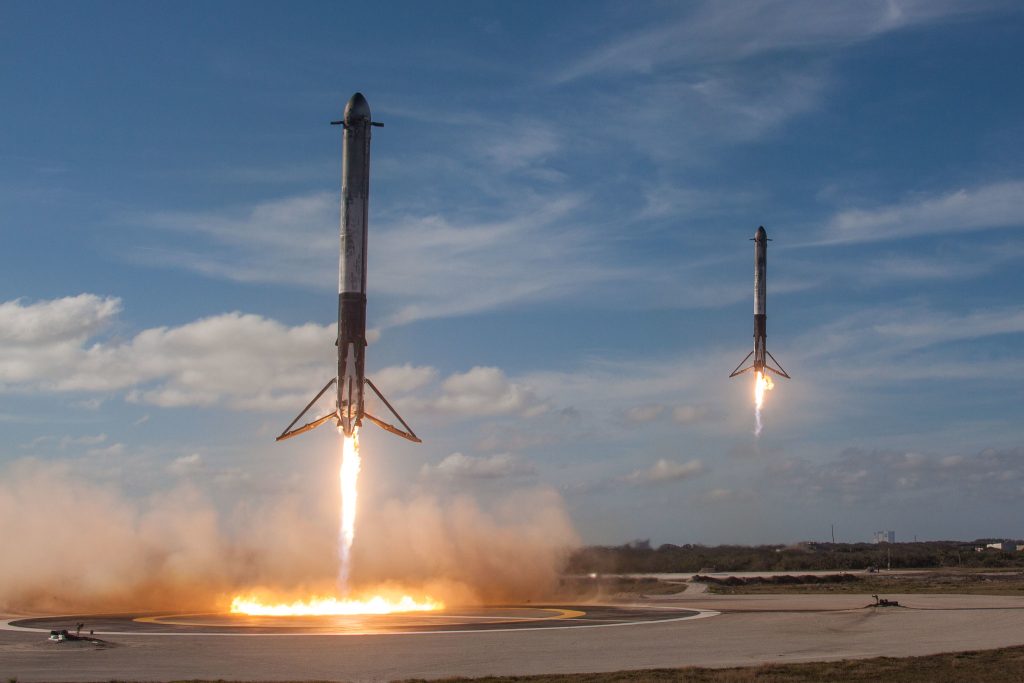
If you’ve ever heard a thunderous crack as a booster returns to Earth, you’ve likely experienced a sonic boom rocket landing, one of the most dramatic moments of reusable spaceflight. This fascinating phenomenon occurs when an object, like a rocket or supersonic jet, breaks the sound barrier, creating a shockwave that spreads across the landscape. But what exactly causes a sonic boom, and why do we only hear it during certain phases of rocket launches? In this article, we’ll break down the science behind sonic booms and explain how they relate to rocket landings, such as those conducted by SpaceX.
What Is a Sonic Boom?
A sonic boom is the loud noise produced when an object travels through the air at supersonic speeds—faster than the speed of sound (about 343 meters per second at sea level). As the object moves, it pushes air molecules aside with tremendous force, much like a boat creates a bow wave when moving through water. This disturbance forms a shockwave that travels outward and downward in a cone shape, known as a shock cone.
People on the ground experience a sonic boom when the shockwave hits them, causing a sudden release of pressure known as peak overpressure. This pressure change creates the loud “boom” that can sometimes rattle windows and be felt miles away from the object’s path. The shockwave follows the object throughout its entire supersonic flight, meaning the sonic boom is a continuous phenomenon, not a one-time event.
Sonic Booms and Rocket Launches
Although sonic booms are a constant feature of supersonic flight, you won’t typically hear them during a rocket’s ascent. This is because, during the launch, the shockwave is moving above your head and parallel to the ground, meaning the sound never reaches your ears. However, during a booster return, such as those conducted by SpaceX’s Falcon rockets, the booster re-enters the atmosphere at supersonic speeds, and the shockwave extends to the ground, causing the sonic boom during rocket landing.
In fact, SpaceX’s Falcon 9 rockets create a series of three distinct sonic booms as the booster returns. These rocket landing sonic boom phenomenon are caused by different parts of the rocket body breaking the sound barrier:
- Nose (or engine): The first boom comes from the engines as the rocket stage flies backward during re-entry.
- Landing legs: The second shockwave is generated by the rocket’s folded landing legs.
- Grid fins: The third and final boom comes from the grid fins located near the end of the rocket.
The Falcon 9’s large body causes the shockwaves to spread out, making them have a more distinguishable Falcon 9 sonic boom during reentry.
The Science Behind the Boom: Shockwaves and Vapor Cones
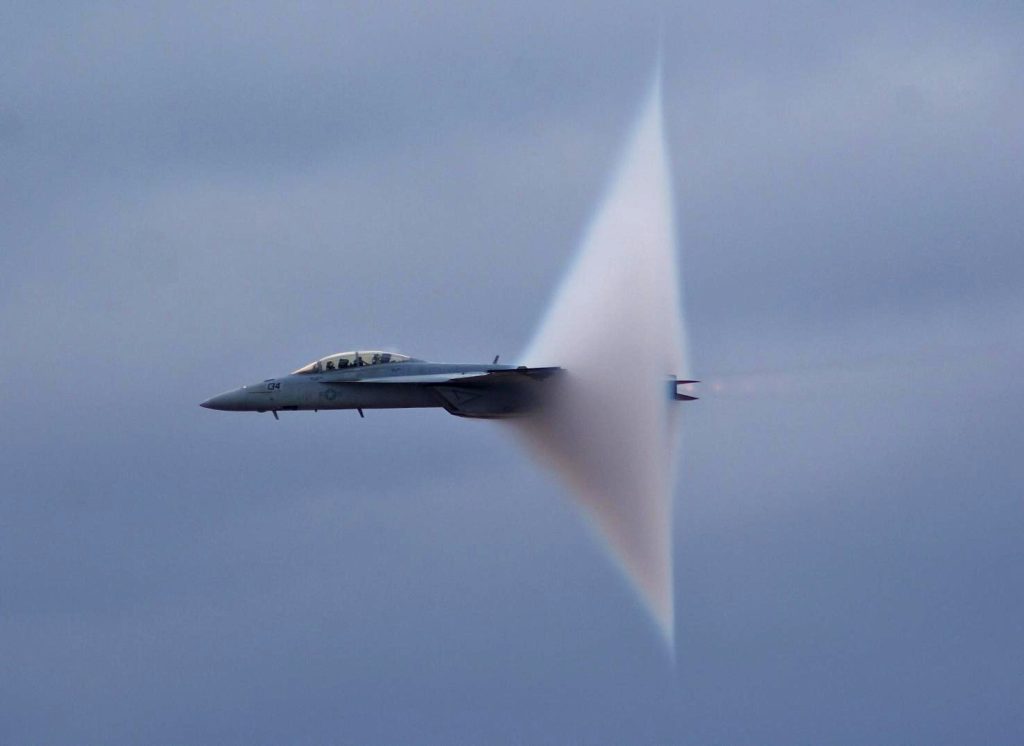
A sonic boom is similar to thunder in that both involve a sudden release of pressure. In the case of thunder, lightning rapidly heats the air, creating a shockwave. For sonic booms, the pressure buildup comes from the aircraft or rocket pushing air aside as it moves faster than sound. This creates a sharp release of pressure, resulting in the loud crack heard on the ground.
You may also see a vapor cone, or “shock collar,” form around the vehicle as it approaches supersonic speeds. This visible effect occurs when the sound waves compress the air, creating a cone-shaped cloud of vapor.
Factors Influencing Sonic Booms
Several factors can influence the intensity and range of sonic booms:
- Weight, size, and shape of the aircraft or rocket
- Altitude: Higher altitudes reduce the boom’s intensity because the shockwave has more time to disperse before reaching the ground.
- Flight path: A steeper flight path can lead to more pronounced booms.
- Weather conditions: Atmospheric conditions like temperature, humidity, and wind can affect how sound travels, impacting where and how a sonic boom is heard.
Why You Don’t Hear Sonic Booms During Rocket Launches
While sonic booms occur throughout supersonic flight, you won’t usually hear one during the launch phase of a rocket. This is because the shockwave is moving above your head and away from your ears. It’s only when the rocket re-enters the atmosphere, as in the case of a Falcon 9 booster, that the shockwave extends to the ground and creates the booster reentry sonic boom.
Final Thoughts: Sonic Booms as a Signature of Rocket Re-Entry
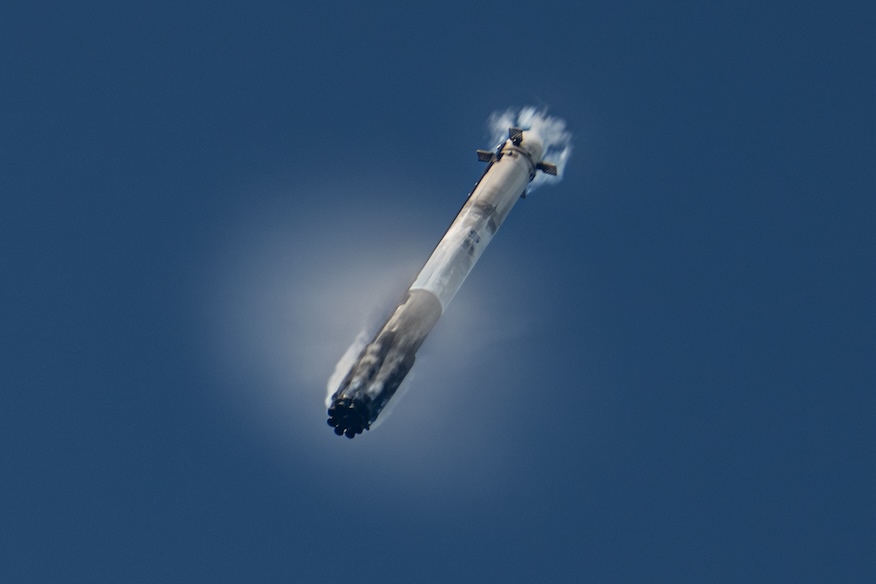
Sonic booms are not only a marvel of physics but also a distinctive sound during rocket landings. They serve as an audible marker of a rocket’s return, with SpaceX’s Falcon rockets providing a fascinating case study of multiple shockwaves. Whether you’re at a rocket launch site or witnessing a military jet fly overhead, the sonic boom reminds us of the power and speed of supersonic flight. A sonic boom rocket landing is more than just a loud noise—it’s a powerful reminder of the speed, physics, and precision involved in modern reusable spaceflight.
Sonic Boom Rocket Landings: Why Rockets Boom on Reentry FAQ
What causes a sonic boom during a rocket landing?
A rocket landing sonic boom happens when a returning booster travels faster than the speed of sound, pushing air aside and creating a shockwave cone. When that shockwave reaches the ground, it is heard as a loud, thunderous crack. Check our rocket launch schedule to see when the next booster return is planned.
Why don’t I hear a sonic boom during a rocket launch?
During ascent, the rocket’s shockwave moves above and parallel to the ground, traveling away from spectators’ ears, so the boom never reaches you. You only hear sonic booms when a booster reenters the atmosphere on its return flight and the shockwave extends down to the ground, such as during a SpaceX booster landing.
Why do SpaceX Falcon 9 boosters produce three sonic booms?
Each boom comes from a different part of the Falcon 9 booster breaking the sound barrier during reentry: the engines, the folded landing legs, and the grid fins. Because the three shockwaves arrive at slightly different times, spectators hear a distinct triple boom. Learn more about SpaceX missions and booster recoveries.
How far away can you hear a sonic boom from a rocket landing?
Sonic booms from returning boosters can be heard for many miles, depending on the vehicle’s altitude, size, flight path, and weather conditions. Wind, humidity, and temperature can carry the sound farther or help it dissipate. If you want to hear one in person, see our rocket launch viewing tips.
What is a vapor cone and how is it related to a sonic boom?
A vapor cone, also called a shock collar, is a visible cloud that forms around a vehicle as it nears supersonic speeds, when sound waves compress moist air into a cone-shaped cloud. It often appears alongside the sonic boom and is a favorite sight for photographers watching rocket launches.