
Jeff Bezos — The Vision, History, and Innovations Behind Blue Origin
Last updated: September 30, 2026.
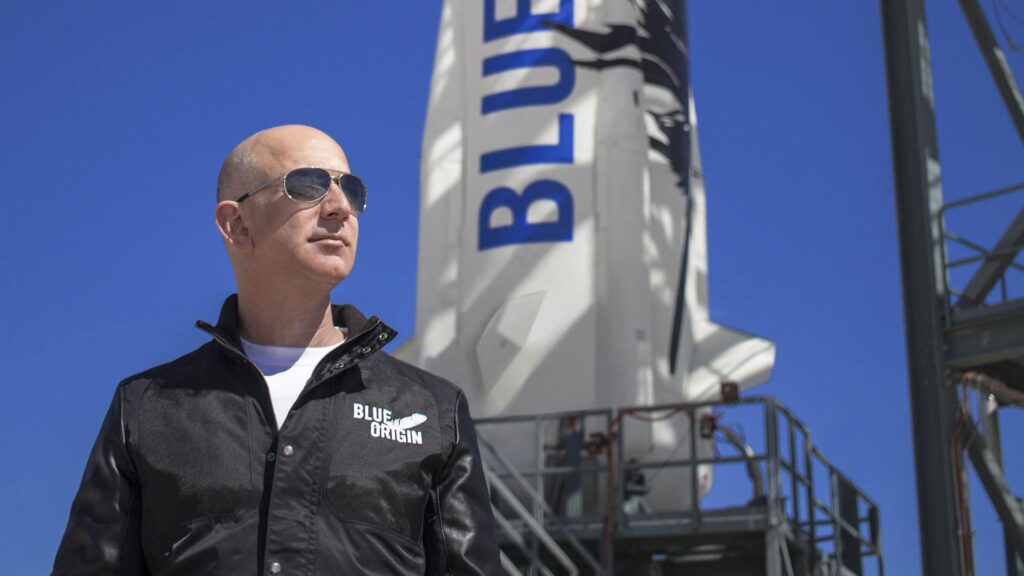
Jeff Bezos is best known as the founder of Amazon, yet his influence on the aerospace industry through Blue Origin represents a separate and equally ambitious legacy. Founded in 2000, Blue Origin was created to address one of humanity’s most enduring challenges. That challenge is how to expand into space in a way that is sustainable, affordable, and scalable over the long term. Guided by the company’s Latin motto, “Gradatim Ferociter”—translated as “Step by Step, Ferociously”—Bezos approaches space development with patience, precision, and an unwavering focus on sustainability.
Rather than focusing on short-term achievements or symbolic milestones, Bezos structured Blue Origin around the belief that lasting progress in space requires carefully built infrastructure and reusable systems. At the time of Blue Origin’s founding, access to space was still largely controlled by government agencies. Additionally, private spaceflight was considered risky and speculative. Blue Origin entered this environment quietly, prioritizing research, testing, and gradual technological refinement.
Over the years, this approach has resulted in major contributions to reusable rocketry, propulsion technology, suborbital research platforms, and lunar lander development. Today, Blue Origin stands alongside companies such as SpaceX, Rocket Lab, and United Launch Alliance. In fact, it is a central figure in the commercial space sector.
Beyond launches and vehicles, Blue Origin’s broader mission is tied to environmental and economic sustainability. Bezos has consistently emphasized that space development should benefit Earth by enabling future industries to operate off-planet. This guiding principle connects Blue Origin’s engineering projects to a long-term vision of human expansion that balances technological growth with planetary preservation.
Early Life, Background, and Spark of Inspiration
Childhood Curiosity and Early Influences
Born in Albuquerque, New Mexico, and raised in Houston, Texas, Jeff Bezos exhibited a deep curiosity for science and technology from an early age. As a child, he converted his parents’ garage into a makeshift laboratory, conducting experiments and building homemade inventions. He often spent hours disassembling household electronics just to understand how they worked.
Academic Path and Technical Foundations
Inspired by the Apollo missions and classic works of science fiction, young Bezos envisioned a future where humanity would expand beyond Earth—a fascination that never faded with time.
Bezos’s academic excellence and passion for innovation led him to Princeton University, where he graduated with degrees in electrical engineering and computer science. His years at Princeton honed his analytical skills and laid the foundation for the systems-based thinking that would later define both his business and engineering ventures.
Career Before Amazon
After graduation, he applied his technical expertise to the world of finance, working at firms such as Fitel, Bankers Trust, and D.E. Shaw & Co. on Wall Street. It was at D.E. Shaw where he met his future wife, MacKenzie Scott. Furthermore, he began refining his vision for leveraging emerging technologies to transform industries.
Founding Amazon and Renewed Focus on Space
In 1994, Bezos made a bold career shift that would alter the course of digital commerce forever. Leaving behind a stable career in finance, he founded Amazon.com, initially conceived as an online bookstore. Under his leadership, Amazon evolved into a global technology company, pioneering innovations in logistics, cloud computing, and artificial intelligence.
Yet even as Amazon grew into one of the most influential companies on Earth, Bezos’s passion for space exploration remained unwavering. In 2000, he transformed that dream into reality by founding Blue Origin, a private aerospace company dedicated to making space travel more affordable, reusable, and sustainable.
The Founding of Blue Origin (2000)
A Vision Rooted in Long-Term Thinking
By the time Jeff Bezos founded Blue Origin in the year 2000, he had already transformed global commerce through Amazon. Yet his ultimate vision extended far beyond Earth. Drawing on decades of fascination with space and a belief in humanity’s potential to become a multi-planetary species, Bezos established Blue Origin with the intent of ensuring that space exploration could one day sustain—not endanger—life on Earth.
Methodical Development Over Hype
From its inception, Blue Origin was deliberately structured to take a long-term, methodical approach to space development. While other emerging space companies focused on rapid advancement and headline-grabbing missions, Bezos emphasized safety, sustainability, and reusability as the cornerstones of progress.
Core Mission Goals
Blue Origin’s mission was, and remains, ambitious. Its core goals include:
- Developing fully reusable rockets to dramatically reduce the cost of access to space
- Designing off-world habitats capable of supporting long-term human life
- Establishing a self-sustaining space economy, enabling industry, research, and manufacturing in orbit
- Protecting Earth by relocating heavy industry to space, preserving the planet’s ecosystems for future generations
Early Research and Quiet Innovation
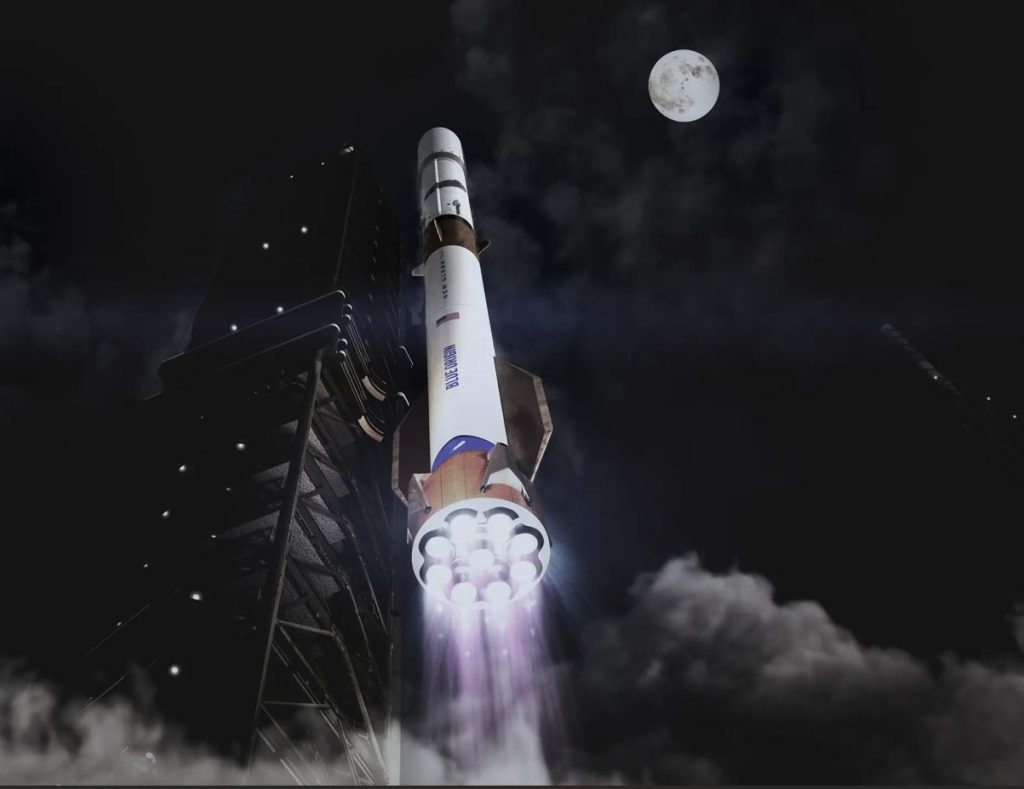
At its early facilities in Kent, Washington, Blue Origin began quietly conducting research into vertical takeoff and landing technology—pioneering work that would later define the company’s rockets. Unlike many competitors that sought immediate media attention, Bezos intentionally kept operations discreet. This allowed engineers the freedom to experiment, iterate, and perfect the fundamentals of rocket reusability before stepping into the public eye.
New Shepard — Space Tourism and Suborbital Flight
Design and Purpose
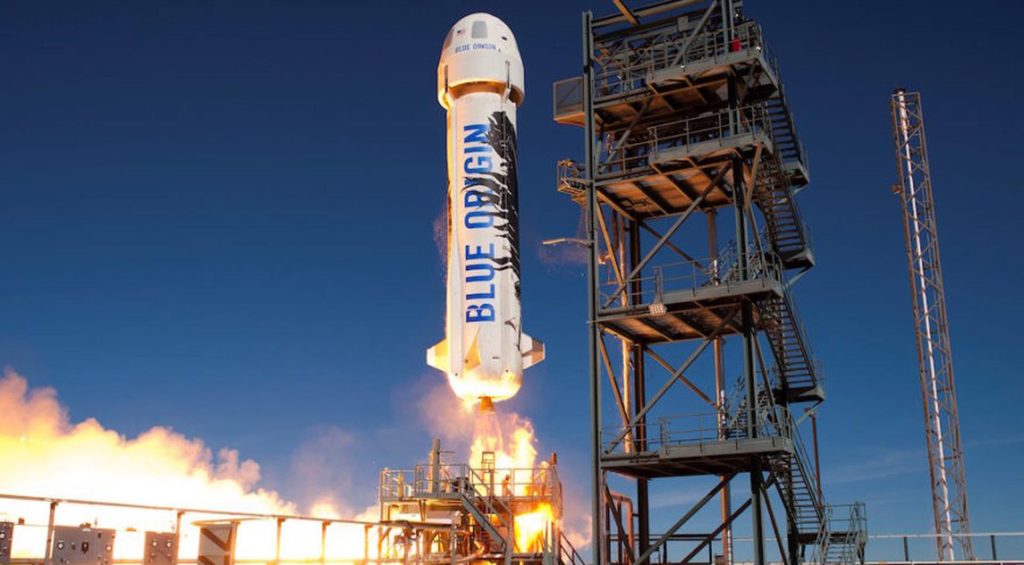
New Shepard marked Blue Origin’s transition from experimental development to operational spaceflight. Designed as a reusable suborbital vehicle, New Shepard serves two primary purposes: carrying human passengers to the edge of space and providing a reliable platform for scientific research in microgravity environments.
How the System Works
The system consists of a reusable booster powered by the BE-3 engine and a pressurized crew capsule capable of accommodating six passengers. After launch, the booster separates and performs a controlled vertical landing. Meanwhile, the capsule descends under parachutes.
Historic First Human Flight
In July 2021, New Shepard carried its first human crew, including Jeff Bezos. This mission validated years of development and demonstrated that commercial suborbital human spaceflight could be conducted safely.
View the New Shepard launch schedule.
New Glenn — Blue Origin’s Heavy-Lift Orbital Rocket
Transition to Orbital Flight
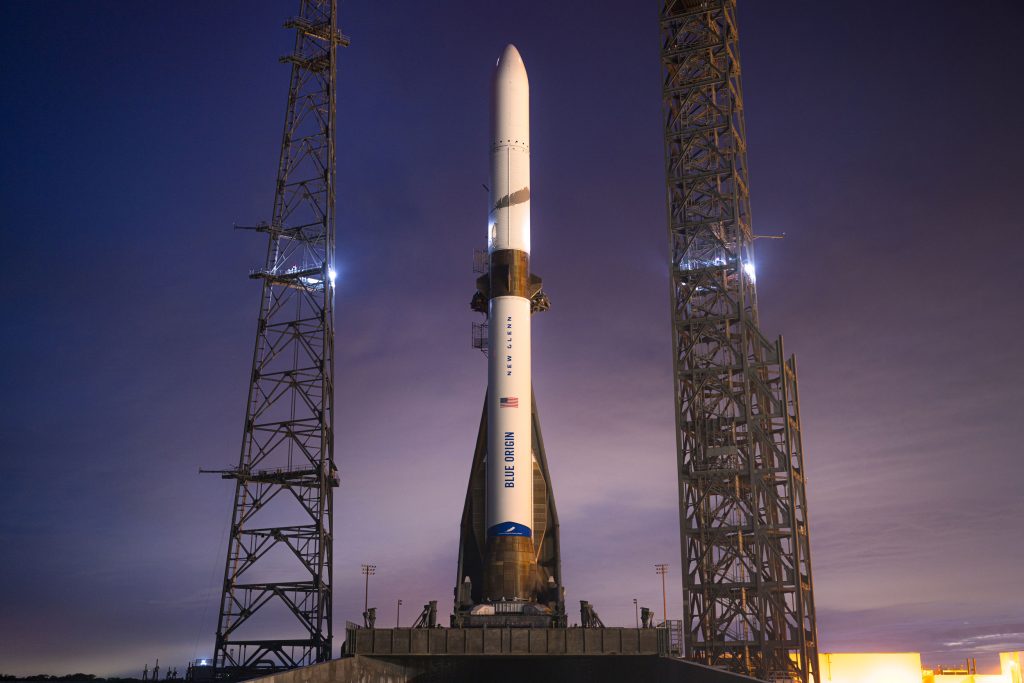
Following the success of New Shepard, Blue Origin began working on a far more ambitious project: the New Glenn rocket. Named in honor of John Glenn, the first American to orbit Earth, New Glenn represents Blue Origin’s transition from suborbital research flights to orbital and deep-space missions.
Capabilities and Design
New Glenn is a two-stage reusable rocket built to deliver satellites, cargo, and potentially crew to low Earth orbit (LEO), geostationary transfer orbit (GTO), and beyond. Its massive 7-meter-diameter first stage makes it one of the largest rockets ever developed.
BE-4 Powered First Stage
The first stage is powered by seven BE-4 engines, burning liquid oxygen (LOX) and liquid natural gas (LNG)—a cleaner and more efficient propellant combination compared to traditional kerosene-based fuels.
New Glenn reached orbit on its maiden flight (NG-1) on January 16, 2025, carrying the Blue Ring Pathfinder payload — although the first-stage booster was lost during its landing attempt.
On May 28, 2026, a New Glenn vehicle exploded during a hot-fire test at Launch Complex 36 at Cape Canaveral, destroying the rocket and heavily damaging the pad — the rocket’s only launch site. Blue Origin traced the failure to the main oxygen valve on one of the BE-4 engines. The company is rebuilding the pad, constructing a second pad (LC-36B) for the larger New Glenn 9×4 variant, and CEO Dave Limp has said Blue Origin still sees a path to returning to flight before the end of 2026.
Spaceflight enthusiasts can follow progress on New Glenn’s testing, development, and return-to-flight missions through the New Glenn launch schedule.
Blue Origin’s Lunar Ambitions — The Blue Moon Lander
Supporting a Sustainable Lunar Presence
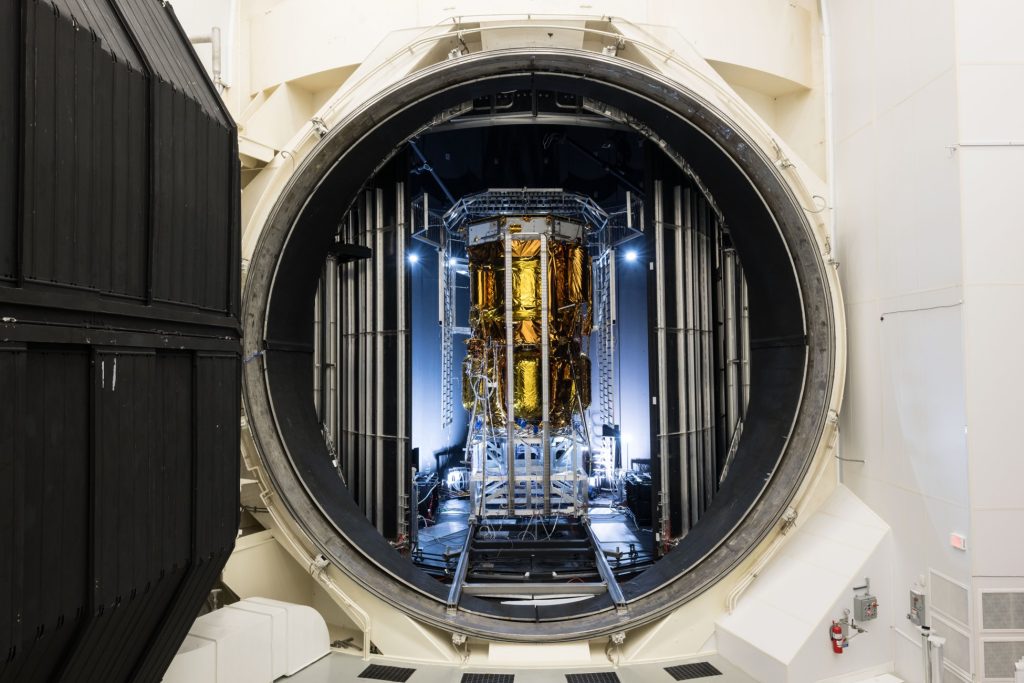
Blue Origin’s interest in lunar exploration centers on establishing a sustainable human presence on the Moon. The Blue Moon lander, introduced in 2019, is designed to deliver cargo, infrastructure, and eventually astronauts to the lunar surface.
Role in NASA’s Artemis Program
As part of NASA’s Artemis program, Blue Origin leads an industry team developing the crewed Blue Moon Mark 2 lander. In 2023, NASA selected Blue Origin to develop this second-generation lunar lander for Artemis V under a $3.4 billion contract.
BE-4 Engines — Powering the Next Generation of Rockets
Technical Overview
The BE-4 engine is a cornerstone of Blue Origin’s technological portfolio. Designed to generate approximately 550,000 pounds of thrust, it powers both the New Glenn rocket and ULA’s Vulcan Centaur.
Cleaner, Reusable Propulsion
Using liquid oxygen and methane, the BE-4 burns cleaner than traditional kerosene-based engines and supports easier refurbishment and reuse.
Philosophy and Long-Term Vision: Millions Living and Working in Space
Preserving Earth by Expanding Beyond It
At the core of Blue Origin’s mission lies a far-reaching vision shaped by Jeff Bezos’s belief that humanity’s destiny extends beyond Earth. His philosophy is simple: for civilization to flourish, it must expand into space.
Three Pillars of the Vision
This vision is built upon three foundational principles:
- Reusability: Continuous reduction of launch costs through reliable, reusable systems.
- Infrastructure First: Building the engines, habitats, and transport networks others will depend on.
- Economic Expansion: Enabling research, manufacturing, and tourism in low Earth orbit and beyond.
What’s Next for Blue Origin?
New Glenn’s Return to Flight
As Blue Origin enters its third decade, the company stands at a defining moment in its evolution. The immediate priority is returning New Glenn to flight after the May 2026 launchpad explosion: rebuilding Launch Complex 36, adding a second pad (LC-36B) for the larger 9×4 variant, and launching again before the end of 2026.
Expanding Suborbital Operations
Meanwhile, New Shepard continues to advance Blue Origin’s suborbital capabilities. At the same time, the Blue Moon lander and Artemis program partnerships push the company deeper into lunar exploration.
Orbital Reef and Commercial Space Infrastructure
Blue Origin’s Orbital Reef commercial space station concept — once developed with Sierra Space as a “mixed-use business park in space” — has been deprioritized; Blue Origin reassigned most of the team in 2023 to focus on New Glenn and the Blue Moon lunar lander. NASA’s plans for commercial space stations continue to evolve as the agency looks toward a post-ISS future.
Conclusion
Jeff Bezos’s work through Blue Origin stands as one of the most ambitious and forward-thinking efforts in modern aerospace. By focusing on reusable rocket technology, advanced lunar landers, and next-generation propulsion systems, Blue Origin is laying the groundwork for a future where human life in space is sustainable and accessible.
Get up-to-date information on upcoming rocket launches.
Jeff Bezos and Blue Origin FAQ
What is Blue Origin?
Blue Origin is the aerospace company founded by Jeff Bezos in 2000 to make space access sustainable, affordable, and scalable. The company focuses on reusable rockets, advanced propulsion, suborbital research platforms, and lunar lander development. Follow its launches on our rocket launch schedule.
When was Blue Origin founded and why?
Jeff Bezos founded Blue Origin in 2000, at a time when access to space was largely controlled by government agencies and private spaceflight was considered risky. Inspired by the Apollo missions and science fiction, Bezos set out to build the long-term infrastructure needed for humanity to expand beyond Earth — patiently, step by step.
What does Blue Origin’s motto “Gradatim Ferociter” mean?
Blue Origin’s Latin motto, “Gradatim Ferociter,” translates to “Step by Step, Ferociously.” It captures Bezos’s philosophy of patient, precise engineering: prioritizing research, testing, and gradual refinement over symbolic milestones. This approach has produced major advances in reusable rocketry and propulsion.
What rockets and engines has Blue Origin built?
Blue Origin developed the reusable New Shepard suborbital vehicle, the heavy-lift New Glenn orbital rocket, and the powerful BE-4 engines that also power other launch vehicles. Its portfolio spans reusable rocketry, propulsion technology, and lunar lander development. Read more company profiles in our space news section.
How is Blue Origin different from SpaceX?
While both are commercial space leaders, Blue Origin emphasizes gradual, sustainability-focused infrastructure building, whereas SpaceX under Elon Musk pursues aggressive rapid development and high flight cadence with Falcon 9, Falcon Heavy, and Starship. Compare the two visions in our Elon Musk space revolution guide.