
National Aeronautics and Space Administration Gemini V Titan II GLV
Rocket Launch Video Streams
Meet the Astronaut Crew

Gordon Cooper
| Birthday | 03/06/1927 |
|---|---|
| Role | Command Pilot |
| Nationality | United States of America |
| First Flight | 05/15/1963 |
| Last Flight | 08/21/1965 |
Leroy Gordon "Gordo" Cooper Jr. was an American aerospace engineer, test pilot, United States Air Force pilot, and ...

Pete Conrad
| Birthday | 06/02/1930 |
|---|---|
| Role | Pilot |
| Nationality | United States of America |
| First Flight | 08/21/1965 |
| Last Flight | 05/25/1973 |
Charles "Pete" Conrad Jr. was an American NASA astronaut, aeronautical engineer, naval officer and aviator, test pi...
About the Gemini V (Gemini 5) Mission
| Type | Human Exploration |
|---|---|
| Orbit | Low Earth Orbit |
Gemini 5 was the third crewed mission of the NASA's Project Gemini. The mission was commanded by Command Pilot L. Gordon Cooper, Jr. and Pilot Charles "Pete" Conrad, Jr. The mission began on August 21, 1965, 13:59:59 UTC and ended on August 29, 1965, 12:55:13 UTC.

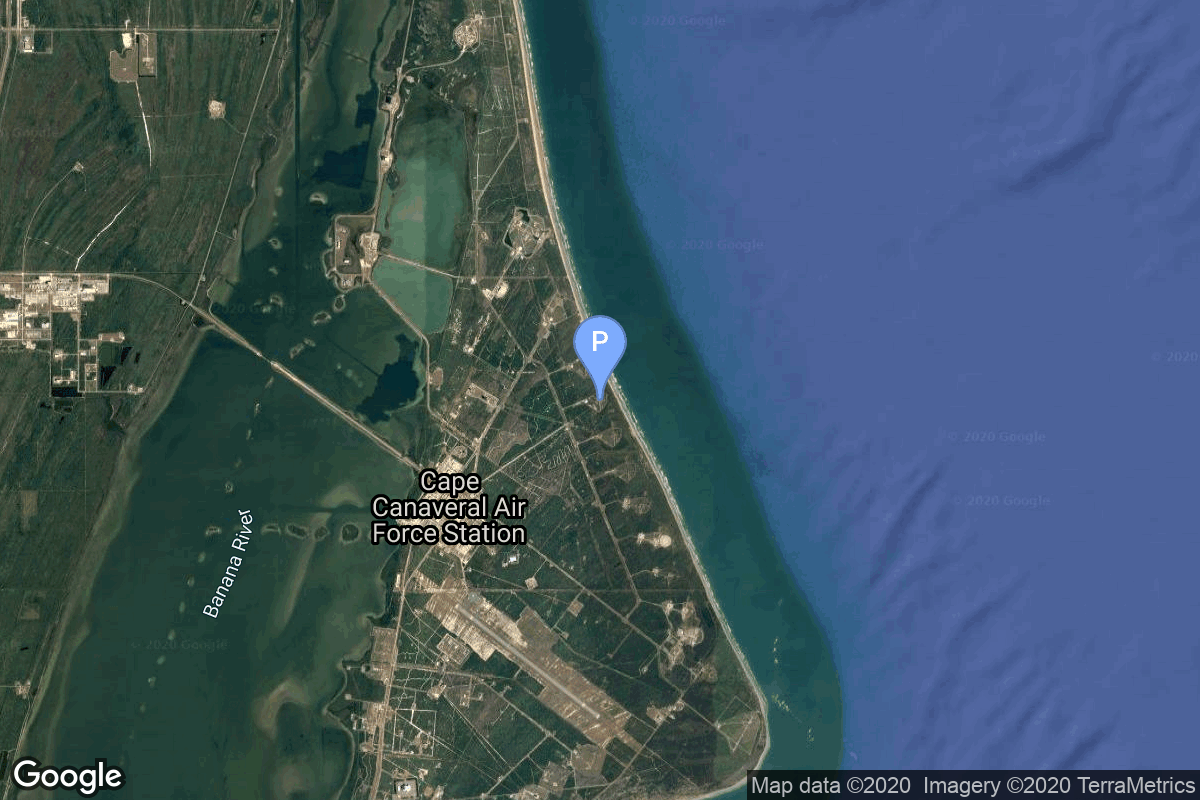
Launch Pad & Location
Launch Complex 19
Cape Canaveral SFS, FL, USA
| Launches | 12 |
|---|---|
| Orbital Launch Attempts | 11 |
| Total Launches | 1111 |
Cape Canaveral Space Force Station (CCSFS) is an installation of the United States Space Force's Space Launch Delta 45, located on Cape Canaveral in Brevard County, Florida.
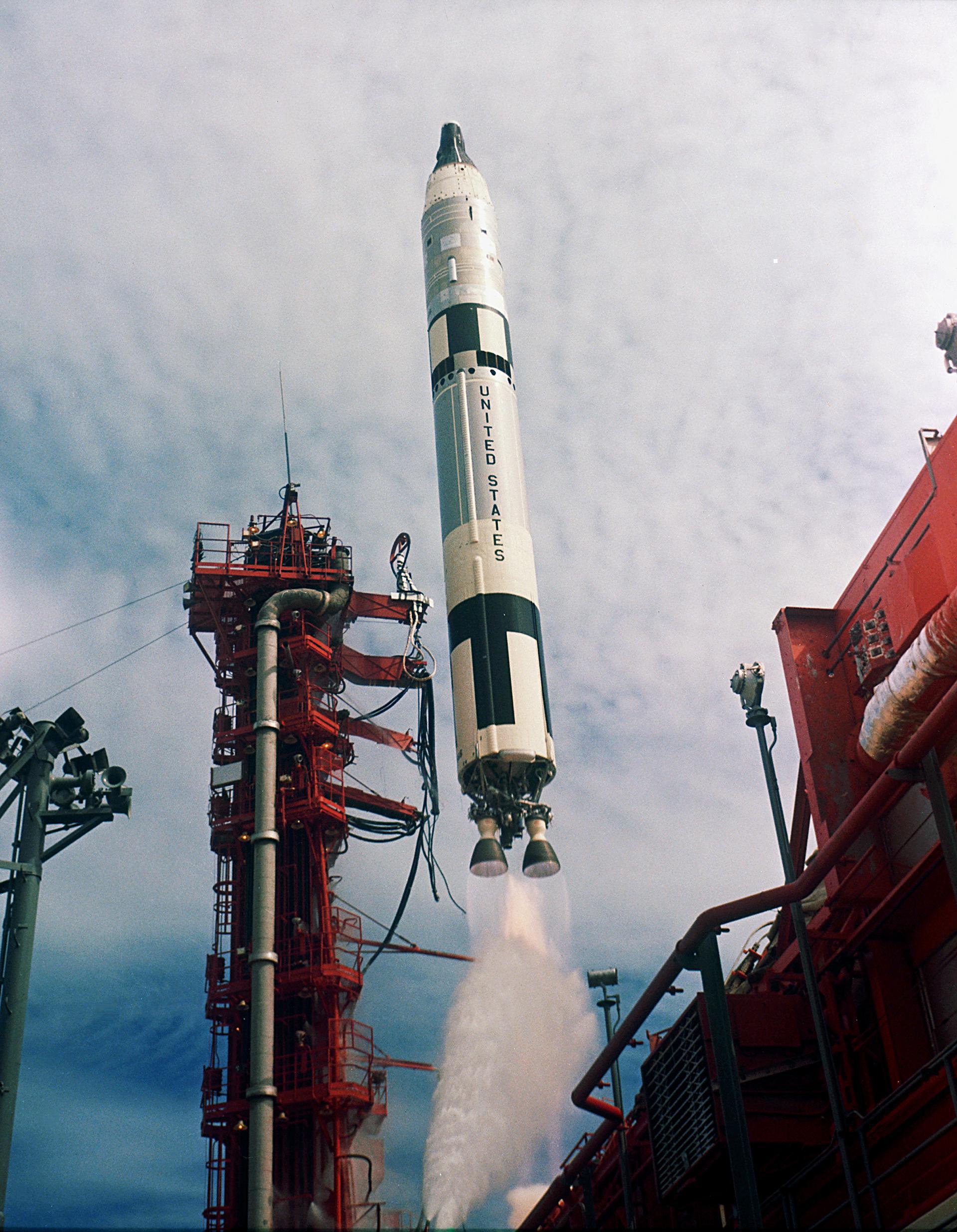
National Aeronautics and Space Administration Titan II GLV Rocket
The Titan II GLV (Gemini Launch Vehicle) or Gemini-Titan II was an American expendable launch system derived from the Titan II missile, which was used to launch twelve Gemini missions for NASA between 1964 and 1966. Two unmanned launches followed by ten manned ones were conducted from Launch Complex 19 at the Cape Canaveral Air Force Station, starting with Gemini 1 on April 8, 1964.
Learn more about the National Aeronautics and Space Administration Titan II GLV Rocket
About National Aeronautics and Space Administration
The National Aeronautics and Space Administration is an independent agency of the executive branch of the United States federal government responsible for the civilian space program, as well as aeronautics and aerospace research. NASA have many launch facilities but most are inactive. The most commonly used pad will be LC-39B at Kennedy Space Center in Florida.
Learn more about National Aeronautics and Space Administration
Frequently Asked Questions
When was the National Aeronautics and Space Administration Titan II Gemini V (Gemini 5) launch scheduled?
The National Aeronautics and Space Administration Titan II Gemini V (Gemini 5) launch was scheduled for:
.
Where can I watch the National Aeronautics and Space Administration Titan II Gemini V (Gemini 5) launch video?
You can watch the National Aeronautics and Space Administration Titan II launch video on this page. The official video includes full mission coverage with multiple camera angles, onboard views, and expert commentary covering pre-launch procedures, liftoff, stage separation, and payload deployment.
Where did the National Aeronautics and Space Administration Titan II Gemini V (Gemini 5) mission launch from?
The National Aeronautics and Space Administration Titan II rocket launched from Launch Complex 19 at Cape Canaveral SFS, FL, USA. Cape Canaveral Space Force Station (CCSFS) is an installation of the United States Space Force's Space Launch Delta 45, located on Cape Canaveral in Brevard County, Florida.
What rocket was used for the Gemini V (Gemini 5) mission?
The Gemini V (Gemini 5) mission launched aboard a National Aeronautics and Space Administration Titan II rocket. The Titan II GLV (Gemini Launch Vehicle) or Gemini-Titan II was an American expendable launch system derived from the Titan II missile, which was used to launch twelve Gemini missions for NASA between 1964 and 1966. Two unmanned launches followed by ten manned ones were conducted from Launch Complex 19 at the Cape Canaveral Air Force Station, starting with Gemini 1 on April 8, 1964. Detailed rocket specifications and performance data are available in the rocket details above.
What weather conditions could have delayed the National Aeronautics and Space Administration Titan II Gemini V (Gemini 5) launch?
The National Aeronautics and Space Administration Titan II Gemini V (Gemini 5) launch could have been delayed by various weather conditions including lightning within 10 nautical miles, high winds (especially upper-level winds), thick cloud layers, precipitation, and poor visibility. Weather must be favorable at the launch site, downrange landing zones, and abort landing sites.
How can I get updates if the National Aeronautics and Space Administration Titan II Gemini V (Gemini 5) launch was delayed?
This page was updated in real-time with the latest National Aeronautics and Space Administration Titan II launch status, including any delays or scrubs for the Gemini V (Gemini 5) mission. You can also check our space launch schedule for historical launch information. Our mobile app provides push notifications for instant alerts about launch status changes. Official National Aeronautics and Space Administration live streams provided the most immediate range updates during the launch window.
Last Updated
Last Updated: