
Soviet Space Program Soyuz 25 Soyuz U
Rocket Launch Video Stream
Meet the Astronaut Crew
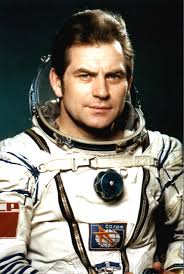
Vladimir Kovalyonok
- Birthday: 03/03/1943
- Role: Commander
- Nationality: Russia
- First Flight: 10/09/1977
- Last Flight: 03/12/1981
Vladimir Vasiliyevich Kovalyonok (Belarusian: Уладзі́мір Васі́льевіч Кавалёнак; Russian: Вла...
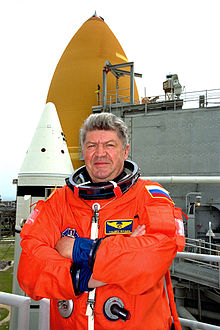
Valery Ryumin
- Birthday: 08/16/1939
- Role: Flight Engineer
- Nationality: Russia
- First Flight: 10/09/1977
- Last Flight: 06/02/1998
Valery Victorovich Ryumin (born August 16, 1939 in Komsomolsk-on-Amur) is a former Soviet cosmonaut.
In 1973, he join...
About the Soyuz 25 Mission
- Type: Human Exploration
- Orbit: Low Earth Orbit
Soyuz 25 was meant to be the first crewed flight to the new Salyut 6 space station. The mission began on October 9, 1977, 02:40:35 UTC, launching Commander Vladimir Kovalyonok and Flight Engineer Valery Rumin into orbit. However, they failed to dock with the station despite five attempts, and had to abort the mission.
The mission concluded with a safe landing back on Earth on October 11, 1977, 03:25:20 UTC.
Launch Pad & Location
1/5
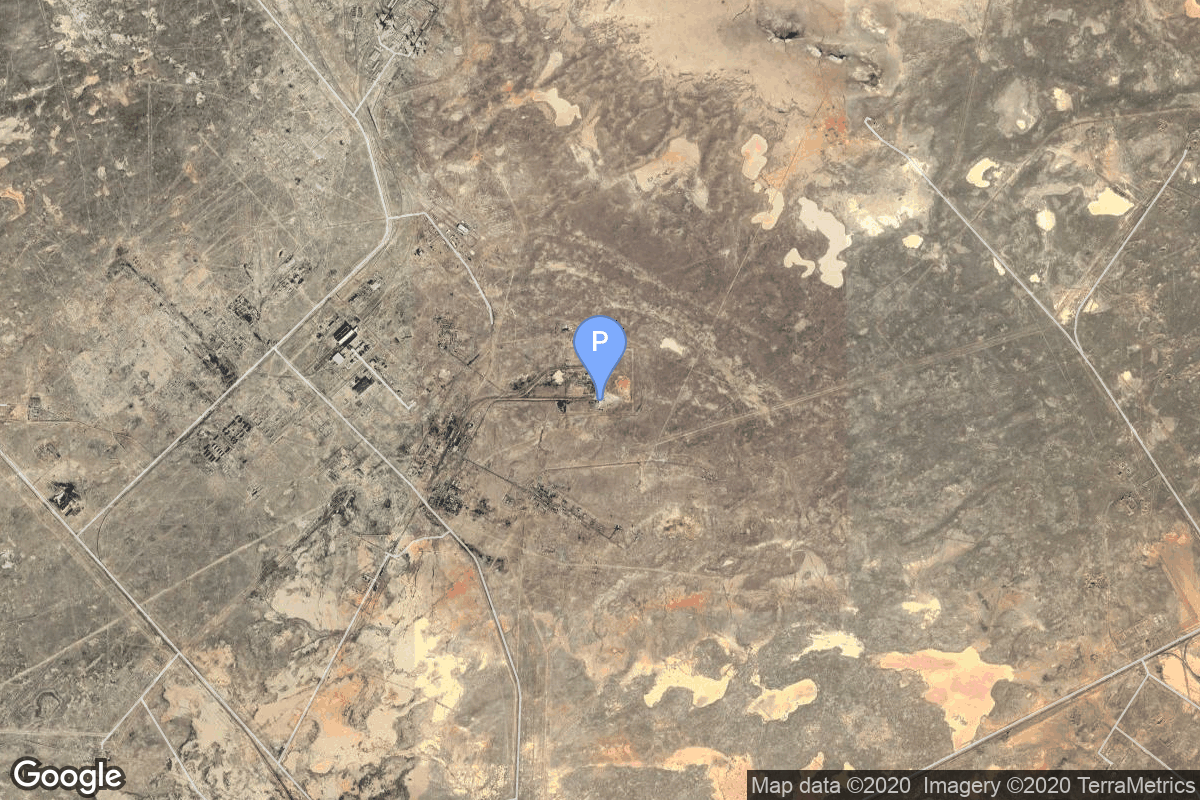
Baikonur Cosmodrome, Republic of Kazakhstan
The 1/5 launch pad has hosted 487 rocket launches, including 487 orbital launch attempts. The Baikonur Cosmodrome, Republic of Kazakhstan launch site has been the location for 1563 total rocket launches.
The Baikonur Cosmodrome is a spaceport operated by Russia within Kazakhstan. Located in the Kazakh city of Baikonur, it is the largest operational space launch facility in terms of area. All Russian crewed spaceflights are launched from Baikonur.
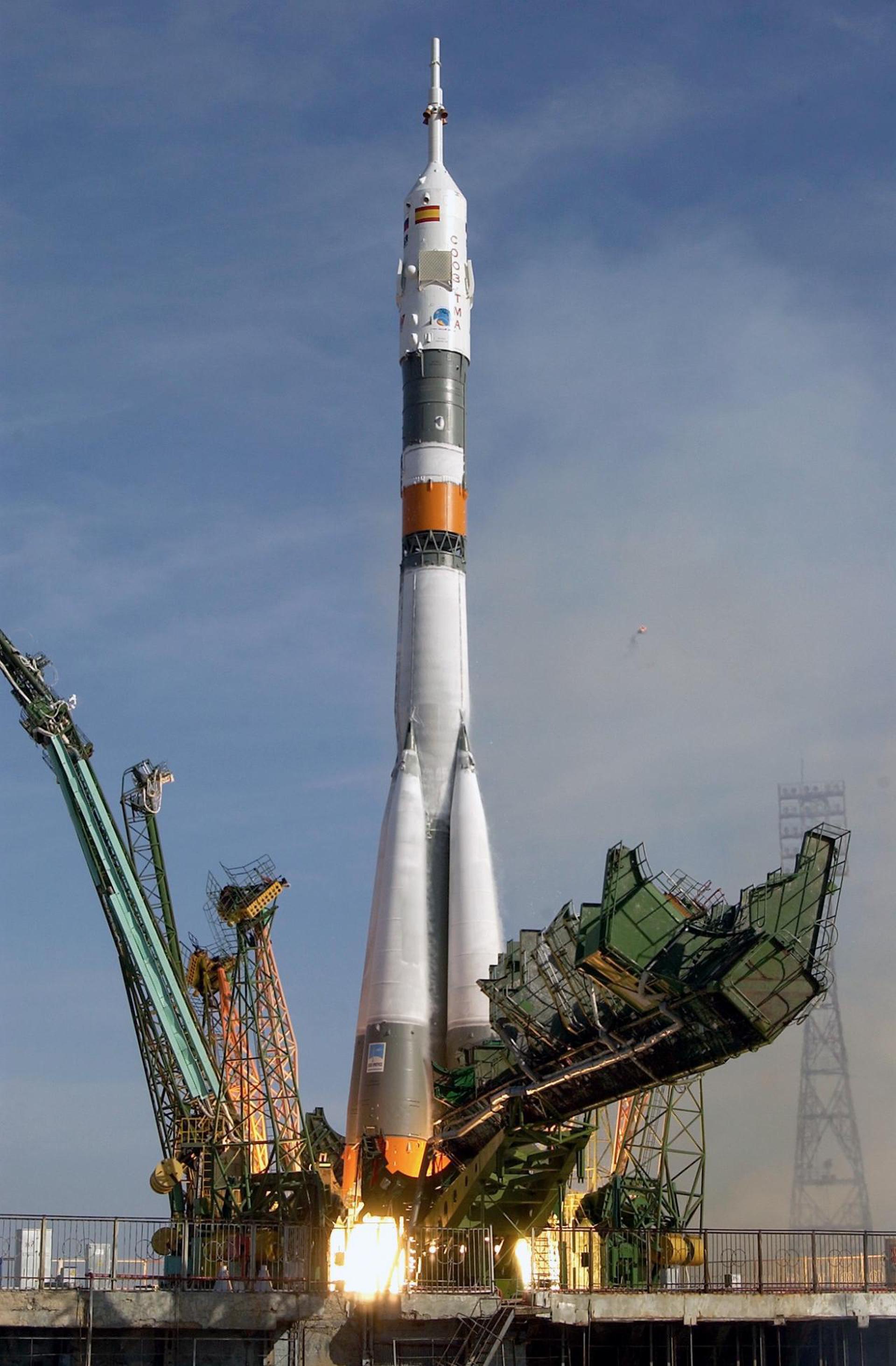
Russian Federal Space Agency (ROSCOSMOS) Soyuz U Rocket
Learn more about the Russian Federal Space Agency (ROSCOSMOS) Soyuz U Rocket
About Soviet Space Program
The Soviet space program, was the national space program of the Union of Soviet Socialist Republics (USSR) actived from 1930s until disintegration of the Soviet Union in 1991.
The Soviet Union's space program was mainly based on the cosmonautic exploration of space and the development of the expandable launch vehicles, which had been split between many design bureaus competing against each other. Over its 60-years of history, the Russian program was responsible for a number of pioneering feats and accomplishments in the human space flight, including the first intercontinental ballistic missile (R-7), first satellite (Sputnik 1), first animal in Earth orbit (the dog Laika on Sputnik 2), first human in space and Earth orbit (cosmonaut Yuri Gagarin on Vostok 1), first woman in space and Earth orbit (cosmonaut Valentina Tereshkova on Vostok 6), first spacewalk (cosmonaut Alexei Leonov on Voskhod 2), first Moon impact (Luna 2), first image of the far side of the Moon (Luna 3) and unmanned lunar soft landing (Luna 9), first space rover (Lunokhod 1), first sample of lunar soil automatically extracted and brought to Earth (Luna 16), and first space station (Salyut 1). Further notable records included the first interplanetary probes: Venera 1 and Mars 1 to fly by Venus and Mars, respectively, Venera 3 and Mars 2 to impact the respective planet surface, and Venera 7 and Mars 3 to make soft landings on these planets.
Frequently Asked Questions
When was the Soviet Space Program Soyuz U Soyuz 25 launch scheduled?
The Soviet Space Program Soyuz U Soyuz 25 launch was scheduled for:
.
Where can I watch the Soviet Space Program Soyuz U Soyuz 25 launch video?
You can watch the Soviet Space Program Soyuz U launch video on this page. The official video includes full mission coverage with multiple camera angles, onboard views, and expert commentary covering pre-launch procedures, liftoff, stage separation, and payload deployment.
Where did the Soviet Space Program Soyuz U Soyuz 25 mission launch from?
The Soviet Space Program Soyuz U rocket launched from 1/5 at Baikonur Cosmodrome, Republic of Kazakhstan. The Baikonur Cosmodrome is a spaceport operated by Russia within Kazakhstan. Located in the Kazakh city of Baikonur, it is the largest operational space launch facility in terms of area. All Russian crewed spaceflights are launched from Baikonur.
What rocket was used for the Soyuz 25 mission?
The Soyuz 25 mission launched aboard a Soviet Space Program Soyuz U rocket. Detailed rocket specifications and performance data are available in the rocket details above.
What weather conditions could have delayed the Soviet Space Program Soyuz U Soyuz 25 launch?
The Soviet Space Program Soyuz U Soyuz 25 launch could have been delayed by various weather conditions including lightning within 10 nautical miles, high winds (especially upper-level winds), thick cloud layers, precipitation, and poor visibility. Weather must be favorable at the launch site, downrange landing zones, and abort landing sites.
How can I get updates if the Soviet Space Program Soyuz U Soyuz 25 launch was delayed?
This page was updated in real-time with the latest Soviet Space Program Soyuz U launch status, including any delays or scrubs for the Soyuz 25 mission. You can also check our space launch schedule for historical launch information. Our mobile app provides push notifications for instant alerts about launch status changes. Official Soviet Space Program live streams provided the most immediate range updates during the launch window.