
RKK Energiya Demo Flight Soyuz-5
Rocket Launch Video Stream
Weather Forecast During Launch
The forecast calls for a temperature of 86°F, overcast clouds, 92% cloud cover and a wind speed of 3mph.
About the Demo Flight Mission
| Type | Test Flight |
|---|---|
| Orbit | Suborbital |
Demonstration Flight for Russia's new Soyuz-5 launch vehicle, with a mass simulator on board. The launch was suborbital with the simulator splashing down in the Pacific Ocean.
Launch Pad & Location
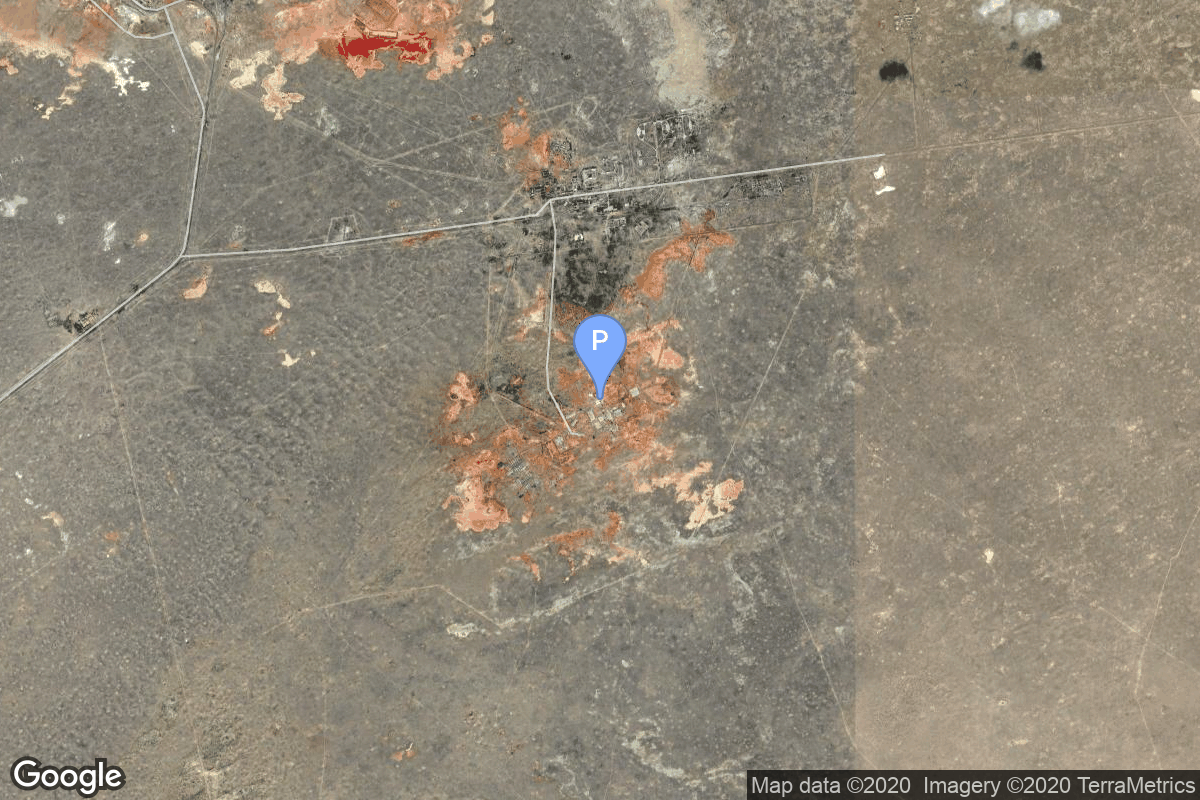
45/1
Baikonur Cosmodrome, Republic of Kazakhstan
| Launches | 47 |
|---|---|
| Orbital Launch Attempts | 46 |
| Total Launches | 1563 |
The Baikonur Cosmodrome is a spaceport operated by Russia within Kazakhstan. Located in the Kazakh city of Baikonur, it is the largest operational space launch facility in terms of area. All Russian crewed spaceflights are launched from Baikonur.
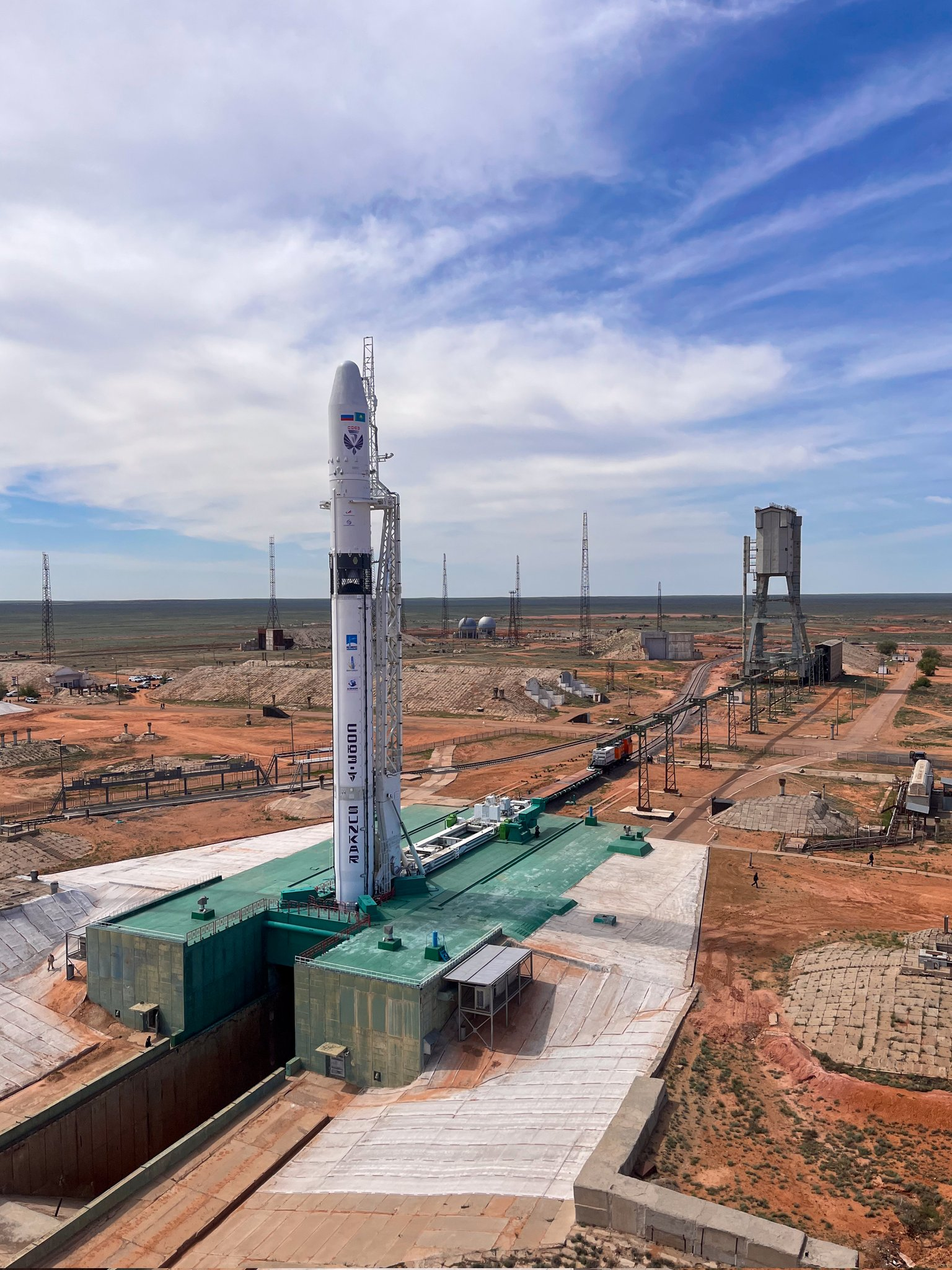
RKK Energiya Soyuz-5 Rocket
Soyuz-5, also named Irtysh is a planned Russian rocket that is being developed by JSC SRC Progress, formerly within "Project Feniks." It will replace the capability of Zenit-2 and Proton Medium. It will initially be a two-stage rocket, but Soyuz 5 can be enhanced with an optional Blok DM-03 upper stage for geostationary missions.
The rocket is loosely based on the Zenit launch vehicle with a RD-171MV engine on the 1st stage, enlarged to 4.1 m in diameter, while the 2nd stage is powered by 2 RD-0124MS engines derived from engines used on the 3rd stage of the Soyuz-2.1b. The Soyuz-5 can lift 17 tonnes to a Low Earth orbit.
| Length | 65.3 m |
|---|---|
| Diameter | 4.1 m |
| Stages | 2-3 |
| Launch Mass | 525.0 T |
| Takeoff Thrust | 7,257.0 kN |
| LEO Capacity | 17,000 kg |
| GTO Capacity | 5,000 kg |
| Maiden Flight | 4/30/2026 |
About RKK Energiya
| Total Launches | 1 |
|---|---|
| Successful | 1 |
| Consecutive Success | 1 |

Frequently Asked Questions
When was the RKK Energiya Soyuz-5 Demo Flight launch scheduled?
The RKK Energiya Soyuz-5 Demo Flight launch was scheduled for:
.
Where can I watch the RKK Energiya Soyuz-5 Demo Flight launch video?
You can watch the RKK Energiya Soyuz-5 launch video on this page. The official video includes full mission coverage with multiple camera angles, onboard views, and expert commentary covering pre-launch procedures, liftoff, stage separation, and payload deployment.
Where did the RKK Energiya Soyuz-5 Demo Flight mission launch from?
The RKK Energiya Soyuz-5 rocket launched from 45/1 at Baikonur Cosmodrome, Republic of Kazakhstan. The Baikonur Cosmodrome is a spaceport operated by Russia within Kazakhstan. Located in the Kazakh city of Baikonur, it is the largest operational space launch facility in terms of area. All Russian crewed spaceflights are launched from Baikonur.
What rocket was used for the Demo Flight mission?
The Demo Flight mission launched aboard a RKK Energiya Soyuz-5 rocket. Soyuz-5, also named Irtysh is a planned Russian rocket that is being developed by JSC SRC Progress, formerly within "Project Feniks." It will replace the capability of Zenit-2 and Proton Medium. It will initially be a two-stage rocket, but Soyuz 5 can be enhanced with an optional Blok DM-03 upper stage for geostationary missions. <br> <br>The rocket is loosely based on the Zenit launch vehicle with a RD-171MV engine on the 1st stage, enlarged to 4.1 m in diameter, while the 2nd stage is powered by 2 RD-0124MS engines derived from engines used on the 3rd stage of the Soyuz-2.1b. The Soyuz-5 can lift 17 tonnes to a Low Earth orbit. Detailed rocket specifications and performance data are available in the rocket details above.
What weather conditions could have delayed the RKK Energiya Soyuz-5 Demo Flight launch?
The RKK Energiya Soyuz-5 Demo Flight launch could have been delayed by various weather conditions including lightning within 10 nautical miles, high winds (especially upper-level winds), thick cloud layers, precipitation, and poor visibility. Weather must be favorable at the launch site, downrange landing zones, and abort landing sites.
How can I get updates if the RKK Energiya Soyuz-5 Demo Flight launch was delayed?
This page was updated in real-time with the latest RKK Energiya Soyuz-5 launch status, including any delays or scrubs for the Demo Flight mission. You can also check our space launch schedule for historical launch information. Our mobile app provides push notifications for instant alerts about launch status changes. Official RKK Energiya live streams provided the most immediate range updates during the launch window.
Last Updated
Last Updated:
-
Official Webcast by u0420u043eu0441u043au043eu0441u043cu043eu0441 u0422u0412 has started
-
Launch success.
-
Launch window extended, awaiting updates.
-
Scrubbed for the day.
-
Probable countdown recycle to end of launch window today.
-
Reported delayed by 24 hours.
-
Possible launch attempt on April 29, TBC.
-
Reverted back to April TBD.
-
NET April 26, TBC.
-
Reverted back to NET April TBD due to lack of new launch attempt information.
-
NET April 4.
-
Reverted back to NET April 3.
-
NET April 4, to be confirmed.
-
Delayed to NET April 2.
-
Delayed to NET March 29, TBC.
-
NET March 27, to be confirmed.
-
NET March 31.
-
Delayed till NET March.
-
Reverted back to NET December pending official updates.
-
Added launch.