
National Research Council San Marco 2 Scout B
About the San Marco 2 Mission
| Type | Earth Science |
|---|---|
| Orbit | Low Earth Orbit |
| Launch Cost | $8,660,000 |
San Marco 2 was a 66-cm-diameter spherical satellite with two experiments, one designed to make direct measurements of air density below 350 km, and the other an ionospheric beacon experiment developed to observe electron content between the earth and the satellite.
Launch Pad & Location
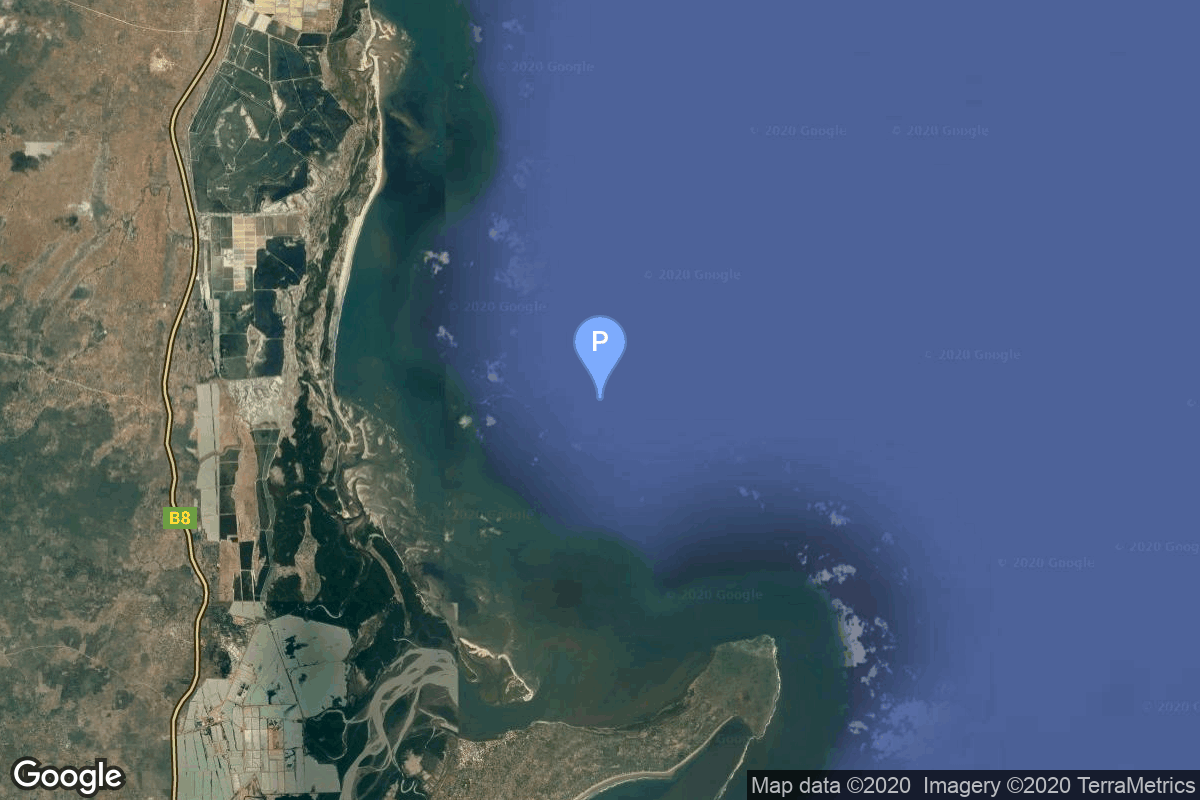
San Marco platform
Broglio Space Center, Kenya
| Launches | 9 |
|---|---|
| Orbital Launch Attempts | 9 |
| Total Launches | 9 |
The Luigi Broglio Space Center (BSC) located near Malindi, Kenya, is an Italian Space Agency (ASI) Spaceport. It served as a spaceport for the launch of both Italian and international satellites, but is currently only used for satellite communications.
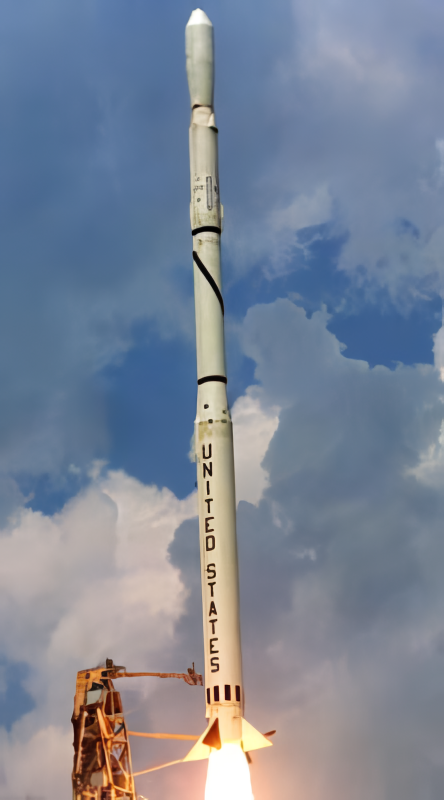
Vought Scout B Rocket
The Scout family of rockets were were American launch vehicles designed to place small satellites into orbit around the Earth. The Scout multistage rocket was the first orbital launch vehicle to be entirely composed of solid fuel stages.
| Length | 25.0 m |
|---|---|
| Diameter | 1.0 m |
| Stages | 4 |
| Launch Mass | 17.0 T |
| Takeoff Thrust | 513.0 kN |
| LEO Capacity | 143 kg |
| Launch Cost | $8,660,000 |
| Maiden Flight | 8/10/1965 |
About National Research Council
The Consiglio Nazionale delle Ricerche (CNR) or National Research Council, is the largest research council in Italy. As a public organisation, its remit is to support scientific and technological research. Its headquarters are in Rome.
| Total Launches | 2 |
|---|---|
| Successful | 2 |
| Consecutive Success | 2 |

Frequently Asked Questions
When was the National Research Council Scout B San Marco 2 launch scheduled?
The National Research Council Scout B San Marco 2 launch was scheduled for:
.
Where did the National Research Council Scout B San Marco 2 mission launch from?
The National Research Council Scout B rocket launched from San Marco platform at Broglio Space Center, Kenya. The Luigi Broglio Space Center (BSC) located near Malindi, Kenya, is an Italian Space Agency (ASI) Spaceport. It served as a spaceport for the launch of both Italian and international satellites, but is currently only used for satellite communications.
What rocket was used for the San Marco 2 mission?
The San Marco 2 mission launched aboard a National Research Council Scout B rocket. The Scout family of rockets were were American launch vehicles designed to place small satellites into orbit around the Earth. The Scout multistage rocket was the first orbital launch vehicle to be entirely composed of solid fuel stages. Detailed rocket specifications and performance data are available in the rocket details above.
What weather conditions could have delayed the National Research Council Scout B San Marco 2 launch?
The National Research Council Scout B San Marco 2 launch could have been delayed by various weather conditions including lightning within 10 nautical miles, high winds (especially upper-level winds), thick cloud layers, precipitation, and poor visibility. Weather must be favorable at the launch site, downrange landing zones, and abort landing sites.
How can I get updates if the National Research Council Scout B San Marco 2 launch was delayed?
This page was updated in real-time with the latest National Research Council Scout B launch status, including any delays or scrubs for the San Marco 2 mission. You can also check our space launch schedule for historical launch information. Our mobile app provides push notifications for instant alerts about launch status changes. Official National Research Council live streams provided the most immediate range updates during the launch window.
Last Updated
Last Updated: