
NASA Apollo AS-201 Saturn IB
About the Apollo AS-201 Mission
| Type | Test Flight |
|---|---|
| Orbit | Suborbital |
Suborbital uncrewed test flight of the Apollo CSM and Saturn IB launch vehicle.
Launch Pad & Location
Launch Complex 34
Cape Canaveral SFS, FL, USA
| Launches | 9 |
|---|---|
| Orbital Launch Attempts | 3 |
| Total Launches | 1130 |
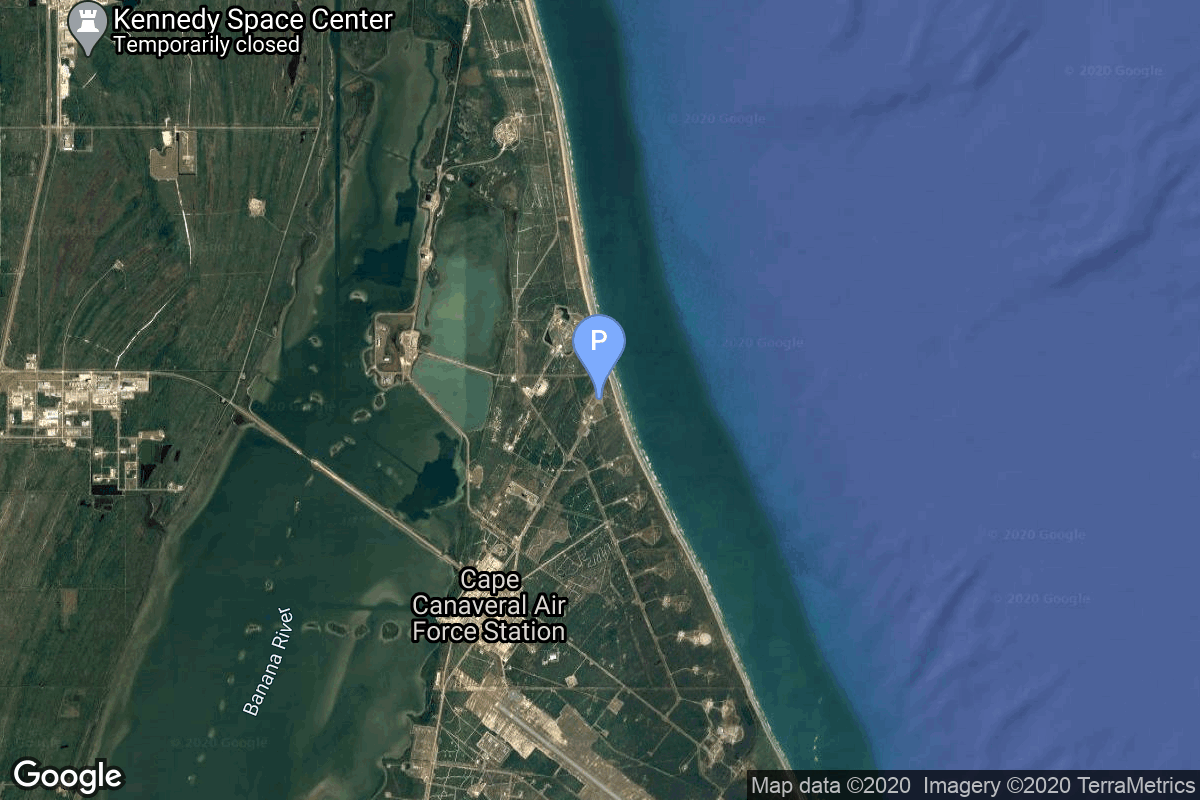
Cape Canaveral Space Force Station (CCSFS) is an installation of the United States Space Force's Space Launch Delta 45, located on Cape Canaveral in Brevard County, Florida.
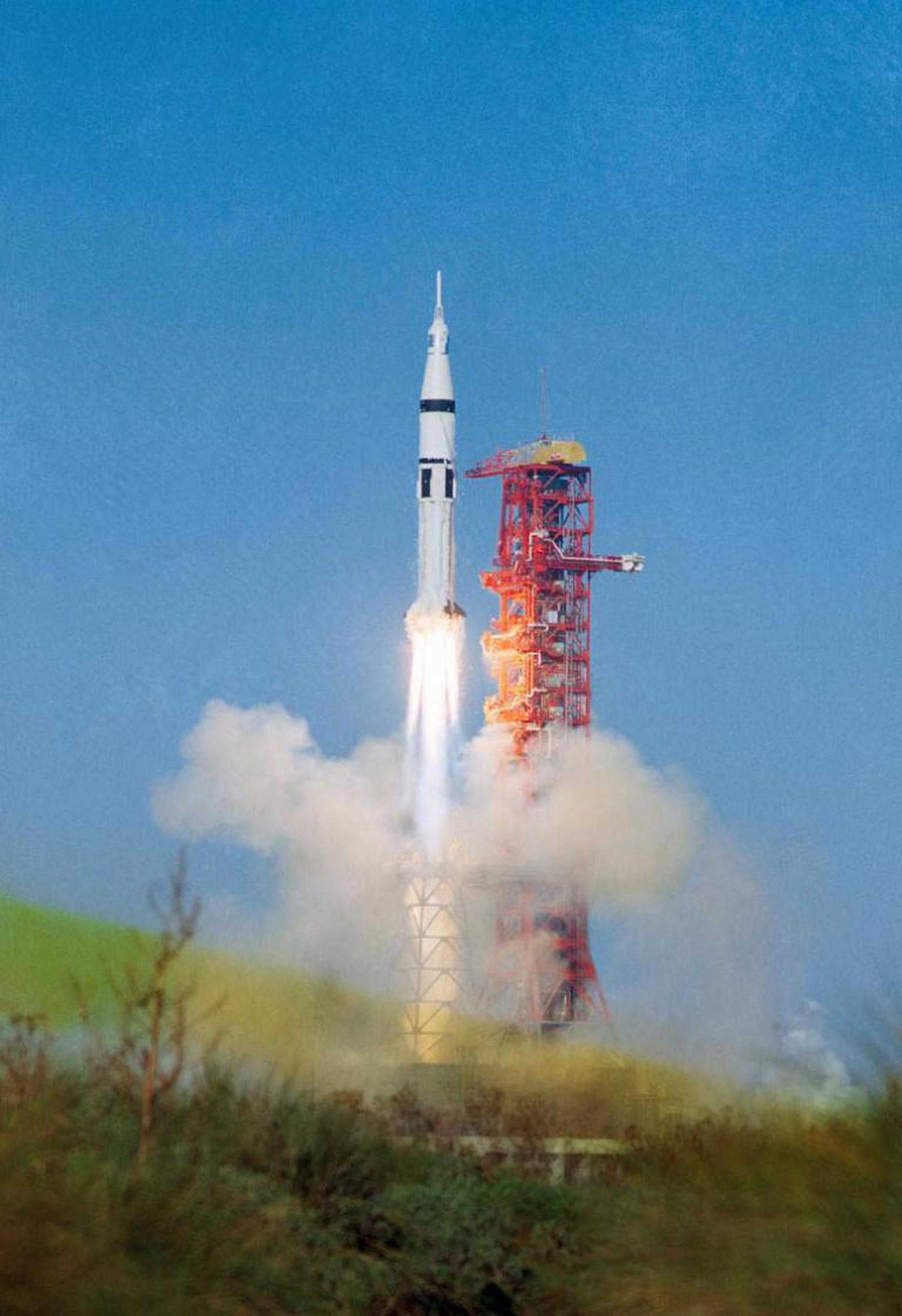
NASA Saturn IB Rocket
The Saturn IB (pronounced "one B", also known as the Uprated Saturn I) was an American launch vehicle commissioned by the National Aeronautics and Space Administration (NASA) for the Apollo program. It replaced the S-IV second stage of the Saturn I with the much more powerful S-IVB, able to launch a partially fueled Apollo Command/Service Module (CSM) or a fully fueled Lunar Module (LM) into low Earth orbit for early flight tests before the larger Saturn V needed for lunar flight was ready.
| Length | 43.2 m |
|---|---|
| Diameter | 6.6 m |
| Stages | 2 |
| Launch Mass | 590.0 T |
| Takeoff Thrust | 7,100.0 kN |
| LEO Capacity | 21,000 kg |
| Maiden Flight | 2/26/1966 |
Mission Spacecraft
Apollo CSM-009
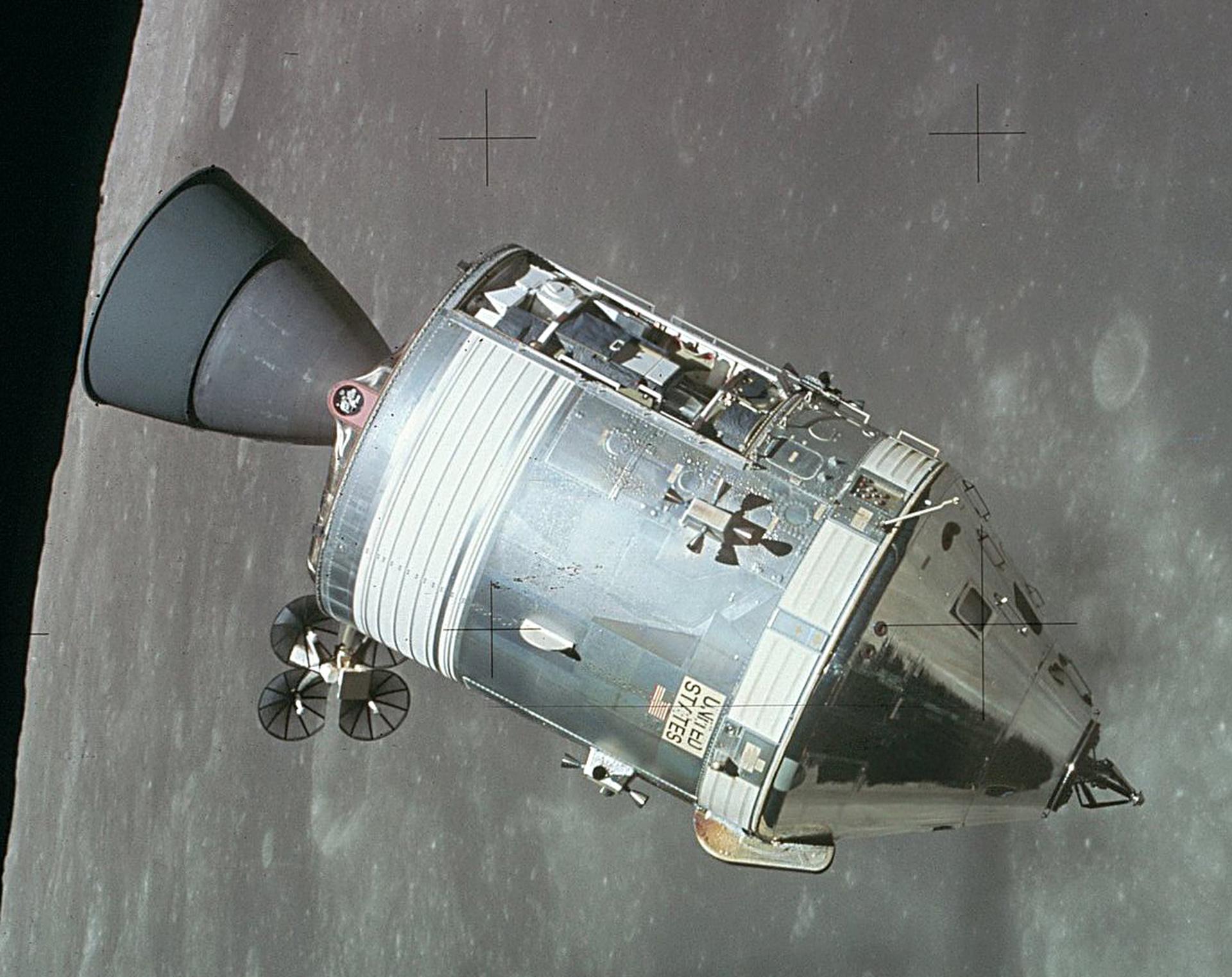
Apollo CSM-009 (CSM-009) was the spacecraft used for this mission. It is a North American Aviation Capsule designed for Cargo and Human Transportation to Lunar Orbit and traveled to Suborbital.
Apollo CSM used for the AS-201 flight and drop tests. Currently on display at the Strategic Air and Space Museum near Offutt Air Force Base in Ashland, Nebraska. The Apollo Command/Service Module (CSM) was one of two principal components of the United States Apollo spacecraft, used for the Apollo program which landed astronauts on the Moon between 1969 and 1972. The CSM functioned as a mother ship which carried a crew of three astronauts and the second Apollo spacecraft, the Lunar Module, to lunar orbit, and brought the astronauts back to Earth. It consisted of two parts: the conical Command Module, a cabin that housed the crew and carried equipment needed for atmospheric reentry and splashdown; and the cylindrical Service Module which provided propulsion, electrical power and storage for various consumables required during a mission. An umbilical connection transferred power and consumables between the two modules. Just before reentry of the Command Module on the return home, the umbilical connection was severed and the Service Module was cast off and allowed to burn up in the atmosphere. 14 days
| Type | Capsule |
|---|---|
| Agency | North American Aviation |
| Serial Number | CSM-009 |
| Status | Single Use |
| Destination | Suborbital |
| Maiden Flight | 2/26/1966 |
| Mission End | 2/26/1966 |
| Flights | 1 |
| Crew Capacity | 3 |
| Human Rated | Yes |
| Height | 11.0 m |
| Diameter | 3.9 m |
| Payload Capacity | 1,050 kg |
About NASA
The National Aeronautics and Space Administration is an independent agency of the executive branch of the United States federal government responsible for the civilian space program, as well as aeronautics and aerospace research. NASA have many launch facilities but most are inactive. The most commonly used pad will be LC-39B at Kennedy Space Center in Florida.
| Total Launches | 142 |
|---|---|
| Successful | 122 |
| Failed | 20 |
| Pending | 5 |
| Consecutive Success | 12 |
Frequently Asked Questions
When was the NASA Saturn IB Apollo AS-201 launch scheduled?
The NASA Saturn IB Apollo AS-201 launch was scheduled for:
.
Where did the NASA Saturn IB Apollo AS-201 mission launch from?
The NASA Saturn IB rocket launched from Launch Complex 34 at Cape Canaveral SFS, FL, USA. Cape Canaveral Space Force Station (CCSFS) is an installation of the United States Space Force's Space Launch Delta 45, located on Cape Canaveral in Brevard County, Florida.
What rocket was used for the Apollo AS-201 mission?
The Apollo AS-201 mission launched aboard a NASA Saturn IB rocket. The Saturn IB (pronounced "one B", also known as the Uprated Saturn I) was an American launch vehicle commissioned by the National Aeronautics and Space Administration (NASA) for the Apollo program. It replaced the S-IV second stage of the Saturn I with the much more powerful S-IVB, able to launch a partially fueled Apollo Command/Service Module (CSM) or a fully fueled Lunar Module (LM) into low Earth orbit for early flight tests before the larger Saturn V needed for lunar flight was ready. Detailed rocket specifications and performance data are available in the rocket details above.
What weather conditions could have delayed the NASA Saturn IB Apollo AS-201 launch?
The NASA Saturn IB Apollo AS-201 launch could have been delayed by various weather conditions including lightning within 10 nautical miles, high winds (especially upper-level winds), thick cloud layers, precipitation, and poor visibility. Weather must be favorable at the launch site, downrange landing zones, and abort landing sites.
How can I get updates if the NASA Saturn IB Apollo AS-201 launch was delayed?
This page was updated in real-time with the latest NASA Saturn IB launch status, including any delays or scrubs for the Apollo AS-201 mission. You can also check our space launch schedule for historical launch information. Our mobile app provides push notifications for instant alerts about launch status changes. Official NASA live streams provided the most immediate range updates during the launch window.
Last Updated
Last Updated: