
Institute of Space and Astronautical Science Tansei-4 Mu-3S
About the Tansei-4 Mission
| Type | Test Flight |
|---|---|
| Orbit | Low Earth Orbit |
Tansei-4 was a test satellite to verify the performance of Mu-3S rocket and to test out tecnhologies for future satellites.
Launch Pad & Location
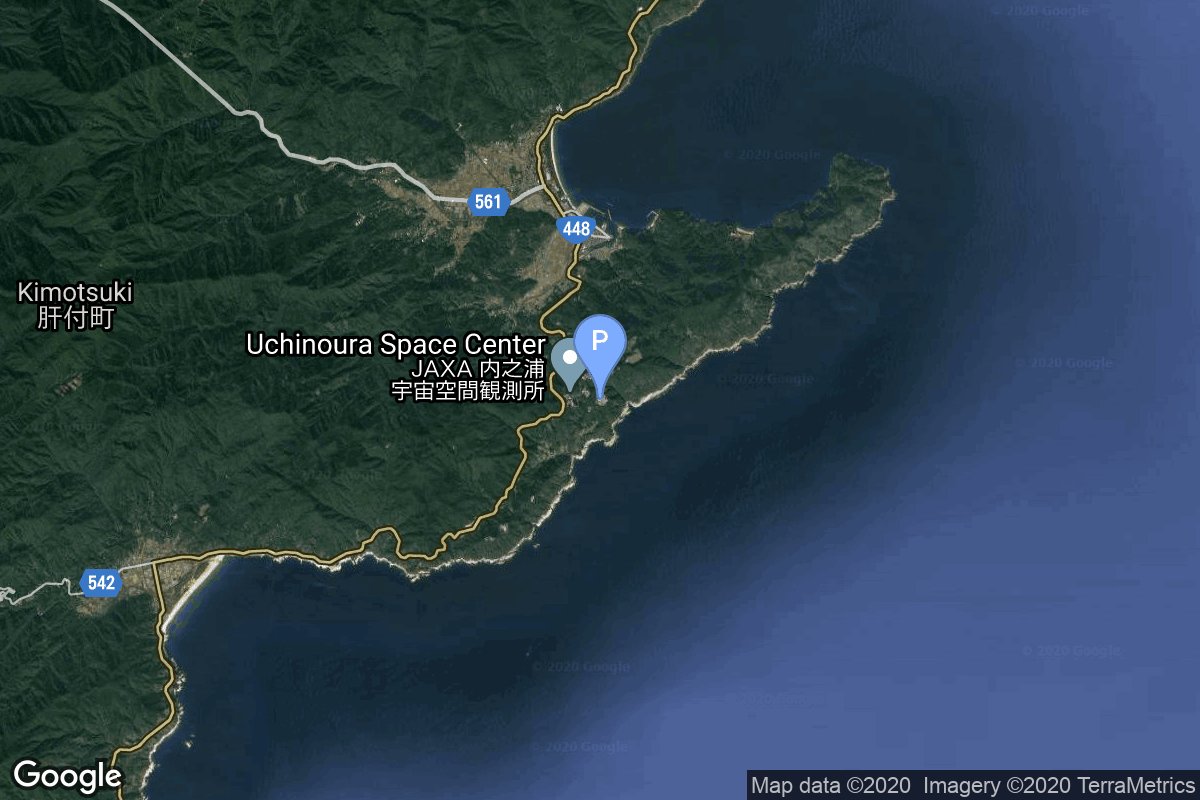
Mu Center
Uchinoura Space Center, Japan
| Launches | 36 |
|---|---|
| Orbital Launch Attempts | 36 |
| Total Launches | 43 |
The Uchinoura Space Center is a space launch facility in the Japanese town of Kimotsuki, Kagoshima Prefecture. All of Japan's scientific satellites were launched from Uchinoura prior to the M-V launch vehicles being decommissioned in 2006. It continues to be used for suborbital launches, stratospheric balloons and has also been used for the Epsilon orbital launch vehicle. Additionally, the center has antennas for communication with interplanetary space probes.
Institute of Space and Astronautical Science Mu-3S Rocket
The Mu, also known as M, was a series of Japanese solid-fuelled carrier rockets, which were launched from Uchinoura between 1966 and 2006. Originally developed by Japan's Institute of Space and Astronautical Science, Mu rockets were later operated by Japan Aerospace Exploration Agency following ISAS becoming part of it.
| Length | 23.8 m |
|---|---|
| Diameter | 1.4 m |
| Stages | 4 |
| Launch Mass | 49.0 T |
| Takeoff Thrust | 2,150.0 kN |
| LEO Capacity | 300 kg |
| Maiden Flight | 2/17/1980 |
Learn more about the Institute of Space and Astronautical Science Mu-3S Rocket
About Institute of Space and Astronautical Science
ISAS is a Japanese national research organization of astrophysics using rockets, astronomical satellites and interplanetary probes which played a major role in Japan's space development.
| Total Launches | 32 |
|---|---|
| Successful | 24 |
| Failed | 8 |
| Consecutive Success | 1 |
Learn more about Institute of Space and Astronautical Science
Frequently Asked Questions
When was the Institute of Space and Astronautical Science Mu-3S Tansei-4 launch scheduled?
The Institute of Space and Astronautical Science Mu-3S Tansei-4 launch was scheduled for:
.
Where did the Institute of Space and Astronautical Science Mu-3S Tansei-4 mission launch from?
The Institute of Space and Astronautical Science Mu-3S rocket launched from Mu Center at Uchinoura Space Center, Japan. The Uchinoura Space Center is a space launch facility in the Japanese town of Kimotsuki, Kagoshima Prefecture. All of Japan's scientific satellites were launched from Uchinoura prior to the M-V launch vehicles being decommissioned in 2006. It continues to be used for suborbital launches, stratospheric balloons and has also been used for the Epsilon orbital launch vehicle. Additionally, the center has antennas for communication with interplanetary space probes.
What rocket was used for the Tansei-4 mission?
The Tansei-4 mission launched aboard a Institute of Space and Astronautical Science Mu-3S rocket. The Mu, also known as M, was a series of Japanese solid-fuelled carrier rockets, which were launched from Uchinoura between 1966 and 2006. Originally developed by Japan's Institute of Space and Astronautical Science, Mu rockets were later operated by Japan Aerospace Exploration Agency following ISAS becoming part of it. Detailed rocket specifications and performance data are available in the rocket details above.
What weather conditions could have delayed the Institute of Space and Astronautical Science Mu-3S Tansei-4 launch?
The Institute of Space and Astronautical Science Mu-3S Tansei-4 launch could have been delayed by various weather conditions including lightning within 10 nautical miles, high winds (especially upper-level winds), thick cloud layers, precipitation, and poor visibility. Weather must be favorable at the launch site, downrange landing zones, and abort landing sites.
How can I get updates if the Institute of Space and Astronautical Science Mu-3S Tansei-4 launch was delayed?
This page was updated in real-time with the latest Institute of Space and Astronautical Science Mu-3S launch status, including any delays or scrubs for the Tansei-4 mission. You can also check our space launch schedule for historical launch information. Our mobile app provides push notifications for instant alerts about launch status changes. Official Institute of Space and Astronautical Science live streams provided the most immediate range updates during the launch window.
Last Updated
Last Updated: