
CASC Chang'e 7 Long March 5
About the Chang'e 7 Mission
| Type | Planetary Science |
|---|---|
| Orbit | Lunar Orbit |
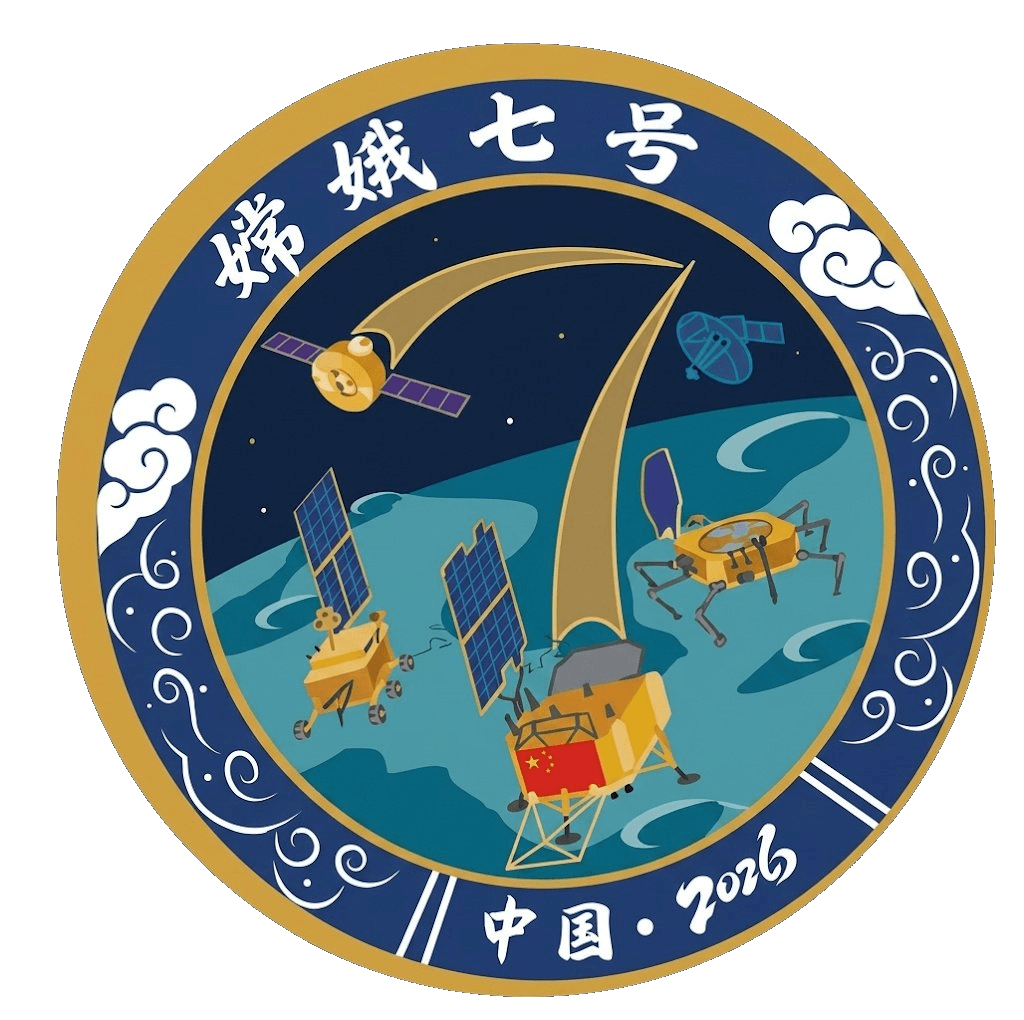
Chang'e 7/CE-7 is scheduled to launch in 2026, including an orbiter, a lander, a mini-hopping probe, and a rover. The mission will land in the South Pole regions of the Moon to study lunar surface environment around the South Pole, especially in looking for water ice in lunar soil.
Launch Pad & Location
101
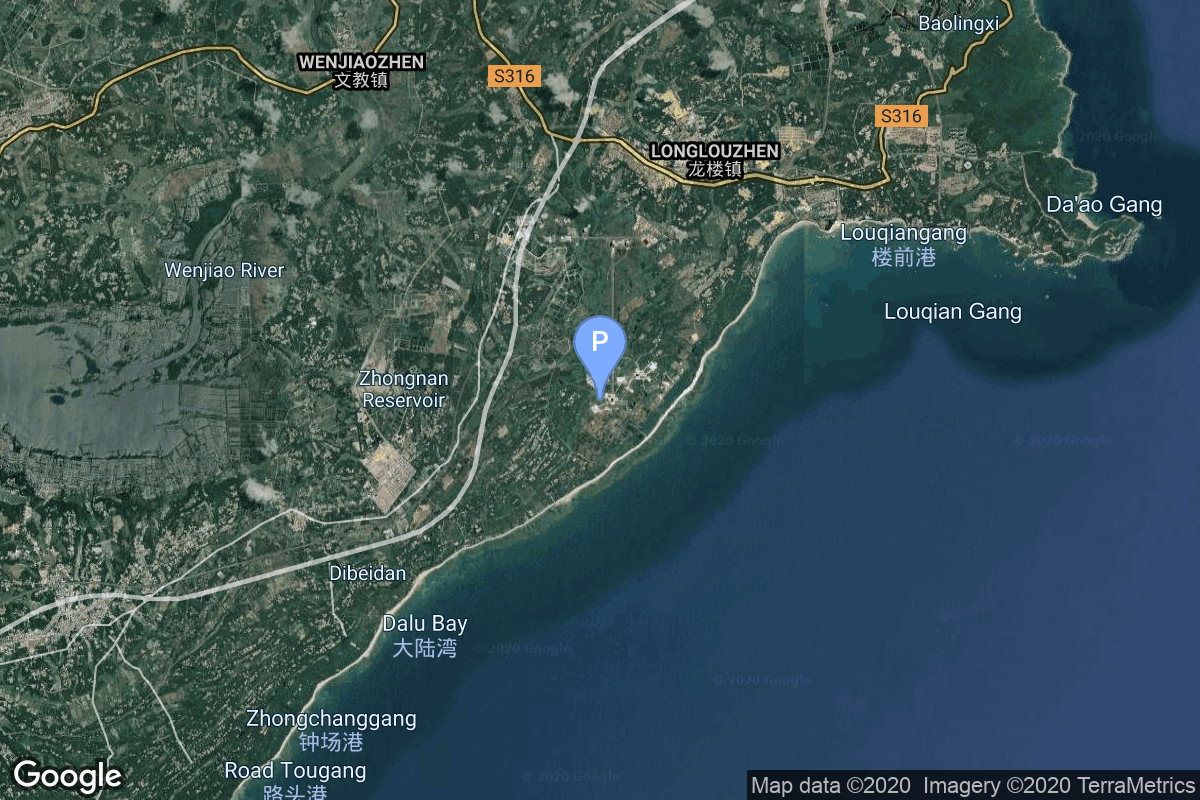
Wenchang Space Launch Site, People's Republic of China
| Launches | 18 |
|---|---|
| Orbital Launch Attempts | 18 |
| Total Launches | 76 |
The Wenchang Space Launch Site is a rocket launch site located in Wenchang on the island of Hainan, in China.
Formally a suborbital test center, it currently serves as China's southernmost spaceport. The site was selected for its low latitude, 19° north of the equator, allowing for larger payloads to be launched. It is capable of launching the Long March 5, the heaviest Chinese rocket. Unlike launch facilities on the mainland, Wenchang uses its seaport for deliveries.
CASC Long March 5 Rocket
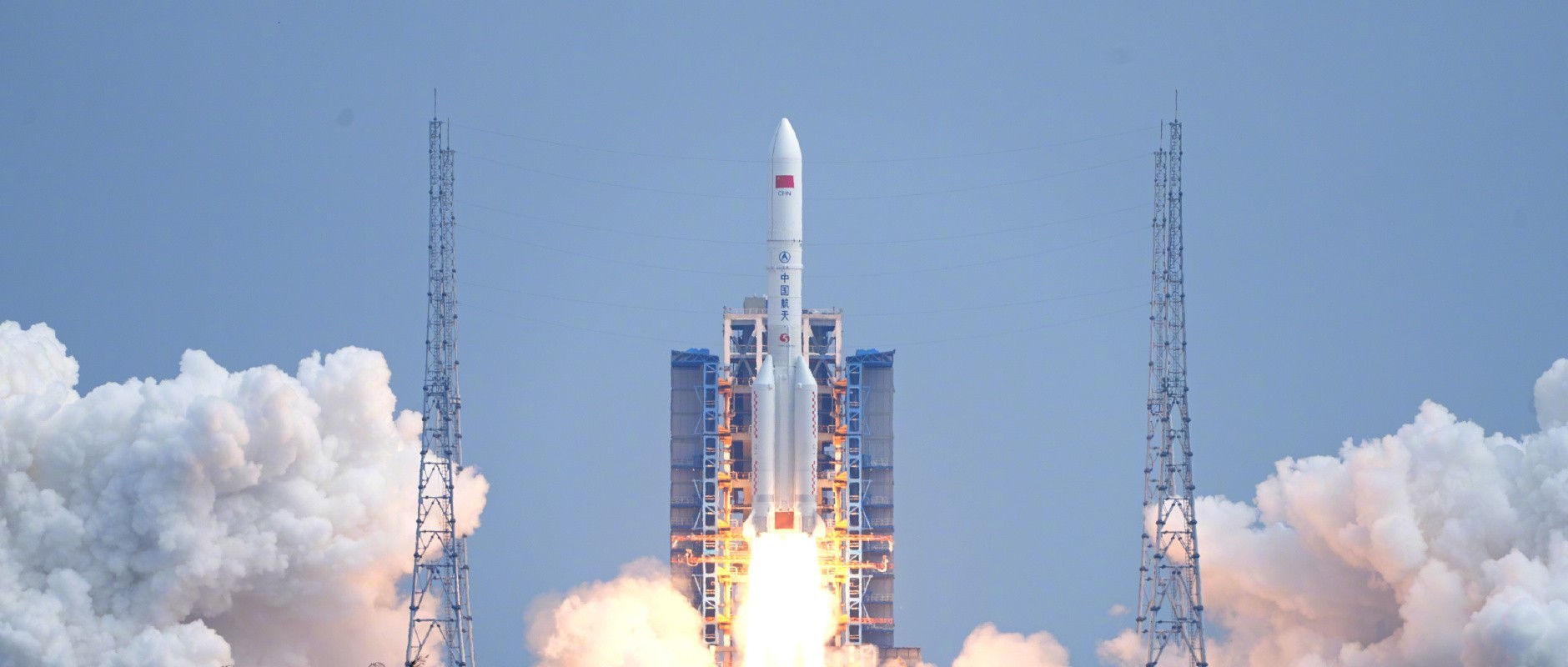
Long March 5 is a Chinese heavy lift launch system developed by China Academy of Launch Vehicle Technology (CALT). CZ-5 is the first Chinese vehicle designed from the ground up to focus on non-hypergolic liquid rocket propellants. Currently, two CZ-5 vehicle configurations are planned, with maximum payload capacities of ~25,000 kilograms (55,000 lb) to LEO and ~14,000 kilograms (31,000 lb) to GTO. The Long March 5 roughly matches the capabilities of American EELV heavy-class vehicles such as the Delta IV Heavy.
| Length | 57.0 m |
|---|---|
| Diameter | 5.0 m |
| Stages | 2 |
| Launch Mass | 867.0 T |
| Takeoff Thrust | 10,600.0 kN |
| LEO Capacity | 25,000 kg |
| GTO Capacity | 14,000 kg |
| Maiden Flight | 11/3/2016 |
About CASC
The China Aerospace Science and Technology Corporation (CASC) is the main contractor for the Chinese space program. It is state-owned and has a number of subordinate entities which design, develop and manufacture a range of spacecraft, launch vehicles, strategic and tactical missile systems, and ground equipment. It was officially established in July 1999 as part of a Chinese government reform drive, having previously been one part of the former China Aerospace Corporation. Various incarnations of the program date back to 1956.
| Total Launches | 621 |
|---|---|
| Successful | 605 |
| Failed | 16 |
| Pending | 7 |
| Consecutive Success | 12 |
Frequently Asked Questions
When is the CASC Long March 5 Chang'e 7 launch scheduled?
The CASC Long March 5 Chang'e 7 launch is currently scheduled for:
.
Launch times are subject to change based on weather conditions, technical readiness, and range availability. Check back regularly for the most up-to-date launch time and status updates.
Where is the CASC Long March 5 Chang'e 7 mission launching from?
The CASC Long March 5 rocket will launch from 101 at Wenchang Space Launch Site, People's Republic of China. The Wenchang Space Launch Site is a rocket launch site located in Wenchang on the island of Hainan, in China. Formally a suborbital test center, it currently serves as China's southernmost spaceport. The site was selected for its low latitude, 19° north of the equator, allowing for larger payloads to be launched. It is capable of launching the Long March 5, the heaviest Chinese rocket. Unlike launch facilities on the mainland, Wenchang uses its seaport for deliveries. For viewing location recommendations and tips, check the launch location details above.
What rocket is being used for the Chang'e 7 mission?
The Chang'e 7 mission will launch aboard a CASC Long March 5 rocket. Long March 5 is a Chinese heavy lift launch system developed by China Academy of Launch Vehicle Technology (CALT). CZ-5 is the first Chinese vehicle designed from the ground up to focus on non-hypergolic liquid rocket propellants. Currently, two CZ-5 vehicle configurations are planned, with maximum payload capacities of ~25,000 kilograms (55,000 lb) to LEO and ~14,000 kilograms (31,000 lb) to GTO. The Long March 5 roughly matches the capabilities of American EELV heavy-class vehicles such as the Delta IV Heavy. Detailed rocket specifications and performance data are available in the rocket details above.
What weather conditions could delay the CASC Long March 5 Chang'e 7 launch?
The CASC Long March 5 Chang'e 7 launch can be delayed by various weather conditions including lightning within 10 nautical miles, high winds (especially upper-level winds), thick cloud layers, precipitation, and poor visibility. Weather must be favorable at the launch site, downrange landing zones, and abort landing sites. Check the launch weather forecast above for current conditions and probability of favorable weather.
How can I get updates if the CASC Long March 5 Chang'e 7 launch is delayed?
This page is updated in real-time with the latest CASC Long March 5 launch status, including any delays or scrubs for the Chang'e 7 mission. You can also check our space launch schedule for the most current information. Enable push notifications through our mobile app to receive instant alerts about launch status changes, weather holds, or new launch times. We recommend following official CASC live streams for the most immediate range updates.
Last Updated
Last Updated:
-
Delayed from late August.
-
Delayed to August 25 due to launch site weather.
-
Refined launch window per new NOTAMs.
-
Updated launch date and window per new NOTAMs; Assignment of this launch to the one in this time window is uncertain.
-
NET August.
-
Updated launch year.
-
NET 2026.