
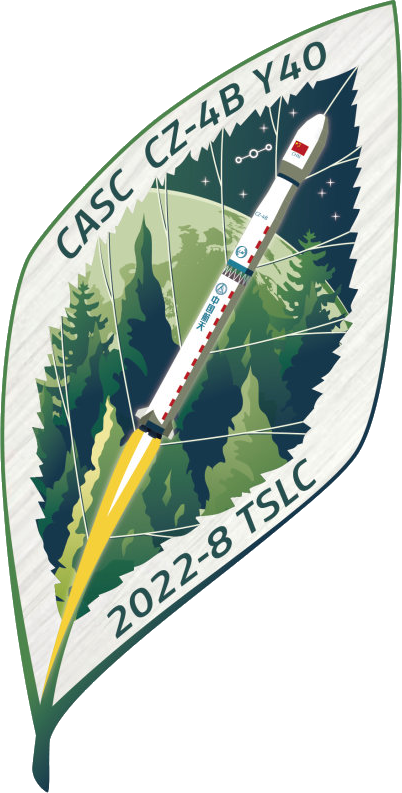
CASC Terrestrial Ecosystem Carbon Inventory Satellite (TECIS) Long March 4B
About the Terrestrial Ecosystem Carbon Inventory Satellite (TECIS) Mission
| Type | Earth Science |
|---|---|
| Orbit | Sun-Synchronous Orbit |
Note: Launch vehicle and payload uncertain.
The Terrestrial Ecosystem Carbon Monitoring Satellite (TECIS) is intended to evaluate forest biomass, measure atmospheric aerosol content, and detect photosynthetic fluorescence. These measurements will contribute to efforts to combat global warming.
The satellite carries 4 instruments: Multi-Beam LIDAR, Directional Multi-Spectral Camera, Directional Polarization Camera, and Chlorophyll Fluorescence Hyper-Spectral Monitor (SIFIS)
The satellite will operate in a sun-synchronous orbit at a height of 506 km, at 10:30 AM local time in the descending mode, with a designed lifetime of 8 years.
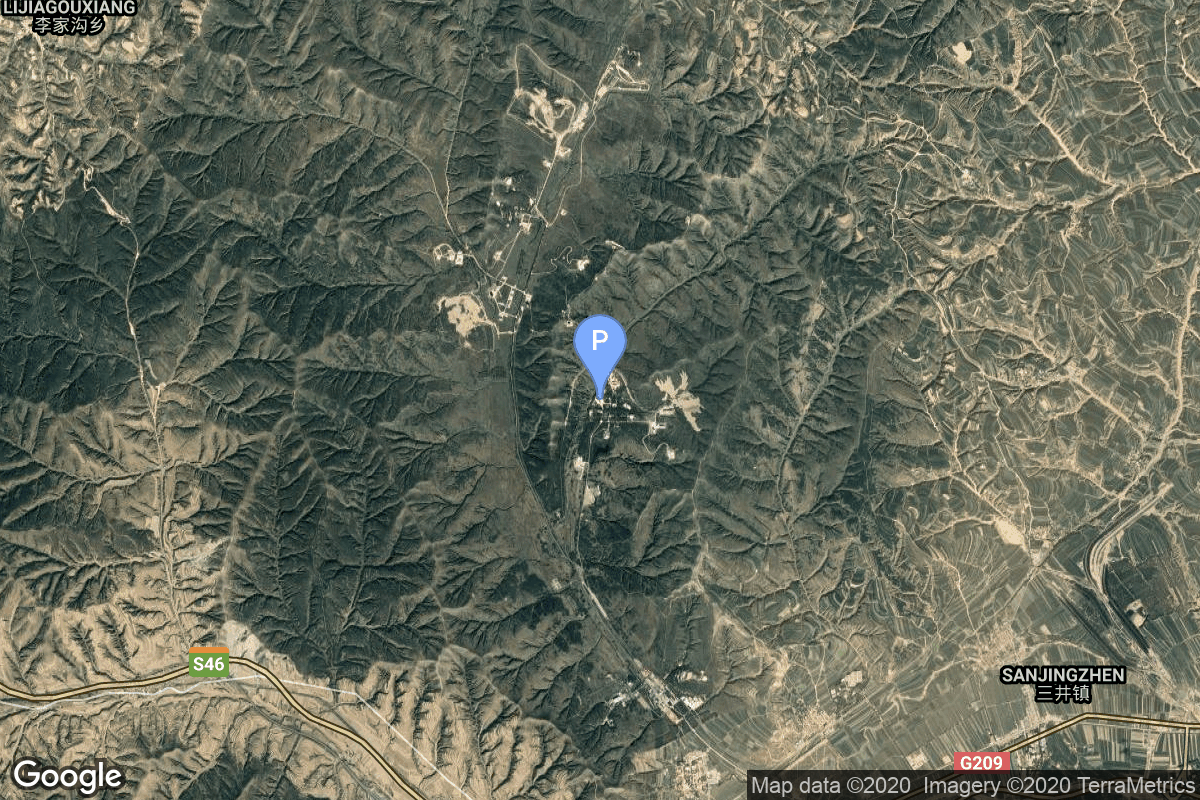
Launch Pad & Location
Launch Complex 9
Taiyuan Satellite Launch Center, People's Republic of China
| Launches | 80 |
|---|---|
| Orbital Launch Attempts | 80 |
| Total Launches | 162 |
The Taiyuan Satellite Launch Center is a People's Republic of China space and defense launch facility. It is situated in Kelan County, Xinzhou, Shanxi Province and is the second of four launch sites having been founded in March 1966 and coming into full operation in 1968.
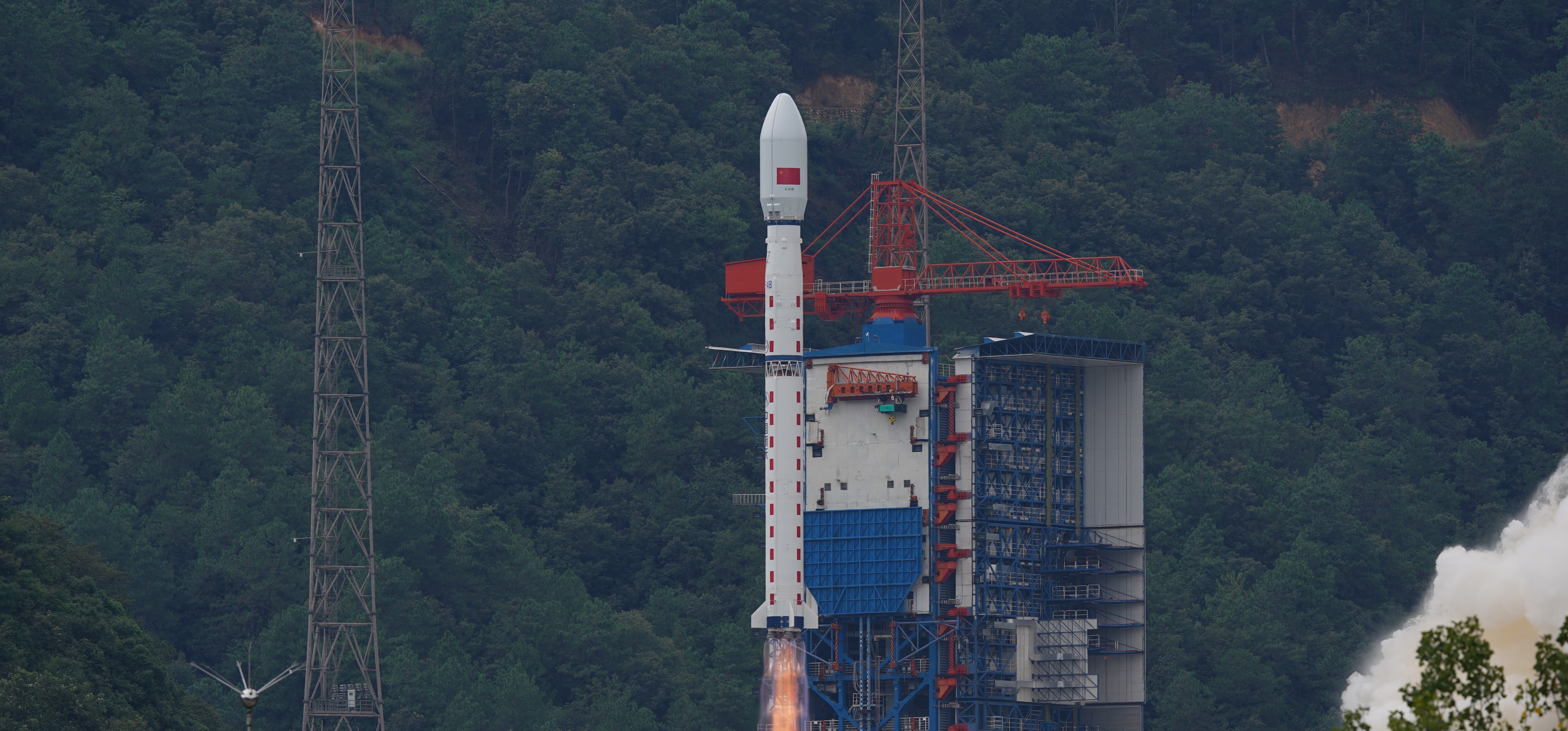
CASC Long March 4B Rocket
The Long March 4B (Chinese: 长征四号乙火箭), also known as the Chang Zheng 4B, CZ-4B and LM-4B is a Chinese orbital carrier rocket. Launched from Launch Complex 1 at the Taiyuan Satellite Launch Center, it is a 3-stage rocket, used mostly to place satellites into low Earth and sun synchronous orbits.
| Length | 44.1 m |
|---|---|
| Diameter | 3.4 m |
| Stages | 3 |
| Launch Mass | 249.0 T |
| Takeoff Thrust | 2,961.0 kN |
| LEO Capacity | 4,200 kg |
| GTO Capacity | 1,500 kg |
| Maiden Flight | 5/10/1999 |
About CASC
The China Aerospace Science and Technology Corporation (CASC) is the main contractor for the Chinese space program. It is state-owned and has a number of subordinate entities which design, develop and manufacture a range of spacecraft, launch vehicles, strategic and tactical missile systems, and ground equipment. It was officially established in July 1999 as part of a Chinese government reform drive, having previously been one part of the former China Aerospace Corporation. Various incarnations of the program date back to 1956.
| Total Launches | 617 |
|---|---|
| Successful | 601 |
| Failed | 16 |
| Pending | 8 |
| Consecutive Success | 8 |
Frequently Asked Questions
When was the CASC Long March 4B Terrestrial Ecosystem Carbon Inventory Satellite (TECIS) launch scheduled?
The CASC Long March 4B Terrestrial Ecosystem Carbon Inventory Satellite (TECIS) launch was scheduled for:
.
Where did the CASC Long March 4B Terrestrial Ecosystem Carbon Inventory Satellite (TECIS) mission launch from?
The CASC Long March 4B rocket launched from Launch Complex 9 at Taiyuan Satellite Launch Center, People's Republic of China. The Taiyuan Satellite Launch Center is a People's Republic of China space and defense launch facility. It is situated in Kelan County, Xinzhou, Shanxi Province and is the second of four launch sites having been founded in March 1966 and coming into full operation in 1968.
What rocket was used for the Terrestrial Ecosystem Carbon Inventory Satellite (TECIS) mission?
The Terrestrial Ecosystem Carbon Inventory Satellite (TECIS) mission launched aboard a CASC Long March 4B rocket. The Long March 4B (Chinese: 长征四号乙火箭), also known as the Chang Zheng 4B, CZ-4B and LM-4B is a Chinese orbital carrier rocket. Launched from Launch Complex 1 at the Taiyuan Satellite Launch Center, it is a 3-stage rocket, used mostly to place satellites into low Earth and sun synchronous orbits. Detailed rocket specifications and performance data are available in the rocket details above.
What weather conditions could have delayed the CASC Long March 4B Terrestrial Ecosystem Carbon Inventory Satellite (TECIS) launch?
The CASC Long March 4B Terrestrial Ecosystem Carbon Inventory Satellite (TECIS) launch could have been delayed by various weather conditions including lightning within 10 nautical miles, high winds (especially upper-level winds), thick cloud layers, precipitation, and poor visibility. Weather must be favorable at the launch site, downrange landing zones, and abort landing sites.
How can I get updates if the CASC Long March 4B Terrestrial Ecosystem Carbon Inventory Satellite (TECIS) launch was delayed?
This page was updated in real-time with the latest CASC Long March 4B launch status, including any delays or scrubs for the Terrestrial Ecosystem Carbon Inventory Satellite (TECIS) mission. You can also check our space launch schedule for historical launch information. Our mobile app provides push notifications for instant alerts about launch status changes. Official CASC live streams provided the most immediate range updates during the launch window.
Last Updated
Last Updated:
-
Launch success
-
Added launch per NOTAMs; Launch vehicle and payload uncertain.