
Virgin Orbit Tubular Bells, Part One LauncherOne
Rocket Launch Video Stream
About the Tubular Bells, Part One Mission
| Type | Dedicated Rideshare |
|---|---|
| Orbit | Low Earth Orbit |
| Launch Cost | $12,000,000 |
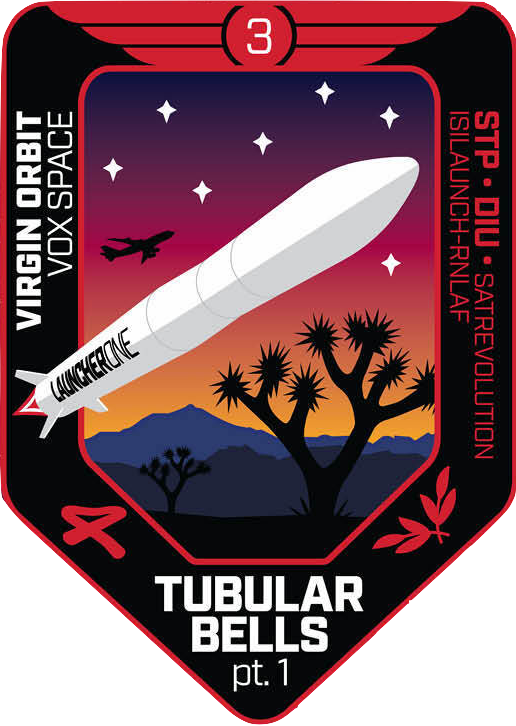
The mission includes three cubesats for US Department of Defense which are launched as a part of the DoS Space Test Program (STP); the Netherland's first military satellite, a cubesat called BRIK II; and two optical satellites, STORK-4 and STORK-5, for SatRevolution's STORK constellation.
The mission name, "Tubular Bells, Part One", references the first music album released by Virgin Records label in the 1970s. The label was established by Virgin Orbit CEO Richard Branson.
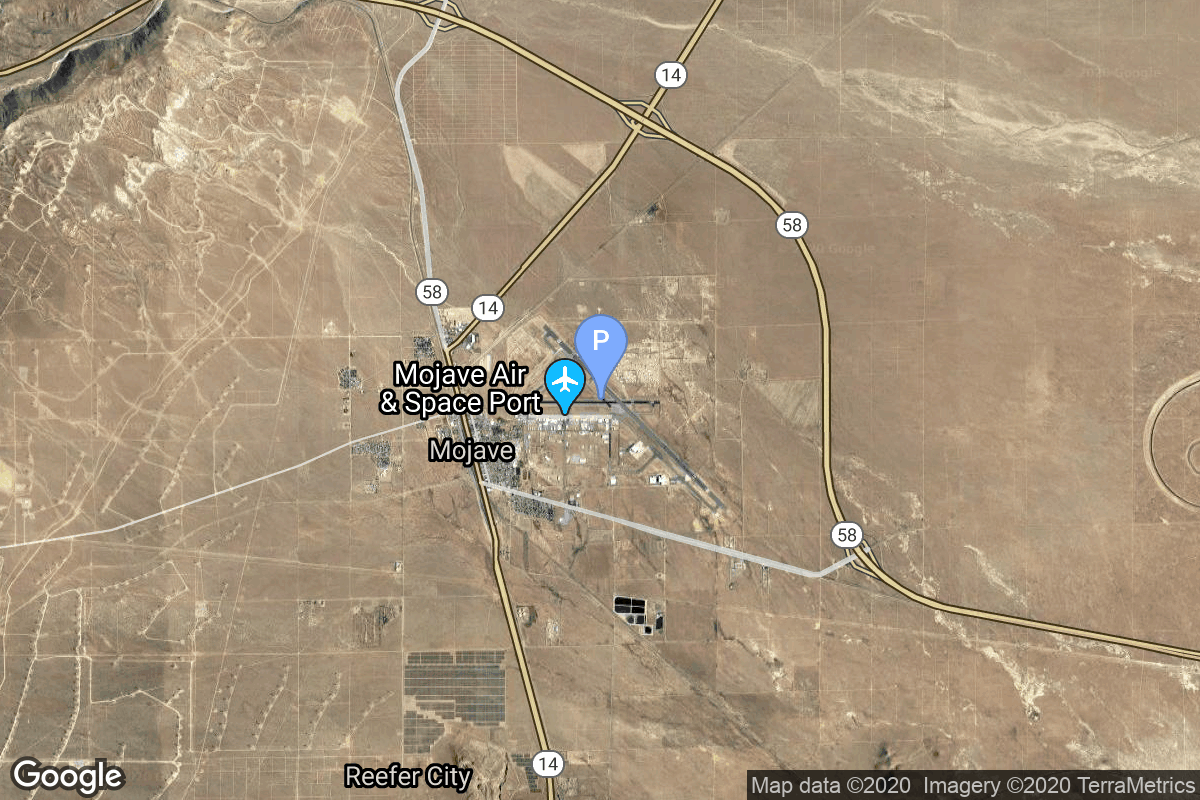
Launch Pad & Location
Mojave Air and Space Port
Air launch to orbit
| Launches | 5 |
|---|---|
| Orbital Launch Attempts | 5 |
| Total Launches | 52 |
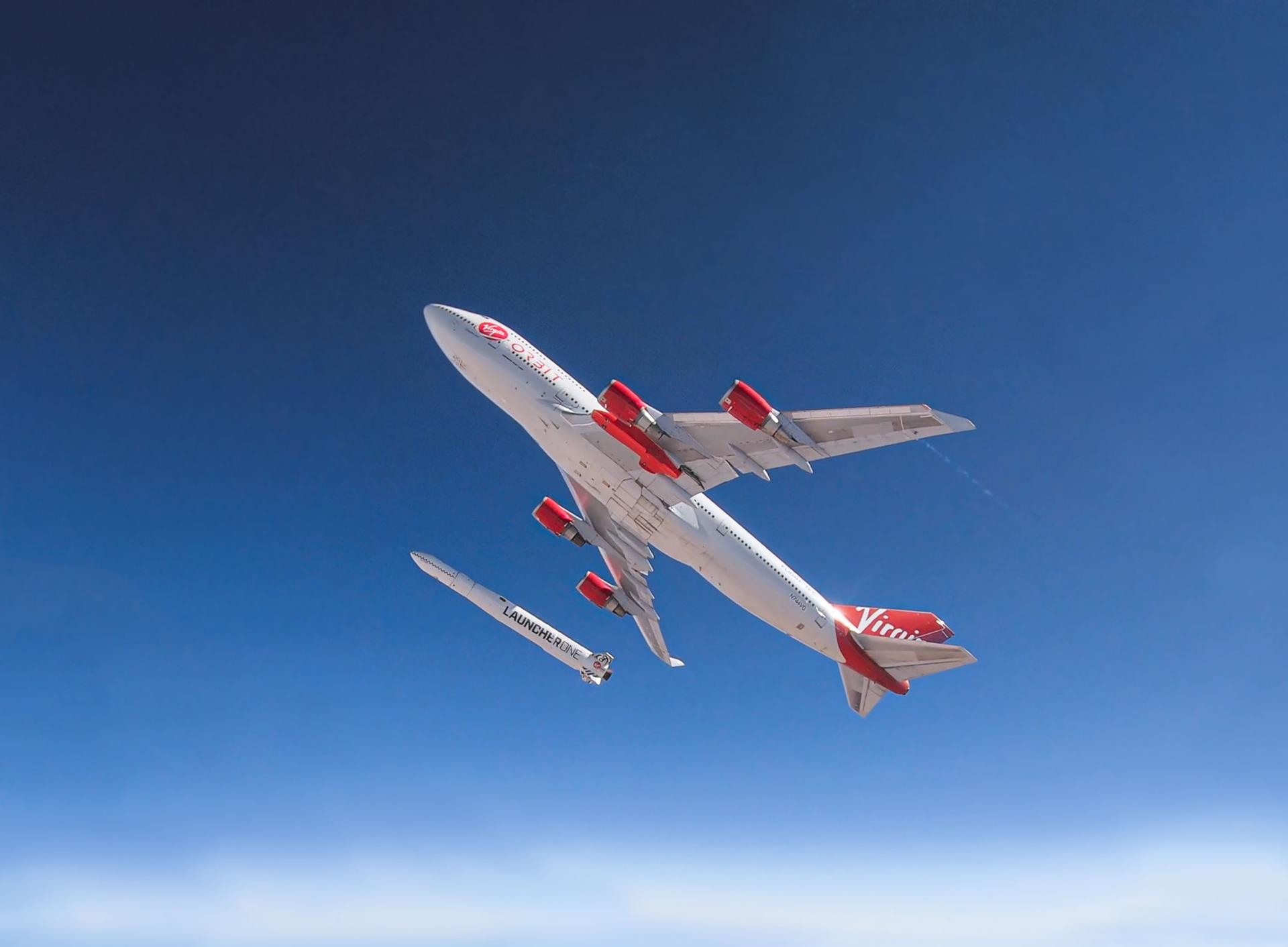
Virgin Orbit LauncherOne Rocket
LauncherOne is a two stage orbital launch vehicle developed by Virgin Orbit since 2007. It is an air launch to orbit rocket, designed to launch "smallsat" payloads of 300 kilograms (660 lb) into a Sun-synchronous orbit, following air launch from a carrier aircraft at high altitude.
| Length | 16.0 m |
|---|---|
| Diameter | 1.6 m |
| Stages | 2 |
| Launch Mass | 30.0 T |
| Takeoff Thrust | 327.0 kN |
| LEO Capacity | 500 kg |
| SSO Capacity | 300 kg |
| Launch Cost | $12,000,000 |
| Maiden Flight | 5/25/2020 |
About Virgin Orbit
Virgin Orbit is a company within the Virgin Group which plans to provide launch services for small satellites. The company was formed in 2017 to develop the air-launched LauncherOne rocket, launched from Cosmic Girl, which had previously been a project of Virgin Galactic. Based in Long Beach, California, Virgin Orbit has more than 300 employees led by president Dan Hart, a former vice president of government satellite systems at Boeing.
Virgin Orbit focuses on small satellite launch, which is one of three capabilities being focused on by Virgin Galactic. These capabilities are: human spaceflight operations, small satellite launch, and advanced aerospace design, manufacturing, and test
| Total Launches | 6 |
|---|---|
| Successful | 4 |
| Failed | 2 |

Frequently Asked Questions
When was the Virgin Orbit LauncherOne Tubular Bells, Part One launch scheduled?
The Virgin Orbit LauncherOne Tubular Bells, Part One launch was scheduled for:
.
Where can I watch the Virgin Orbit LauncherOne Tubular Bells, Part One launch video?
You can watch the Virgin Orbit LauncherOne launch video on this page. The official video includes full mission coverage with multiple camera angles, onboard views, and expert commentary covering pre-launch procedures, liftoff, stage separation, and payload deployment.
Where did the Virgin Orbit LauncherOne Tubular Bells, Part One mission launch from?
The Virgin Orbit LauncherOne rocket launched from Mojave Air and Space Port at Air launch to orbit.
What rocket was used for the Tubular Bells, Part One mission?
The Tubular Bells, Part One mission launched aboard a Virgin Orbit LauncherOne rocket. LauncherOne is a two stage orbital launch vehicle developed by Virgin Orbit since 2007. It is an air launch to orbit rocket, designed to launch "smallsat" payloads of 300 kilograms (660 lb) into a Sun-synchronous orbit, following air launch from a carrier aircraft at high altitude. Detailed rocket specifications and performance data are available in the rocket details above.
What weather conditions could have delayed the Virgin Orbit LauncherOne Tubular Bells, Part One launch?
The Virgin Orbit LauncherOne Tubular Bells, Part One launch could have been delayed by various weather conditions including lightning within 10 nautical miles, high winds (especially upper-level winds), thick cloud layers, precipitation, and poor visibility. Weather must be favorable at the launch site, downrange landing zones, and abort landing sites.
How can I get updates if the Virgin Orbit LauncherOne Tubular Bells, Part One launch was delayed?
This page was updated in real-time with the latest Virgin Orbit LauncherOne launch status, including any delays or scrubs for the Tubular Bells, Part One mission. You can also check our space launch schedule for historical launch information. Our mobile app provides push notifications for instant alerts about launch status changes. Official Virgin Orbit live streams provided the most immediate range updates during the launch window.
Last Updated
Last Updated:
-
Launch success confirmed
-
LauncherOne has separated from Cosmic Girl and ignited its first stage.
-
Launch window 14:00-16:00 UTC based on takeoff time.
-
NOTAMs issued.
-
New launch date.
-
Rolling back previous update as the notice might not be related.
-
Added launch date per air space closure notices.