
CAS Space Flight 2 Kinetica 1
Rocket Launch Video Stream
About the Flight 2 Mission
| Type | Earth Science |
|---|---|
| Orbit | Sun-Synchronous Orbit |
Will carry 26 different satellites on a ride-share launch mission, including Earth observation satellites, details TBD.
Launch Pad & Location
Launch Area 130
Jiuquan Satellite Launch Center, People's Republic of China
| Launches | 13 |
|---|---|
| Orbital Launch Attempts | 13 |
| Total Launches | 287 |
Jiuquan Satellite Launch Center is a Chinese spaceport located between the Ejin, Alxa, Inner Mongolia and Hangtian Town, Jinta County, Jiuquan, Gansu Province. It is part of the Dongfeng Aerospace City (Base 10).
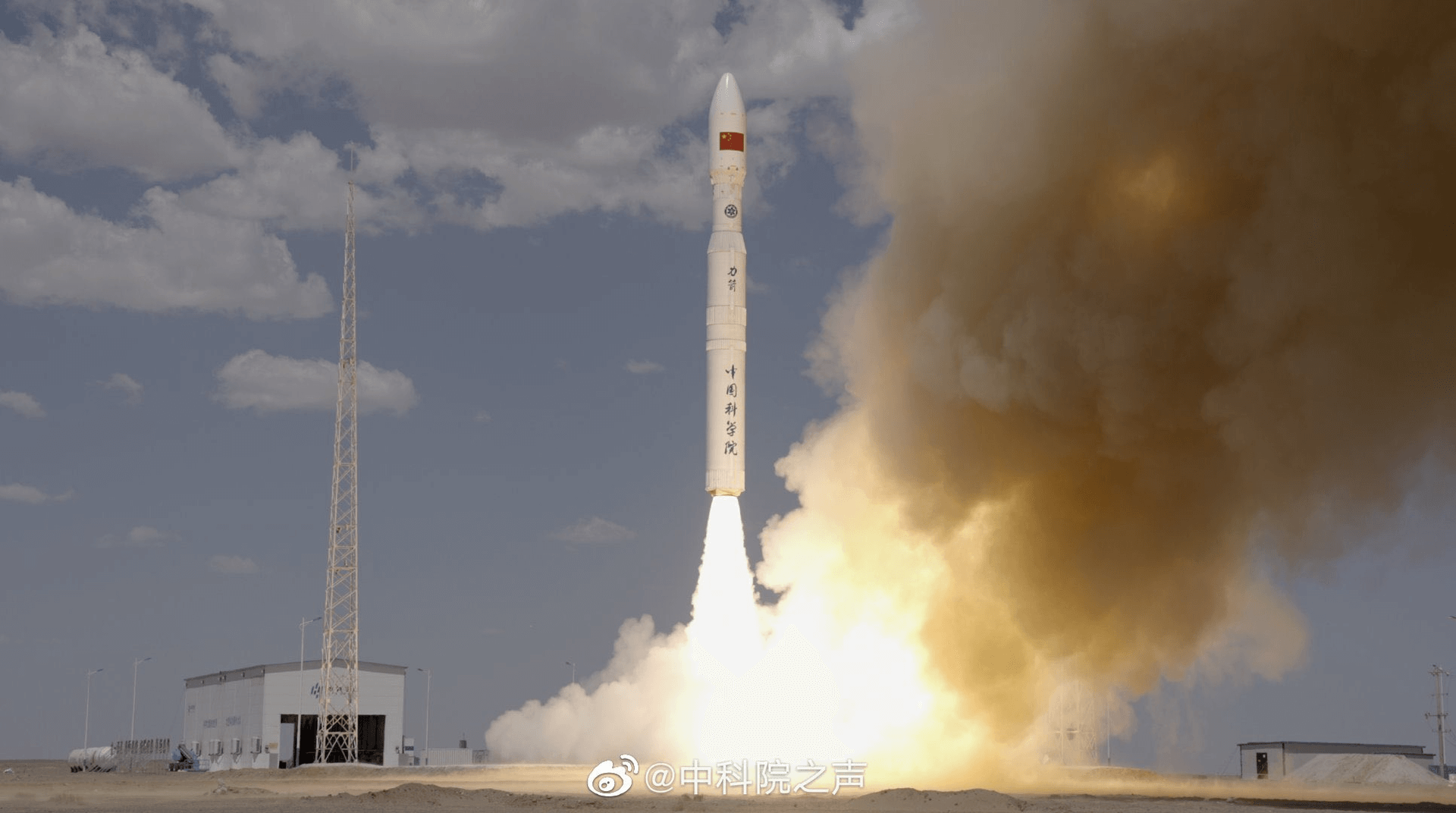
CAS Space Kinetica 1 Rocket
Kinetica 1 (also known as Lijian-1, Chinese: 力箭一号) is a Chinese solid-propellant light launch vehicle. It is capable of placing about 2 tons into low earth orbit and 1.5 tons into sun-synchronous orbit. It is developed by CAS Space, a subsidiary of the Chinese Academy of Sciences. Kinetica 1 is a light launcher whose first stage seems to be derived from the DF-31 long-range intercontinental ballistic missile. It is 30 m high and has a diameter of 2.65 m, with a liftoff mass of 135 t. It's the largest Chinese solid propellant launcher to date, with four stages with a thrust of 200, 100, 50 and 10 tons respectively. The fairing has a diameter of 3.35 meters.
| Length | 30.0 m |
|---|---|
| Diameter | 2.7 m |
| Stages | 4 |
| Launch Mass | 135.0 T |
| Takeoff Thrust | 1,961.0 kN |
| LEO Capacity | 2,000 kg |
| SSO Capacity | 1,500 kg |
| Maiden Flight | 7/27/2022 |
About CAS Space
CAS Space is a spin-off company from the Chinese Academy of Sciences (CAS) that is operating and plans to operate various launch vehicles of the Zhongke series.
| Total Launches | 14 |
|---|---|
| Successful | 13 |
| Failed | 1 |
| Consecutive Success | 8 |

Frequently Asked Questions
When was the CAS Space Kinetica 1 Flight 2 launch scheduled?
The CAS Space Kinetica 1 Flight 2 launch was scheduled for:
.
Where can I watch the CAS Space Kinetica 1 Flight 2 launch video?
You can watch the CAS Space Kinetica 1 launch video on this page. The official video includes full mission coverage with multiple camera angles, onboard views, and expert commentary covering pre-launch procedures, liftoff, stage separation, and payload deployment.
Where did the CAS Space Kinetica 1 Flight 2 mission launch from?
The CAS Space Kinetica 1 rocket launched from Launch Area 130 at Jiuquan Satellite Launch Center, People's Republic of China. Jiuquan Satellite Launch Center is a Chinese spaceport located between the Ejin, Alxa, Inner Mongolia and Hangtian Town, Jinta County, Jiuquan, Gansu Province. It is part of the Dongfeng Aerospace City (Base 10).
What rocket was used for the Flight 2 mission?
The Flight 2 mission launched aboard a CAS Space Kinetica 1 rocket. Kinetica 1 (also known as Lijian-1, Chinese: 力箭一号) is a Chinese solid-propellant light launch vehicle. It is capable of placing about 2 tons into low earth orbit and 1.5 tons into sun-synchronous orbit. It is developed by CAS Space, a subsidiary of the Chinese Academy of Sciences. Kinetica 1 is a light launcher whose first stage seems to be derived from the DF-31 long-range intercontinental ballistic missile. It is 30 m high and has a diameter of 2.65 m, with a liftoff mass of 135 t. It's the largest Chinese solid propellant launcher to date, with four stages with a thrust of 200, 100, 50 and 10 tons respectively. The fairing has a diameter of 3.35 meters. Detailed rocket specifications and performance data are available in the rocket details above.
What weather conditions could have delayed the CAS Space Kinetica 1 Flight 2 launch?
The CAS Space Kinetica 1 Flight 2 launch could have been delayed by various weather conditions including lightning within 10 nautical miles, high winds (especially upper-level winds), thick cloud layers, precipitation, and poor visibility. Weather must be favorable at the launch site, downrange landing zones, and abort landing sites.
How can I get updates if the CAS Space Kinetica 1 Flight 2 launch was delayed?
This page was updated in real-time with the latest CAS Space Kinetica 1 launch status, including any delays or scrubs for the Flight 2 mission. You can also check our space launch schedule for historical launch information. Our mobile app provides push notifications for instant alerts about launch status changes. Official CAS Space live streams provided the most immediate range updates during the launch window.
Last Updated
Last Updated:
-
Launch success.