
Mitsubishi Heavy Industries Martian Moons eXploration (MMX) H3-24
About the Martian Moons eXploration (MMX) Mission
| Type | Planetary Science |
|---|---|
| Orbit | Mars Orbit |
| Launch Cost | $50,000,000 |
MMX is a Japanese scientific mission to land on Phobos, one of the two moons of Mars, to collect samples before bringing them back to Earth.
The mission includes a small French/German rover to explore the surface of Phobos.
Launch Pad & Location
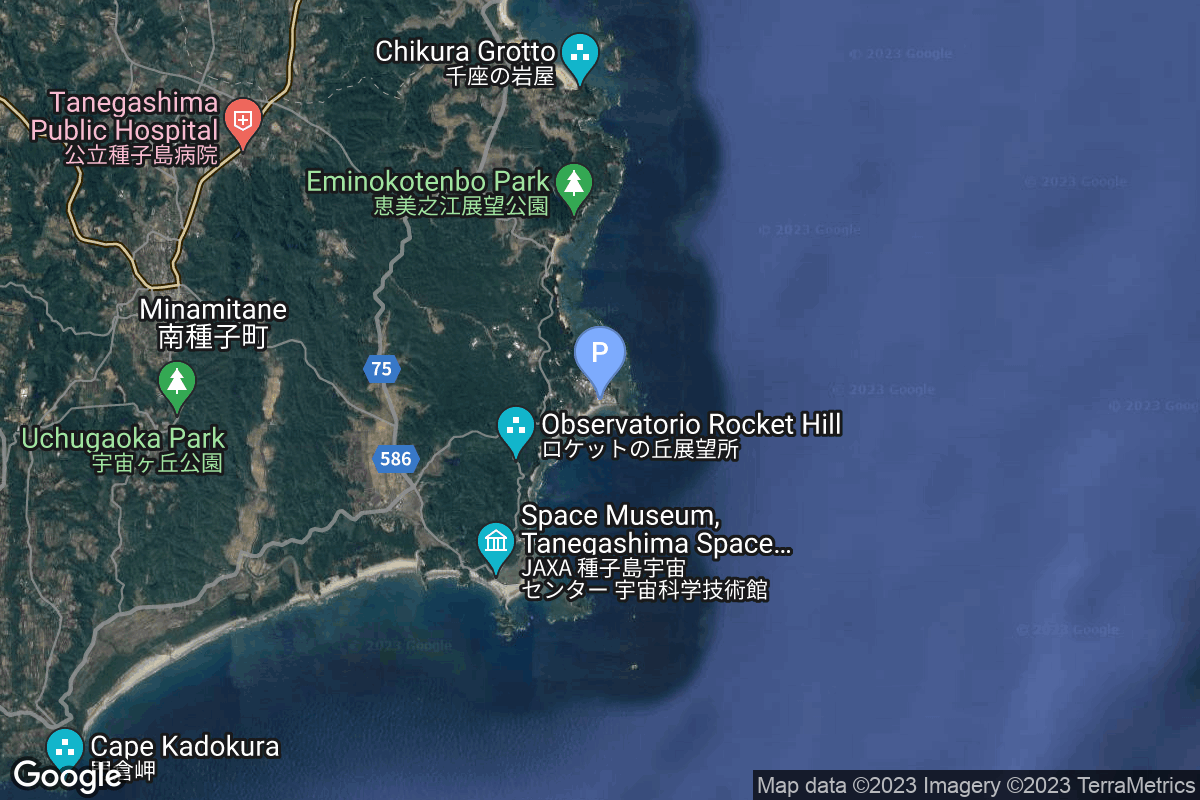
Yoshinobu Launch Complex LP-2
Tanegashima Space Center, Japan
| Launches | 18 |
|---|---|
| Orbital Launch Attempts | 18 |
| Total Launches | 99 |
The Tanegashima Space Center is the largest rocket-launch complex in Japan. It is located on the southeastern tip of Tanegashima, an island located south of Kyushu, an island and region and Japan. It was established in 1969 when the National Space Development Agency of Japan (NASDA) was formed, and is now run by JAXA. The activities that take place at TNSC include assembly, testing, launching, and tracking satellites, as well as rocket engine firing tests.
Rocket Launch Timeline
Track every phase of the rocket launch with our detailed mission timeline. From T-minus countdown events and pre-launch preparations through liftoff, stage separation, and orbital insertion, follow each critical milestone in real-time. Our comprehensive launch sequence timeline includes payload integration, propellant loading, engine ignition, and post-launch telemetry tracking.
| Time | Event |
|---|---|
| T+ 00 : 00 : 00 | Liftoff First upwards movement of the rocket |
| T+ 00 : 01 : 56 | Boosters Separation Separation of the side boosters |
| T+ 00 : 01 : 58 | Boosters Separation Separation of the side boosters |
| T+ 00 : 03 : 17 | Fairing Separation Separation of the payload fairing |
| T+ 00 : 04 : 52 | MECO Cut-off of the main engine |
| T+ 00 : 04 : 59 | Stage 2 Separation Separation of the second stage from the first |
| T+ 00 : 05 : 12 | SES-1 First start of the second engine |
| T+ 00 : 10 : 40 | SECO-1 First cut-off of the second engine |
| T+ 01 : 03 : 57 | SES-2 Second start of the second engine |
| T+ 01 : 10 : 21 | SECO-2 Second cut-off of the second engine |
| T+ 01 : 11 : 12 | Payload Separation Final deployment of the payload from the rocket |
Mitsubishi Heavy Industries H3-24 Rocket
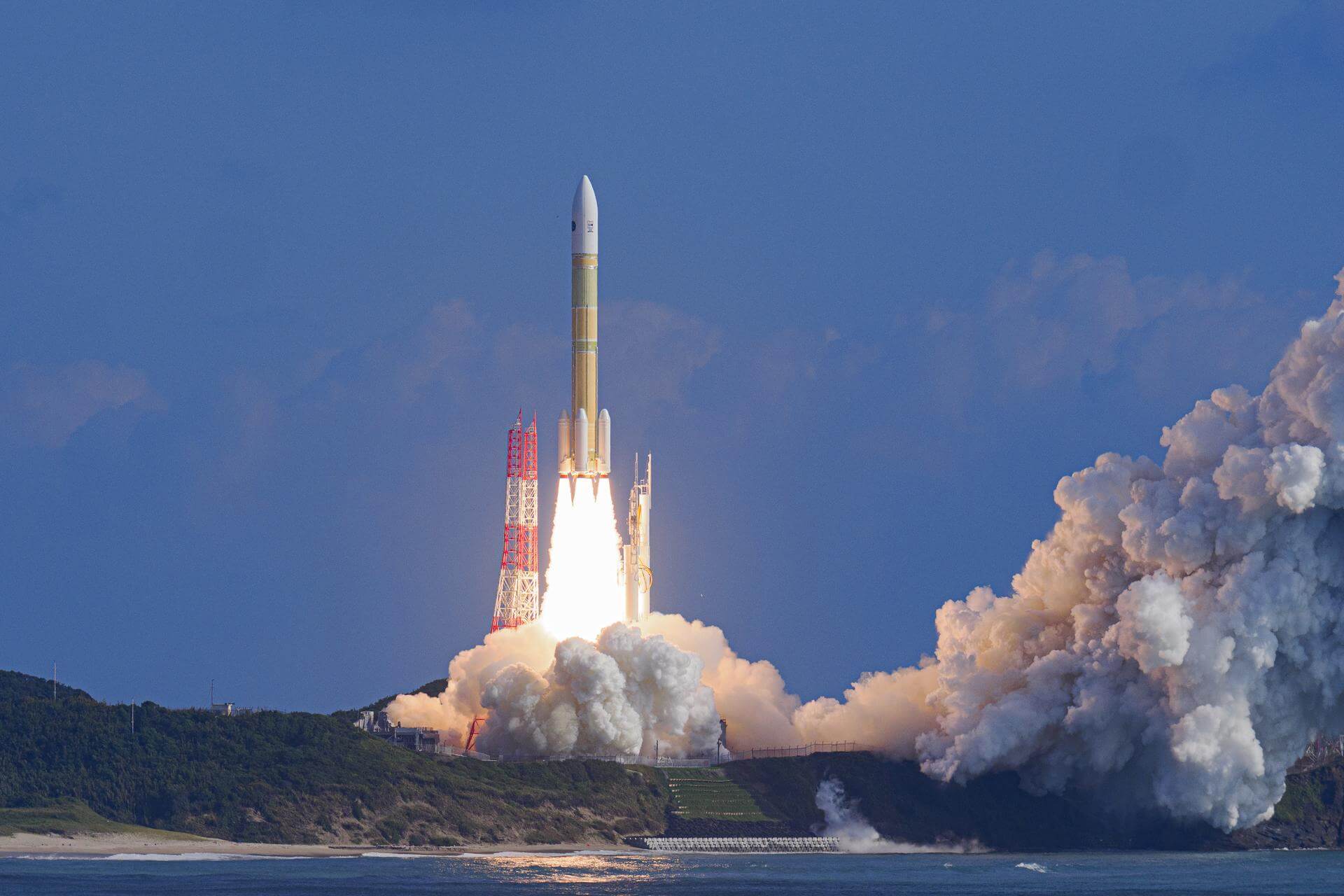
The H3 Launch Vehicle is a Japanese expendable launch system.
Each H3 booster configuration has a two-digit and a letter designation that indicates the features of that configuration. The first digit represents the number of LE-9 engines on the main stage, either "2" or "3". The second digit indicates the number of SRB-3 solid rocket boosters attached to the base of the rocket, and can be "0", "2" or "4". All layouts of solid boosters are symmetrical. The letter in the end shows the length of the payload fairing, either short "S" or long "L". For example, an H3-24L has two engines, four solid rocket boosters, and a long fairing, whereas an H3-30S has three engines, no solid rocket boosters, and a short fairing.
| Length | 63.0 m |
|---|---|
| Diameter | 5.3 m |
| Stages | 2 |
| Takeoff Thrust | 12,142.0 kN |
| GTO Capacity | 7,900 kg |
| Launch Cost | $50,000,000 |
| Maiden Flight | 10/26/2025 |
Learn more about the Mitsubishi Heavy Industries H3-24 Rocket
About Mitsubishi Heavy Industries
Mitsubishi Heavy Industries, Ltd. is a Japanese multinational engineering, electrical equipment and electronics company headquartered in Tokyo, Japan. MHI is one of the core companies of the Mitsubishi Group.
MHI's products include aerospace components, air conditioners, aircraft, automotive components, forklift trucks, hydraulic equipment, machine tools, missiles, power generation equipment, printing machines, ships and space launch vehicles. Through its defense-related activities, it is the world's 23rd-largest defense contractor measured by 2011 defense revenues and the largest based in Japan.
| Total Launches | 58 |
|---|---|
| Successful | 56 |
| Failed | 2 |
| Pending | 13 |
| Consecutive Success | 2 |

Frequently Asked Questions
When is the Mitsubishi Heavy Industries H3-24 Martian Moons eXploration (MMX) launch scheduled?
The Mitsubishi Heavy Industries H3-24 Martian Moons eXploration (MMX) launch is currently scheduled for:
.
Launch times are subject to change based on weather conditions, technical readiness, and range availability. Check back regularly for the most up-to-date launch time and status updates.
Where is the Mitsubishi Heavy Industries H3-24 Martian Moons eXploration (MMX) mission launching from?
The Mitsubishi Heavy Industries H3-24 rocket will launch from Yoshinobu Launch Complex LP-2 at Tanegashima Space Center, Japan. The Tanegashima Space Center is the largest rocket-launch complex in Japan. It is located on the southeastern tip of Tanegashima, an island located south of Kyushu, an island and region and Japan. It was established in 1969 when the National Space Development Agency of Japan (NASDA) was formed, and is now run by JAXA. The activities that take place at TNSC include assembly, testing, launching, and tracking satellites, as well as rocket engine firing tests. For viewing location recommendations and tips, check the launch location details above.
What rocket is being used for the Martian Moons eXploration (MMX) mission?
The Martian Moons eXploration (MMX) mission will launch aboard a Mitsubishi Heavy Industries H3-24 rocket. The H3 Launch Vehicle is a Japanese expendable launch system. Each H3 booster configuration has a two-digit and a letter designation that indicates the features of that configuration. The first digit represents the number of LE-9 engines on the main stage, either "2" or "3". The second digit indicates the number of SRB-3 solid rocket boosters attached to the base of the rocket, and can be "0", "2" or "4". All layouts of solid boosters are symmetrical. The letter in the end shows the length of the payload fairing, either short "S" or long "L". For example, an H3-24L has two engines, four solid rocket boosters, and a long fairing, whereas an H3-30S has three engines, no solid rocket boosters, and a short fairing. Detailed rocket specifications and performance data are available in the rocket details above.
What weather conditions could delay the Mitsubishi Heavy Industries H3-24 Martian Moons eXploration (MMX) launch?
The Mitsubishi Heavy Industries H3-24 Martian Moons eXploration (MMX) launch can be delayed by various weather conditions including lightning within 10 nautical miles, high winds (especially upper-level winds), thick cloud layers, precipitation, and poor visibility. Weather must be favorable at the launch site, downrange landing zones, and abort landing sites. Check the launch weather forecast above for current conditions and probability of favorable weather.
How can I get updates if the Mitsubishi Heavy Industries H3-24 Martian Moons eXploration (MMX) launch is delayed?
This page is updated in real-time with the latest Mitsubishi Heavy Industries H3-24 launch status, including any delays or scrubs for the Martian Moons eXploration (MMX) mission. You can also check our space launch schedule for the most current information. Enable push notifications through our mobile app to receive instant alerts about launch status changes, weather holds, or new launch times. We recommend following official Mitsubishi Heavy Industries live streams for the most immediate range updates.
Last Updated
Last Updated:
-
GO for launch.
-
NET October 20.
-
NET October.
-
Delayed to 2026 launch window due to H3 launch vehicle unavailability.