
Japan Aerospace Exploration Agency RAISE-3 & others Epsilon
About the RAISE-3 & others Mission
| Type | Technology |
|---|---|
| Orbit | Sun-Synchronous Orbit |
| Launch Cost | $39,000,000 |
RAISE-3 (RApid Innovative payload demonstration Satellite-3) was a satellite for on-orbit demonstrations of 7 demonstration components and equipment selected by public solicitation. The satellite was to be operated in response to requests from the demonstration theme proposers, and will provide experimental data of the demonstration devices and environmental data during the experiments.
The launch is also carrying QPS-SAR 3 & 4 radar Earth observation satellites for iQPS, and 5 cubesats for various Japanese institutions & companies.
Flight Termination System activated at T+06:28 after rocket was observed not in correct attitude for normal 2nd/3rd stage separation.
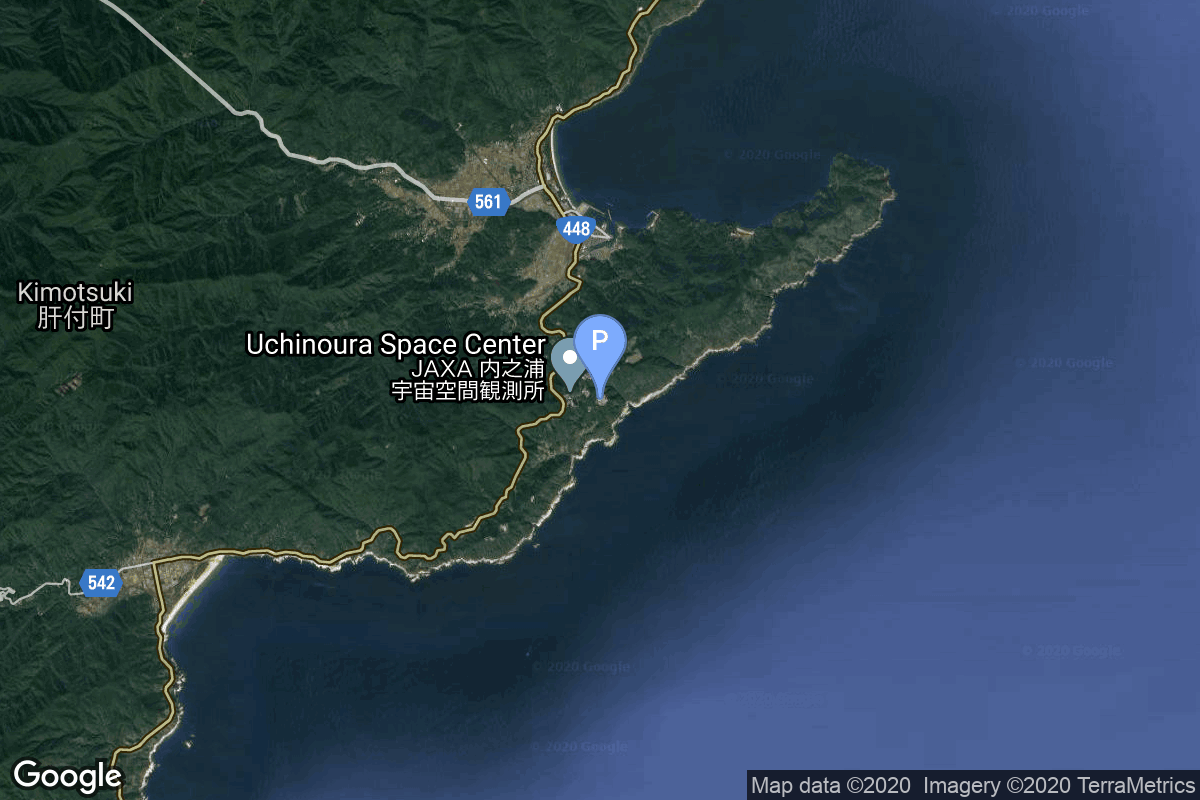
Launch Pad & Location
Mu Center
Uchinoura Space Center, Japan
| Launches | 36 |
|---|---|
| Orbital Launch Attempts | 36 |
| Total Launches | 43 |
The Uchinoura Space Center is a space launch facility in the Japanese town of Kimotsuki, Kagoshima Prefecture. All of Japan's scientific satellites were launched from Uchinoura prior to the M-V launch vehicles being decommissioned in 2006. It continues to be used for suborbital launches, stratospheric balloons and has also been used for the Epsilon orbital launch vehicle. Additionally, the center has antennas for communication with interplanetary space probes.
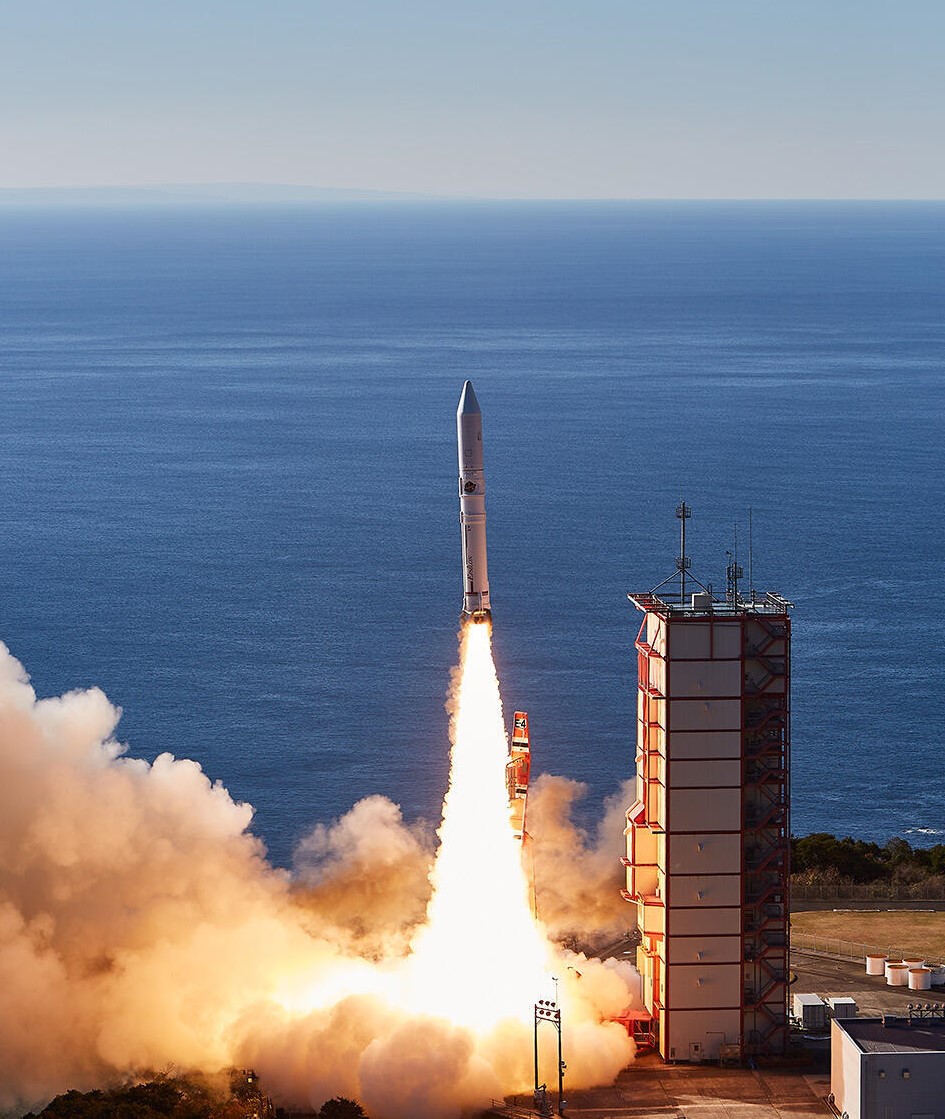
Japan Aerospace Exploration Agency Epsilon Rocket
The Epsilon rocket is a Japanese solid-fuel rocket designed to launch scientific satellites. It is a follow-on project to the larger and more expensive M-V rocket which was retired in 2006. The Japan Aerospace Exploration Agency (JAXA) began developing the Epsilon in 2007. It is capable of placing a 590 kg payload into Sun-synchronous orbit.
Learn more about the Japan Aerospace Exploration Agency Epsilon Rocket
About Japan Aerospace Exploration Agency
The Japan Aerospace Exploration Agency (JAXA) is Japan's national aero-space agency. Through the merger of three previously independent organizations, JAXA was formed on 1 October 2003. JAXA is responsible for research, technology development and the launch of satellites into orbit, and is involved in many more advanced missions, such as asteroid exploration and possible manned exploration of the Moon. JAXA launch their Epsilon vehicle from the Uchinoura Space Center and their H-II vehicles from the Tanegashima Space Center.

Frequently Asked Questions
When was the Japan Aerospace Exploration Agency Epsilon RAISE-3 & others launch scheduled?
The Japan Aerospace Exploration Agency Epsilon RAISE-3 & others launch was scheduled for:
.
Where did the Japan Aerospace Exploration Agency Epsilon RAISE-3 & others mission launch from?
The Japan Aerospace Exploration Agency Epsilon rocket launched from Mu Center at Uchinoura Space Center, Japan. The Uchinoura Space Center is a space launch facility in the Japanese town of Kimotsuki, Kagoshima Prefecture. All of Japan's scientific satellites were launched from Uchinoura prior to the M-V launch vehicles being decommissioned in 2006. It continues to be used for suborbital launches, stratospheric balloons and has also been used for the Epsilon orbital launch vehicle. Additionally, the center has antennas for communication with interplanetary space probes.
What rocket was used for the RAISE-3 & others mission?
The RAISE-3 & others mission launched aboard a Japan Aerospace Exploration Agency Epsilon rocket. The Epsilon rocket is a Japanese solid-fuel rocket designed to launch scientific satellites. It is a follow-on project to the larger and more expensive M-V rocket which was retired in 2006. The Japan Aerospace Exploration Agency (JAXA) began developing the Epsilon in 2007. It is capable of placing a 590 kg payload into Sun-synchronous orbit. Detailed rocket specifications and performance data are available in the rocket details above.
What weather conditions could have delayed the Japan Aerospace Exploration Agency Epsilon RAISE-3 & others launch?
The Japan Aerospace Exploration Agency Epsilon RAISE-3 & others launch could have been delayed by various weather conditions including lightning within 10 nautical miles, high winds (especially upper-level winds), thick cloud layers, precipitation, and poor visibility. Weather must be favorable at the launch site, downrange landing zones, and abort landing sites.
How can I get updates if the Japan Aerospace Exploration Agency Epsilon RAISE-3 & others launch was delayed?
This page was updated in real-time with the latest Japan Aerospace Exploration Agency Epsilon launch status, including any delays or scrubs for the RAISE-3 & others mission. You can also check our space launch schedule for historical launch information. Our mobile app provides push notifications for instant alerts about launch status changes. Official Japan Aerospace Exploration Agency live streams provided the most immediate range updates during the launch window.
Last Updated
Last Updated:
-
Launch failure
-
Liftoff
-
Webcast live
-
Launch rescheduled to October 12
-
Launch delayed due to unspecified problem with the launch vehicle; new date TBD
-
Added launch date and time
-
Added launch under preparations right now