
Russian Space Forces 3 x Rodnik (Kosmos 2597, 2598, 2599) Angara 1.2
Rocket Launch Video Stream
About the 3 x Rodnik (Kosmos 2597, 2598, 2599) Mission
| Type | Government/Top Secret |
|---|---|
| Orbit | Low Earth Orbit |
| Launch Cost | $31,000,000 |
Note: Payload identity and Cosmos series numbering not confirmed.
The Strela (Russian: Стрела) are Soviet, then Russian, military space telecommunication satellites, in use since 1964.
These satellites operate as mailboxes ("store-and-forward"): they remember the received messages and then resend them after the scheduled time, or by a command from the Earth. They can serve for up to five years. The satellites are used for transmission of encrypted messages and images.
The operational constellation consists of 12 satellites in two orbital planes, spaced 90° apart. The spacecraft had a cylindrical body with a gravity-gradient boom, which was extended on-orbit to provide passive attitude stabilization. On-board storage was 12 Mbits of data, with a transmission rate of 2.4 kbit/s.
The first three satellites were launched in 1964 by a Cosmos launcher. After one year of service, new and improved satellites were launched, called Strela-2. In 1970, these satellites were modernized, and became the Strela-1M and Strela-2M satellites. From 1985, these satellites will be gradually replaced by Strela-3, and then by Strela-3M from 2005. A civilian version of these satellites was created, called Goniets.
Initially they were launched in groups of six on Tsyklon; when the launcher was retired, they were only launched by two on Cosmos, before Rokot was put into service and allowed the sending of triplets of Strela satellites.
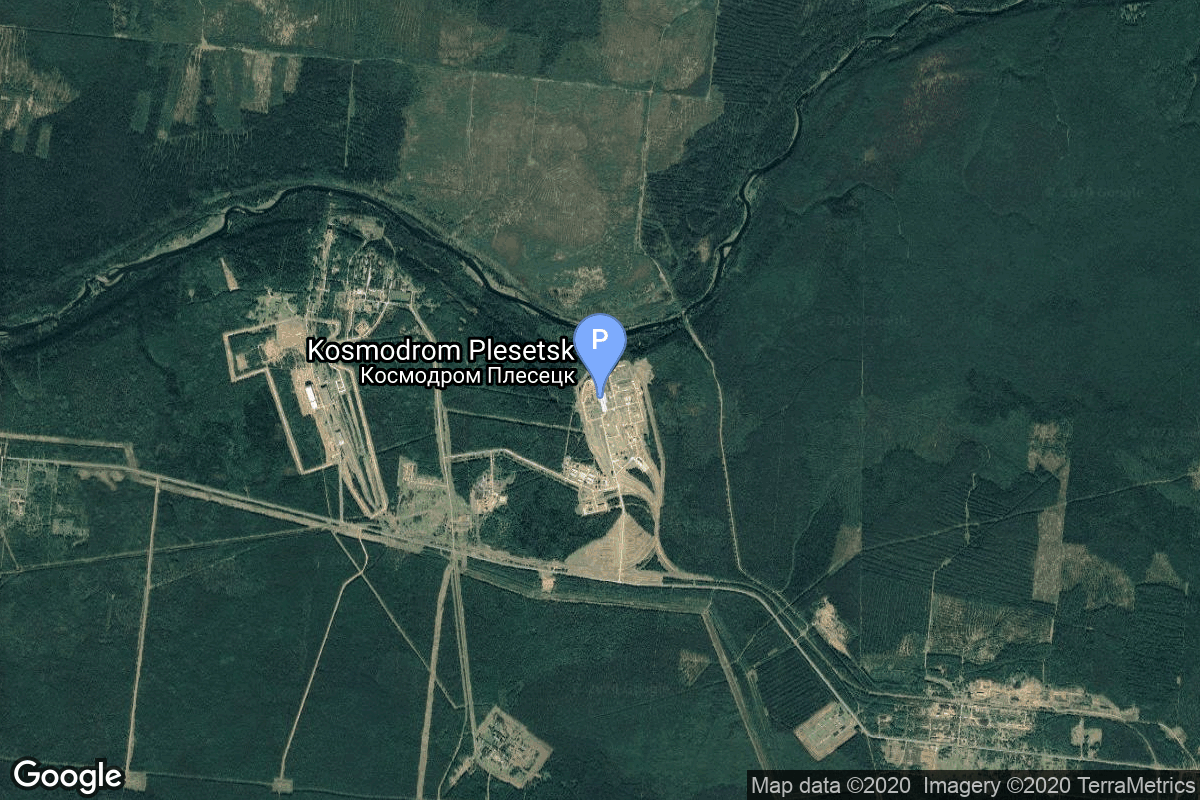
Launch Pad & Location
35/1
Plesetsk Cosmodrome, Russian Federation
| Launches | 12 |
|---|---|
| Orbital Launch Attempts | 12 |
| Total Launches | 1685 |
Plesetsk Cosmodrome is a Russian spaceport located in Mirny, Arkhangelsk Oblast, about 800 km north of Moscow and approximately 200 km south of Arkhangelsk. Originally developed as an ICBM site for the R-7 missile, it also served for numerous satellite launches using the R-7 and other rockets. Its high latitude makes it useful only for certain types of launches, especially the Molniya orbits, so for much of the site's history it functioned as a secondary location, with most orbital launches taking place from Baikonur, in the Kazakh SSR. With the end of the Soviet Union, Baikonur became a foreign territory, and Kazakhstan charged $115 million usage fees annually. Consequently, Plesetsk has seen considerably more activity since the 2000s.
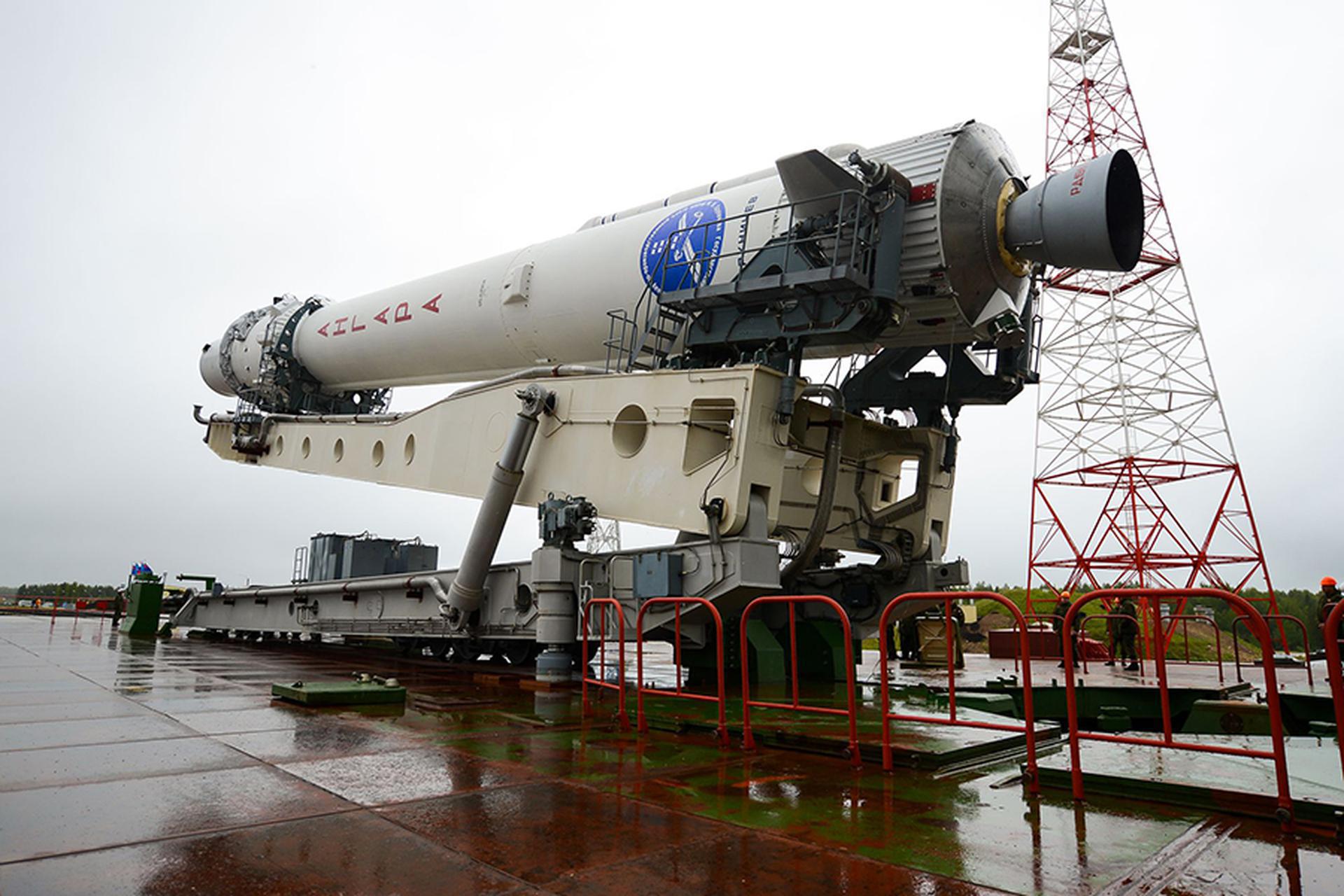
Khrunichev State Research and Production Space Center Angara 1.2 Rocket
The Angara 1.2 is the base launcher for the Angara launch family that uses a modular approach to create multiple launch vehicle configurations for various mission requirements. The Angara 1.2 consists of a standard Universal Rocket Module for the core stage and either a modified Block I Upper Stage or a Briz-KM upper stage.
| Length | 41.5 m |
|---|---|
| Diameter | 2.9 m |
| Stages | 2 |
| Launch Mass | 171.0 T |
| Takeoff Thrust | 1,920.0 kN |
| LEO Capacity | 3,700 kg |
| SSO Capacity | 2,400 kg |
| Launch Cost | $31,000,000 |
| Maiden Flight | 7/9/2014 |
Learn more about the Khrunichev State Research and Production Space Center Angara 1.2 Rocket
About Russian Space Forces
The Russian Space Forces are a branch of the Russian Aerospace Forces, that provides aerospace warning, air sovereignty, and protection for Russia. Having been reestablished following August 1, 2015 merger between the Russian Air Force and the Russian Aerospace Defence Forces after a 2011 dissolving of the branch. The Russian Space Forces were originally formed on August 10, 1992 and the creation of the Russian Armed Forces.
| Total Launches | 156 |
|---|---|
| Successful | 148 |
| Failed | 8 |
| Pending | 1 |
| Consecutive Success | 68 |
Frequently Asked Questions
When was the Russian Space Forces Angara 1.2 3 x Rodnik (Kosmos 2597, 2598, 2599) launch scheduled?
The Russian Space Forces Angara 1.2 3 x Rodnik (Kosmos 2597, 2598, 2599) launch was scheduled for:
.
Where can I watch the Russian Space Forces Angara 1.2 3 x Rodnik (Kosmos 2597, 2598, 2599) launch video?
You can watch the Russian Space Forces Angara 1.2 launch video on this page. The official video includes full mission coverage with multiple camera angles, onboard views, and expert commentary covering pre-launch procedures, liftoff, stage separation, and payload deployment.
Where did the Russian Space Forces Angara 1.2 3 x Rodnik (Kosmos 2597, 2598, 2599) mission launch from?
The Russian Space Forces Angara 1.2 rocket launched from 35/1 at Plesetsk Cosmodrome, Russian Federation. Plesetsk Cosmodrome is a Russian spaceport located in Mirny, Arkhangelsk Oblast, about 800 km north of Moscow and approximately 200 km south of Arkhangelsk. Originally developed as an ICBM site for the R-7 missile, it also served for numerous satellite launches using the R-7 and other rockets. Its high latitude makes it useful only for certain types of launches, especially the Molniya orbits, so for much of the site's history it functioned as a secondary location, with most orbital launches taking place from Baikonur, in the Kazakh SSR. With the end of the Soviet Union, Baikonur became a foreign territory, and Kazakhstan charged $115 million usage fees annually. Consequently, Plesetsk has seen considerably more activity since the 2000s.
What rocket was used for the 3 x Rodnik (Kosmos 2597, 2598, 2599) mission?
The 3 x Rodnik (Kosmos 2597, 2598, 2599) mission launched aboard a Russian Space Forces Angara 1.2 rocket. The Angara 1.2 is the base launcher for the Angara launch family that uses a modular approach to create multiple launch vehicle configurations for various mission requirements. The Angara 1.2 consists of a standard Universal Rocket Module for the core stage and either a modified Block I Upper Stage or a Briz-KM upper stage. Detailed rocket specifications and performance data are available in the rocket details above.
What weather conditions could have delayed the Russian Space Forces Angara 1.2 3 x Rodnik (Kosmos 2597, 2598, 2599) launch?
The Russian Space Forces Angara 1.2 3 x Rodnik (Kosmos 2597, 2598, 2599) launch could have been delayed by various weather conditions including lightning within 10 nautical miles, high winds (especially upper-level winds), thick cloud layers, precipitation, and poor visibility. Weather must be favorable at the launch site, downrange landing zones, and abort landing sites.
How can I get updates if the Russian Space Forces Angara 1.2 3 x Rodnik (Kosmos 2597, 2598, 2599) launch was delayed?
This page was updated in real-time with the latest Russian Space Forces Angara 1.2 launch status, including any delays or scrubs for the 3 x Rodnik (Kosmos 2597, 2598, 2599) mission. You can also check our space launch schedule for historical launch information. Our mobile app provides push notifications for instant alerts about launch status changes. Official Russian Space Forces live streams provided the most immediate range updates during the launch window.
Last Updated
Last Updated:
-
Launch success.
-
Refined launch window.
-
Added launch per NOTAMs; Payload identities uncertain.