
Little Joe (North American Aviation)
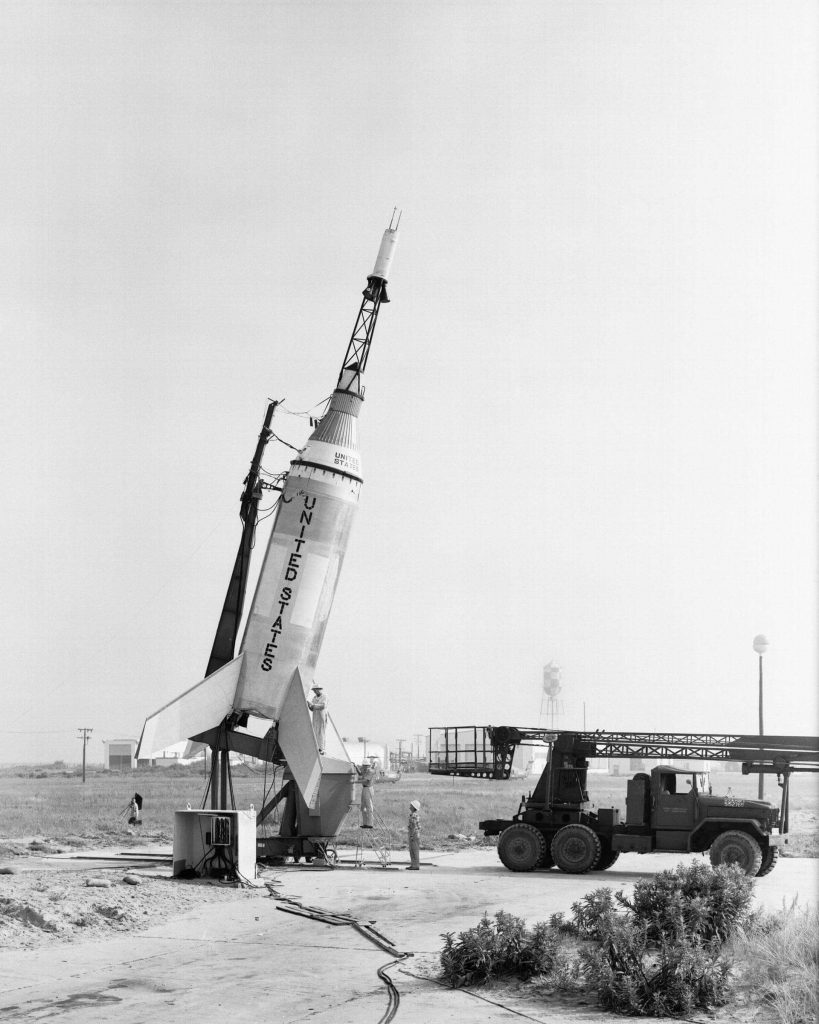
The Little Joe is a non-reusable, inactive launch vehicle manufactured by North American Aviation (established in 1928). It undertook its inaugural launch on 08/21/1959.
Little Joe was a solid-fueled booster rocket used by NASA for eight launches from 1959-1960 from Wallops Island, Virginia to test the launch escape system and heat shield for Project Mercury capsules.
Little Joe Specifications
| Length | 17 m |
|---|---|
| Stages | 1 |
Little Joe Launch Record
| Total Launches | 8 |
|---|---|
| Successful Launches | 3 |
| Failed Launches | 5 |
| Consecutive Successful Launches | 1 |
Manufacturer
North American Aviation (NAA) was a major American aerospace manufacturer, responsible for a number of historic aircraft, including the T-6 Texan trainer, the P-51 Mustang fighter, the B-25 Mitchell bomber, the F-86 Sabre jet fighter, the X-15 rocket plane, and the XB-70, as well as Apollo command and service module, the second stage of the Saturn V rocket, the Space Shuttle orbiter and the B-1 Lancer.
Program
Project Mercury was the first human spaceflight program of the United States, running from 1958 through 1963.