
Vanguard (Lockheed Martin)
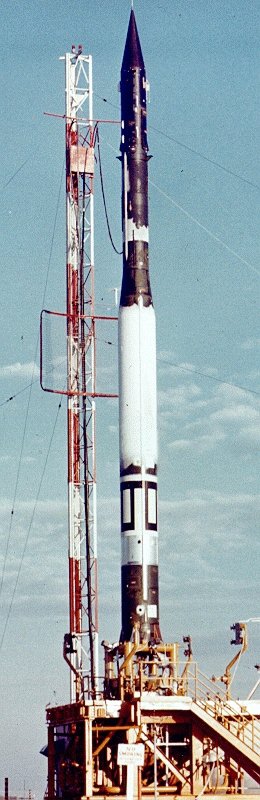
The Vanguard is a non-reusable, inactive launch vehicle manufactured by Lockheed Martin (established in 1953). It undertook its inaugural launch on 10/23/1957.
The Vanguard rocket was intended to be the first launch vehicle the United States would use to place a satellite into orbit. Instead, the Sputnik crisis caused by the surprise launch of Sputnik 1 led the U.S., after the failure of Vanguard TV3, to quickly orbit the Explorer 1 satellite using a Juno I rocket, making Vanguard I the second successful U.S. orbital launch.
Vanguard Specifications
| Length | 23 m |
|---|---|
| Diameter | 1.14 m |
| Stages | 3 |
| Launch Mass | 10 T |
| Takeoff Thrust | 123 kN |
| LEO Capacity | 9 kg |
Vanguard Launch Record
| Total Launches | 11 |
|---|---|
| Successful Launches | 3 |
| Failed Launches | 8 |
| Consecutive Successful Launches | 1 |
Manufacturer
Lockheed Martin's Space Division started in the production of missiles and later ICBM's in the 1950s. Their TITAN missile system was used for 12 Gemini spacecraft and the Voyager probes. They have worked largely in collaboration with NASA on many of their probes, landers, and spacecraft, and hope to play a key role in NASA's return to the moon in 2024.