
Titan IIIC (Lockheed Martin)
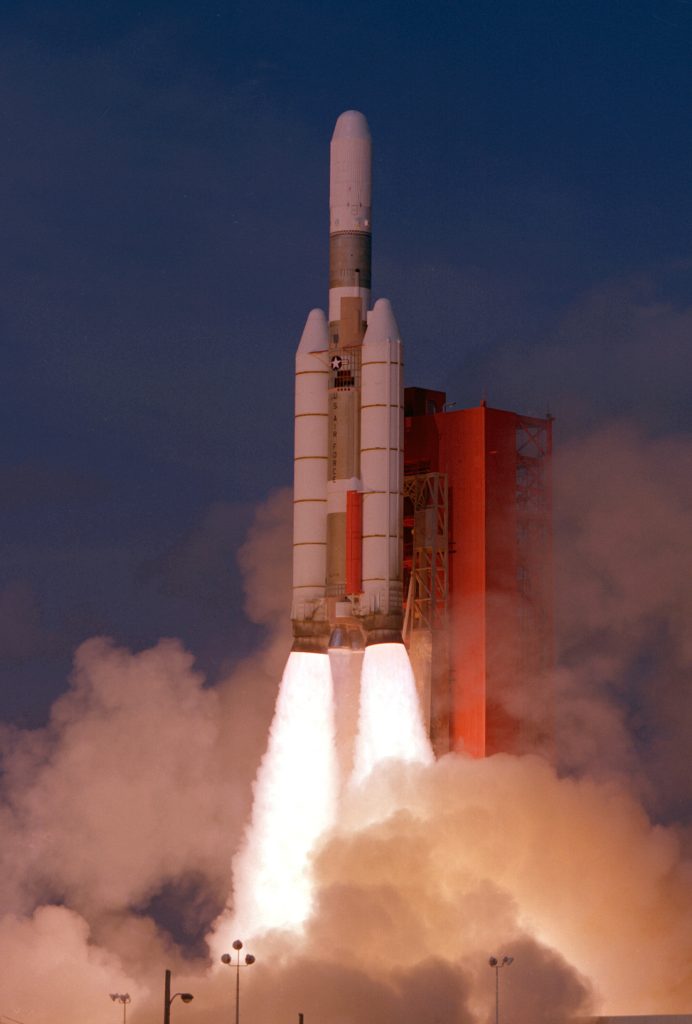
The Titan IIIC is a non-reusable, inactive launch vehicle manufactured by Lockheed Martin (established in 1953). It undertook its inaugural launch on 06/18/1965.
The Titan IIIC was an expendable launch system used by the United States Air Force from 1965 until 1982. It was the first Titan booster to feature large solid rocket motors and was planned to be used as a launcher for the Dyna-Soar, though the spaceplane was cancelled before it could fly. The majority of the launcher's payloads were DoD satellites, for military communications and early warning, though one flight (ATS-6) was performed by NASA. The Titan IIIC was launched exclusively from Cape Canaveral while its sibling, the Titan IIID, was launched only from Vandenberg AFB.
Titan IIIC Specifications
| Variant | IIIC |
|---|---|
| Length | 42 m |
| Diameter | 3 m |
| Stages | 2-3 |
| Launch Mass | 626 T |
| Takeoff Thrust | 10586 kN |
| LEO Capacity | 13100 kg |
| GTO Capacity | 3000 kg |
Titan IIIC Launch Record
| Total Launches | 36 |
|---|---|
| Successful Launches | 34 |
| Failed Launches | 2 |
| Consecutive Successful Launches | 8 |
Manufacturer
Lockheed Martin's Space Division started in the production of missiles and later ICBM's in the 1950s. Their TITAN missile system was used for 12 Gemini spacecraft and the Voyager probes. They have worked largely in collaboration with NASA on many of their probes, landers, and spacecraft, and hope to play a key role in NASA's return to the moon in 2024.